
They gave James Uthmeier’s campaign $25,000. Then his office stepped in to help
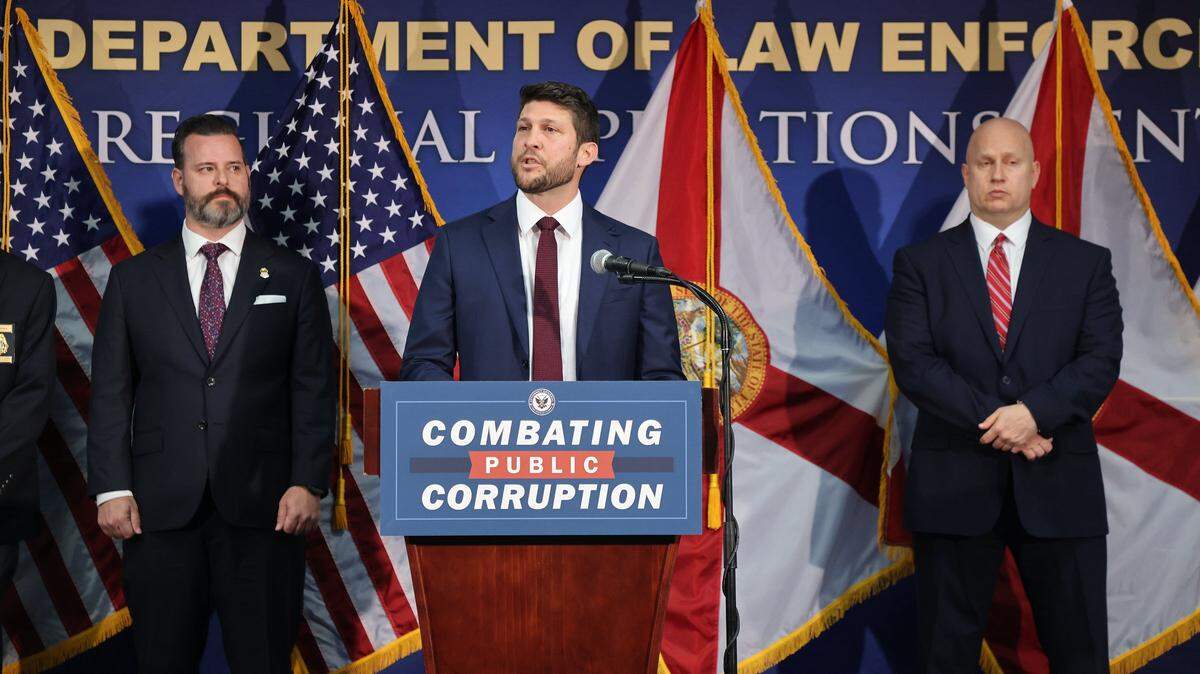
Florida Attorney General James Uthmeier has used his office to intervene on behalf of donors since taking office last year, inserting the state’s lawyers in civil disputes to help developers and car dealers.
In at least three separate instances, the attorney general’s office got involved in a legal battle days or weeks after a donor gave $25,000 to Uthmeier’s campaign. He also helped expunge the criminal history of a wealthy businessman’s daughter this year.
There’s no proof that the attorney general’s office stepped in because of the donations. But questions about the blurring of political and official actions spilled into court proceedings last month in a case involving one of his donors, a South Florida developer trying to tear down a waterfront building and replace it with luxury condominiums.
Lawyers for the remaining condo owners fighting the developer noted in court that the state’s lawyers asked to join the case on behalf of Two Roads Development shortly after the company gave $25,000 to Uthmeier’s campaign.
“Ten days after the $25,000, for the first time ever, the attorney general now wants to intervene in our case,” attorney Glen Waldman told a Miami judge last month. “Is it a coincidence? Hardly.”
The judge did not respond to the comment.
Uthmeier’s office did not answer questions from the Herald/Times but did not dispute the attorney general’s involvement in issues involving donors.
“You’re reporting that the AG’s supporters happen to believe similar things that he believes?” spokesperson Jeremy Redfern said in a statement. “Shocking revelation.”
Campaign donations roll in
Uthmeier has repeatedly flouted norms and refused to enforce state laws he disagrees with. He was Gov. Ron DeSantis’ chief of staff until the governor appointed him as attorney general in early 2025, and he’s running in his first election this year.
A month after taking office, Uthmeier’s political committee received $25,000 from Norman Braman and his wife, the owners of numerous car dealerships. The donation was first reported by investigative reporter Jason Garcia.
Braman was leading a lawsuit filed in Miami-Dade County against Scout Motors, a Volkswagen-backed startup, to prevent it from selling electric SUVs and trucks directly to consumers. Braman argued that the company was violating a state law.
About three weeks after getting the donation, Uthmeier agreed with Braman, writing on X that Volkswagen was trying to “circumvent Florida’s auto dealers” and issuing a letter to Scout demanding the same types of records that the dealers were seeking.
Attorneys for the car dealers cited Uthmeier’s post and letter in their court filings. The case is ongoing. (Other auto dealers and owners have given Uthmeier about $118,000, according to campaign finance reports.)
In March, Uthmeier’s committee took in $25,000 from the Matthew W. Lazenby Revocable Trust. Lazenby is the CEO of a development company suing Bal Harbour after officials wouldn’t approve adding a high-rise hotel and residential tower to the waterfront mall in South Florida.
Two weeks later, the attorney general’s office intervened in the case, arguing that a new state law prevented the village from limiting the project.
Lazenby did not return calls and text messages for this story.
Bal Harbour Mayor Seth Salver, the face of the community’s fight against the developer, said he wondered about the attorney general’s motivations. He said he didn’t know about the campaign contribution until being contacted for this story.
“I figured there was some quid pro quo,” Salver said. “I just didn’t think it would be that brazen.”
Attorney general spokesman Jae Williams pushed back on Salver’s characterization, saying that Uthmeier “has been going after local governments across the state who refuse to follow the law or abuse their authority. I guess the mayor, who falls into this category, is upset and wrongly slandering the AG.”
Uthmeier’s intervention didn’t affect the case, Salver said. But he said the timing — two weeks before the village was set to consider a settlement with the developer — rattled the community. Town leaders rejected the settlement.
“It was timed really well to spook the community into submission,” Salver said.
Around the same time, the attorney general’s office was working to insert itself in the case involving Two Roads Development. The company controls 183 of the 192 units in Miami’s Biscayne 21 condo tower and demolished most of the inside of the building despite objections from remaining residents.
A judge ordered the company to rebuild what it destroyed, which the company estimated would cost more than $60 million.
Uthmeier’s office then asked the judge in February if the state could intervene “to ensure that public health and safety is not harmed by allowing dangerous conditions to exist or by mandating rebuilding.”
During last month’s hearing, attorneys for Two Roads Development did not dispute the company’s $25,000 donation to Uthmeier. But they noted that the attorney general’s office had previously tried to intervene in the case at the Florida Supreme Court last year. The justices declined to hear the case then, so Uthmeier wasn’t able to intervene.
Fast-tracking a pardon
In February, Uthmeier used his power to secure a pardon for Sarah Jon Porreca, a 44-year-old Tampa Bay woman convicted of felony possession of a controlled substance in 2003.
Florida’s clemency and pardon process is notoriously slow, with applicants often waiting for years. Candidates are expected to have maintained a squeaky-clean image since their conviction.
But the governor and members of the Cabinet, including the attorney general, can fast-track an applicant. Porreca, who had her voting rights restored a year after her conviction, has since had more than a dozen traffic violations, including driving with a suspended license. She was arrested in 2021 on a misdemeanor domestic violence charge in Pinellas County. The case, which is sealed, appears to have been dropped or dismissed. (She has had no traffic violations or other incidents since 2021.)
At the February clemency board meeting, DeSantis indicated that Uthmeier fast-tracked Porreca: “I think the attorney general has put this one up.”
Porreca told DeSantis and the Cabinet that she needed clemency to adopt a child. The pardon would clear the felony conviction from her record.
“More than 20 years ago, I made a horrible mistake,” she told the governor and Cabinet. “It’s a mistake that I have regretted, and I take 100% responsibility for.”
“I’ve been able to spend some time with Sarah and her parents, her family,” Uthmeier said during that meeting. “Nonviolent drug offense when she was a teenager, had some mental health issues. We’ve talked through that.”
A month after the hearing, Porreca’s father, the owner of a multibillion-dollar human resources company in Florida, gave $100,000 to a political committee that donates to Republican candidates and the Republican Party of Florida. That’s the only donation that John Porreca has made in his name in 16 years, state campaign finance records show. Neither he nor his daughter returned calls and text messages requesting comment.
Five days after John Porreca’s donation, the committee, Wren PC, gave $25,000 to the Republican Party of Florida. The party has given him $1.9 million since March last year, making it impossible to know whether any of it was Porreca’s donation.
Uthmeier faced other questions about conflicts
Attorneys general have long faced accusations of conflicts of interest between their campaign donors and the duties of the office, which can include pursuing criminal or civil charges against major corporations. Former Attorney General Pam Bondi, for example, was criticized for not pursuing complaints against Trump University around the time she solicited $25,000 from the future president. Scandal-ridden Texas Attorney General Ken Paxton was accused by his own staffers of intervening to help donors.
Before becoming attorney general, Uthmeier solicited state lobbyists to donate to DeSantis’ 2024 presidential campaign while also working as the governor’s chief of staff, NBC News reported.
He was also a central figure in the Hope Florida scandal, overseeing the diversion of $10 million from a state Medicaid settlement through the Hope Florida Foundation and into a political committee he controls. A criminal grand jury was convened and issued a report on its findings, but it has not been released. Uthmeier has denied wrongdoing.
Earlier this month, Uthmeier leapt to the defense of University of Florida board chairperson Mori Hosseini, one of DeSantis’ most loyal supporters and arguably the most powerful person at the school. Hossseini helped Uthmeier land a $100,000 teaching gig at UF last year, and his companies have given $7,000 to the attorney general’s campaign.
Amid a fight over UF’s next president, conservative activist Christopher Rufo called for “a full investigation into Hosseini’s financial disclosures and potential conflicts of interest related to his real estate holdings.” Uthmeier responded, calling the allegations “baseless.”
“If you want to defame and smear a good man’s name, you’re going to have a real problem with me,” Uthmeier wrote.
The next day, Uthmeier’s office issued a letter by a staffer clearing the way for the Board of Governors to approve Hosseini’s choice for UF president. The opinion was requested by a member of the board.
In December, Uthmeier received a $50,000 donation from new Tampa Bay Rays owner Patrick Zalupski’s company. The donation came two months before Uthmeier and the Cabinet voted to give state-owned land to the team to build a stadium in Tampa.
At the Cabinet meeting, Uthmeier praised the plan and its “significant economic benefit to the state.”
“At the end of the day, I’m a big fan of keeping the Rays in Florida,” he said.
Herald/Times Tallahassee bureau reporters Romy Ellenbogen and Garrett Shanley contributed to this report.
This story was originally published July 7, 2026 at 6:00 AM.