A developer tried to push Miami condo owners from their homes. They fought back
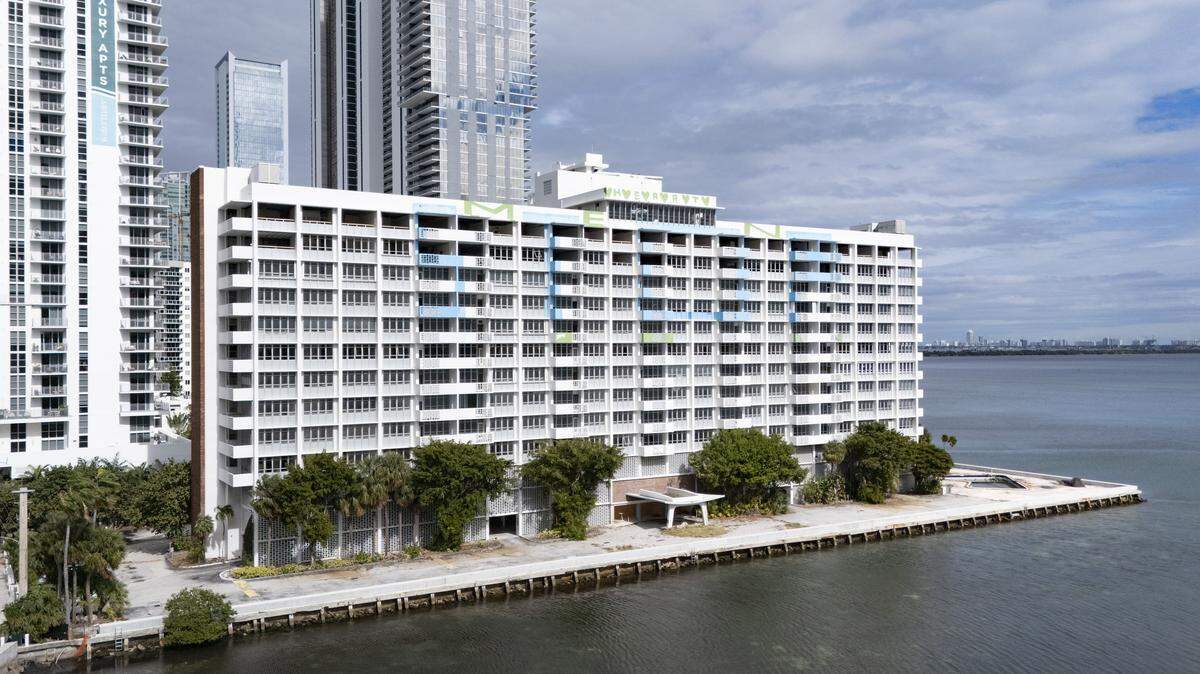
An older condo building with a bayfront view. A developer eager to remake the property. Residents forced out of their homes.
Biscayne 21, a 1960s high-rise on the lip of Biscayne Bay, just north of downtown, had all the makings of another Miami condo takeover. Two Roads Development, a Florida developer looking to build new luxury condos, swooped in to buy residents out of the building, which has 191 units and 14 stories, according to county records.
But it won’t happen.
In this case, the little guys, a group of residents who didn’t want to lose their homes, fought back. They sued the developer — and won their case.
A judge ruled in January that Two Roads Development, the developer that wanted to replace Biscayne 21 with Marriott-branded condos, must restore the building to the condition it was in when residents filed suit in May 2023.
Taylor Collins, a managing partner at Two Roads, estimated the repairs will cost $65 million. The ruling says Two Roads must make these repairs at its own expense.
Robert Murphy, one of the residents who sued, said he was forced from his home in September 2023 when the developer informed him it would soon shut off the air conditioning. He’ll be able to move back into his unit once the building is repaired, which he said is expected to take about two years.
But this rare victory for residents is unlikely to halt all Miami condo takeovers. The lawsuit filed in Miami-Dade Circuit Court focused narrowly on the condo’s declaration, or the legal document that establishes the condominium, and the language in it. But it may give other residents hope that they can hold on to homes they don’t want to leave.
“To have your home taken away from you is like an assault,” said Murphy, a retired lawyer. “I’m really sorry it ever happened. I’m glad we fought for our rights, and I want to be back on my balcony.”
Murphy was offered nearly $1.3 million for his three-bedroom unit. He said he doubts that would have been enough to buy a comparable unit, and after spending years remodeling his condo, he wasn’t interested in moving anyway.
In a statement emailed to the Miami Herald, Two Roads said the judge’s ruling was “anticipated” and that the firm “has complied with all court orders and will continue to do so.” The developer said it will need “professional review” to determine its next steps for restoring the building.
What is a condo termination?
Terminating a condo means changing a building with a condo style of ownership, or multiple owners, to a single owner. This requires the approval of unit owners. Once a condo is terminated, the new owner may choose to rent the units out as apartments or demolish the building and redevelop the site.
When an older condo building sits on valuable land in a desirable neighborhood, like Biscayne 21 does, developers often see it as an opportunity to tear down the old and replace it with a newer, more profitable luxury condo building.
Terminations have become an attractive option for developers in recent years, especially as post-Surfside legislation has left some owners in older condos facing high fees for repairs and maintenance. Jack McCabe, a South Florida real estate analyst, said he expects more terminations to come as condo owners struggle to afford rising fees and insurance costs. In some cases, that may be welcomed by owners looking to unload their units.
But that wasn’t the case for Murphy and the other Biscayne 21 residents who sued.
Murphy said he’d never heard of a condo termination before 2019, when the attempted buyout began in his building. He bought his condo in 2012, and he said he liked to watch sunrises, as well as manatees and dolphins, from his bayfront balcony.
That balcony may have been part of why Biscayne 21 was targeted for termination in the first place.
Peter Zalewski, a South Florida condo expert and founder of the real estate consultancy Condo Vultures, said developers may look for buildings with balconies when they’re searching for condos to terminate and redevelop. Balconies are expensive to repair and maintain and can lead to big bills for condo associations.
Another feature Zalewski mentioned is surface parking, which Biscayne 21 has. Surface lots are a less efficient use of space than garages, meaning developers may see buildings with parking as ripe for more profitable redevelopment.
But what Two Roads may not have accounted for was how difficult it can be to terminate a larger condo building. Adding more unit owners to the mix makes it more difficult to come to an agreement during a buyout.
For that reason, Zalewski said, developers looking to terminate often seek out buildings with fewer than 100 units. Biscayne 21 has nearly 200.
Another hurdle for Two Roads was a rule in the condo’s declaration requiring 100% owner approval to terminate the condo association. That means even one holdout could derail the termination. That rule was ultimately what sunk Two Roads’ project, and has left the developer on the hook for millions in repairs.
MORE: Could your condo be a takeover target? Know the signs that could attract a developer
How the condo termination dispute happened
Two Roads began buying condos in Biscayne 21 in 2019 and had acquired a majority of units by 2022, when the company filed paperwork to terminate the condo association. A group of residents held out, refusing to take the buyout and foiling the developer’s plan. Ten plaintiffs are listed in the lawsuit, which was filed in May 2023. For most of the holdouts, their condos at Biscayne 21 were their primary residences, not second homes or investment properties.
But Two Roads thought it had found a loophole that would make it possible to terminate Biscayne 21’s condo association without a unanimous vote. Biscayne 21’s declaration could typically be changed with just 51% approval. So Two Roads used its majority vote to amend the document and change the declaration’s rules about termination. With the new amendment, the condo association could be terminated with just 80% approval.
But the declaration also stated that changes to the document that altered residents’ right to vote on matters affecting the condo association needed 100% owner approval. And when the holdout residents sued, the judge ruled that terminating the association amounted to stripping those residents of their voting rights.
Donna DiMaggio Berger, a South Florida attorney who has represented condo associations, said Two Roads took a “gamble,” thinking the court would view the change to the declaration as a “procedural tweak.”
“The court basically said, ‘Look, it’s not a procedural tweak. It materially changed owners’ voting rights,’” Berger said.
The developer also gambled by going ahead with its planned demolition at Biscayne 21 while the lawsuit was ongoing.
Murphy said it was “scary” taking a well-funded developer to court. Adding to the fear was knowing that if he and the other plaintiffs lost, they’d lose their condos and get paid significantly less than the residents who took the buyouts.
Under Florida law, when a resident doesn’t want to sell but is forced to during a termination, the developer can pick the appraiser, and the appraisal of the unit is based on other condos in the area, not in the building. That means the holdouts’ condos are typically valued much lower than other condos in the building.
What’s next for Biscayne 21 residents?
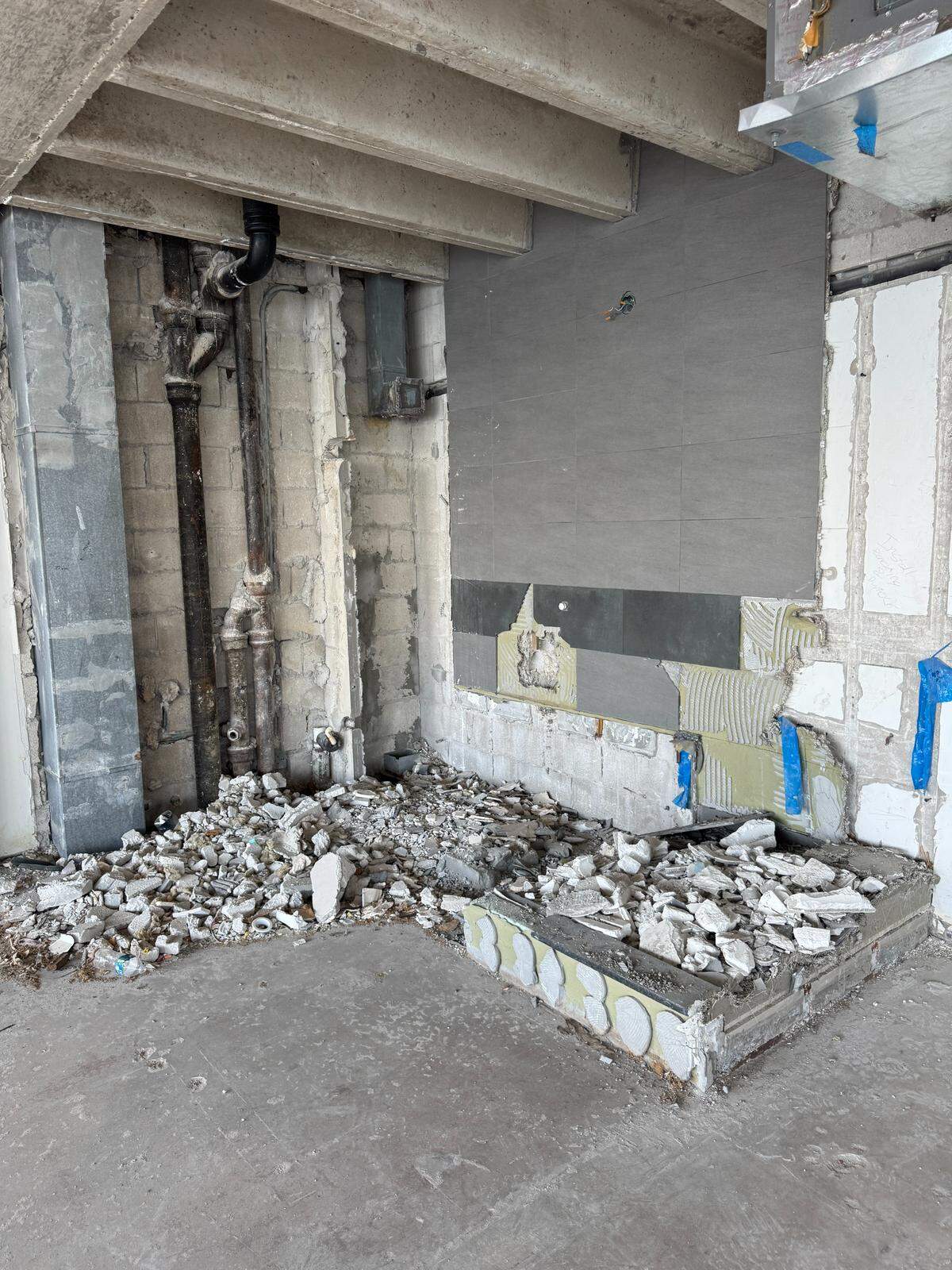
After the judge’s ruling, Murphy said he was allowed back into the building to see his unit. In the time since he’d moved out, the place had been gutted. The developer had planned to demolish the building and had begun stripping the units. When he saw his home in November, Murphy was dismayed at the state of his bathroom, which he said he’d spent a lot of time and money remodeling.
The building’s restoration won’t come in an instant. Murphy said residents received an appraisal from a mortgage lender, which estimated it will take two years to complete the repairs. The building “remains vacant and non-habitable,” according to the developer.
Jeffrey Lam, an attorney representing most of the Biscayne 21 residents, said he’s planning to seek monetary compensation from the developer for his clients. The complaint filed in May 2023 asked for compensation, the amount of which would be decided in court. Lam said he doesn’t yet know what the exact figure will be, but he expects it to be tens of millions of dollars.
“We’re very pleased with the recent ruling,” Lam said. “It’s just the next step toward getting our clients back in their homes.”
Impact of the Miami condo termination ruling
Oscar Rivera, a South Florida attorney who has represented developers in condo terminations, said the ruling makes it virtually impossible for developers to terminate condo associations that require 100% owner approval. He added that this ruling means developers should be more cautious in their approach to terminations.
One weakness of the Biscayne 21 ruling is that it didn’t go up to the Florida Supreme Court, Berger said. In October, the state’s high court declined to take up the case. That means a similar suit could be filed in another court district in Florida. If the outcome of that suit contradicts this recent ruling, Berger said condo associations in different parts of the state could end up subject to different rules.
Lam said he thinks Biscayne 21 was a “unique situation” that doesn’t necessarily spell the end of condo terminations across South Florida. But he does think going forward, developers will be “more careful about what the actual language in the declaration says” when they attempt to take over a condo.
Carolina Sznajderman Sheir, an attorney who has represented residents, associations and developers in terminations, emphasized that every case is different. This ruling won’t be the end of condo association terminations, she said. It comes down to the language in a condo association’s declaration.
“You have to analyze it on a case-by-case basis,” Sheir said. “The specific facts and situations that happened in Biscayne 21 are not necessarily applied to every single case.”
As for Murphy, he said he was happy to be involved in a lawsuit that may help other Florida condo residents facing termination keep their homes. Still, he said it was a stressful process.
“I wanted to sit on my balcony and enjoy my retirement,” said Murphy, “but this was my lot in life.”
This story was originally published January 29, 2026 at 11:15 AM.