Far-right groups find that Florida provides fertile ground — and a national stage
READ MORE
The Oath Keepers Among Us
Leaked emails, exclusive interviews and a major federal indictment shed new light on a Florida network of militia members.
Expand All
Florida’s militia movement grew for years before emerging at heart of Jan. 6 probe
Far-right groups find that Florida provides fertile ground — and a national stage
Arrests in the Capitol riot: where Florida leads the nation
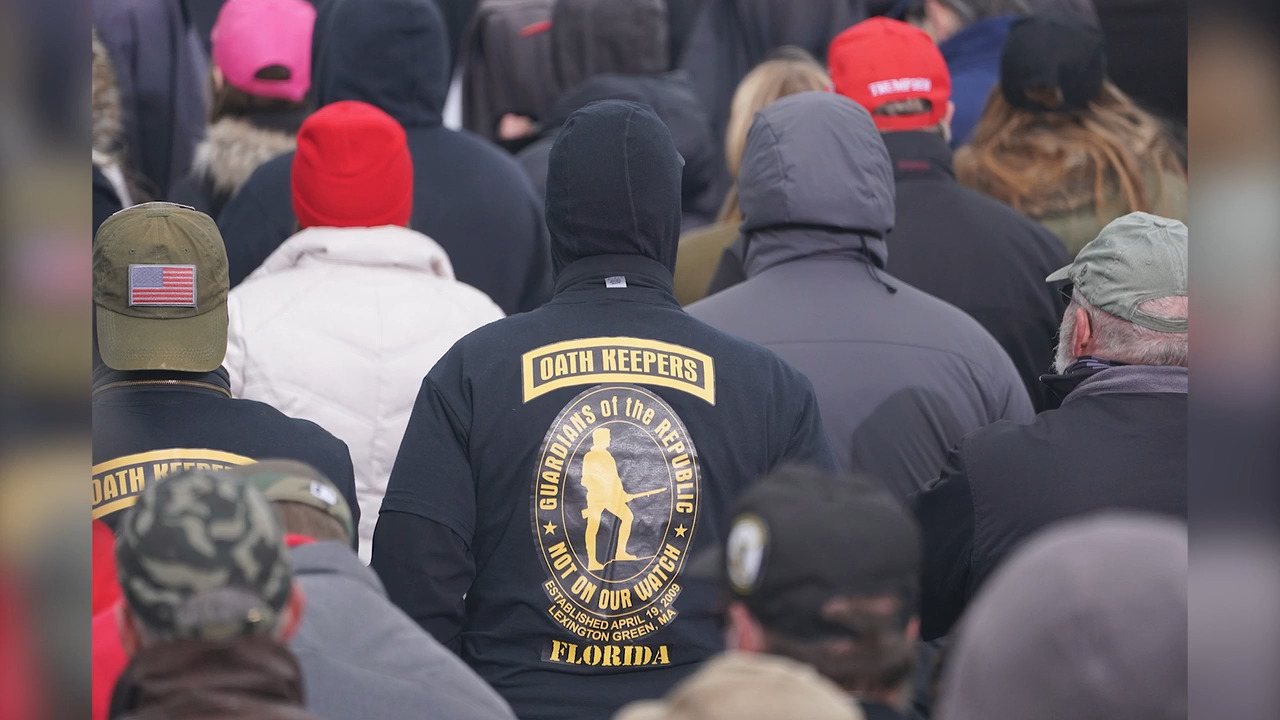
From Oath Keepers to Proud Boys to neo-Nazis: Florida fringe groups are asserting themselves
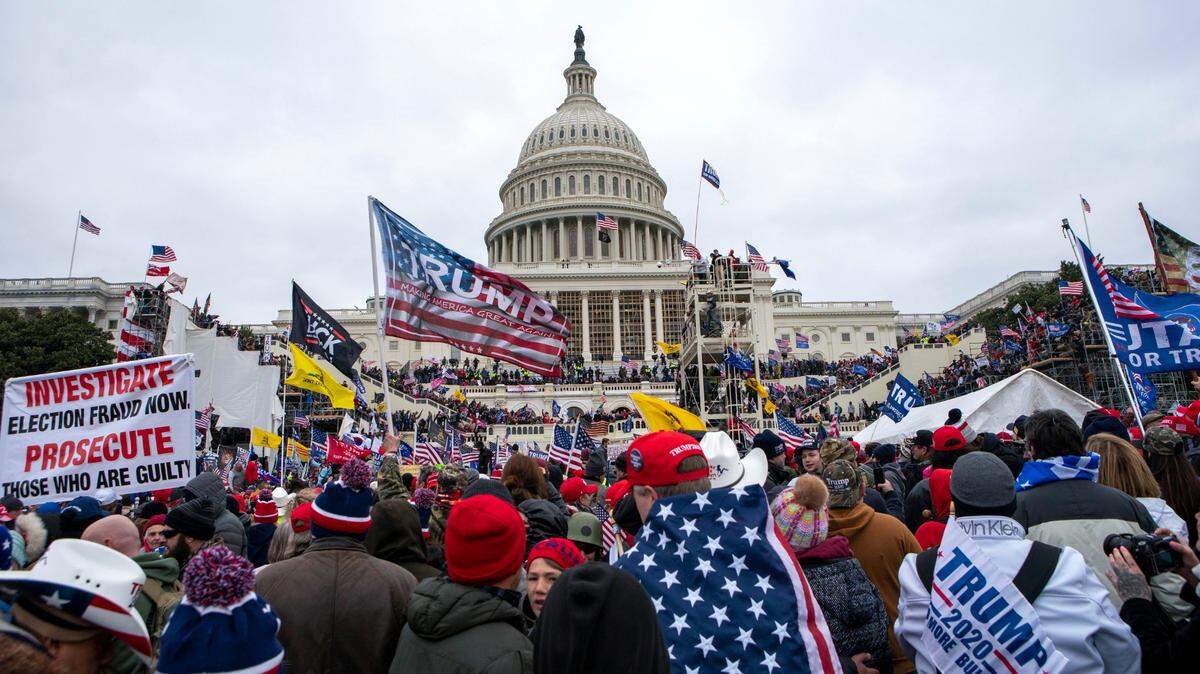
Rioters who stormed the U.S. Capitol on Jan. 6, 2021, hoping to thwart certification of the 2020 presidential election, came from all over the country. But no state has more residents facing federal charges for their conduct that day than Florida.
Florida is the nation’s third-most-populous state, so it would figure to be home to a significant number of those arrested.
But Florida’s influence goes beyond raw numbers. Some of the most prominent figures in the far-right so-called “patriot movement” live in Florida, making the state not just fertile ground for recruitment but a national stage for extremists with ambitions beyond school boards and statehouses.
Several Floridians operate at the nexus between national far-right organizations and former President Donald Trump’s orbit. Among them: Michael Flynn, the former Trump national security advisor who has flirted with the QAnon conspiracy movement; Enríque Tarrio, head of the Proud Boys and former Florida state director of Latinos for Trump; and Roger Stone, a longtime Trump confidante who has associated with both Proud Boys and Oath Keepers.
Proud Boys and Oath Keepers have both sought to move into mainstream politics, embedding themselves in the fringe of the Republican Party. Members of both groups have mounted abortive campaigns for Congress under the GOP banner, leaving some unsure whether to ignore or denounce them.
An ex-Oath Keeper has served as a city commissioner in Deltona, a city between Daytona and Orlando. The NAACP sought unsuccessfully to have him recalled.
“What’s really interesting about Florida is that, while there are these local groups, Florida also has a number of national organizations on the scene in the militia movement, and national leaders that are based in Florida that have wide reach,” said Rachel Carroll Rivas, senior research analyst with the Intelligence Project at the Southern Poverty Law Center.
“It’s a phenomenon that we have noticed at the Southern Poverty Law Center and that we’ve been watching for a while — it is one of the places of pocket activity and has those dual draws, of local activity and of leaders on the national scene,” Carroll Rivas said. “Those national players can speak to audiences around the country — they choose to be based in Florida, but they’re also influenced by the politics of Florida and influence Florida politics. And in that way, they actually export Florida culture across the country.”
Susan MacManus, a distinguished professor emerita at the University of South Florida, noted that more people have moved to Florida in recent years than to any other state, contributing to its diversity across the political spectrum.
But Florida’s status as a political battleground and home to national leaders of the far-right movement has energized extremist groups that see the federal government — not local officials — as their primary threat.
“It’s always been there, it’s just that it’s been easier to activate people — and the anger against Washington has intensified,” said MacManus. “For people who really don’t follow politics 24/7, their idea of government is not Tallahassee or their local government. It’s Washington. And they look there and really don’t see much that’s been helpful in the plight of their lives.”
Groups tracking such networks say that extremists in Florida proved better organized than those in other states leading up to Jan. 6.
“Florida does at present have this dubious distinction of leading the way in Jan. 6 cases,” said Jon Lewis, a research fellow at George Washington University’s Program on Extremism.
In Lewis’ database, 79 out of a total 734 federal Jan. 6 cases involve Florida residents. Based on population, that means Floridians are over-represented among the Capitol rioters arrested thus far. But so are Pennsylvania, Washington, D.C., and several small states.
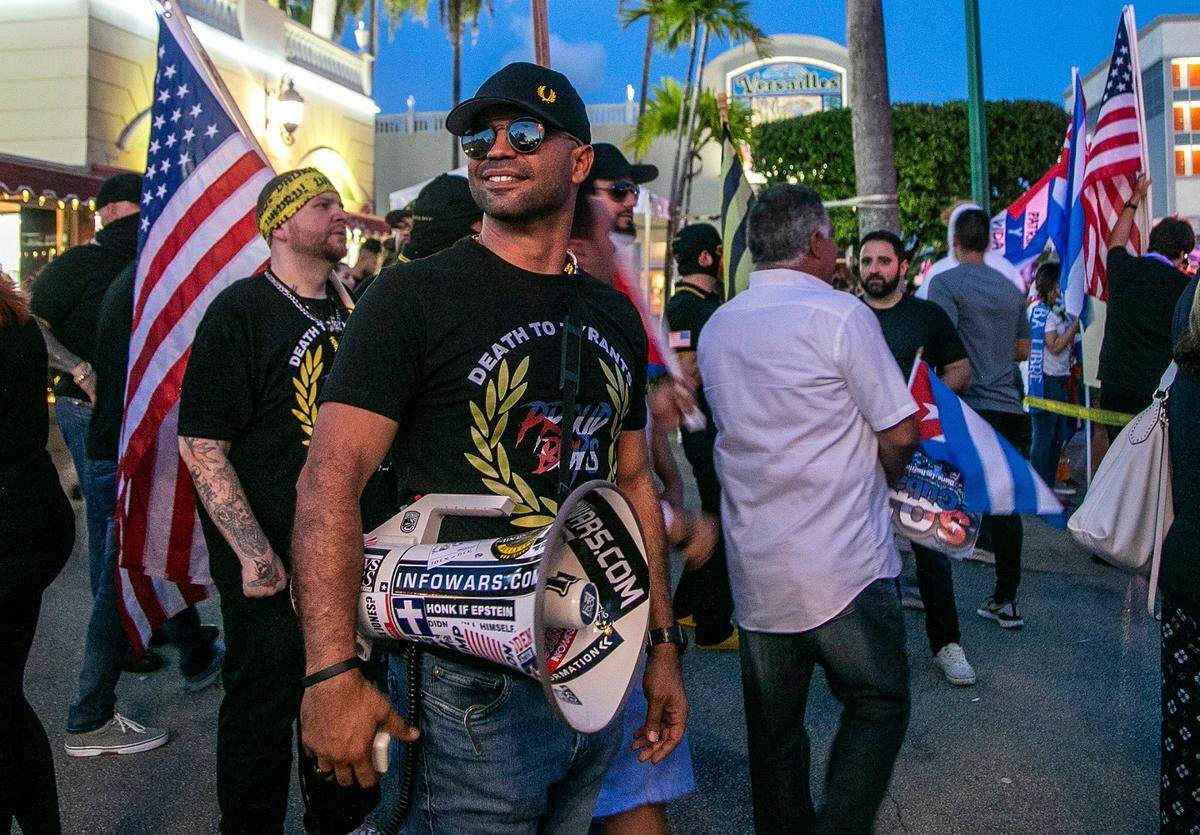
The state now has 68 SPLC-classified hate groups — second-most in the nation after California. — according to the organization’s database.
Deana Rohlinger, professor of sociology and associate dean for faculty development at Florida State University, said she has tracked Second Amendment-focused groups that have operated in Florida for decades, seeing some morph over time into more extreme networks.
“We’ve had in Florida militia groups for quite some time, and groups can broaden and change their ideologies over time and become more encompassing,” Rohlinger said. “They’ve provided a foundation for other groups to tap into and develop.”
In today’s polarized climate, what constitutes a hate group can depend on who is doing the analysis, with some taking sharp issue with SPLC’s definitions, which are broad and some say politically tinged.
While the SPLC and many others consider the Proud Boys a hate group, a long-shot Republican candidate for Congress in the Tampa Bay area, Christine Quinn, considers them an ally and has invited Tarrio, the Proud Boys leader, to share the stage with her at an event this weekend.
One group that normally draws condemnation from across the spectrum is neo-Nazis. A bunch of them recently made waves in Florida.
On a recent Sunday outside Orlando, a small group of neo-Nazis held a rally, generating more publicity than they could have imagined. Asked to comment on the group, Gov. Ron DeSantis’ spokeswoman, Christina Pushaw, suggested they might be Democrats pretending to be neo-Nazis.
Critics pounced on her tweet, which she later deleted. GOP Sens. Rick Scott and Marco Rubio and several state-level Republican leaders all issued strong denunciations of the neo-Nazis. Pushaw’s boss DeSantis, asked about the group by reporters, went on the attack, accusing Democrats of trying to “smear” him and vowing he would “not play their game.” (He dismissed the neo-Nazis as “some jackasses.”)
In March of last year, the intelligence community issued an assessment that racially or ethnically motivated violent extremists and militia violent extremists present the most lethal terrorist threats to the homeland today, with those motivated by race and ethnicity “most likely to conduct mass-casualty attacks against civilians.“
In September, FBI Director Christopher Wray said that the bureau had nearly tripled its load of domestic terrorism cases in just two years and was forced to increase the number of agents working on the cases by 260%.
The neo-Nazis’ emergence in Florida drew the attention of senior officials at the Department of Homeland Security, which in recent days issued a new warning that threats from domestic violent extremists have grown online and become increasingly specific.
Days after the latest demonstration, Bethune-Cookman University was the target of a bomb threat, one of a string of threats against historically Black campuses around the country.
Daytona Beach Police Chief Jakari Young, in a press conference, said he suspected a neo-Nazi group known as the “Atomwaffen.”
The FBI is investigating.
“There are certainly groups and individuals that are extremists, and part of extremist organizations,” Rohlinger said. “But there’s this larger pool of people that are increasingly engaging and adopting extremist ideas, and not identifying them as such.
“We can’t just disentangle a group,” Rohlinger added. “We can’t just point at a group anymore.”
This story was originally published February 13, 2022 at 6:30 AM.