The Florida COVID-19 data said one thing while Gov. DeSantis sometimes said another
READ MORE
A Numbers Game
The Miami Herald analyzed both public and non-public data in order to illustrate the spread of the novel coronavirus in Florida, examine reopening benchmarks and look at what comes next.
Expand All
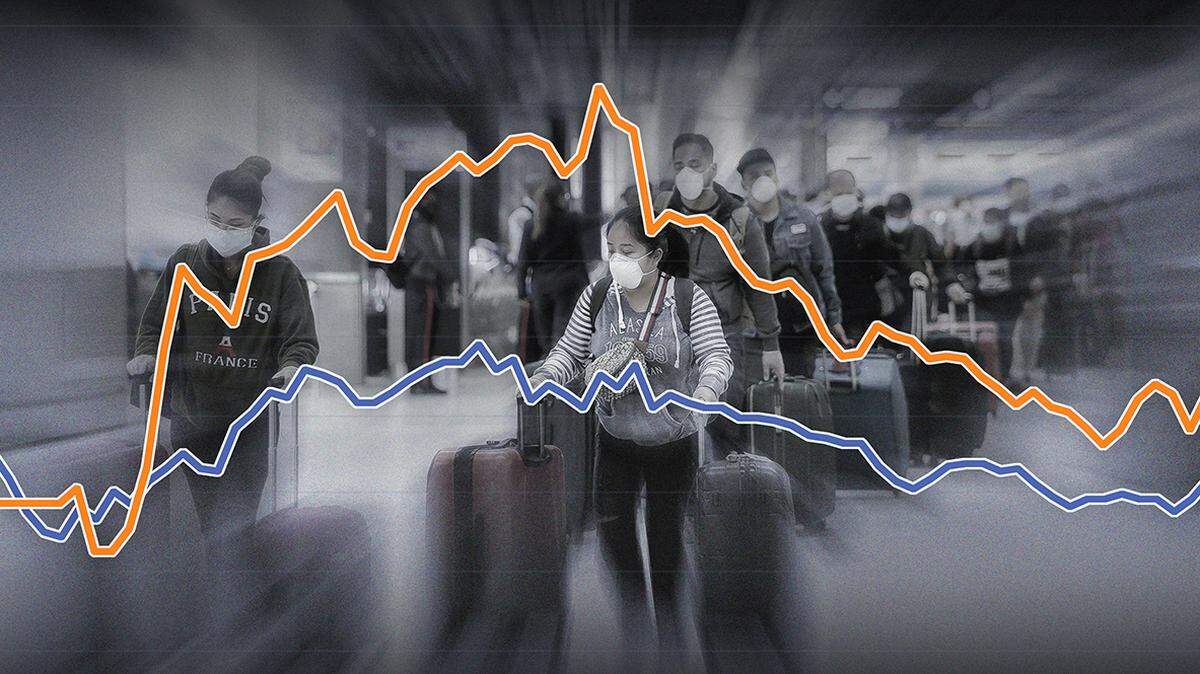
Floridians flattened the COVID curve. Then, amid upbeat talk, the numbers began to rise
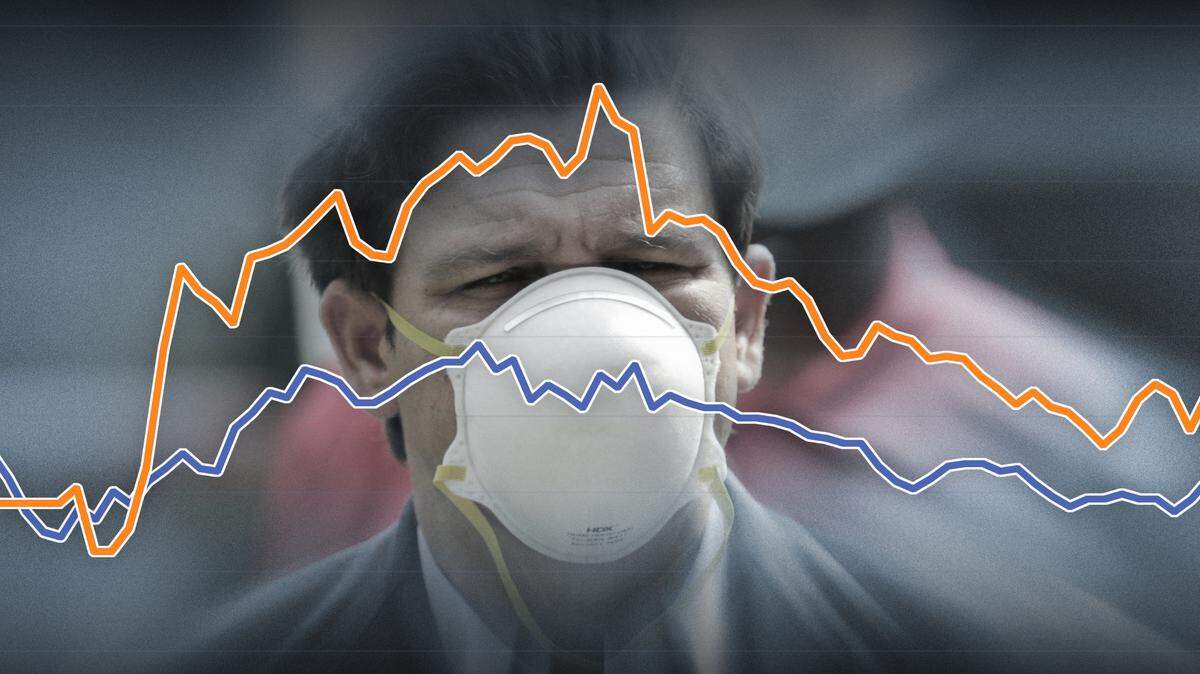
The Florida COVID-19 data said one thing while Gov. DeSantis sometimes said another
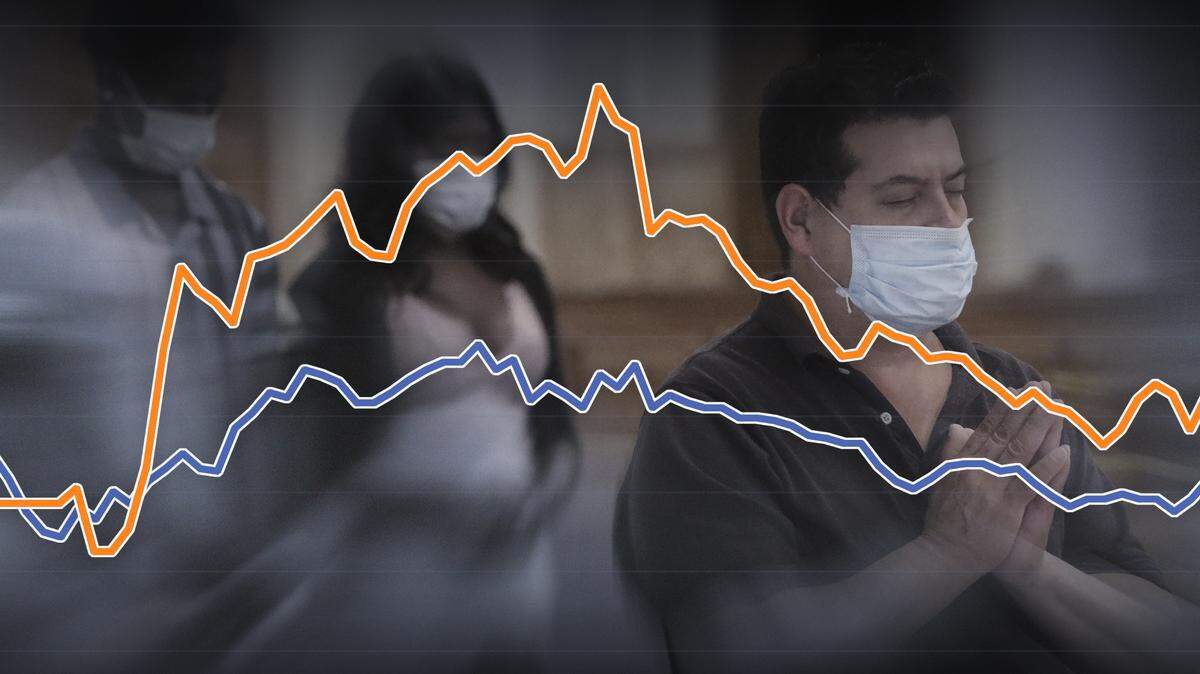
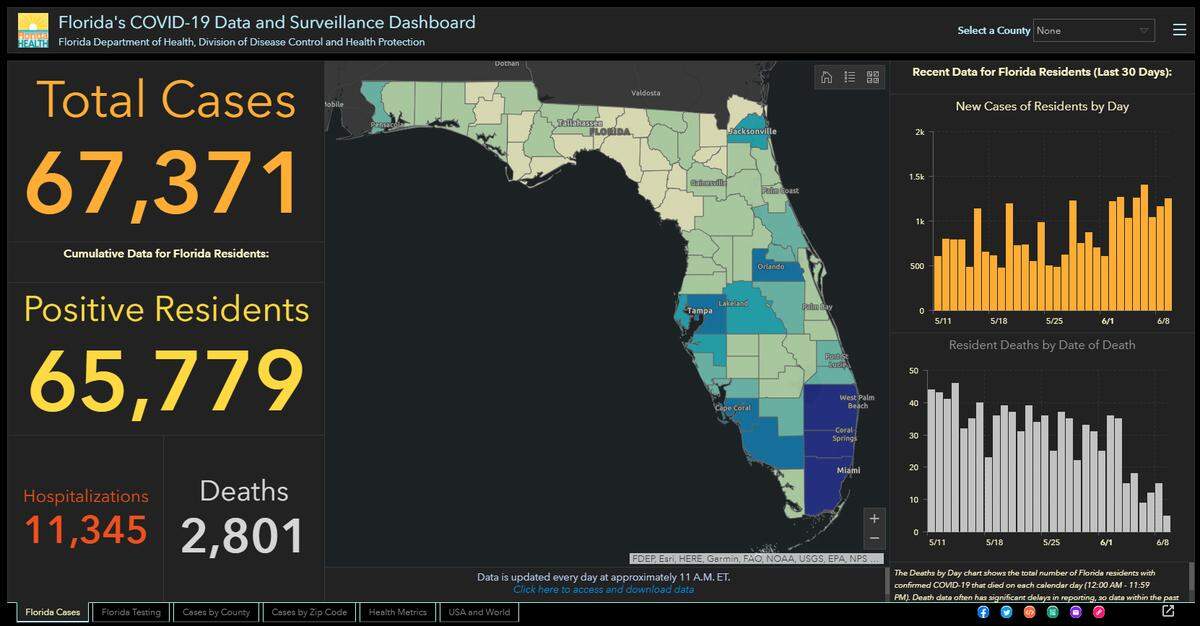
Reluctantly, under pressure, Florida disclosed COVID-19 data. What the numbers tell us
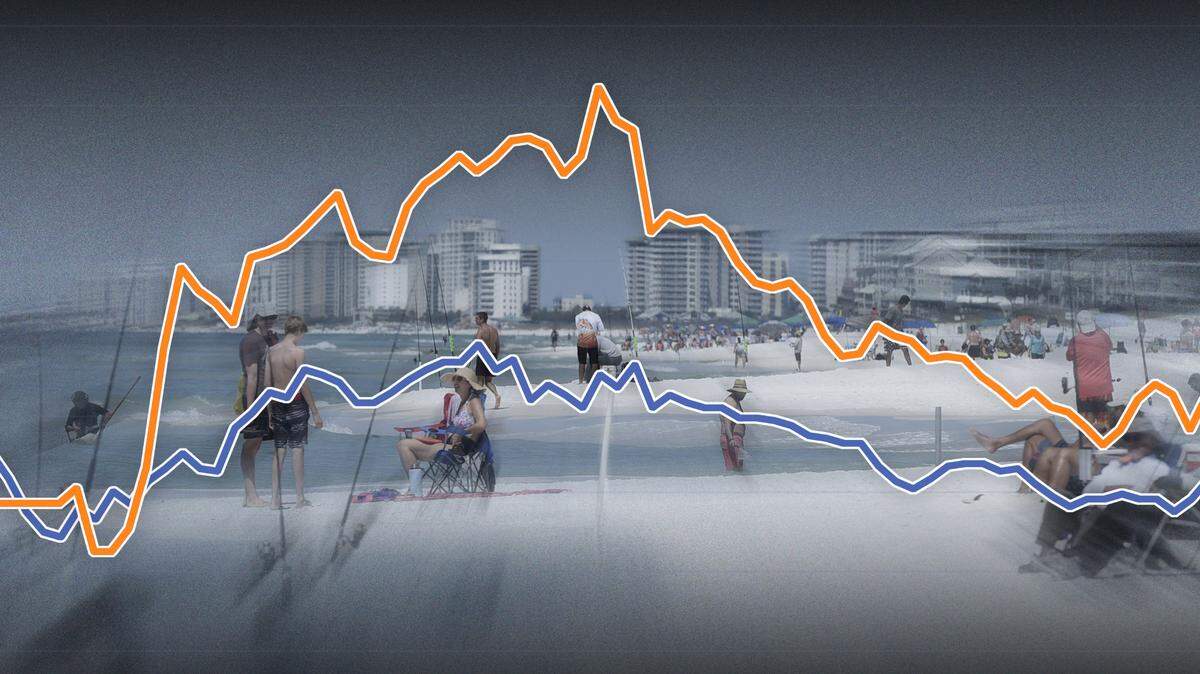
‘Leading indicators of a resurgence,’ COVID-19 numbers trending up since reopening
When Gov. Ron DeSantis announced that most of the state would reopen for business on May 4, he cited his administration’s “data-driven strategy” and success at achieving “critical benchmarks in flattening the curve” to contain COVID-19.
But a review of the data the governor was using shows his public pronouncements were often in conflict with real-time facts. He either wasn’t aware the data showed that community spread, regional outbreaks and death tolls were worse than he was telling Floridians, or he selectively focused on outdated statistics to make his case.
A glaring example came on April 29, when the governor brought a slideshow to a news conference to announce that all counties but three in South Florida would lift stay-home orders for many nonessential businesses.
The state had satisfied the “gating criteria,’’ the benchmarks established by the White House Coronavirus Task Force and the Centers for Disease Control and Prevention, to begin the phased reopening of the state, DeSantis said.
“The curve was flattened,’’ he said. “The goal has been satisfied” and “we’ve done much better than everybody said we would do.’’
The curve of new cases had indeed flattened. Both new cases and the percentage of people testing positive for the disease — the “positivity rate” — had been in decline for much of April. But the data suggest that by the time DeSantis announced reopening, those trends were showing signs of reversing.
At the time the governor spoke, the state, excluding South Florida, was on the third day of a four-day rise in the positivity rate, according to confidential Department of Health data obtained exclusively and analyzed by the Miami Herald. New cases were also showing an uptick around that time.
Those increases could have made parts of the state ineligible for reopening for at least 10 more days, depending how the state applied the criteria set by the CDC.
To follow the White House Guidance, a region had to show either a two-week downward trajectory in new cases or in the positivity rate. Within that period, new cases could not increase for more than four consecutive days, and positivity rates for no more than two to three days.
Additionally, in the two-week period before reopening, new cases trended slightly upward for the first time after weeks of decline, the Herald analysis showed. That trend, along with the uptick in positivity, rendered the governor’s claim of a “data-driven strategy” for reopening tenuous at best.
The state has never released the specific data and criteria it used to reopen, despite Miami Herald inquiries.
The Herald analysis was based conceptually on the CDC guidelines, but should not be considered a perfect replica. (Read our methodology.) The Herald’s analysis would not have been possible had it solely relied on the data published by the Department of Health on either its dashboard, a broad collection of numbers, graphics and trends, or the state’s case line data portal, with detailed information, minus personal identification, on every coronavirus case in the state.
DOH’s public data are incomplete, sometimes changed without explanation, and have had information removed following questions from reporters. Instead, the Herald obtained three internal data sets that allow a never-before-seen look at information the state has not released publicly. The data sets include information on all COVID-19 tests performed in Florida — negative and positive.
Addressing the Herald’s questions about the underlying data, Department of Health spokesman Alberto Moscoso responded not with answers but by sending previously published charts.
“At the close of April 2020, the state of Florida has achieved several critical benchmarks outlined by the White House, relating to syndromic surveillance, epidemiology and outbreak decline, and healthcare capability indicating successful management of the COVID-19 pandemic,’’ he wrote.
Excluding South Florida, the decline in new cases had stopped in late April, roughly two weeks after the governor began talking about reopening the state. Positivity also showed sustained increase. Cellphone mobility data provided by Descartes Labs show that Floridians, who had largely stayed at home for a month, started moving around again more by late April.
Last week, DeSantis continued to loosen social distancing rules and announced the 64 counties excluding South Florida had reached the next stage and could now move to Phase 2 reopening. Starting Friday, June 5, groups of up to 50 people were allowed to gather and bars and nightclubs could resume operations.
As of the day of that announcement, June 3, new cases in the state had consistently been trending up since mid-May, the Herald’s analysis of real-time data found. The trends could not be attributed solely to increases in testing, which had been inconsistent and sometimes declining during that period.
As DeSantis made the Phase 2 announcement at Universal Studios in Orlando, he again pointed to charts and graphs that showed the virus slowing in Florida. But, as when he announced Phase 1, his office has refused to make public the data he used to prepare the estimates and he has not disclosed the criteria used to make his decision.
Trump allegiance
For DeSantis, the metrics aren’t just about public health, they are also about politics in a state that’s pivotal for President Donald Trump’s reelection.
The day before DeSantis said he was lifting his stay-home order for nonessential businesses on April 29, the governor went to the White House for what was billed as an impromptu news conference with the president. He brought with him his posters and charts.
“We’re going to approach it in a very measured, thoughtful and data-driven way,’’ DeSantis told the president as reporters and television cameras recorded the scene.
“And look, over the last two weeks, we’ve seen a consistent decrease, an average decrease in the positivity rate the last four or five days,’’ DeSantis continued, as the president nodded.
But that’s not what the numbers said.
Under the CDC’s nonbinding guidelines, there should be a “downward trajectory” over 14 days in the percentage of all people tested for the virus who test positive. The other measure used by the CDC is “a downward trajectory of documented cases within a 14-day period.”
Neither the CDC nor the White House guidelines provide a definition for what qualifies as a “downward trajectory.”
If DeSantis had any misgivings about the new numbers, he didn’t disclose them. Was it possible he wasn’t aware of the shift in data? The governor’s communications team has not responded to multiple requests from the Miami Herald for a response.
Prior to meeting the president, DeSantis had embarked on a coordinated campaign to reopen the state that began with convening a task force of business executives and holding news conferences with several hospital officials. The hospital officials underscored how hospitals had been able to accommodate the surge in COVID-19 cases.
The task force, which included no healthcare professionals, expected to meet for a final sign-off of the reopening plan. Instead, the plan was drafted by the governor’s office and the task force never reconvened. Public health experts were warning the governor to wait, suggesting that a premature opening would prolong the economic pain.
During the crucial months following the onset of the pandemic in Florida, DeSantis emerged as the go-to governor for the president. When Trump needed an example for how a big state was ready to resume business to restart the faltering economy, he invited DeSantis to the White House to demonstrate how Florida had “flattened the curve.”
DeSantis has said he favored targeted mitigation — such as limiting movements in areas with the worst outbreaks, rather than applying uniform restrictions statewide — and credits that with helping Florida businesses while avoiding becoming the next New York or New Jersey.
For DeSantis, close alignment with the president and his messaging has been a successful strategy ever since Trump endorsed him over his rivals in the 2018 Republican primary, when the former congressman aired a television ad with his toddler son using blocks to “build a wall.”
DeSantis approached his handling of the coronavirus like a campaign. He crisscrossed the state and conducted news conferences with data charts and graphics, delivering details about mobile testing units, attempts to acquire personal protective equipment and the state’s effort to protect vulnerable elderly in long-term care homes. It was a message that said: “We got this,’’ more than one that said: “Beware.”
The governor’s approach mirrored the president’s.
When the president was rejecting stay-home orders on March 23, DeSantis called them a “blunt instrument” and said “you simply cannot lock down our society with no end in sight.” By that point, cellphone data showed that most of the public didn’t need the governor to guide their actions as people were already moving around 70% less than normal.
Just as Trump deferred to governors the decision of whether to issue and lift closure orders, DeSantis deferred to local leaders. In Miami-Dade County, which had some of the highest numbers in the state, and other hard-hit areas, officials shut down eat-in dining and bars and closed beaches weeks before the governor stepped in.
While governors in other states were issuing stay-home orders, DeSantis endured sharp criticism as he waited for direction from the White House.
The governor spent little time talking about prevention or the value of social distancing, and when it came to mask wearing to prevent the aerosol transmission of the virus, he was never an advocate.
DeSantis, like Trump, rarely wears a mask — except in Miami, where it has been required. Photographers caught him incorrectly strapping on an N95 mask one time and another time wearing only one glove.
“If you put the mask on, you’re more likely to be fiddling around your face, and actually you may even be more likely to transmit the virus if you’re in contact with it,” DeSantis told reporters in February. “So those really need to be used for healthcare professionals, who are treating patients who may or may not have this illness but who may be susceptible to it.”
Valid data a casualty
With White House approval, the governor set the reopening date for May 4, despite the worrying trends in the data.
At the time, the three counties of South Florida, which had the highest number of COVID-19 infections in the state and were excluded from reopening, seemed to meet the federal reopening criteria. Testing was increasing or even. New cases and positivity were down.
Those trends in South Florida wouldn’t last, however, reversing by mid-May.
Across the state, trends in new cases continued upward as the month of May concluded, the Herald analysis showed. So did positivity trends.
Johns Hopkins University explains that the rate at which people test positive for COVID-19 “is an important indicator because it can provide insights into whether a community is conducting enough testing to find cases. If a community’s positivity is high, it suggests that that community may largely be testing the sickest patients and possibly missing milder or asymptomatic cases. A lower positivity may indicate that a community is including in its testing patients with milder or no symptoms.”
The World Health Organization has said that in countries that have conducted extensive testing for COVID-19, the rate of positive cases should remain at 5% or lower for at least 14 days before loosening social distancing requirements.
Dr. Leonard Marcus, founding co-director of the National Preparedness Leadership Initiative, a joint program of the Harvard T.H. Chan School of Public Health and the Harvard Kennedy School, said that while “every crisis is political ... history will remember this case as the most politicized of crises.”
“There have been many casualties in this crisis, and one of the casualties has been confidence in the validity of the numbers that are being shared by the government,” Marcus said.
He said that effective leaders not only give people “evidence-based facts” and provide the role modeling for behavior they want people to follow, but the public has “got to believe that what you’re telling them is true, which even includes telling them that there’s some things that we don’t know.”
“If people have confidence in their leaders and in their institutions, and in the viability of those institutions, we will be resilient,’’ he said. “And if people lose that confidence, that’s going to make being resilient, or the economy resilient, or the country resilient, or our standing in the world, all the more difficult.”
South Florida numbers
When the governor moved to reopen the remaining three South Florida counties for Phase 1, the same pattern that occurred in the other 64 counties was happening: Counties seemed to meet — then ultimately missed — the benchmarks.
“Florida satisfies the gating criteria statewide, even including Miami, Palm Beach and Broward,’’ DeSantis declared at a news conference in Miami on May 6, a statement that advanced the announcement that the remaining three counties would return nonessential employees back to work.
The governor cited the decline in influenza-like illness, the decline in positive cases, and the rise in the number of tests as the rate of people testing positive declined.
At the time, he was right.
On May 6, DOH data showed that after testing increased across South Florida, Miami-Dade, Broward and Palm Beach counties met federal guidelines for reopening by showing a two-week decline in the rate of people testing positive for the infection.
But the good news didn’t last. The day before Palm Beach reopened on May 11, the county’s positivity rate was trending upward again. South Florida as a whole also saw a potentially disqualifying sustained increase in positivity rates over a four-day period, according to the Herald analysis of DOH testing data.
Blaming batches of data
The governor has repeatedly downplayed spikes in positive results in COVID-19 case numbers as “data dumps” from private testing labs that report a large number of results from a single address, such as a prison or nursing home, on one day.
However, while batches of more than 20 tests from a single location in a single day do sometimes affect trends, the May 10 rise in positivity was still present after batches of tests were removed, the Herald analysis showed.
The same trend was in evidence on May 2, when the state, excluding South Florida, saw an increase in positive cases even after the large batches of tests were removed, the Herald found.
And discounting the batches, the 64 counties that reopened on May 4 still did not appear to meet federal guidelines on positivity, according to a Herald analysis based on CDC reopening guidelines.
Manipulating data?
For months, questions have been raised about the reliability and transparency of the state’s data. In March, when the Miami Herald sought information from the Miami-Dade Medical Examiner’s Office about COVID-19 deaths, attorneys for the state health department moved to block the records from becoming public.
When the Tampa Bay Times found medical examiner data didn’t match the state’s records, the state ordered medical examiners not to release the numbers.
In February, one out of four people getting sick from the coronavirus had not traveled out of state and had no known contact with another person, according to documents and data obtained by the Miami Herald, yet the governor and Surgeon General Scott Rivkees repeatedly asserted there was no “community spread.”
Was the state divulging what it knew when it knew it?
That issue came into focus when Rebekah Jones, the former geographic information sciences manager for the Department of Health, alleged on May 15 that the deputy secretary of the Florida Department of Health directed her to “manipulate” data on the state’s COVID-19 digital dashboard to downplay the threat in rural counties leading up to the reopening of the state.
The state official, Shamarial Roberson, denied the claim. DeSantis accused Jones of insubordination and fired her.
“Our data is transparent,’’ DeSantis said on May 20, with Vice President Mike Pence standing silently beside him, in a denunciation of the news media that went viral on Twitter.
“In fact, [White House Coronavirus Task Force member] Dr. [Deborah] Birx has talked multiple times about how Florida has the absolute best data,’’ he said. “So any insinuating otherwise is just typical partisan narrative trying to be spun.”
Agriculture Commissioner Nikki Fried, the lone Democrat in statewide office, has been the most outspoken critic of the way the governor has handled his messaging to the public during the pandemic.
“The public listens to their elected officials and tries to ascertain what’s in their best interest by what the elected officials are saying on TV and in press conferences,’’ she said. “And there was a lot of misinformation. Instead of erring on the side of caution and saying ‘we don’t know enough so please be safe,’ we got ‘no big deal, this is going to go away soon.’ ”
The result, she said, was “public confusion, runs on toilet paper, and conflicting information.”
Mary Ellen Klas can be reached at meklas@miamiherald.com and @MaryEllenKlas
This story was originally published June 12, 2020 at 8:00 AM.