
Florida Puerto Ricans say Trump response to Hurricane Dorian won’t ease Maria memories
As the prospect of a major hurricane hitting the Florida coast looms, the political storm over Puerto Rico continues to churn, with hundreds of thousands of Puerto Ricans in Florida facing the prospect of turning to President Donald Trump’s administration for crucial assistance after Hurricane Dorian.
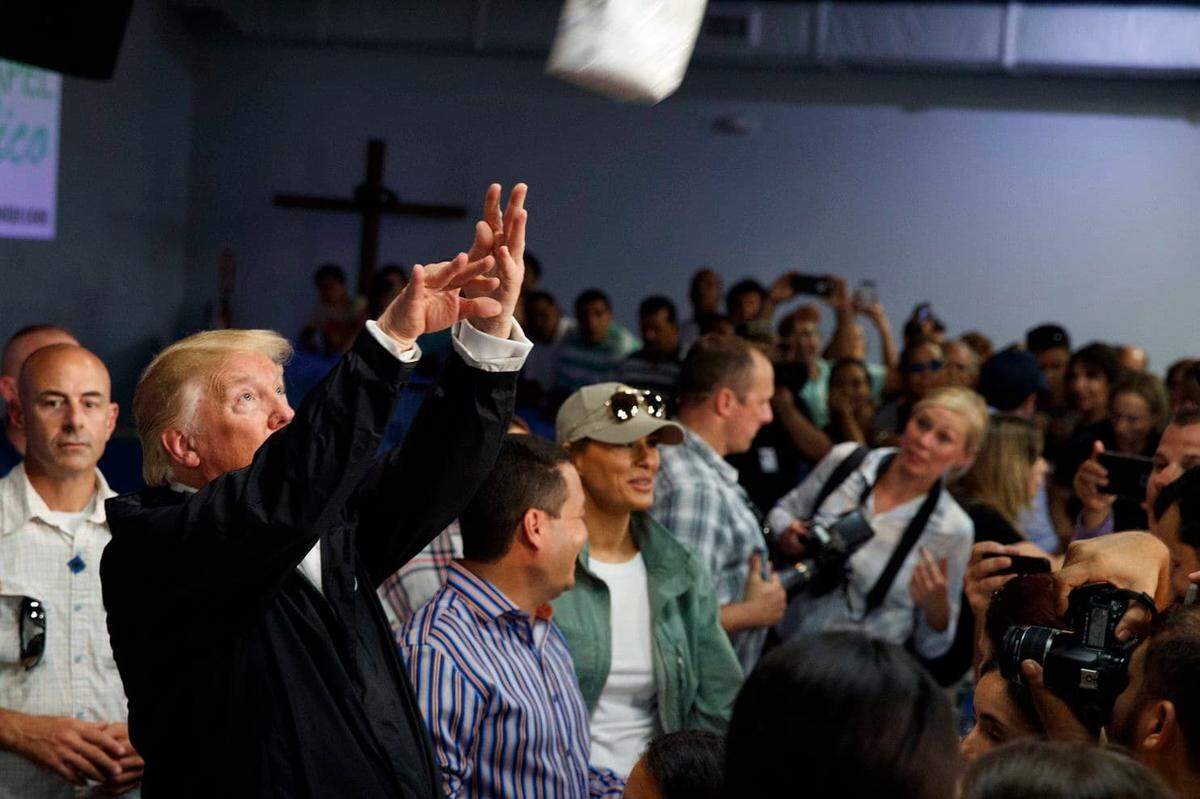
For some, it’s an unwelcome reminder of Trump’s highly criticized response two years ago to Hurricane Maria in Puerto Rico and the president’s attempts to dismiss the nearly 3,000-person death toll from the storm.
“If he shut his mouth and almost sounded humane, maybe Puerto Ricans would say, ‘Thank you for helping,’ ” said Natascha Otero-Santiago, a Puerto Rican activist living in Miami. “But there is no redemption here for Trump.”
Dorian, expected to become a powerful Category 4 hurricane by the time it nears Florida’s east coast, could affect more than 1 million Puerto Ricans living in Florida — a state Trump believes he must win in order to be reelected. Most of the diaspora live in Central and South Florida, and it remained possible late Friday that the storm could hit just about anywhere in the state.
Kayleigh McEnany, national press secretary for Trump’s reelection campaign, said criticisms of the administration’s response to Maria aren’t warranted.
“After Hurricane Maria hit Puerto Rico, President Trump delivered the largest [Federal Emergency Management Agency] disaster relief operation in history — the longest sustained air mission of food and water response, the largest disaster commodity distribution, and the largest sea-bridge operation bringing aid,” she said. ”President Trump has delivered for Puerto Rico, and the Puerto Rican community sees through the fake news narrative of the media.”
But even as Trump aggressively courts Florida’s Venezuelan and Cuban voters, he has continued to blast Puerto Rican leaders. Just this week, as Dorian approached Puerto Rico as a tropical storm, Trump repeated a wildly inaccurate claim that he’d provided $92 billion in storm assistance to Puerto Rico (about half that amount has been allocated). And then he suggested that Puerto Ricans had been ungrateful for FEMA’s help in 2017, and took a shot at “the incompetent Mayor of San Juan.”
Island transplants living in Florida say his continued antagonizing of their home community leaves little possibility for reconciliation.
“I don’t think Puerto Ricans are so easily going to forget,” said Otero-Santiago, whose 91-year-old mother still lives on the island.
Florida is home to approximately 1.2 million Puerto Ricans, the largest population on the mainland, according to Dr. Edwin Meléndez, director of the center for Puerto Rican studies at Hunter College in New York.
And he says about 175,000 Puerto Ricans left the island in the year after Hurricane Maria, with the majority settling in Florida. Another estimate, by the University of Florida, pegged the number of Hurricane Maria transplants at around 50,000.
Meanwhile, a poll released last summer by Florida International University showed that fewer than one in five Puerto Ricans in Florida held a good opinion about Trump, far below the support enjoyed by fellow Republicans Gov. Ron DeSantis and U.S. Sen. Rick Scott and a potential problem in a state where elections have a history of coming down to razor-thin margins.
An analysis of the 2018 midterm results suggests the Puerto Rican vote wasn’t as influential as some believed it would be following a temporary exodus from the hurricane-ravaged island. But Puerto Ricans have also proven to vote in higher numbers during presidential elections.
Trump has campaigned aggressively in the state more than a year out from the 2020 election. He’s recently made it clear that he prioritizes Florida’s storm recovery by holding a rally in the still-devastated Panhandle, which was hit by Hurricane Michael last year, and by promising this summer to grant 90% reimbursement for damage there.
“We’re going to be there for you,” Trump told DeSantis during a Wednesday night conversation, according to the Florida governor.
U.S. Rep. Darren Soto, a Puerto Rican Democrat representing Kissimmee who maintains he’s confident the state and federal government will be ready to respond, said Hurricane Maria transplants are still “shell shocked,” though they don’t seem to be panicking as Dorian grows in strength and threatens to menace Central Florida.
But Soto also thinks it’s unlikely Trump could make peace with Puerto Ricans at this point.
“The damage has already been done,” said Soto. “He had an opportunity with Dorian to unite the country and give confidence to folks on the island and the Puerto Rican diaspora community. Instead he doubled down on this wholly atrocious behavior of attacking Americans in Puerto Rico as they prepare for another natural disaster. He doesn’t do that with Florida, Texas or these other red states that he won. It’s so transparent and disturbing.”
For many Puerto Ricans now in Central Florida, preparations for Dorian have brought back bitter reminders of Maria’s wrath — and the beleaguered government response.
Rev. José Rodríguez, an Episcopal pastor at Iglesia Episcopal Jesús de Nazaret in Orlando who became an advocate for Maria evacuees searching for housing after that storm, said in an interview Thursday that his church was in the process of preparing a community center as a shelter for about 14 families, many of them Maria survivors, if Dorian strikes.
He said some Puerto Ricans felt reassured they would be better taken care of on the mainland — but that didn’t make them feel better about what happened after Maria.
“I called a lady today and said, ‘You have to get ready for the hurricane.’ And her response was, ‘Prepare for what? I’m here with the gringos. This is not like Puerto Rico where we were abandoned,’ ” Rodríguez said.
McEnany, the Trump campaign spokeswoman, called the FEMA response in Puerto Rico after Maria “unprecedented” in its scope and success.
A poll by FIU in June 2018, though, indicated that Puerto Ricans in Florida didn’t see it that way. Those who participated in the poll — the last public poll to identify support for Trump among Puerto Ricans in the state — gave Republican Sens. Rick Scott and Marco Rubio high favorability rankings, but 72 percent of respondents said they had a very bad or bad opinion of the president. Just 18 percent of respondents said they had a good or very good opinion of the president.
The numbers are more than a year old, but Trump has done little to try to change his standing with Puerto Ricans since it was conducted, said Jorge Duany, the director of Florida International University’s Cuban research institute and an expert on Puerto Rican politics.
On Friday, Puerto Rico’s largest newspaper, El Nuevo Dia, took the unusual step of running a blistering front page criticism — in English — of Trump’s exaggerated FEMA numbers.
“As far as I can tell, he’s been able to unite everyone against him in Puerto Rico,” said Duany.
For Trump’s reelection campaign, though, it matters less whether Puerto Ricans on the island are united against him if there’s more support — or at least less distaste — for him in Florida. Puerto Ricans on the island don’t vote in presidential general elections, but are U.S. citizens and can register to vote if they move to the mainland.
“We must give him credit for being consistent. He’s never once spoken well of Puerto Rico,” said Marcos Vilar, executive director of the progressive group Alianza for Progress. “He can’t win his reelection without winning Florida. ... He has to look good here.”
This story was originally published August 30, 2019 at 7:34 PM.