Nocturnal creature — with bright green patches — is new species in Vietnam. See it

In the forests of northern Vietnam, researchers on the hunt for frogs trekked through the dense leaves and trees under the cover of darkness .
As they approached fast-flowing streams cutting through the foliage, they saw small creatures sitting on the vegetation just above the water, the mossy rocks breaking up the current below them.
They were small frogs, with bodies just an inch and a half long, but they would turn out to be a significant discovery.
The frogs are a new species.
The animals were identified as part of the Amolops frog genus, or a group of species with similar physical characteristics and evolutionary lineage, according to a study published Oct. 22 in the peer-reviewed journal ZooKeys.
But it had unique features that established it as a species that hadn’t been recorded before.
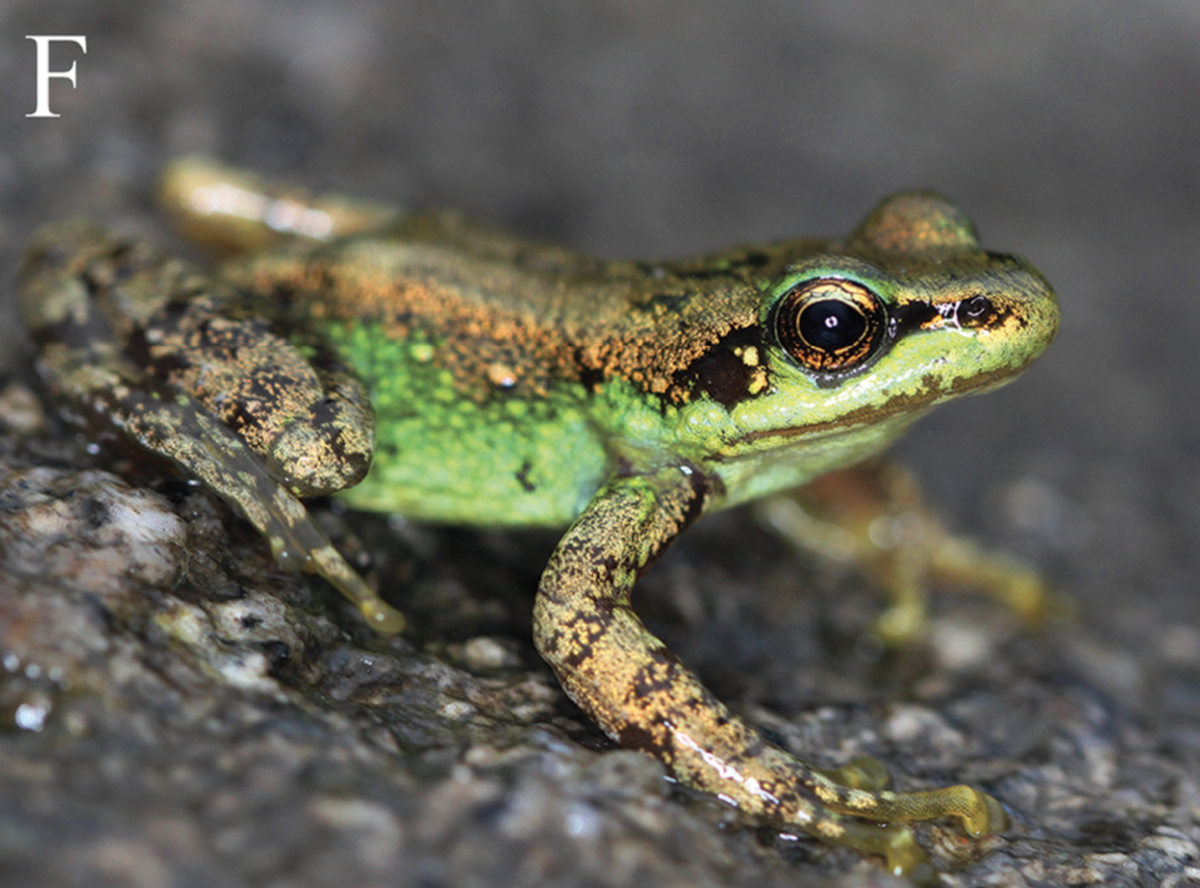
The frog’s head is longer than it is wide, and its snout is short, according to the study.
The front limbs are “robust” and the fingers end in wide discs, researchers said. The back limbs are “long” and the toes are webbed.
Most of the frog’s body is smooth, while the sides, throat, chest and stomach have some small bumps, according to the study.
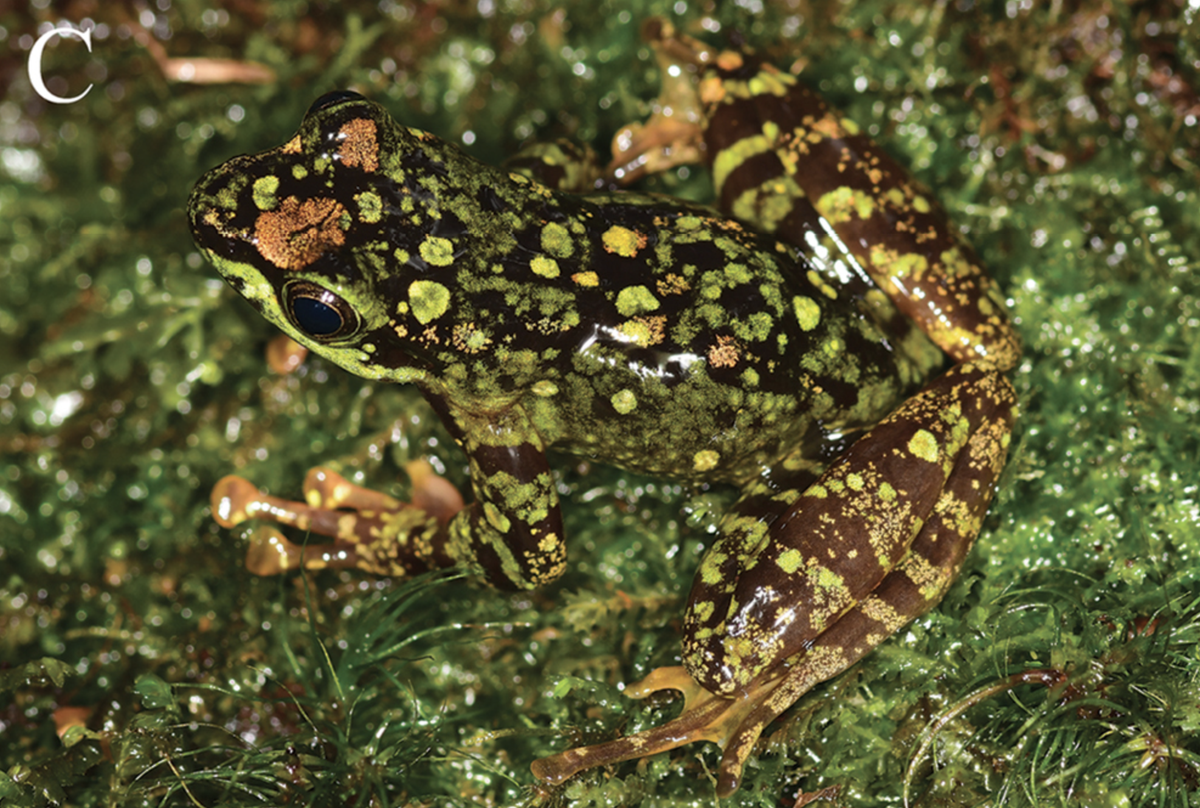
The coloration on the frog is mottled, with a green background and “dark brown spots” with “some large pale green markings,” researchers said. There are “irregular small black dots” on the surface of the head and the frog’s lips are a “pale green” color.
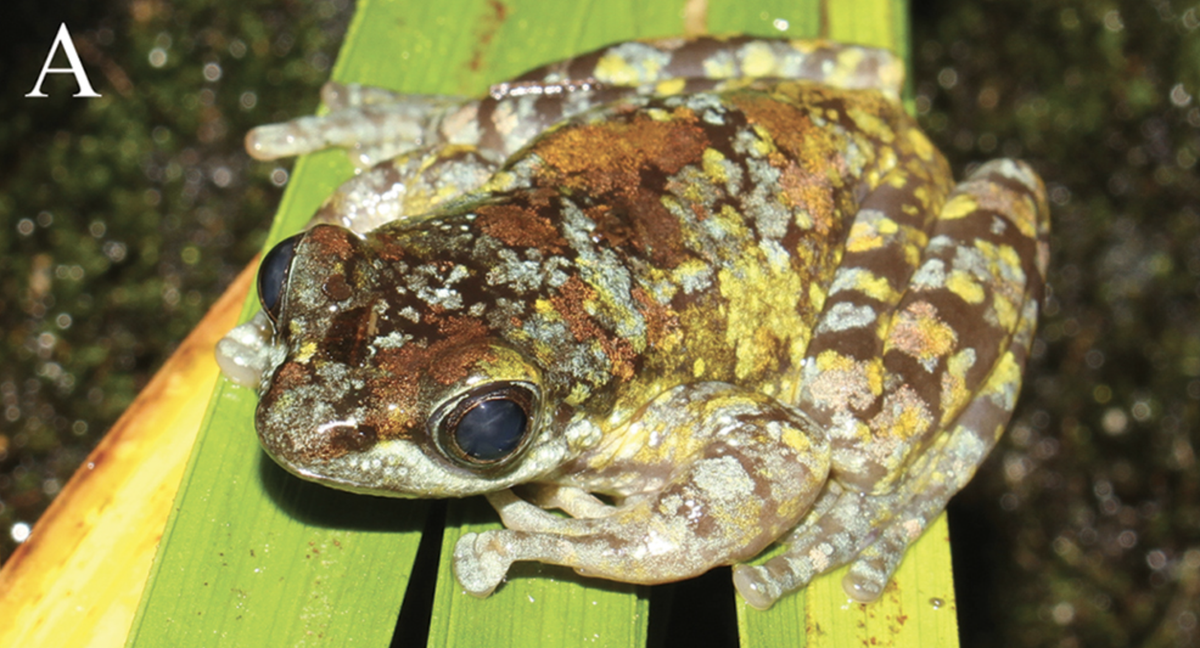
The frog’s flanks, or sides, are more clearly green and the frog’s throat, chest and belly are a “pale cream” color dotted with white.
While the main colors of the frogs are the same across specimens, there is a lot of variation between frogs of the new species.
Some frogs have “blotches of bluish grey” on their backs, while others are more “yellowish green and copper,” researchers said.
The new species was named Amolops cuongi, or Cuong’s torrent frog, after herpetologist Cuong The Pham, who has worked on the taxonomic account of frog species, according to the study.
Despite their recent discovery, Cuong’s torrent frog is already facing population threats.
The frogs were found in three areas, and each area has significant human influences, according to the study.
“The habitat of this species in all three localities is degraded, at elevations below (about 6,500 feet), forest is being degraded in riparian (next to water) habitat to establish cardamom plantations,” researchers said.
Around Mount Fansipan, there is a growing tourism industry, including a tourist camp that wasn’t far from where the frog was discovered.
There is trash and pollutants from the tourists and gravel has been mined from the area to make trekking routes for people, disturbing the places where females may have laid their eggs, researchers said.
“Given the relatively small range, number of locations and ongoing habitat loss and modification, this species qualifies for being assessed as Vulnerable in accordance with the IUCN Red List of Threatened Species,” according to the study.
The discovery sites are in northern Vietnam, just south of the border with China.
The research team includes Anh Van Pham, Chung Van Hoang, Benjamin Tapley, Luan Thanh Nguyen, Hanh Huu Nguyen, Toi Van La, Thomas Ziegler, Jodi J. L. Rowley, Truong Quang Nguyen and Minh Duc Le.