Forest creature — with ‘coppery’ arms — is new species in China orchid reserve
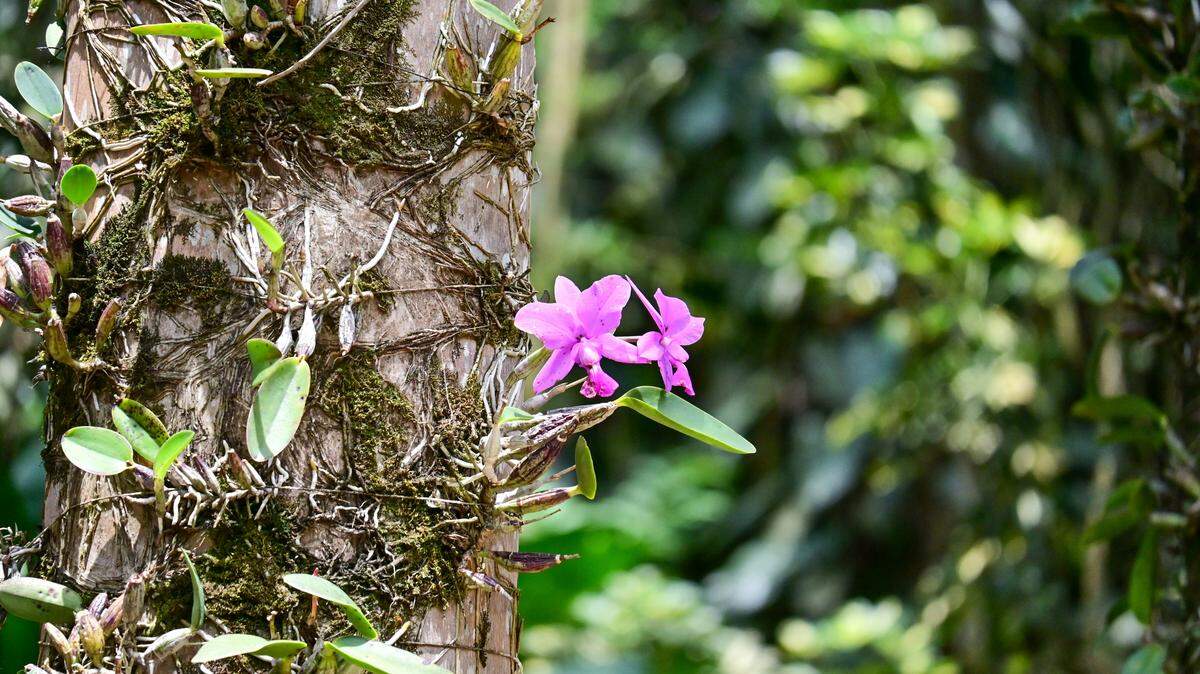
In the Yachang Orchid National Nature Reserve in Guangxi, China, walls of green are dotted with colorful flowers.
Countless orchids stick out from greenery and drape down from trees in the forest, and across 85 square miles at least 130 orchid species have been found.
But when a group of researchers entered the reserve in April, it wasn’t the orchids they were hoping to find.
Instead, they were looking for frogs.
“During recent field surveys in mountainous areas of northwestern Guangxi, we collected seven adult male and two adult female specimens of a Leptobrachella species,” researchers said in an Oct. 20 study published in the peer-reviewed journal Herpetozoa.
Leptobrachella are a group of leaf litter frogs that are “ forest dwellers,” and species in this group are spread out through China, Myanmar, northeastern India, Borneo and Natuna Island, according to the study.
When the research team took a closer look at the Leptobrachella frogs collected from the orchid reserve, they noticed physical differences between the frogs and other known species.
After analyzing the frogs’ DNA, it confirmed what they suspected — this was a new species.
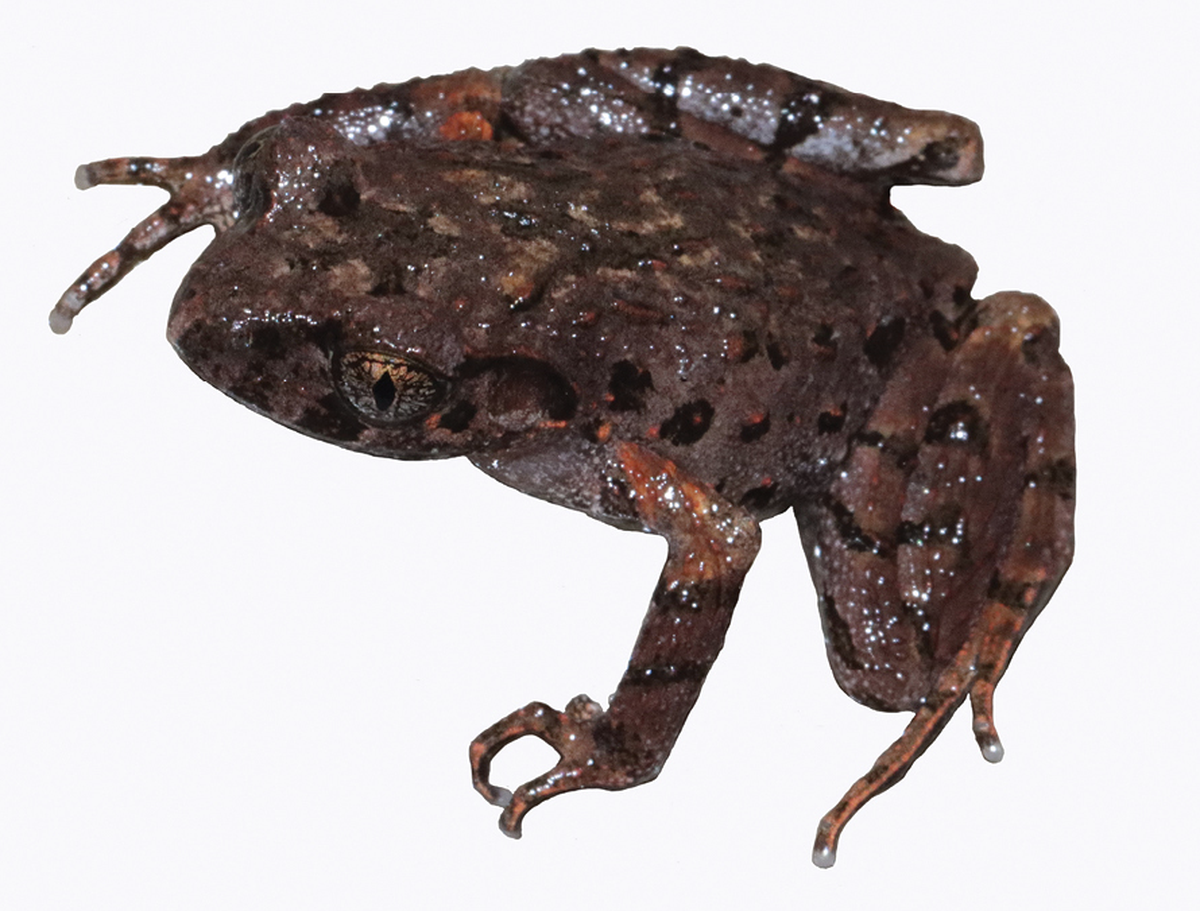
Leptobrachella yachangensis, or the Yachang leaf litter toad, was described as having a “small body size,” measuring just over an inch long from head to butt in males, according to the study.
The frog’s iris is bicolored, where the upper half appears “coppery orange” while the lower half is “grayish brown,” researchers said.
Their heads are longer than they are wide, with a “slightly protruding” snout ahead of where the eyes sit, according to the study.
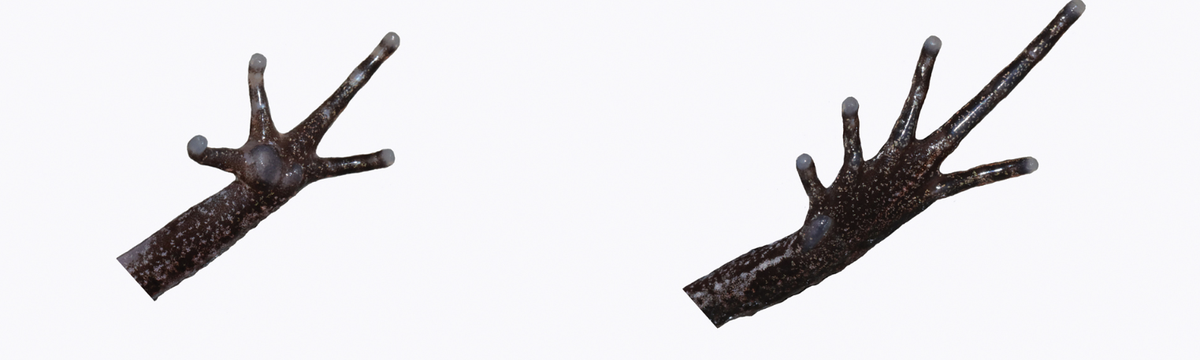
The Yachang leaf litter toad has rounded fingertips that are “slightly swollen,” and one finger is significantly longer than the others on both the hands and feet, photos show.
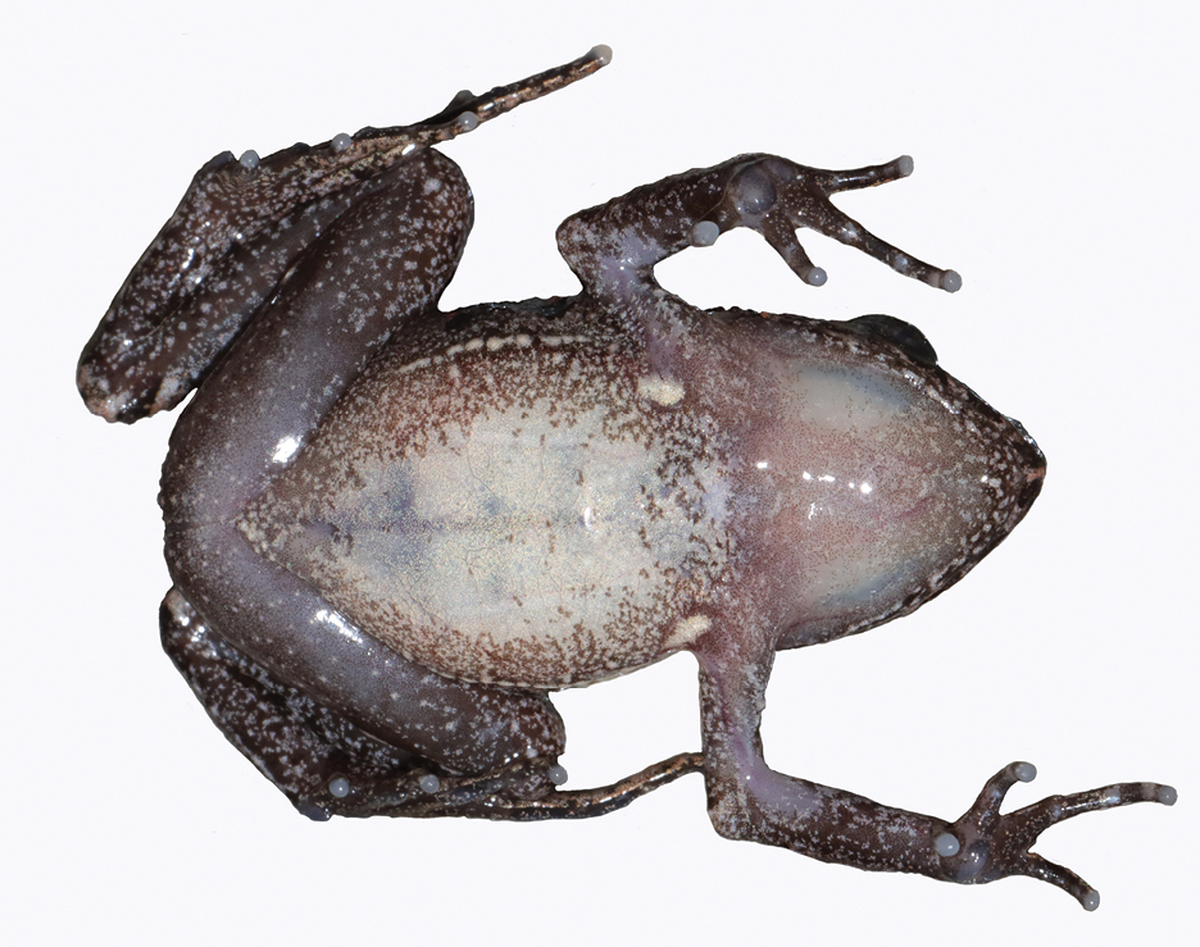
Most of the frog’s body is “grayish brown” with dark brown markings scattered on their backs, according to the study. The underside, however, is “creamy white” down the surface of the throat, chest and abdomen.
Above the elbows, the upper arms are “coppery orange, with dark markings and spots,” researchers said.
The frogs also have glands above the armpits and on their underside that stand out from their bodies as “coppery orange” and “grayish white,” according to the study.
The Yachang leaf litter toads were found in clear-water streams filled with rocks in the forest, surrounded by trees and karst formations, researchers said.
“Males were observed calling while perched in the rock crevices or on the leaves of dwarf shrubs near flowing seeps. The breeding season lasts from February to June according to our long-term observation,” the study said. “During the breeding season, a large number of vocalizing individuals can be observed in the streams.” (
Despite living in a protected reserve, the species still faces possible threats.
Just outside the reserve are “potential wind power projects” and development for eco-tourism that could disturb their habitat, researchers said. There are also artificial forests being planted as well as normal human pressures from pollution and habitat fragmentation. (
There is not enough known about the species to determine whether it is endangered, but given the significant risk amphibians around the world face, the species could be at risk. (
The Yachang Orchid National Nature Reserve is in Leye County, Guangxi, in south-central China.
The research team includes Zhong Huang, Zhao-Chi Zeng, Jian Wang, Hao-Tian Wang, Zhen-Hai Deng, Zhi-Wei Wang, Xiao-Wen Liao and Yun-Ming Mo.