Tree creatures from ‘little known’ species spotted in Bangladesh for first time
When searching through the forest for new and unique critters, sometimes the best place to look is up.
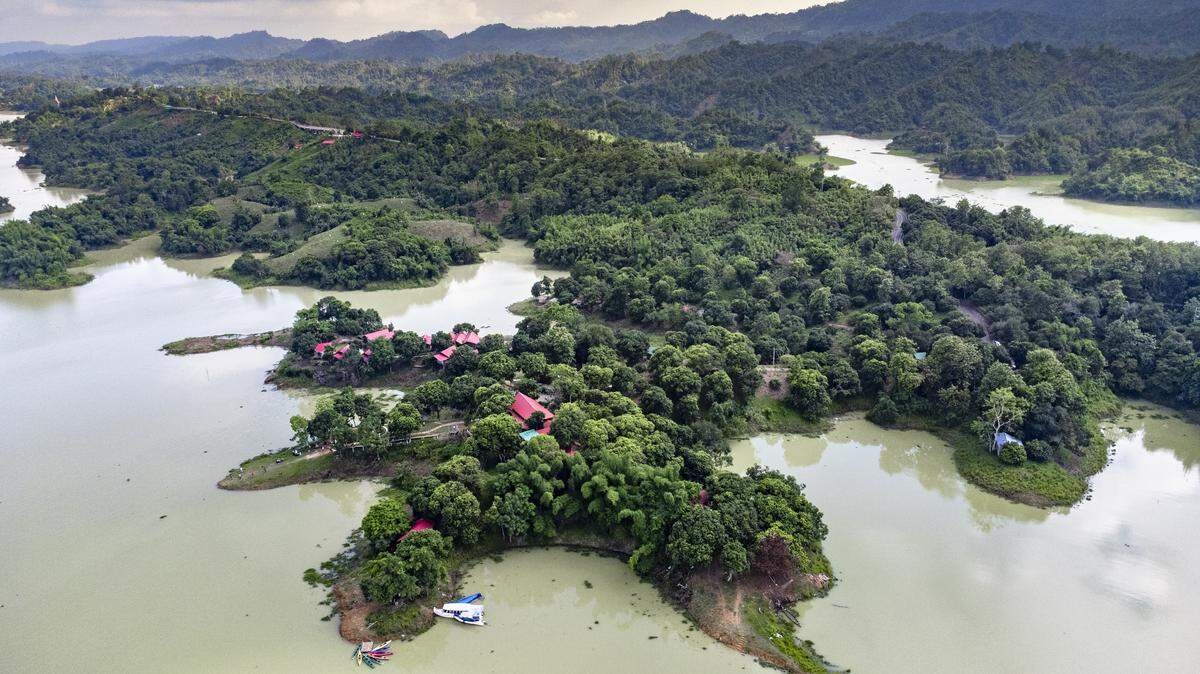
A group of researchers had their eyes on the trees as they trudged through Kaptai National Park and the Dudpukuria-Dhopachari Wildlife Sanctuary between November 2023 and October 2024, hoping to catch a glimpse of tree snakes.
Snakes are “one of the least studied” groups of animals in Bangladesh, according to a Sept. 26 study published in the peer-reviewed journal Check List, so when their eyes trained on creatures slithering along the branches, the researchers knew they were on to something.
Researchers found two species of snakes belonging to the genus Dendrelaphis, or bronze backs, according to the study.
The snakes belonging to this genus are “slender, fast-moving, and primarily arboreal snakes” that are non-venomous and rarely seen in Bangladesh, researchers said.
The new records marked the first time both “little known” species had ever been documented in the country.
Dendrelaphis cyanochloris was spotted in a mixed evergreen forest near a stream and with lots of leaf litter, according to the study.
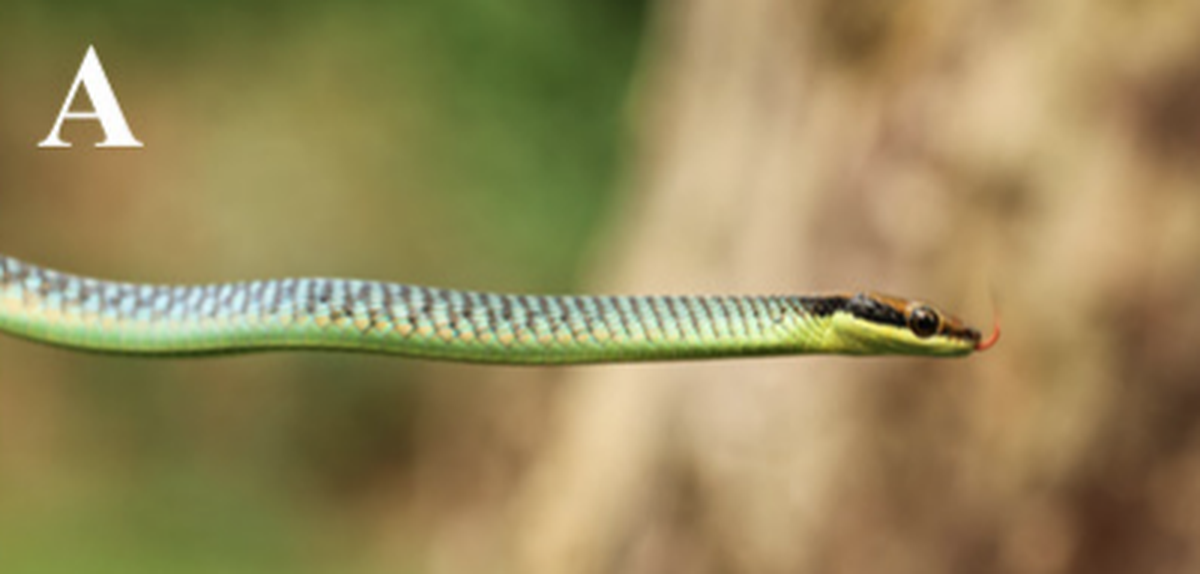
“The adult female specimen was found resting on a tiny branch approximately (12 feet) above the sandy stream,” researchers said. “Another female specimen from (the) same forest, (was) collected from natural forest habitat above (8.5 feet) the rocky stream on a tiny bamboo branch.”
The snakes are “slender” with a “large” head that is clearly distinct from its noodle-like body, according to the study.
The back scales are “olive-green”, yellow and bronze, and they have scales with black edges that form a “fish-net pattern,” researchers said. When the body of the snake expands and more of the scales are visible, blue appears between the scales.
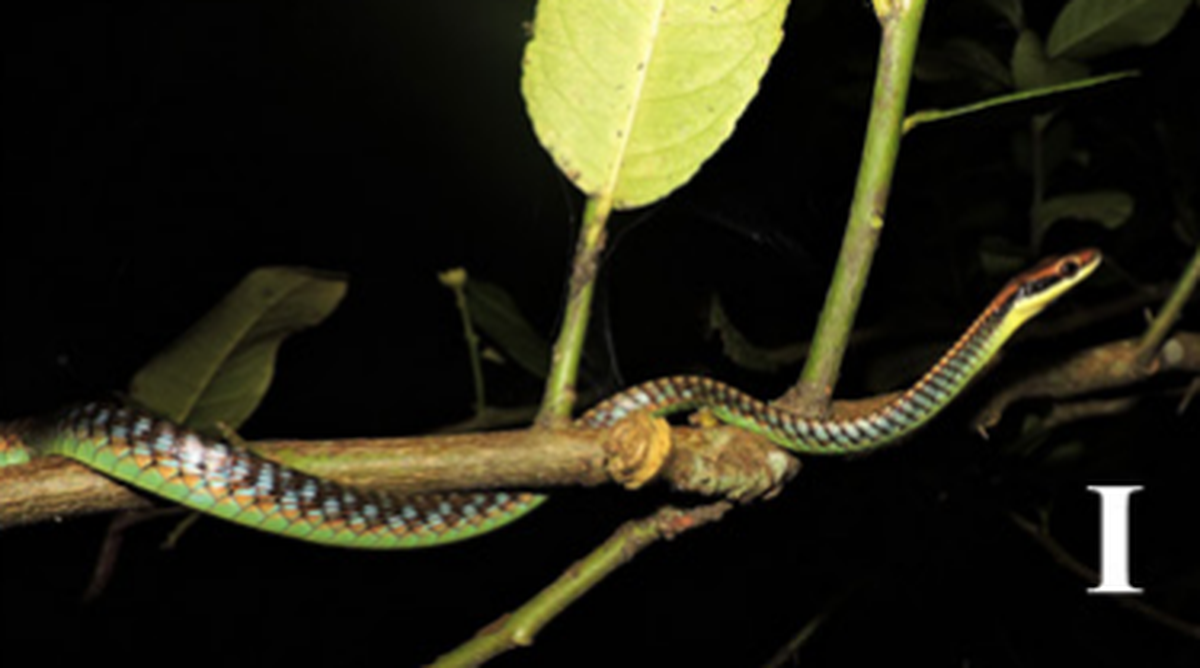
D. cyanochloris is considered “relatively rare” for the researchers to encounter, but they were spotted more than once during the search, according to the study.
The species is diurnal, meaning it moves around during the day, and arboreal, meaning it spends most of its life in trees, researchers said.
“Animals preferred sleeping on tiny branches positioned directly over streams, likely as an adaptive strategy to minimize risk of predation and take advantage of favorable conditions,” researchers said. “(D. cyanochloris) primarily feeds on small lizards and frogs and lay clutches of 3-5 elongate eggs in tree crevices. The sharply defined edges of scales on the belly and tail are notched, and these help it climb while leaping from branch to branch.”
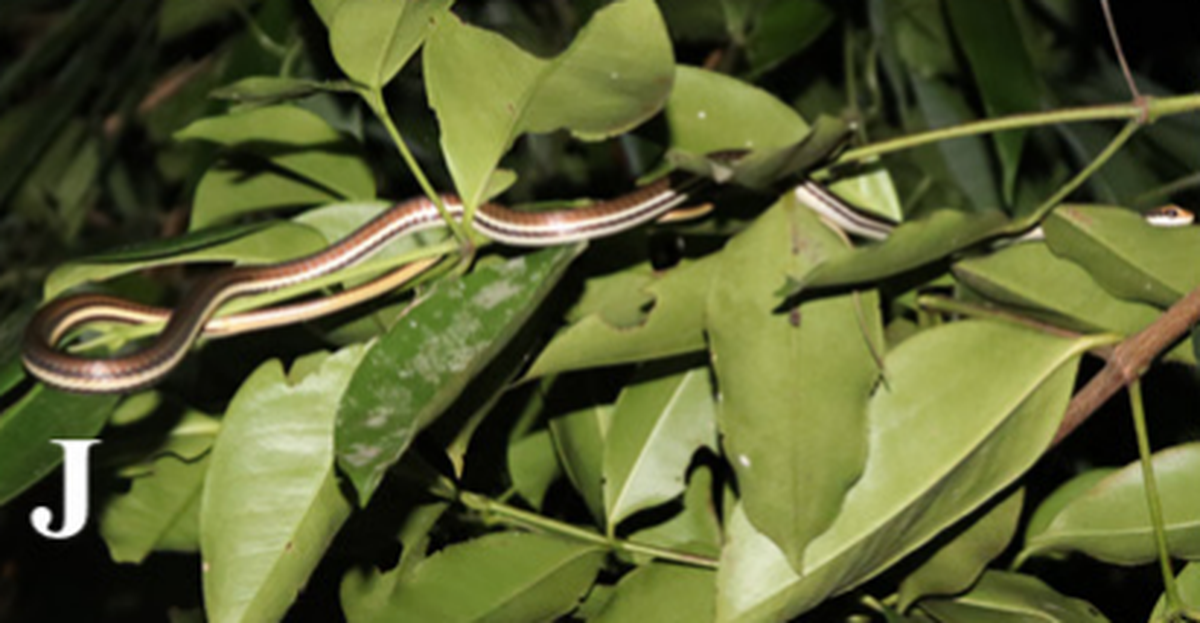
A second species, Dendrelaphis haasi, was also spotted for the first time in Bangladesh.
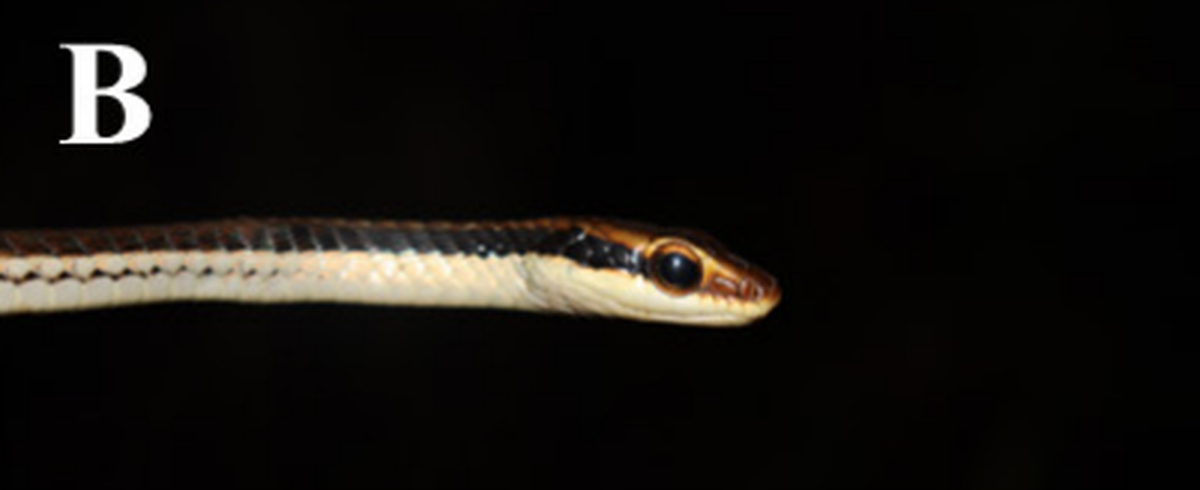
D. haasi was found in a similar site, at about 13 feet above a stream perched on a small branch, according to the study.
This snake also has a “slender” body and “large head,” but its coloration is more “olive” and there is a narrow stripe running the length of its head onto the neck.
The snake’s head is “golden brown” and it has a red tongue “tipped with black,” researchers said.
“We observed D. haasi predominantly in a resting position at night, on thin bamboo branches interspersed with bushes and medium-sized trees near streams on hill slopes. We also encountered it near human habitation in the forest,” researchers said.
The rest of the snake’s behavior is similar to that of D. cyanochloris, according to the study.
Both D. cyanochloris and D. haasi had been recorded in the neighboring regions of India and Myanmar, but the discovery of the snakes in Bangladesh had never been confirmed until now, according to the study.
D. haasi was only discovered recently, researchers said, so finding it at an even larger range than expected is “particularly notable.”
“The confirmed presence of these species in the Dudpukuria-Dhopachari Wildlife Sanctuary and Kaptai National Park highlights the role of protected areas in harboring cryptic or overlooked taxa. However, escalating anthropogenic pressures including habitat fragmentation, forest degradation, and human–wildlife conflict driven by fear or misunderstanding of snakes pose serious threats to arboreal snake species,” according to the study.
The Dudpukuria-Dhopachari Wildlife Sanctuary and Kaptai National Park are in southeastern Bangladesh.
The research team includes Md. Shohel Rana, Sajib Biswas, Ashis Kumar Datta, Sharmin Akhtar and Md. Kamrul Hasan.