Burrowing creature — and one half-male-half-female — is new species in Thailand

As a scientist, discovering and describing a new species is rare. Some researchers may go their entire careers without such a discovery, while others dedicate their work to the taxonomic frontier.
For a group of researchers in Thailand, not only did they discover a species new to science hiding in dirt burrows, but they discovered something else that is extremely rare in the animal kingdom — a half-male and half-female creature.
A group was in western Thailand when they found an area of forest near a road that was undisturbed, according to a study published Sept. 25 in the peer-reviewed journal Zootaxa.
They searched the ground for holes, then stuck their hands inside and pulled out spiders belonging to the genus Damarchus, or wishbone spiders, according to the study.
The spiders were given to researchers at Chulalongkorn University Museum of Natural History for a closer look, researchers said.
Damarchus spiders are known as “mygalomorphs,” or spiders that build holes or burrows into the ground and wait to attack passing prey.
The researchers were given males and females, and noticed they had wildly different colorations.
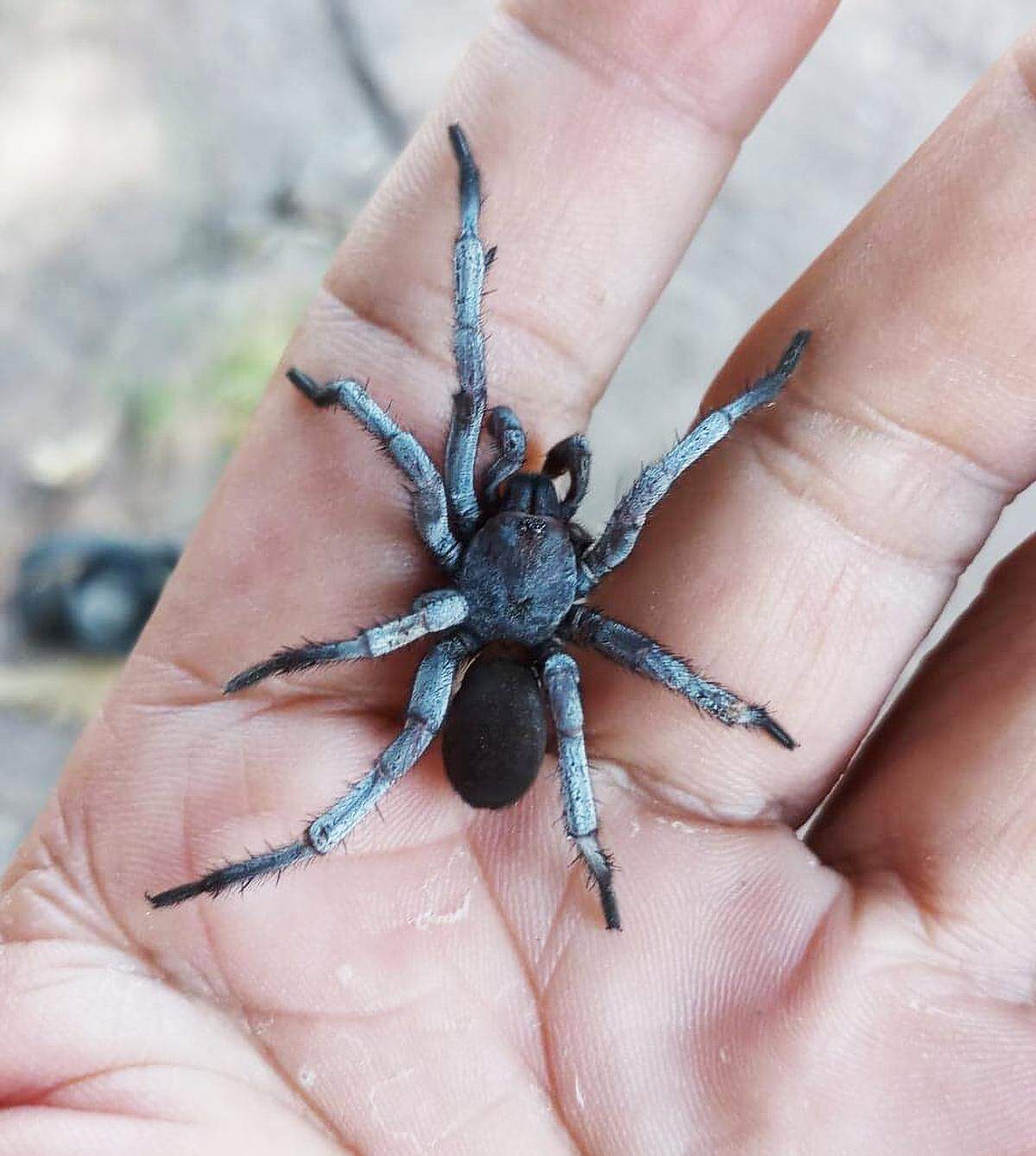
Males of the new species had a body length of about 0.6 inches, with eight long legs extending from the body, according to the study.
The entire body of the spider is “covered with (a) white layer (unknown material)” while the abdomen underneath is “dark grey” with “pale white spots,” researchers said.
Females, on the other hand, were both larger in size and a different color.
Their body length reached up to about an inch, and their dark body was instead covered with “orange” instead of white, according to the study.
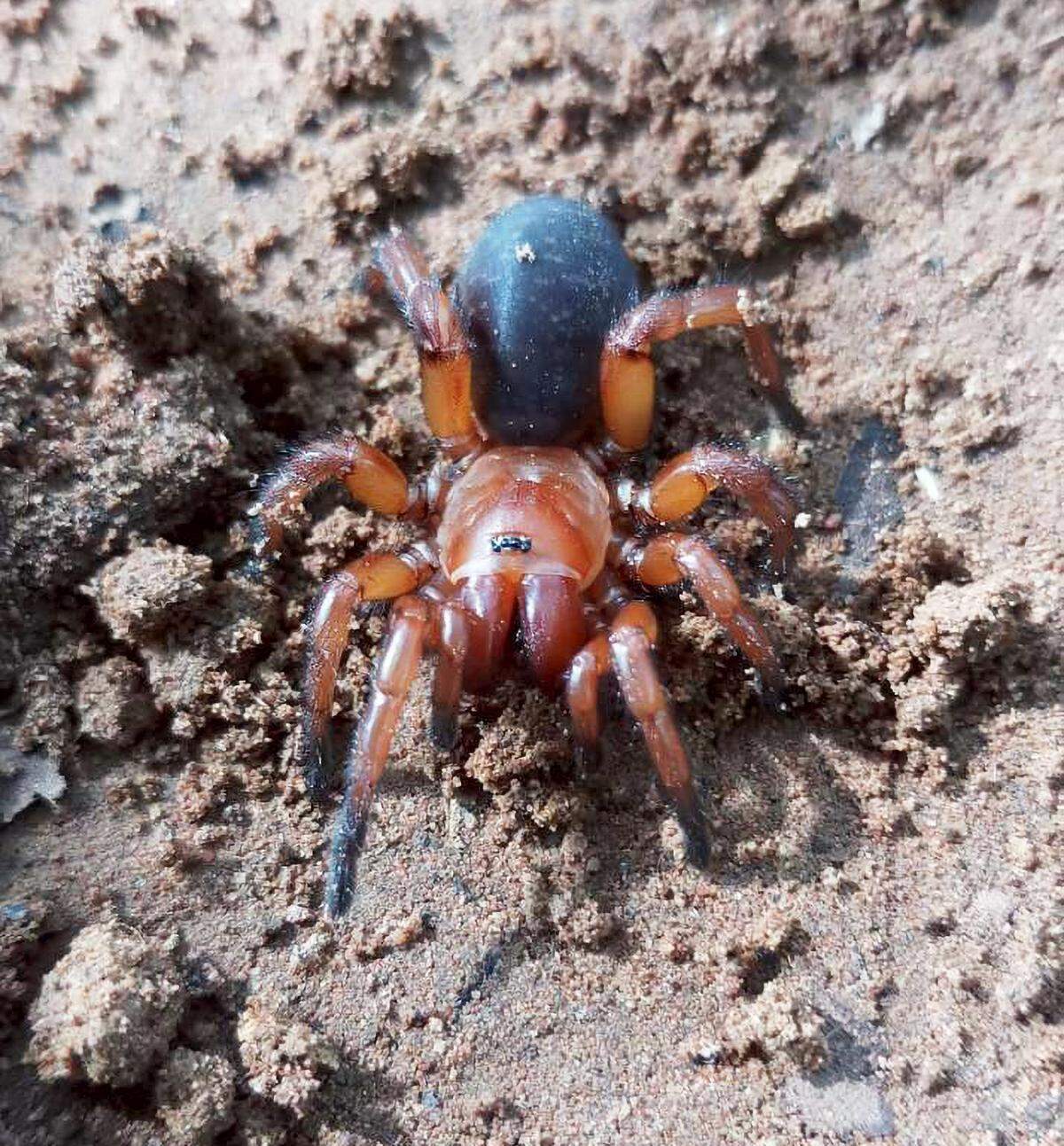
The difference earned the new species its name, Damarchus inazuma.
“The species is named after Inazuma, a character from the Japanese manga ‘One Piece,’ known for the ability to change sex between male and female. The Inazuma style is characterized by bilateral asymmetry, presenting distinct coloration with orange on the left side and white on the right side,” researchers said. “This color arrangement closely mirrors the sexual dimorphism observed in this species, with males exhibiting white coloration and females displaying orange.”
This name would become even more fitting as they looked through the spider specimens and noticed one that had both white and orange coloring.
The left side of its body looked female, with orange legs and an orange carapace. Then, the body was split exactly in two and the other side was white and grey, like a male.
It was a gynandromorph, or an animal that is half-male and half-female, split completely down the middle.
.jpg "New3_dorsal gynandromorph (1).jpg")
“Gynandromorphism is a rare phenomenon characterized by the presence of both male and female traits distinctly manifested on opposite sides of an organism’s body,” according to the study. “... occurrences of gynandromorphism in mygalomorphs (burrowing spiders) are exceedingly rare, with only two formal reports identified exclusively within the Theraphosidae family.”
This is the first report of a half-male, half-female spider in the family of the new species, researchers said.
What causes gynandromorphism is still being studied, but the research team suggested it may have been caused by “the loss of two or more sexual X chromosomes (a chromosomal disorder) in the female zygote, potentially induced by various natural factors, including nematode infections,” according to the study.
Kanchanaburi is a region in western Thailand, along the border with Myanmar.
The research team includes Chawakorn Kunsete, Chawatat Thanoosing, Varat Sivayyapram, Prapun Traiyasut and Natapot Warrit.