Trump deportation move says Venezuela is OK for migrants to return. Facts say otherwise
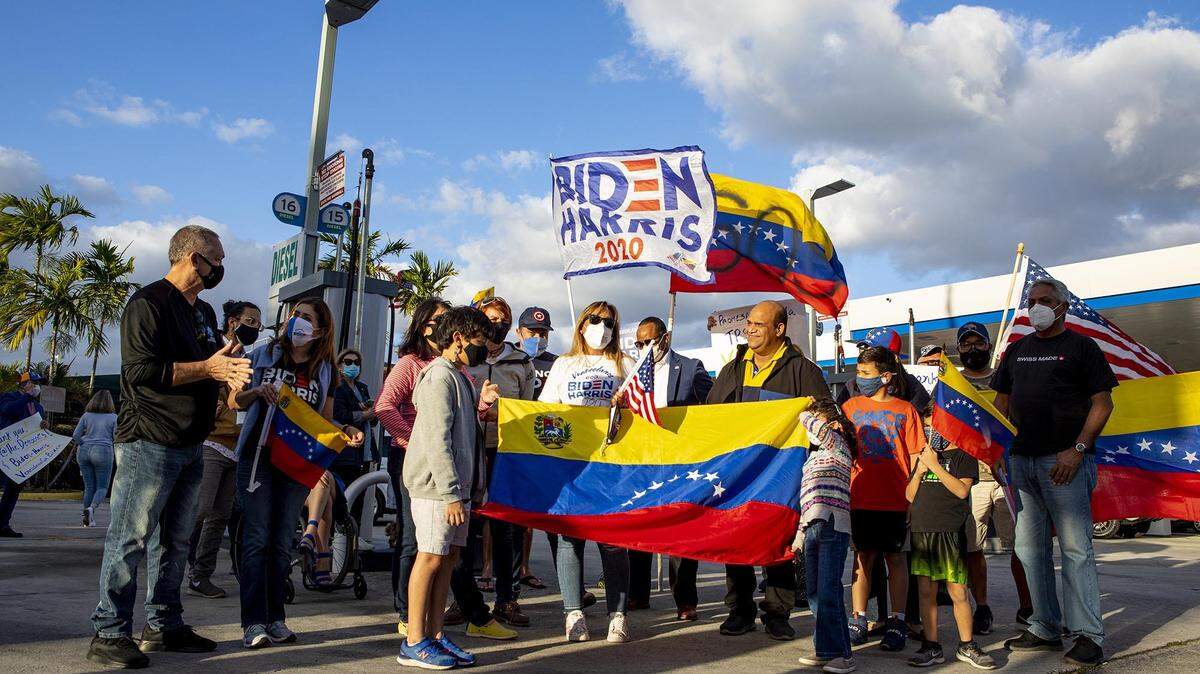
The Trump administration’s decision Sunday to end the protection from deportation for hundreds of thousands of Venezuelans living in the United States is based on the notion that conditions have improved in the South American country to the point that its citizens no longer need to be safeguarded from a repressive dictatorship.
If so, someone forgot to tell strongman Nicolás Maduro.
Homeland Security Secretary Kristi Noem said Sunday that “Venezuela no longer continues to meet the conditions for the 2023 designation” of Temporary Protect Status, the policy that grants migrants in the U.S. a reprieve from having to return to homelands torn by political or economic strife.
Conditions have in fact never been worse for citizens of Venezuela, as the autocratic regime increases its choke hold on Venezuelan society, driving opposition members, human rights activists, journalists and just about anyone with a different opinion underground or out of the country.
“This is very hard to understand,” David Morán, a former Venezuelan vice minister of finance who is currently in hiding from the regime inside the country to avoid imprisonment, told the Miami Herald. “Maduro has just executed a coup d’état against the popular will manifested in the last election and he currently has the largest numbers of political prisoners held since the 25 years of the chavista rule, so the only way to interpret this is as an act of absolute ignorance.”
Morán, an ally of key opposition leader María Corina Machado, said Venezuelans are living in an environment of terror like never before.
All top members of Vente Venezuela, Machado’s political party, “have been arrested and we have not had, since the last dictatorship in the 1950s, all the top members of the opposition political parties having to go underground,” he said.
Following the regime’s announcement that Maduro won reelection for another six years in the July 28, 2024, election, thousands of Venezuelans took to the streets to protest what they felt was another attempt by the strongman to stay in power through electoral fraud.
The regime responded by launching the worst repressive wave the country had seen in years, arresting at least 2,000 people, including minors, that it accused of plotting to overthrow the government. The candidate most Western nations believe actually won the election handily, Edmundo Gonzalez, had to flee the country to avoid arrest — and when he said he planned to return to be inaugurated as president, the regime said it was prepared to fire on his plane.
According to international human rights organizations some of those arrested after the election have been tortured and there have been reports of extrajudicial killings. Previous reports from the United Nations had warned that those actions were systematically implemented by Maduro’s repression apparatus.
As the repression continues, millions of Venezuela are currently considering leaving the country. More than 7.8 million of them have already done so in recent years to escape economic ruin, violence and political persecution. While the majority of them ended up settling down in other Latin American countries, such as Colombia and Brazil, about 800,000 have sought refuge in the U.S..
The Trump administration’s decision Sunday leaves hundreds of thousands of Venezuelans in danger of being sent back to the South American country in 60 days when the protection expires. The development comes days after Noem announced that the administration would eliminate a Biden-era extension that allowed over a half-million Venezuelans to be protected by TPS through October 2026.
Noem said she had revoked the measure because former Homeland Security Secretary Alejandro Mayorkas had improperly made the extension and that it was up to the Trump administration to make that decision.
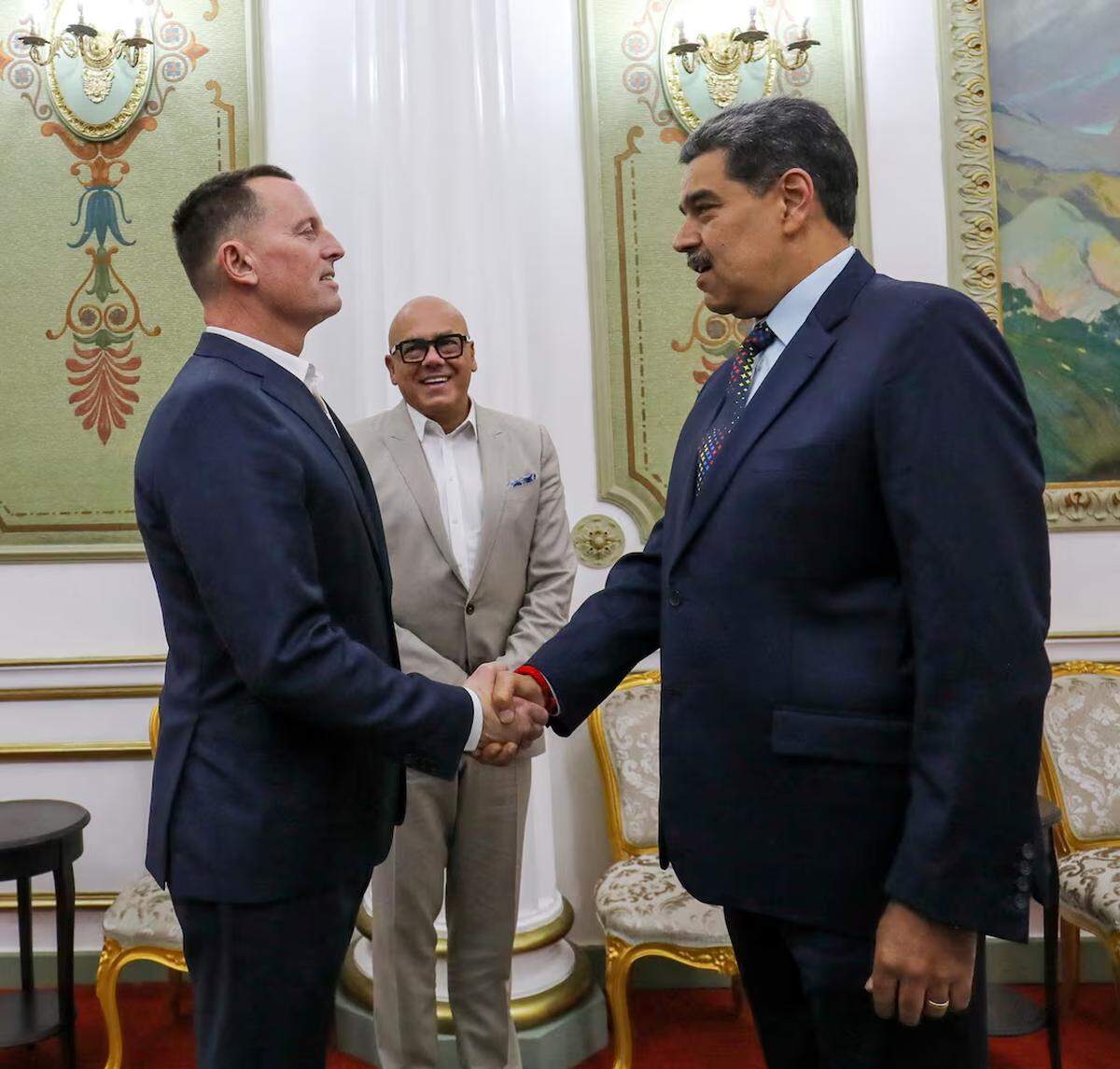
On Saturday Trump had announced that Maduro has agreed to take Venezuelan deportees back.
Situation worse now
Antonio De La Cruz, director of the Washington based think-tank Inter American Trends, said that virtually all social, political and economical conditions in Venezuela are worse now than they were five years ago.
Living conditions have severely deteriorated in that time, he said. The regime had been trying to make sure that the collapse of public services did not reach Caracas, sacrificing the rest of the country while doing so, in an attempt to avoid massive unrest in the capital that could lead to an uprising.
But they could not keep it up and now there are also frequent power outages, water rationing and fuel shortages in Caracas, he said
The economy is in shambles, and families are also having a hard time putting food on the table. While Venezuela still boasts of having the largest oil reserves on the planet, and the migration exodus means that there are significantly fewer mouths to feed, some five million Venezuelans are still going hungry in the country today.
According to the most recent report from the U.N. Food and Agriculture Organization, hunger afflicts 17.6% of Venezuela’s population, a rate that is among the highest in the region.
José Antonio Colina, president of a Miami-based exile organization, also said he was having a very hard time understanding how the U.S. government can conclude that the situation has improved in Venezuela.
“It is the opposite,” he said. “Today we have more repression, more persecution, more human rights violations to a point where no one that dissents from the government is safe. Opposition leaders are either imprisoned or kidnapped by regime forces and a similar risk awaits anyone who fled the country because of the regime that finds himself or herself inside of a plane being deported to the United States.”
Amnesty International USA, the U.S. chapter of the international human-rights organization, also expressed concerned about the administration’s decision.
“This decision reeks of President Trump’s racism towards Venezuelans. 300,000 of our Venezuelan neighbors now have their safety ripped away, and simply cannot return,” the organization said on its X account. “These are people seeking safety, fleeing a humanitarian crisis and serious political repression.”
This story was originally published February 2, 2025 at 5:18 PM.