‘Haiti sells.’ Designers seize World Cup moment amid soccer jerseys scarcity, FIFA rules
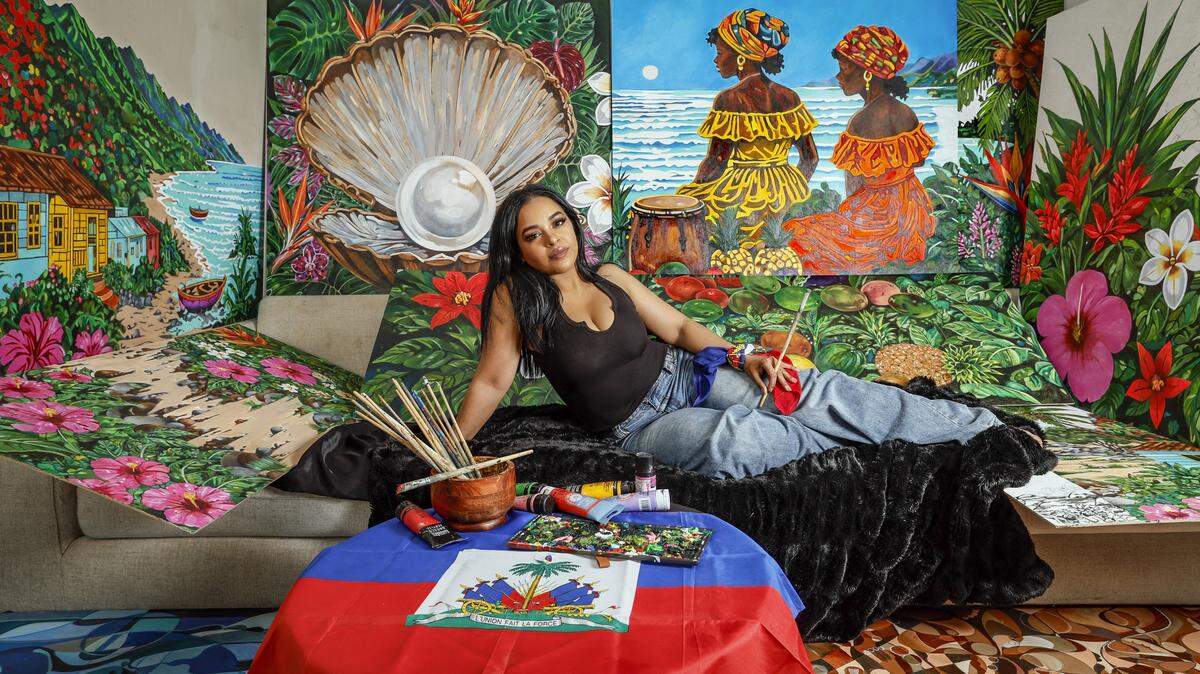
Ever since Haiti qualified for its first World Cup in more than half a century, Haitians everywhere have been searching — not only for tickets to one of the country’s three matchups, but for team jerseys that would allow them to show solidarity with the Haiti national soccer team.
“We live in Miami. I thought it would have been in Walmart, or Macy’s,” said Laurenee Gauvin, 37, who has been looking to buy an authentic blue-and-red Les Grenadiers shirt to no avail. “I don’t know why I expected it to be a little bit more available.”
Gauvin, like others hoping to represent in an authentic Haiti soccer jersey, has spent the past week scouring the internet only to learn from the official manufacturer, Colombia-based Saeta, that they are out of stock on her size. She even went on FIFA’s official website, where instead of Haiti’s jersey, she said, she found an image of a cat.
“I’m going to the Haiti-Brazil game in Philly, so I need to represent,” she says of the June 19 match in Philadelphia. “I just really need to represent authentically.”
At this rate, she might be left with only one choice, Gauvin, who is an artist, said: “To do my own shirt.”
The suggestion might seem farfetched, but it’s not. With official team Haiti jerseys sold out, difficult to find online or absent altogether on the shelves of major retailers — including at the Official FIFA World Cup 2026 Store that opened last week in Miami Beach — Haitian designers are stepping into the void, using the country’s historic return to soccer’s global stage to not just satisfy soaring demands, but to also make broader statements about Haitian culture and representation.
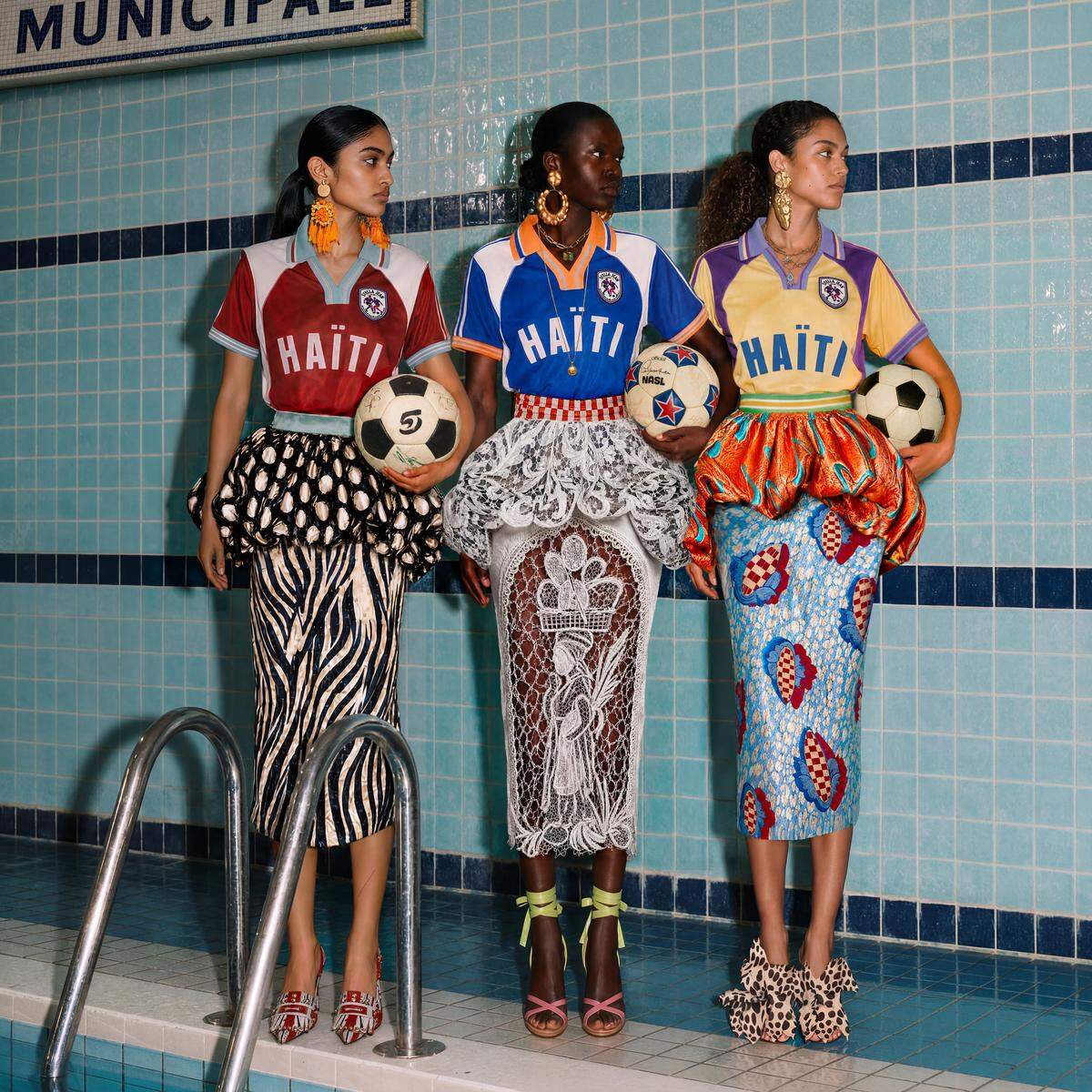
From designer Garvenchy Nicolas‘ Vinshēk’s “Manno” Heritage World Cup Jersey (1974–2026), which sells for $75, to Haitian-Italian Stella Jean’s vibrant $291 silhouettes, fashion creatives are discovering opportunity in Haiti’s omission in FIFA’s World Cup official apparel line up.
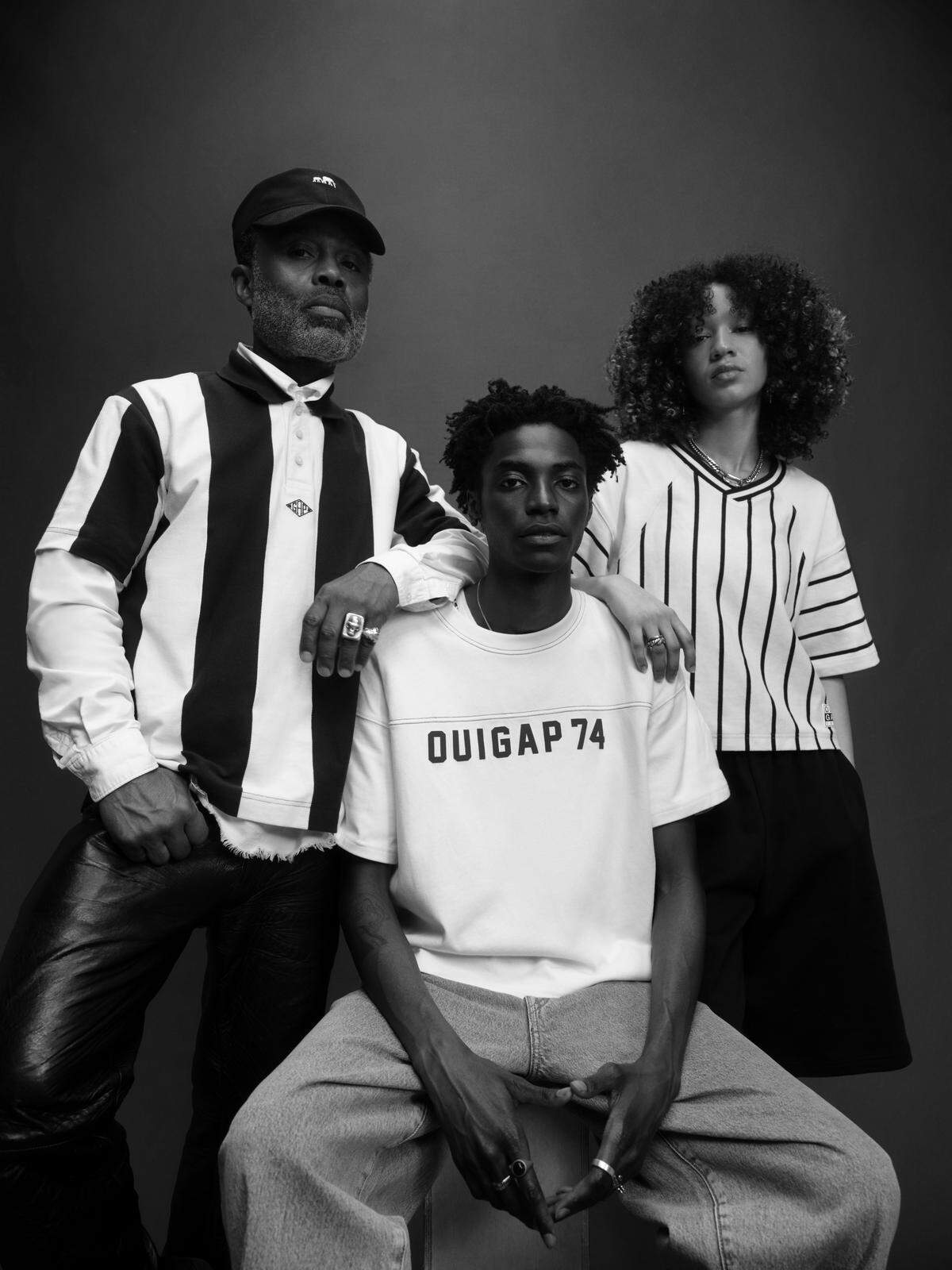
“Haiti sells,” said Ouigi Theodore, the Haiti-born designer and founder of The Brooklyn Circus, whose Haiti’s World Cup jersey sold out in 48 hours on preorders with customers committing to wait more than a month for delivery despite never having “ever touched or seen the jersey.”
The frenzy around the Haiti-themed designs, is more than just about celebrating soccer, designers say. It’s about pride, identity and showing an image of Haiti that extends beyond the country’s crisis of armed gangs and political instability.
“We’re telling deeper stories about Haiti and showing that it’s not just red and blue, although we respect the flag,” said Theodore. “But there’s also all of these other things.”
Weaving storytelling into fashion
Known for weaving storytelling into his fashion, Theodore was initially approached by Gap to design a collection of FIFA-licensed, vintage-inspired World Cup jerseys. At the time of the offer, he immediately thought of Haiti. Born the same year, as the country’s first World Cup, 1974, he saw an opportunity to bring the country’s aesthetics and his own lived experiences to the design.
But he quickly learned that Haiti was not among the eight countries selected for the FIFA Classics — a line of jerseys designed to promote powerhouse teams such as Brazil, Argentina, Mexico, USA and France.
Even so, Theodore recognized an opportunity, much like other designers have since the country qualified for the first time in 52 years, and persuaded Gap to come aboard with a series of products dedicated to the 1974 Haiti team known as the OuiGap Collection and available through the retailer online. The collection, Gap President and CEO Mark Breitbard said, “bridges the gap between heritage style and the electric energy of football fandom and offers fans a way to express their passion with both soul and originality.”
Still wanting to do a jersey, Theodore launched it separately. He now has a waitlist of about 500 customers for the shirt, which retail for $98 on his website and at his New York store.
“We support,” Theodore said of Haitians’ loyalty to products supporting the culture. “That’s what I’ve come to realize with all of the shirts we did before, including this one that’s not clearly red-and-blue.”
The moment transcends soccer
The Haitian-Italian designer Stella Jean has also launched a handmade line of 100% cotton World-Cup inspired silhouettes Polo T-shirt and long T-shirt dresses.
Jean made international headlines earlier this year for designing Haiti’s Winter Olympic uniforms, inspired by the work of Haiti-born, Miami-based artist Edouard Duval-Carrié. Her decision to create a Haiti World Cup-inspired line, she said, had little to do with sports merchandising and everything to do with creating a “cultural object capable of carrying dignity, identity, memory and representation.”
“Something that could resonate far beyond the stadium itself,” she said of her new “L’Haitiana” line. Jean believes what’s happening around Haiti is a sign of a deeper cultural shift.
“ Despite being one of the smallest and most fragile countries in the Western Hemisphere, Haiti continues to produce an extraordinary concentration of internationally relevant talent across multiple fields,” she said. “Haitian artists are exhibiting at the Venice Biennale, filmmakers are reaching Cannes, musicians and DJs are filling international arenas, writers are receiving major literary recognition, and Haitian fashion designers today represent the strongest concentration of fashion talent in the Caribbean from a single nation.
“And this is happening without the infrastructures, privileges, financial systems or institutional machinery that traditionally manufacture global visibility,” she added. “At a certain point, this should not simply raise curiosity — it should sound like a siren.”
One of only two countries in the Caribbean to qualify, along with Curacao, Haiti did so by never having played a game on its home turf due to armed gangs’ take over of its stadium and control of most of Port-au-Prince. Jean notes that the country’s chances of qualifying for the World Cup had been statistically low, while Italy — widely expected to qualify — did not.
“Statistically, a country of this size and complexity should not be generating this level of cultural excellence across so many disciplines simultaneously,” Jean said. “And yet it is.
“That is why the image of David and Goliath feels so relevant to me. Haiti continues to stand before far larger powers — culturally, economically, politically — without retreating. And fortunately, we already know how that story ends,” she added.
The designs
In both their designs, Jean and Theodore chose not to lean exclusively on Haiti’s national colors.
Theodore uses a deep maroon with navy and muted orange-like tone instead of the traditional red and blue. The front of the shirt bears the phrase “Grenadye Alaso,” “Soldiers Charge,” the Haitian-Creole rallying cry of the national soccer team, whose name, Les Grenadiers, is rooted in the country’s revolutionary history.
“If it’s red and blue and if says Haiti, people may just walk right by it,” said Theodore, explaining how he wanted to create a conversation piece that challenges people’s assumptions about Haiti. “For me, Haiti represents more than what people think they know about it. Yes, it’s suffering, yes there’s political violence, the assassination of the president...the Duvalier era.
“But the reality is we still have a Citadelle,” he said of the massive mountaintop fortress built by former slaves outside of Cap-Haïtien to defend the new nation against French invasion after independence. “We have all of these amazing things about the country.”
The jersey is layered with references to Haitian history. The back and front features “1804,” the year Haiti gained independence from France. The pumpkin orange hue is a nod to soup joumou, the traditional pumpkin soup that became a symbol of freedom after independence and in 2021 was recognized by UNESCO as part of Haiti’s cultural heritage.
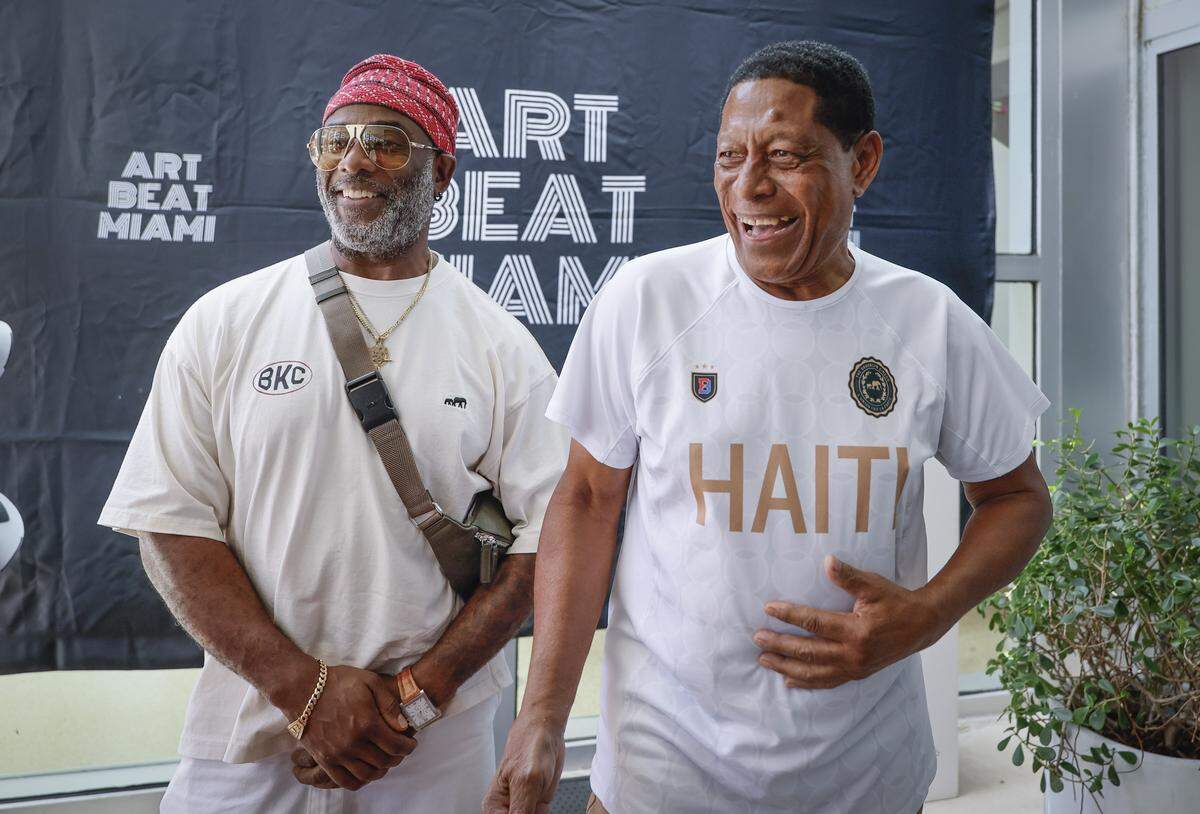
“When you think about the American flag, and you think about America, there’s a lot of red, white and blue products out there,” said Theodore, who also designed a Haiti soccer jersey wore by former defender on the 1974 World Cup team, Pierre Bayonne during an appearance in Miami on Sunday. “But there are also products that represent American culture that doesn’t necessarily have to scream the red, right and blue.
“We are proud of our team, country colors,” he added, “but there’s more to it.”
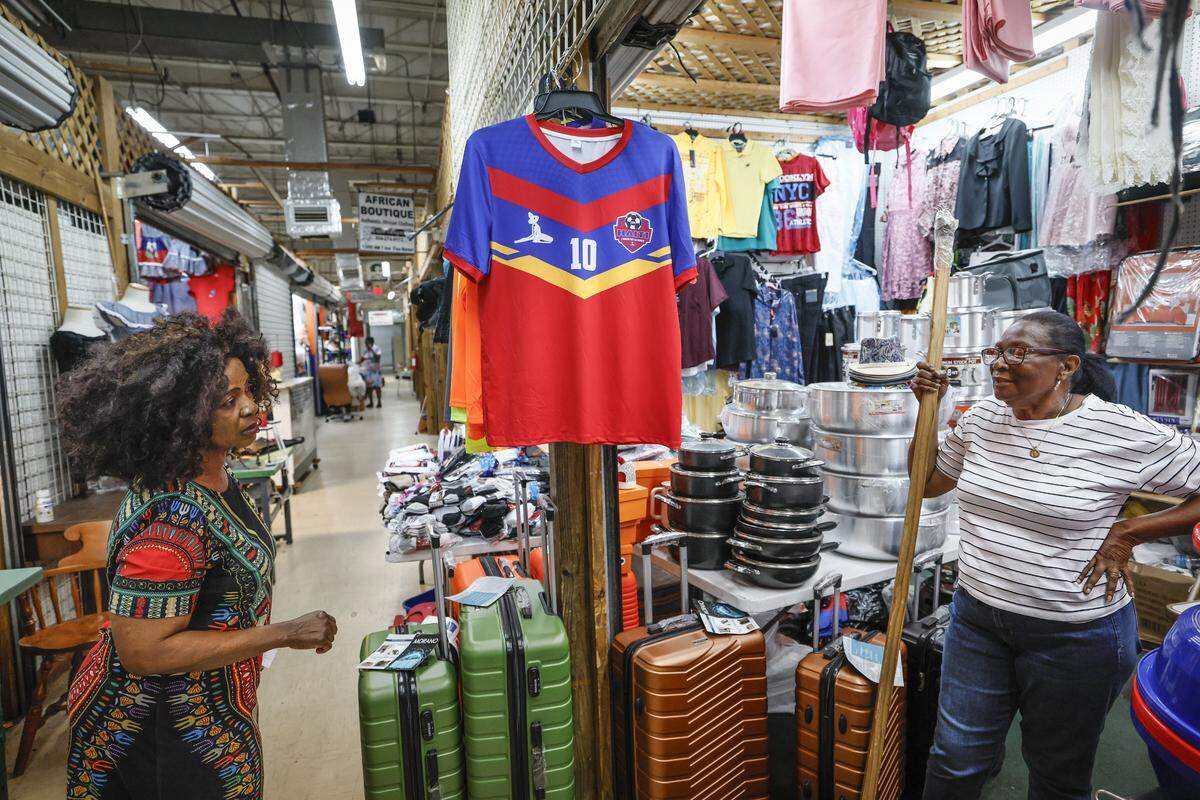
With the Haiti shirt, he says, he wants people to stop and ask questions: Why does it look different? Why is it orangish like pumpkin?
Initially disappointed that Haiti had been excluded from the official FIFA-Gap collaboration, Theodore now sees the omission differently.
“It was perfect that Haiti wasn’t part of the official FIFA collection,” he said. “FIFA is so rigid with the rules and what you can and can’t do.”
Haitian aesthetics sell
Jean, meanwhile, also wants to make a statement with her Haiti World Cup-inspired silhouettes. It is one about elegance and Haitian aesthetics.
“Whenever I think about elegance, my memory inevitably returns to my mother and my grandmother. That is where my understanding of beauty began,” she said. “And perhaps that is exactly what I would like the world to begin understanding about Haiti as well.”
While she uses the red and blue, Jean also accents her designs with yellow, purple and orange. “Haiti,” meanwhile is emblazoned across her shirts.
“When people imagine Caribbean aesthetics, they often reduce them to clichés of exoticism, leisure or escapism. But Haitian elegance is something entirely different,” Jean said. “It possesses rigor. Presence. Stratification. Memory. A truly elegant Haitian woman is recognizable anywhere in the world. There is a dignity, discipline, sensuality and refinement that transcends clothing itself.”
It is her hope that people will begin associating Caribbean sophistication with Haitian aesthetics, said Jean, who also frequently incorporates African prints into her work.
“Haiti has developed a visual language that is unique, recognizable and deeply influential — one shaped by history, survival, diaspora, craftsmanship and an almost instinctive relationship with beauty,” she said.
‘They would have made so much money’
Saeta, which has been outfitting Haiti’s national soccer team for over a decade, did not respond to a Miami Herald request for comment. But shirts were sold-out as far back as December.
Gauvin wouldn’t mind owning one of Jean’s designs -- “I would go crazy because I just like that color combination,” she said -- but she’s still hoping for an authentic Haiti national soccer team jersey.
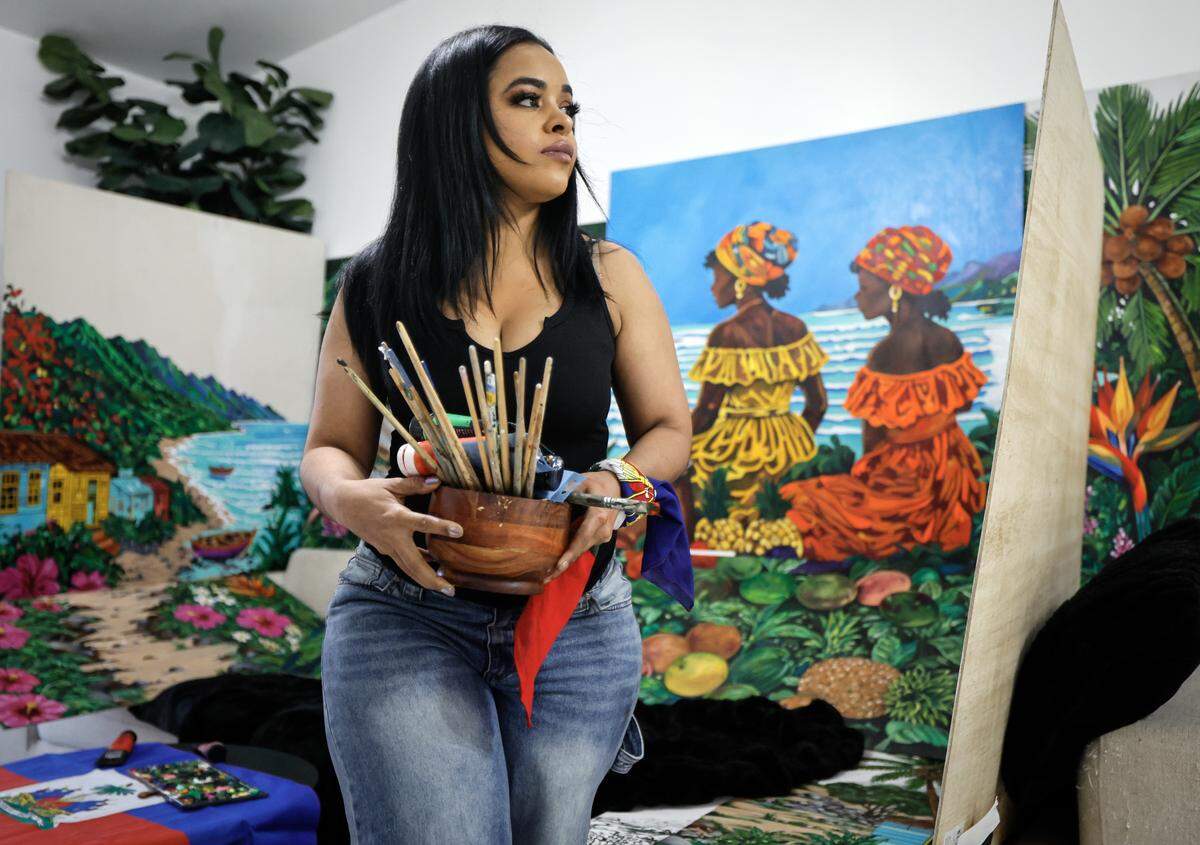
“I want to put money into the team, into whoever is creating the jersey,” she said. “I want to be able to support.”
And she wants to be able to “authentically represent,” just like the fans from all the other countries vying for soccer’s most prestigious prize, added Gauvin, who is currently working on a mural scheduled to be unveiled at Pearl of the Island restaurant in Hollywood to coincide with next week’s friendlies in South Florida against New Zealand and Peru ahead of the June 13 opener against Scotland in Boston.
As she continues to look for a jersey, Gauvin said one thing is clear: Retailers, the manufacturer and FIFA all missed out on a huge opportunity.
“They would have made so much money,” she said.
.
This story was originally published May 30, 2026 at 8:22 AM.