‘Symbol of the Haitian spirit’: The story behind Haiti’s Winter Olympic uniform
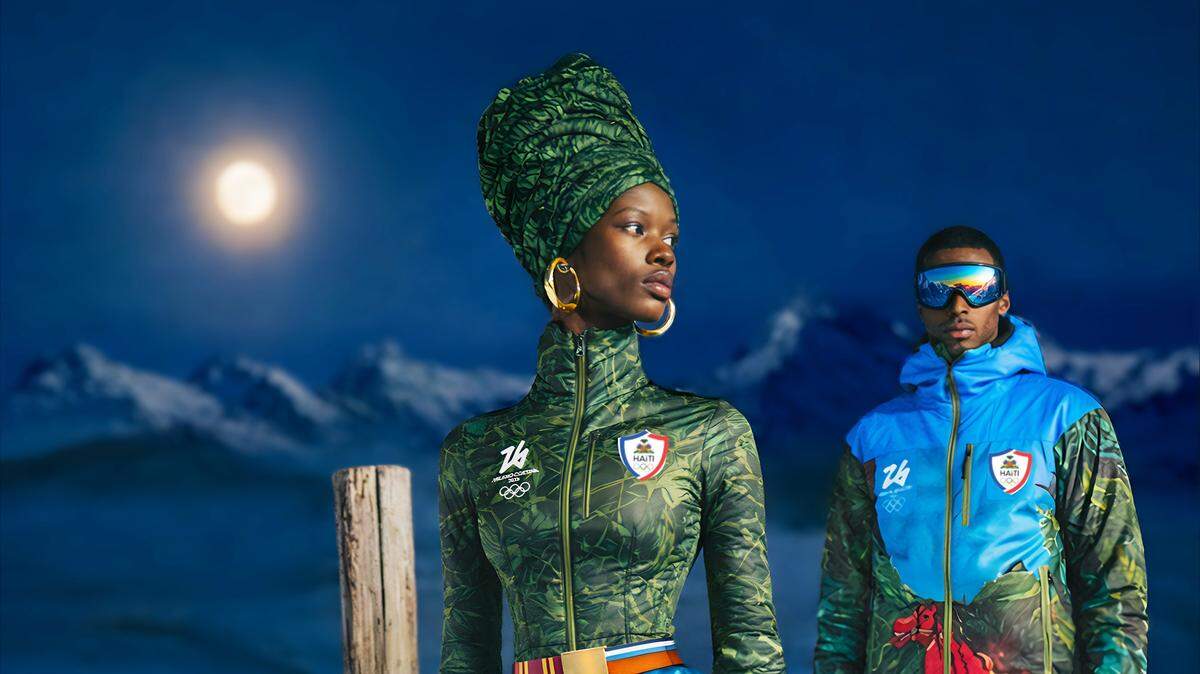
When Haiti’s two-person Olympic team files into the stadium on Friday for the opening ceremony of the Milan Cortina Winter Games, Italian-Haitian designer Stella Jean hopes the scene will highlight not the rarity of the moment, rather the Caribbean nation’s cultural identity and perseverance.
Jean, who designed Haiti’s uniforms for the 2024 Paris Games, now part of the Olympic Museum’s collection, has once more drawn inspiration from Haitian artistry and history to inspire its athletes and tell another chapter of its story.
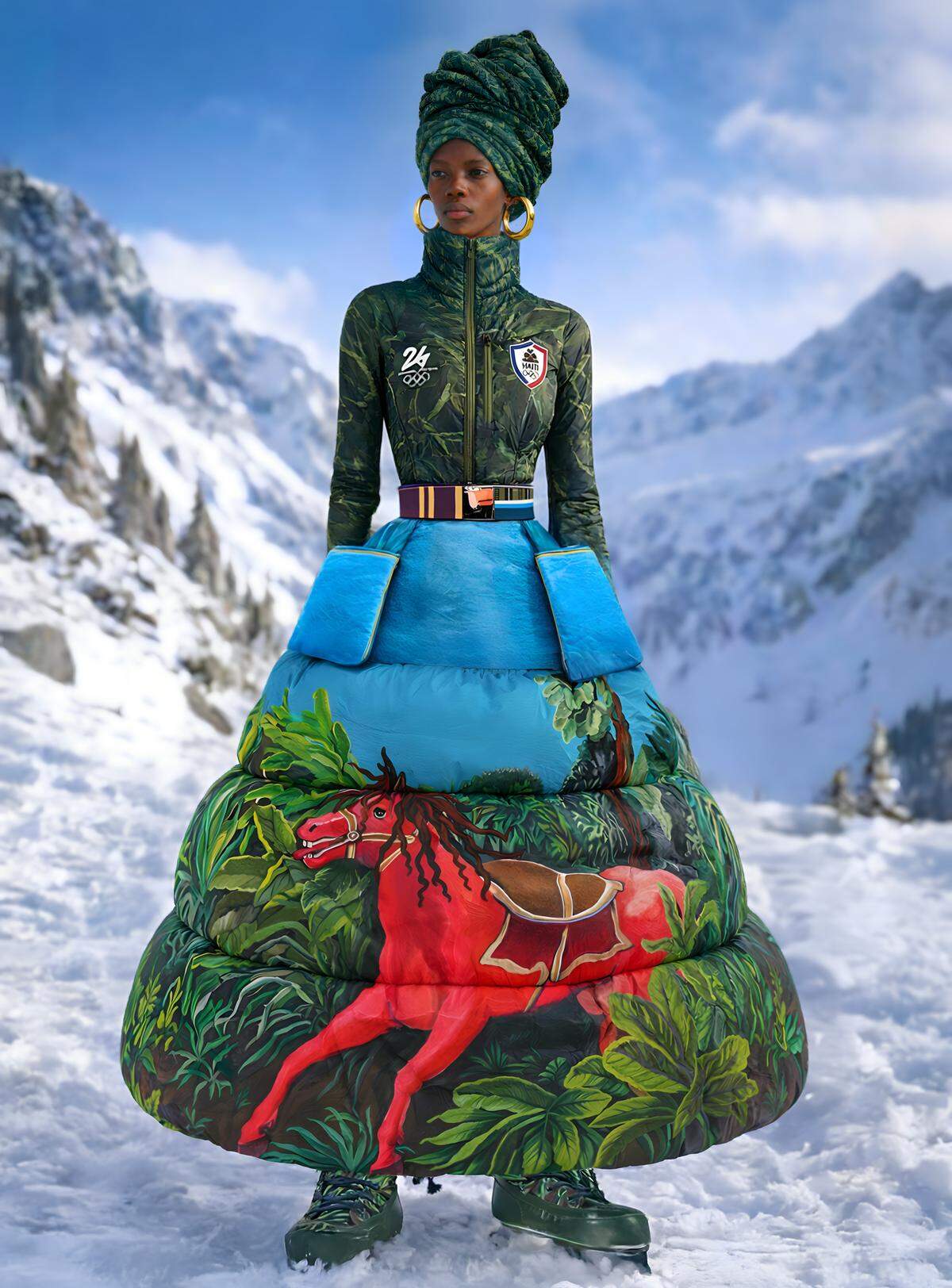
This time, her muse was a painting by Miami-based Haitian artist Edouard Duval-Carrié depicting the revolutionary hero Toussaint Louverture on horseback, charging into battle. The horse is red and in Toussaint’s hand, a sword transformed into a snake. In Vodou tradition, the snake symbolizes Danbala, the great spirit of wisdom, peace and purity.
The mixed-media portrait was painted more than 20 years ago, and among many Duval-Carrié has done of the leader. But this one, “is the very symbol of the Haitian spirit,” Jean said in an interview with the Miami Herald shortly after arriving in Milan.
“Even the preparation of this uniform,” she added.
Redesign amid the Olympic rules
Jean spent nearly a year working on the uniforms, only to be told last month that the image of Haiti’s founding father violated the International Olympic Committee rules prohibiting political, religious or racial propaganda at Olympic venues and on uniforms.
“Two hundred years later?” Duval-Carrié quipped, reacting to the decision. “It’s amazing that Toussaint would represent a political statement.”
Nevertheless, the IOC’s objection set off a brief panic—and a creative scramble—as Jean faced a tight deadline, no budget and the challenge of preserving her message without diluting Haiti’s history.
“For 24 hours, I said, ‘It’s over; they won’t have any uniform,’” she said. “But then I also thought that what brought us here was Haitian art, Haitian culture, Haitian excellence. So many human factors that helped us to be there.”
.jpg "3 teamhaiti winter olympics men uniform (front).jpg")
Refusing to accept defeat, the designer, who was working for free, enlisted the help of some Italian artisans who she worked with on her own collection that merges Italian tailoring with bold, colorful patterns celebrating Haitian and African cultural themes.
“Five days ago, they started to [hand] paint all the uniforms, and yesterday night I brought them myself in Milan from the other regions,” she said on Thursday.
Her team is accustomed to painting on natural fabrics, she said. But the Olympic uniforms are made of synthetic material.
“I just pray that it doesn’t rain,” she laughed.
Gone is the figure of Toussaint, but his red horse remains, charging against a lush tropical background. The word “Haiti” is emblazoned across the back against a blue sky on the tops.
“This painting has the two colors of the flag, red and blue,” Jean said. “You can immediately recognize it.”
For the rest of the delegation, including trainers and support staff, she has also designed a turban-like head wrap inspired by the tignon that emerged after the French colonizers forced enslaved African women to cover their hair, to appease their jealous wives, in what was then known as Saint-Domingue, France’s richest colony. The head wrap later became its own fashion statement, along with the skirts with pockets that Jean also designed to pay homage to the outfits worn by Haiti’s street market vendors.
“Every single piece in this uniform has a specific historical meaning for it,” she said.
Inspired by history
For the athletes, Jean could have chosen not just from any number of Haitian masters, but also from many of Duval-Carrié’s works drawn from Haitian history. She selected Toussaint and his red horse, she said, because they symbolize pride and perseverance.
Though Haitians have different views on many of the figures in the country’s revolution to become the world’s first Black republic in 1804, Jean said, “we all agree on Toussaint Louverture.”
A former slave who became a skilled military strategist, Toussaint is remembered as a symbol of resistance. He once controlled the entire island of Hispaniola, including the part that’s now the Dominican Republic, before being captured by French forces, and imprisoned in the cold Fort de Joux in France, where he died in 1803.
Duval-Carrié said he thought “it was a bit cheeky of the Olympic Committee,” to want Toussaint erased because someone might be offended. Still, any visibility for Haiti on a global stage was valuable, said the artist, who in May will represent his homeland at the Venice Biennale.
Though the two artists do not know each other personally, Duval-Carrié said he sees an affinity in Jean, whom he called “a force in the design world.”
“I commend her for her being steadfastly supportive of anything Haiti,” he said of Jean, whose 2024 Olympic designs drew inspiration from another Haitian artist, Philippe Dodard of Port-au-Prince.
Haiti’s skiers at the Winter Games
The two athletes representing Haiti in the Winter Olympics are both skiers, who grew up outside the country with adoptive families.
Richardson Viano, 23, is Haiti’s first Winter Olympian, having competed at the 2022 Beijing Games, finishing 34th in the men’s slalom. Savart, 25, is a cross-country skier.
Both are part of the small ski federation created in the wake of the devastating 2010 earthquake.
The opening ceremony will be brief, and Haiti’s delegation—one of the smallest at the Games—is expected to appear for no more than 10 seconds. But those seconds carry weight, Jean said, particularly at a moment when Haiti is grappling with escalating gang violence, political paralysis and foreign military presence.
Earlier this week, one of the few remaining sports facilities available to children in the country was vandalized and partially burned by criminal gangs.
“We will have just 10 seconds, maybe nine,” Jean said, “in which these two athletes will become with their bodies the Haitian flag. We have to say everything without words, just with images, to the world.”
That message, she said, is that amid the depleted resources, environmental degradation, and prolonged instability, Haiti still has something to offer the world.
“The one thing Haiti can always export,” Jean said, “is our art, our culture and our creativity.”
This story was originally published February 5, 2026 at 8:41 PM.