‘An awful lot of abandoned babies’: Jordanian Princess Zeid on Haiti’s crisis
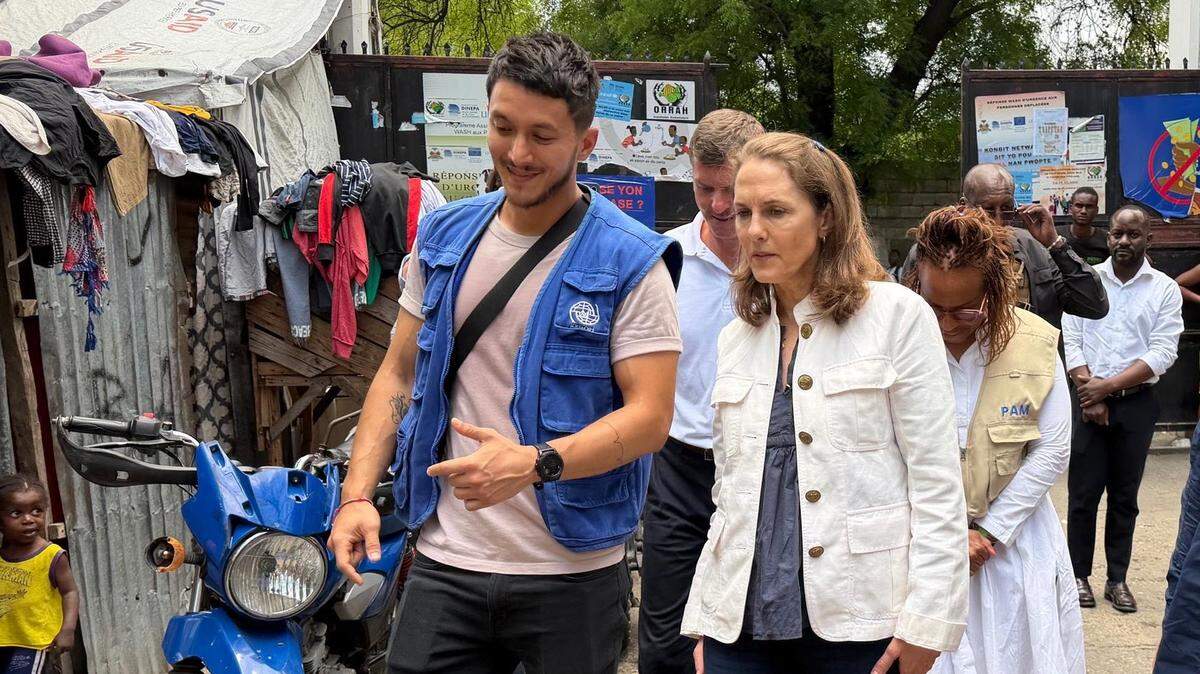
As Princess Sarah Zeid of Jordan walked through the grounds of a former government building turned soiled encampment during a recent visit to Haiti’s gang-plagued capital, she found herself thinking about the barriers facing women amid her own anger and speechlessness.
“There were four working toilets for this population of 6,000,” said the health activist and humanitarian who works closely with the United Nations. “Four working toilets.”
The building that once housed bureaucrats now shelters families displaced by gangs, sleeping on stained sheets across the floor, in stairwells and next to two broken toilets. Amid the chaos and open sewage, there had been some attempt to instill some order, but a conversation with a pregnant woman revealed a darker reality beneath the daily struggle for survival.
“There’s a community kitchen. It’s really well organized. There’s a management committee,” Zeid said. “But with the food distribution, she gets pushed out of the way by the big men.”
And then, if that wasn’t degrading enough, the woman explained: “You have to pay to use one of the toilets.”
“And of course, if you’re a woman or a girl, it’s always pay — and,” the royal said, pausing before explaining the “and.” “If you don’t have the money then it’s just the ‘And.’ You’re giving them sex.”
READ MORE: ‘What are they thinking?’ Feminist leaders denounce Haitian ministry shakeup
Zeid’s first field visit to Haiti late last month left such a deep impression that she is now thinking of how to remove the barriers confronting women, particularly pregnant and lactating women trapped in terrorizing violence. Women and girls are bearing the brunt of the crisis., which has left nearly 1.5 million Haitians displaced and more than half of the country’s 12 million hungry.
That violence, along with forcing the closure of most of the capital’s hospitals, has left women, already facing risky births before gangs began laying siege to most neighborhoods in Port-au-Prince, even more likely to die in childbirth. The World Bank estimates that 328 women per 100,000 die giving birth.
“You know that a woman can bleed to death before she delivers because she can’t afford to travel to the hospital. It is absolutely unforgivable, unforgivable,” Zeid said.
After a brief pause, she said: “It’s inhumane.”
‘No logos’ trust fund for women
As a humanitarian who has long worked alongside U.N. agencies, Zeid knows the limitations created by what aid officials call “silos” — bureaucratic divisions separating responsibilities among agencies such as the World Food Program, UNICEF and the U.N. Population Fund.
But when she thinks about the immense suffering and needs in Haiti, and other conflict zones, those divisions, Zeid said, make no sense.
“The majority of preventable maternal, newborn mortality, morbidity and stillbirths take place in humanitarian and fragile settings,” she said. “And yet they are the priority of no one because we have these silos. Someone over here has children, someone over here has reproductive health, someone over here has food, and we’ve got nutrition over there, and we do vaccines here. These are preventable deaths, and they are not at the top of everybody’s priority list, and I think that they should be.”
That reality has led Zeid to begin imagining what she calls a “No logo Trust Fund,” to remove barriers, allowing women to tap directly into money they need to address their problems. Funding, she said, constrained neither by logos, silos, rigid donor rules or endless paperwork but designed to reach women where they are.
“Where we have to be is with the woman who is stuck to the sticky floor. And the sticky floor is that place where there is just always something that keeps pulling you back,” she said. ““For some women it’s a lack of contraception. It’s not being able to get your child to the hospital on time. It’s not being able to pay for antibiotics. Making sure that health costs in hospitals are covered and, and that women know that they can always go deliver in a hospital.“
The system could work similar to the World Food Program’s biometric cash transfer programs, allowing pregnant and breastfeeding women, for example, to receive direct assistance to buy what they need from designated shops.
The idea, Zeid said, emerged after repeatedly hearing stories about women unable to pay for transportation to get to the only public hospital still operating in the capital, or even being able to afford deliveries.
“We were told by MSF that there is a huge unmet demand for long-term contraception, the one that goes under the skin,” she said referring to the French medical charity Médecins Sans Frontières/ Doctors Without Borders. “And the reason for it is because women and girls know they’re going to get raped.”
But the fund she envisions would serve not just women.
“In the hospital, there was a seven-month-old baby, and he had been there for quite some time because he was abandoned. He was so malnourished, he couldn’t even roll his head around. He was that small and that weak. But they had kept him alive,” she said. “They said that there are an awful lot of abandoned babies.”
Visit organized by WFP
Zeid’s visit to Haiti was organized by the World Food Program’s country director, Wanja Kaaria, whom she first met during Kaaria’s posting in Cameroon. With 5.8 million Haitian facing severe levels of hunger, the aid group last month said it needs $332 million to maintain its operations over the next 12 months. The request is part of the $880 million Humanitarian Response Plan for Haiti the U.N. is seeking. Last month the world agency said the plan is just under 20 percent funded, with only $172 million on hand.
Zeid also had the support of Tom Fletcher, the U.N.’s humanitarian affairs chief, who made his fist visit to Haiti in September to also sound the alarm on funding and the severe rape crisis facing women and girls.
Unlike many diplomats and aid officials, Zeid speaks with unusual candor. She also speaks with imagery, and emotion as she expresses her anger — “fizzing mad “ — over what she saw.
Before departing the country after her four-day visit, she met with the prime minister and members of the country’s private sector. She is thinking $100,000 would be an adequate start of the fund, and hopes to convince others of its importance.
“The most dangerous time in a woman’s life is also the time she is most neglected,” said Zeid. “I’m trying desperately to say, this isn’t just a WFP problem or UNFPA problem. This is everybody’s responsibility.”
Since Zeid’s visit at the end of April, the situation in Port-au-Prince has grown worse. An outbreak of violence by warring gangs has led to the deaths of at least 80 people, according to human rights advocates, and forced the temporary suspension of operations at both Médecins Sans Frontières’ health facility in Cité Soleil, and Centre Hospitalier de Fontaine. Among those forced to evacuate the Fontaine hospital were eight women awaiting C-sections, while a baby was abandoned by his fleeing mother.
The armed attacks have driven another 5,000-plus people from their homes, the International Organization for Migration said.
Brief moments of joy
It’s this reality that Zeid wants to address. Once more, she turns to imagery to describe what she saw — and how it motivates her to do something.
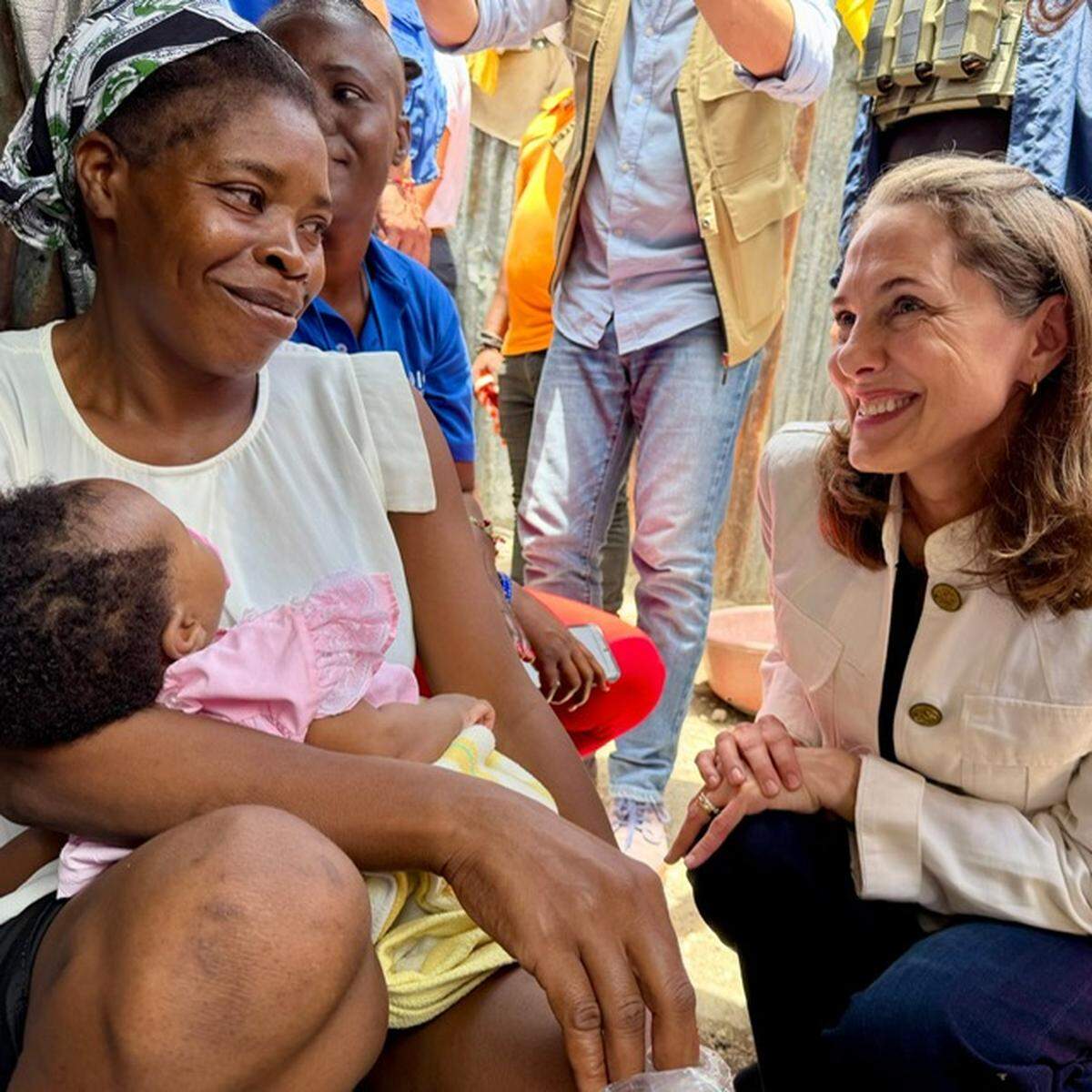
“Walking through that displacement camp, I saw a baby,“ she said, recalling twins she encountered. “In this horrific place a woman had delivered twins…And there she was with these, two healthy babies. We chatted as much as we could, you tickle some toes, connect and ask a couple of questions.”
But even in those brief moments of joy, she said, there was “just too much unnecessary pain. There is no need for this unconscionable death,” Zeid said. ”None of this is necessary. There is no need. There is no dignity. It is so cruel that people’s lives are reduced to a daily battle for survival.”
What she witnessed in Haiti, Zeid said, has left her “ready to go and just throw myself across the table at the big World Bank and all of these other people who are so filled with rhetoric about the wonderful things they’re doing and will not extend themselves to the individuals, who will never, ever, have a chance— not to survive, not to thrive, not to be heard.”