
Haiti makes history, returns to the World Cup for the first time in 52 years
Haiti is headed to the World Cup for the first time in more than 50 years, and celebrations broke out from Port-au-Prince to South Florida.
The soccer-loving Caribbean island, which has been besieged by gang violence and economic instability, qualified for the 2026 World Cup on Tuesday night, the first time Haiti will participate since 1974.
Across Haiti, tens of thousands of jubilant fans spilled onto the streets to celebrate. It was a rare outing and outburst of national unity during these turbulent times.
“All of these victories are like a serum,” said Patrice Dumont, a former Haitian senator and longtime sports commentator. It was as if, he said, with the berth “Haitians refound their confidence.”
People took to the streets after the match, he said, because “they were sure that nothing would happen to them.” “It was as if they said to themselves, ’The people who are killing people, they are not crazy enough to attack them in the streets,” Dumont said.
Dumont who was also out said he saw all kinds of people out and doesn’t remember the last time he saw that kind of movement in Port-au-Prince where even before dark streets empty out. “
Like others, he believes that Tuesday’s historic win could be a unifying moment, and serve as a change agent.
“It can bring a change vis a vis those who are victims or potential victims,” he said. “Those who won’t let 8 p.m. catch them on the streets. Those who know that at any moment gang members can invade their homes.”
Haiti earned one of three direct Concacaf berths with a 2-0 win over Nicaragua in Curacao on Tuesday. The feat was especially impressive because the Haitian team did not play a single qualifying match at home because the stadium was unsafe due to gang violence. The team last played at home in 2021.
All of Haiti’s home matches were moved to neutral sites.
“Fifty-two years! We are back,” said Dr. Joseph Durandis, a Haiti-born physician and South Florida resident, who was at the game in Curacao. “Can you believe it? A country that is going through hell right now, we found the resources to be back on the world stage… After all of the odds, Haiti is back in the World Cup.”
He also noted the historical significance. Nov. 18 is the Battle of Vertières, the decisive battle in the country’s fight for independence from France.
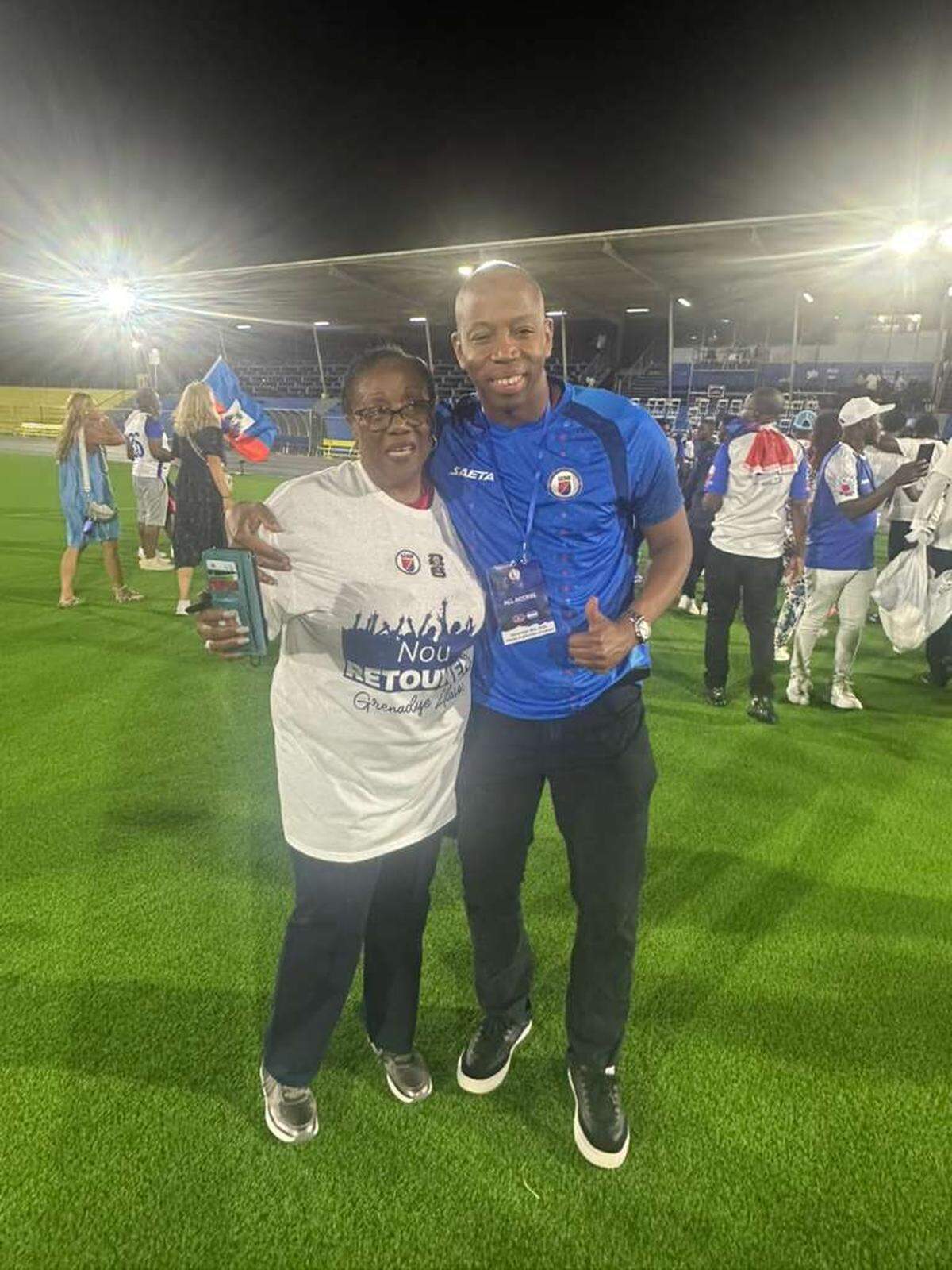
“November 18, 222 years after the Vertières battle, Haiti is back,” he declared, losing his voice with excitement. “We have won another battle, this time on the soccer field…This country cannot die, this country just cannot die. Haiti is back! We are back in the World Cup.”
Inter Miami forward Fafa Picault, a member of Haiti’s national team the past few years, did not play in the match Tuesday night, but was overwhelmed with emotion watching from home. He was still giddy and wearing a huge smile when he met with the media Wednesday morning before training.
“I am super emotional, super happy,” Picault said. “Not only because of everything happening in the country, but also because it had been so many years without qualifying. It’s an honor for all of us, for our country, our families, and for me, personally, because my grandfather also played for the national team. It’s hard to explain what I am feeling.”
Picault watched the game with friends and family. He was called up for World Cup qualifying matches earlier in the year, but said an injury during the game against Honduras Sept. 6 and lack of playing time with Inter Miami in recent months hurt his chances to be named for the Nicaragua match. Nonetheless, he was overjoyed, and his Miami teammates made a celebratory tunnel for him to run through before practice.
He discussed the obstacles Haiti faced in reaching this historic moment.
“It was very difficult because we played our home games in neutral grounds, we don’t get that many fans, we are appreciative of the fans that live in those countries and still come out and support, but the crowds aren’t big and the fields can be difficult,” Picault explained. “You don’t get that sense of truly home. What we’ve always had is each other as a group and the support of our people back home. That’s what’s gotten us through because it has not been an easy journey at all.”
The team is mostly made up of members from the diaspora with only a handful of players who were born in Haiti. Still, the significance of the day, November 18, was used as a motivating factor for the team, one of its advisers said. The day marked the decisive moment that Haitians won their freedom from France.
Haiti’s last appearance at the World Cup was 1974. Philippe Vorbe, who was on the national team, played as a midfielder. It was always his hope to see Haiti once more qualify for another World Cup before he died.
On Wednesday, he was ecstatic, saying, “my heart is overflowing with joy.”
“We qualified, we are going to the World Cup,” he said. “It’s a victory for all Haitians,” he said. “They all took to the streets. That’s a formidable message.”
Vorbe said he wasn’t worries about the team’s economic deficits, noting that FIFA will provide some funding.
He also noted that there is no instrument to measure between the two teams. But in the evolution of soccer, if he were to compare he said, “I can see they are stronger than us,” he said, noting the team’s endurance, better technique and physical development. “In my opinion, these guys have more talent than we had,” he said.
Ruben Providence, who plays for Almere City in the Netherlands, and Louicius Deedson, who plays for FC Dallas in Major League Soccer, scored for Haiti on Tuesday.
Picault said when the final whistle blew Tuesday night, he ripped off the blue No. 7 Haiti jersey he was wearing, the one he wore for the Honduras match, threw it in the air and started celebrating. He said he will continue working hard in the coming months in the hopes he can rejoin the Haitian roster for the World Cup.
Haiti (3-2-1) entered the night tied with Honduras for top spot in its four-team qualifying group and needed to get one more point than its rival to secure a berth in the 48-team tournament, which will be held next summer in the United States, Mexico and Canada.
Concacaf got three direct berths in addition to the three host spots. Panama and Curacao earned the other spots.
This story was originally published November 18, 2025 at 10:59 PM.