Like Venezuela, Haiti is mired in instability. Here’s why the U.S. is unlikely to intervene
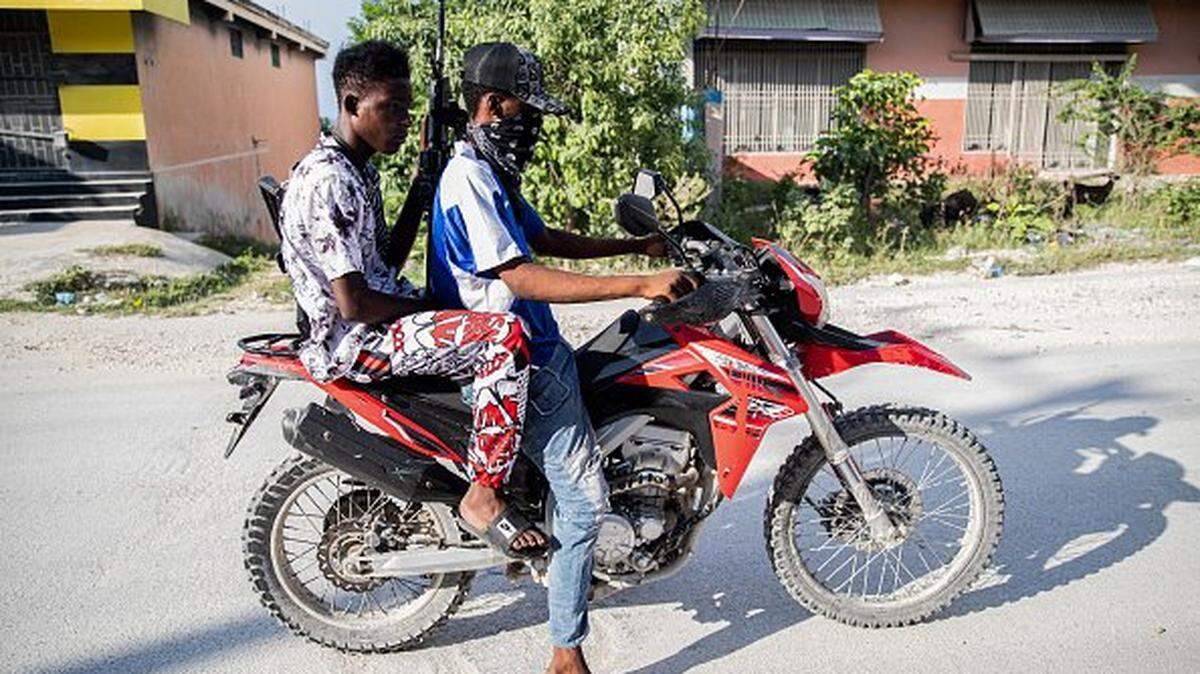
As the U.S. military deployed elite special forces and war helicopters to Caracas on Saturday to remove Venezuelan strongman Nicolás Maduro and his wife, Cilia Flores, some Haitians wondered whether their own troubled country could be next. Like Venezuela, Haiti is mired in turmoil. Its government is largely nonfunctional since the 2021 assassination of President Jovenel Moise; the economy is collapsing, and armed gangs control key roads and strategic ports they use to traffic drugs and illegal weapons.
The violence and chaos are driving hunger and displacement as tens of thousands flee their homes, posing risks not only to the country but to regional security.
Yet few analysts expect a U.S. military intervention in Haiti similar to the pre-dawn raid carried out in Venezuela. The reason, they say, lies in Haiti’s lack of strategic value to an administration that’s increasingly embracing a transactional approach to its foreign policy.
“In the president’s discussion, you see that he took Maduro out because of the oil,” Edwin “Edo” Zenny, a former Haiti senator, said Sunday in an interview published by On TV News on TikTok, where Haitians were offering up their analysis of the audacious U.S. operation. “If we had oil, he would have already taken care of this problem.”
In a press conference on Saturday, Trump depicted Maduro as “a kingpin” running a vast criminal enterprise threatening the United States. Zenny said Haiti’s situation is even more dire, describing the country as so “upside-down” that gangs openly post videos on social media threatening beheadings and neighborhood burnings.
Jason Marczak, vice president at the Adrienne Arsht Latin America Center at the Washington-based Atlantic Council, said that even though Haiti is a bastion of illegal activities, he doesn’t “expect ramped up U.S. activities to dislodge” Haitian gangs.
“What’s clear from the Venezuela actions is that Trump prefers quick results with limited U.S. boots on the ground,” he said. “Greater involvement in Haiti would require significant U.S. presence in a country that’s not nearly as strategic as Venezuela.”
Maduro’s campaign of violence
Maduro, Trump said, had waged “a ceaseless campaign of violence and terror” and had threatened “the stability” of the entire region.
“For decades, other administrations have neglected or even contributed to these growing security threats in the Western hemisphere,” he said, describing the capture. “Under the Trump administration, we are reasserting American power in a very powerful way in our home region.” Yet even as Trump described conditions that could also apply to Haiti’s gang-controlled criminal networks, he made clear where his economic interests lie: “Oil” was mentioned 20 times by the president who, after announcing the U.S. will “run” Venezuela, said “We’ll have the greatest oil companies in the world going.”
“The administration's rhetoric about combating gangs, drugs and other causes of migration would suggest deep interest in helping Haiti address those problems,” said Fulton Armstrong, a former national intelligence officer for Latin America who headed the CIA’s Haiti branch and now teaches foreign policy in a program with Syracuse University. “But the president's and secretary of state's priorities are oil, revenge against a leader who resisted U.S. hegemony and votes in Miami.”
Miami is home to the largest community of Venezuelan Americans who have been increasingly upset with Trump’s deportation policy, which hasn’t just ensnarled Venezuelans but Haitians and other immigrants fleeing unstable countries.
Memories of past U.S. interventions
For many Haitians, Maduro’s capture revived memories of earlier U.S. interventions in Haiti, among them in 2004, when President Jean-Bertrand Aristide claimed he had been kidnapped by the U.S. and forced into exile, a claim Washington has repeatedly denied; and 1915, when U.S. Marines invaded Port-au-Prince after the assassination of president Vilbrun Guillaume Sam.
The threat of a possible European invasion of an increasingly unstable Haiti after Sam’s lynching was used by the U.S. as an excuse to occupy the country. At the time, the Caribbean nation was heavily indebted to France after being forced to pay restitution for its 1804 independence, and had a small German class dominating its commercial business interests. The U.S. interned German nationals, seized assets and imposed a treaty that gave Washington control over Haiti's finances and military. The occupation lasted 19 years.
Today, Haitians are absorbing a different lesson: that even as their country faces an existential crisis, it remains unlikely to see American boots on the ground — not because the need is any less urgent, but because it has no resources like oil to offer the U.S.
“I think we’d be much more likely to see action against another dictator in the hemisphere (Cuba, Nicaragua) before seeing a major military commitment to Haiti,” said Ryan Berg, director of the Americas Program and head of the Future of Venezuela Initiative at the Center for Strategic and International Studies in Washington, D.C.
Charles Prospère, who teaches foreign relations at Tuskegee University in Alabama, noted that unlike Venezuela, which has the world’s largest oil reserves, Haiti has no obvious natural resources, “even though people are always saying that Haiti has oil, Haiti has gold.”
“The studies have never been confirmed any of it,” Prospère said. As a result, he added, “the business interest isn’t there for them.”
U.S. policy in Haiti instead relies on diplomatic pressure.
The most Haitians can expect, Prospère believes, is for the U.S. to continue sending equipment to the country’s beleaguered police force and the deployment of the U.S.-backed Gang Suppression Force that was authorized by the United Nations in September.
“I think they will leave the case of Haiti to be managed by the United Nations because they do not have any personal interests in Haiti outside the migration issue,” he said of Washington. “The U.S. will not get directly involved in Haiti outside the U.N.”
Still, the show of force in Venezuela is fueling a belief in Haiti that the U.S. could take down the gangs if it wanted to.
Changing attitude
Fritznel Pierre, a human rights advocate in Port-au-Prince, doesn’t doubt U.S. troops could make a difference.
Like Venezuela’s Tren de Aragua, Haiti’s powerful Viv Ansanm gang coalition has been designated by the U.S. as foreign and global terrorists. While the country’s perceived lack of natural resources weakens its geopolitical standing, the growing force of gangs indrug trafficking and the regional threat they pose deserve a reassessment by the U.S. of its resistance to putting boots on the ground, Pierre said.
But he warned that given Haitians’ history with past interventions and concerns about sovereignty, Haitians would not accept a U.S. military intervention like the one in Venezuela.
“They might accept a U.S. contingent as part” of the Gang Supression Force, said Pierre, who heads Le Combite pour la Paix et le Développement/ The Fight for Peace and Development.
“All the voices that have risen in recent days have clearly demonstrated that we are conscious that the Haitian authorities, the police and the army, after three years have been unable to provide the population with security,” he said. “On the contrary. Gangs now control more territory, more people are dying, more women are being raped, and more kidnappings are occurring every day.”