The U.S. gamble on Chavismo: How a once-unthinkable pact could stabilize Venezuela
By any ideological measure, an alliance between the United States and the surviving leadership of Venezuela’s Chavista regime should be impossible.
For more than two decades, Chavismo — the ideology named after dead socialist leader Hugo Chavez — defined itself through confrontation with Washington. Its legitimacy rested on anti-imperial rhetoric, resistance to U.S. influence and alliances with America’s principal geopolitical rivals: Cuba, Russia, Iran and, later, China. Meanwhile, successive U.S. administrations framed Venezuela as a hemispheric security threat, a narco-state, and a cautionary tale of democratic collapse.
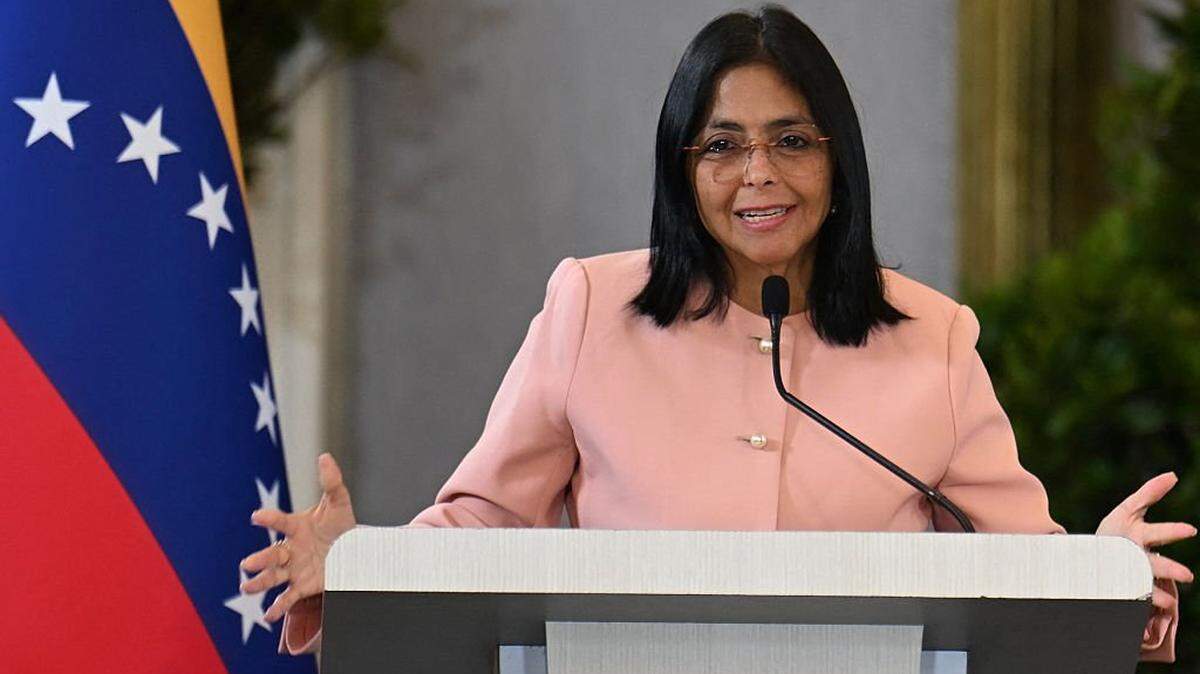
Yet following the removal of Nicolás Maduro and a series of extraordinary U.S. military and legal moves, Washington now appears open to a scenario that would have once been politically unthinkable: working with remnants of the Maduro regime — particularly his vice president, Delcy Rodriguez, and her brother, Jorge Rodríguez — to stabilize, administer and reorient Venezuela without first installing a democratic government.
Analysts who have followed the Venezuelan crisis for years told the Miami Herald that the arrangement announced Saturday by President Donald Trump and Secretary of State Marco Rubio pairs deeply distrustful actors with opposing worldviews.
But it is also an experiment that could succeed because it has the potential to satisfy the core interests of both sides — and, under certain conditions, may be one of the few scenarios capable of governing Venezuela without triggering large-scale violence, institutional collapse or mass migration.
“I think this could probably work because of one reason, and that is the ultimate fear they’ll have is that Venezuela goes into chaos, and I think it’s on all sides,” said Oren Kesler, CEO of the geostrategic and business consultancy Wikistrat.
The arrangement could simultaneously serve the interests of the remaining Chavista leadership —which is, above all, staying in power — and those of the United States, which include reclaiming influence over Venezuela from Russia, Iran and China, and pressuring Venezuelan officials to curb drug trafficking, without plunging the South American nation into turmoil.
The price, however, could be paid by ordinary Venezuelans eager to reclaim democracy after two decades of authoritarian socialist rule that coincided with economic collapse, mass emigration and institutional decay.
Among the biggest losers is the long-suffering Venezuelan opposition led by Nobel Peace Prize holder María Corina Machado. Despite commanding broad popular support — polling and opposition estimates have placed it near 80% — Machado lacks what Washington increasingly views as decisive: the backing of the Venezuelan military.
Following Maduro’s capture by U.S. forces on Saturday, Trump said the United States would effectively “run” Venezuela until a political transition takes place — an assertion that appears to rest on an understanding with figures inside the ruling socialist coalition and that sidelines Machado.
At a press conference, Trump spoke as though Venezuela’s prolonged political and economic crisis was nearing an end under an arrangement overseen by Washington.
“We are going to run the country until such time as we can see a proper and judicious transition,” Trump said. “We can’t take a chance that someone else takes over Venezuela who doesn’t have the good of the Venezuelan people in mind.”
Both Trump and Rubio suggested the Caracas leadership, now headed by Rodríguez, would follow Washington’s instructions closely.
Rodríguez “is essentially willing to do what we think is necessary to make Venezuela great again,” Trump said, adding that Rubio had been in contact with the newly minted Chavista leader.
From regime change to strategic realignment
Analysts said the key to understanding the contradictory alliance now emerging lies in Washington’s recalibrated objectives.
Despite years of rhetorical support for democratic restoration, they say the Trump administration does not view democracy as its primary endgame in Venezuela. Instead, the overriding goal is strategic realignment.
From Washington’s perspective, Venezuela has functioned as a logistical hub for adversarial powers and illicit networks: a transit corridor for cocaine, a shadow supplier of oil to sanctioned nations and a permissive environment for Russian, Iranian and Cuban intelligence operations in the Western Hemisphere. Neutralizing those threats, reducing migration pressure, and restoring predictable access to energy markets now outweigh the question of immediate democratic transition.
“Democracy would be a positive outcome,” said Evan Ellis, a research professor of Latin American studies at the U.S. Army War College Strategic Studies Institute. “But it is not a necessity.”
That distinction marks a fundamental departure from the outlook of officials such as Rubio, who has long framed Venezuela as a moral and ideological struggle. Rubio, analysts say, genuinely believes in dismantling the dictatorship and restoring democratic accountability. But in practice, he remains bound to execute the president’s policy — however transactional or authoritarian-tolerant it may be.
The result is a two-track U.S. approach: ideological language on democracy coexisting with pragmatic engagement aimed at securing compliance on drugs, migration, foreign alliances and oil.
Why the Rodríguez circle matters
Within Venezuela, not all Chavista figures are equally positioned to engage in such a bargain.
Analysts point repeatedly to the Rodríguez siblings—Delcy Rodríguez, vice president and de facto power broker after Maduro’s removal, and her brother Jorge Rodríguez, a longtime political operator and negotiator—as uniquely capable links in the chain.
Their relevance stems from three critical factors.
First, control.:The Rodríguez network retains influence over key elements of the security apparatus, intelligence services and judicial system. That control is essential not only to enforce any agreement with Washington, but also to reassure regime insiders that cooperation with the U.S. will not lead to prosecution, purges or seizures of their properties.
Second, flexibility: Unlike ideologues tied to the early Chávez project, the Rodríguez camp has shown a willingness to reframe alliances as transactional rather than doctrinal. Ties to Cuba, Iran or Russia, analysts argue, were survival mechanisms after the U.S. imposed sanctions — but not immutable commitments. Severing them would be painful, but feasible.
Third, deniability: Notably, the Rodríguez siblings were absent from recent unsealed U.S. drug-trafficking indictments that named other senior Venezuelan figures as co-conspirators. That omission has fueled speculation — unconfirmed but widely discussed — that back-channel talks are already under way, or at least being contemplated.
“This could be cynical deal-making,” Ellis said. “Or it could be aspirational thinking on Trump’s part. The truth may not even be fully clear yet.”
Coercive diplomacy
If such an alliance were to function, it would not rest on trust, but on leverage.
Recent U.S. military actions, analysts said, served less as an invasion than as a demonstration to the Venezuelan regime of its inability to resist. Caracas’ Russian-supplied air defenses reportedly failed. Cuban intelligence services—long embedded within Venezuela’s security structure—appeared conspicuously passive. The message was unmistakable: Washington has the ability to escalate force and willing to use it.
That leverage extends beyond force. U.S. prosecutors retain sealed indictments. Sanctions relief remains conditional. Access to international financial systems can be granted or withdrawn rapidly. For Venezuelan elites seeking survival, legitimacy and economic revival, the incentives—and the threats—are aligned.
“This would be coercive diplomacy,” Ellis said. “Negotiation backed by the credible threat of legal and military action.”
In that context, even powerful figures like Interior Minister Diosdado Cabello could become expendable. Analysts suggested Cabello’s recent behavior hints at anxiety over being “thrown under the bus” should Washington demand a symbolic sacrifice to validate the new arrangement.
Such internal purges, while destabilizing, may be precisely what would allow a narrower coalition to consolidate control and deliver on U.S. demands.
Managing the Chavista base
The most delicate challenge for any U.S.–Chavista alliance would be political legitimacy inside Venezuela.
Chavismo cannot openly present itself as an American proxy without fracturing its base. Instead, analysts believe the leadership would reframe cooperation as a pragmatic partnership undertaken to prevent chaos, avoid foreign occupation and protect national sovereignty under new conditions.
“They won’t say ‘we are a puppet,’” Kesler said. “They’ll say, ‘We are working with a new partner.’”
That framing may succeed because fear — not ideology — now dominates Venezuelan politics. The military fears fragmentation. Civilians fear economic collapse. Elites fear prosecution or exile. And all factions fear any descent into uncontrolled violence that could invite direct foreign intervention.
Maduro, analysts argue, had become the primary bottleneck preventing such recalibration. His removal has created a rare transitional moment in which power holders are reassessing their options.
In that vacuum, a controlled, elite-driven transition — even short of full democracy — may be acceptable to actors who would otherwise resist any change.
What Washington would demand
On foreign policy, analysts are confident compliance by Venezuela would be swift.
Ending oil shipments to Cuba, halting cocaine trafficking routes, curbing Iranian and Russian access, and opening Venezuela’s energy sector to U.S. companies are all achievable without dismantling the regime’s internal power structure. In fact, they would likely enrich those who control the transition.
“These were never ideological commitments,” Kesler said. “They were survival strategies.”
The harder question lies internally: power sharing, elections and accountability on the part of the remaining government. On those fronts, analysts expect resistance, delay, and selective concessions rather than sweeping reform.
But from Washington’s perspective, that may be acceptable, t least initially. Stability, alignment and predictability could take precedence over democratic purity.
A fragile equilibrium
None of this guarantees success.
Public statements by Delcy Rodríguez on Saturday rejecting U.S. dominance suggest either necessary political theater — or genuine resistance exacerbated by Trump’s public bravado. Analysts warn that Trump’s overstated claims about “running Venezuela” may harden positions, forcing Venezuelan leaders to posture defensively even if negotiations are ongoing.
The result is an unstable equilibrium: private talks, public defiance, incremental compliance, and constant recalibration.
“It’s weird,” Ellis said. “There could be 16 different things happening at once.”
History suggests such arrangements are not unprecedented. The United States has repeatedly worked with unsavory partners to achieve strategic objectives — from Cold War Latin America to post-war Iraq and beyond.
In Venezuela’s case, the alternative paths — civil war, mass migration, or prolonged paralysis — may be worse.
An alliance between Washington and remnants of the Maduro regime would unite actors who distrust each other, despise each other’s narratives, and expect betrayal. But it would also align incentives around survival, profit and control.
That may be enough to make it work — at least for now.
A Miami Herald correspondent in Venezuela contributed to this report.