
Rubio warns Cuban leaders they won’t be able to ‘buy time,’ calls Cuba a ‘threat’
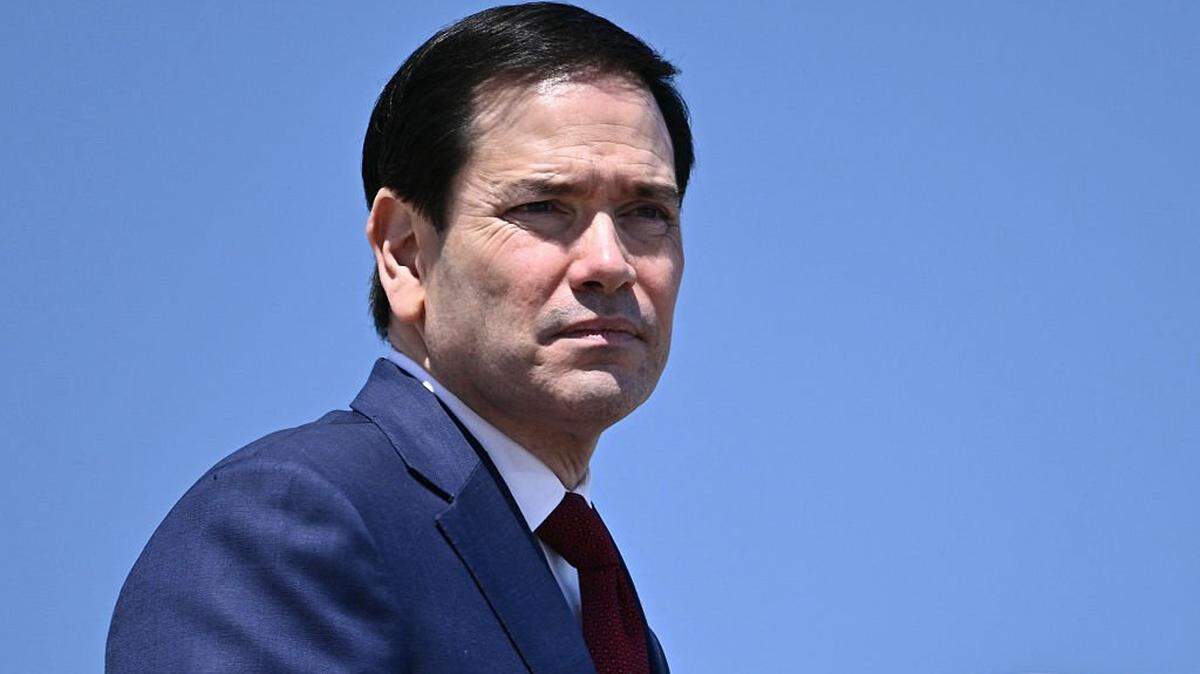
Secretary of State Marco Rubio cast doubt on Thursday that conflict with Cuba can be resolved diplomatically and issued a strong warning to the government in Havana, telling reporters Cuba is a national security threat and that Cuban leaders will not be able to “buy time.”
“They’re not going to be able to wait us out or buy time,” Rubio told reporters in Miami on his way to Sweden. “We’re very serious, we’re very focused. As I told you a moment ago, in the context of Iran, the president’s preference is always a negotiated agreement that’s peaceful. That’s always our preference, that remains our preference with Cuba. I’m just being honest with you. You know, the likelihood of that happening, given who we’re dealing with right now, is not high. But if they have a change of heart, we’re here, and in the meantime, we’ll keep doing what we need to do.”
Pressed about the likelihood of the use of military force to achieve a political change in Cuba, Rubio stressed the administration’s preference is “a diplomatic solution, always, and a negotiated agreement.
“But to answer your question, if there’s a threat to the national security of the United States, the President not just has the right, he has the obligation to address that national security threat,” he added.
The administration has been ramping up the pressure on the Cuban government in recent days, when it announced sanctions on the military conglomerate GAESA, which runs much of the island’s economy, and on several government officials. On Wednesday, the Justice Department unsealed an indictment against Raúl Castro, the island’s longtime ruler, who was charged with murder for the deaths of four Cuban exiles in a 1996 shoot-down by Cuba’s air force of two civilian planes from Miami.
In recent days, Rubio’s tone has hardened, tying economic reforms in Cuba with regime change.
On Thursday, Rubio called Cuba a national security threat, saying it’s a country 90 miles from U.S. shores heading to a “systemic meltdown.” He said the Cuban government has acquired weapons from Russia and China over the years and “hosts” the presence of Russian and Chinese intelligence. He called the island’s government “one of the leading sponsors of terrorism in the entire region.
“Cuba has consistently posed a threat to the national security of the United States, and the other thing that poses a threat to national security, the United States, is to have a failed state 90 miles from our shores, run by friends of our adversaries,” he told reporters.
Rubio also said Cuba’s prolonged economic and political crisis could directly affect the United States.
“You’re heading for a failed state, but it’s 90 miles from our shores, so we’ll be impacted by the migratory crisis, by any violence and instability that happens there,” he said. “It directly implicates the United States’ national interest. So the future of Cuba belongs to the people of Cuba, in terms of how they’re governed, what the system looks like, and so forth. But the national security threat that’s 100% something we’re going to focus on, because that’s about America.”
Cuba immediately protested Rubio’s remarks.
Foreign Minister Bruno Rodríguez said Rubio was lying “to incite military aggression that would result in the shedding of Cuban and American blood.”
Cuba, he said, has never been a threat to the national security of the United States. “It is the U.S. government that ruthlessly and systematically attacks the Cuban people,” Rodriguez said in a statement in X.
On Thursday afternoon, the social media account of the government of Cuba, handled by the office of the country’s prime minister Manuel Marrero, posted a parody of Rubio as a puppet and identified him as Mr. Blonde Worm, recycling a derogatory term Fidel Castro coined to dehumanize opponents.
In Miami, Rubio blasted Cuban leaders for refusing to enact changes to allow Cubans to own businesses and vote for their leaders. He doubted that there are people among the elites in power who would be willing to work with the United States to make such changes, a hint that back-channel conversations with Raúl Castro´s grandson, Raúl Guillermo Rodríguez Castro, are not delivering the expected results.
“There just doesn’t seem to be people over there in charge of the regime who are in any way open to any of those changes. And the things they talk about economically are cosmetic in nature, they’re not real, because that’s what they’ve gotten used to all these years. It’s just buying time and waiting us out,” he said.
The Trump administration has sent State Department officials and the director of the CIA to Havana to engage in talks, but Rubio said the diplomatic engagement with Cuban officials was not progressing.
“At the end of the day, they got to make a decision,” he said. “Their system doesn’t work right, their economic system does not work. It’s broken, and you can’t fix it with the current political system that’s in place. They just don’t comprehend how to do it, and it’s a failed state.”
Rubio again blamed the military company GAESA for pocketing the country’s foreign revenue instead of spending it on the population or the country’s dilapidated public infrastructure, in remarks similar to a video message in Spanish he posted on Wednesday to mark Cuba’s Independence Day..
“They have a private military company named GAESA, that’s sitting on $18 billion of assets, and not a penny of that transfers over to the state budget, not a penny of that goes over to help the people of Cuba, not one cent,” he said. “So, even if they had all the diesel in the world, they still wouldn’t be able to generate energy, because they stole the money and haven’t invested in their energy infrastructure.”