
Rubio: Cuba’s reforms ‘not dramatic enough,’ country needs ‘new people’ in charge
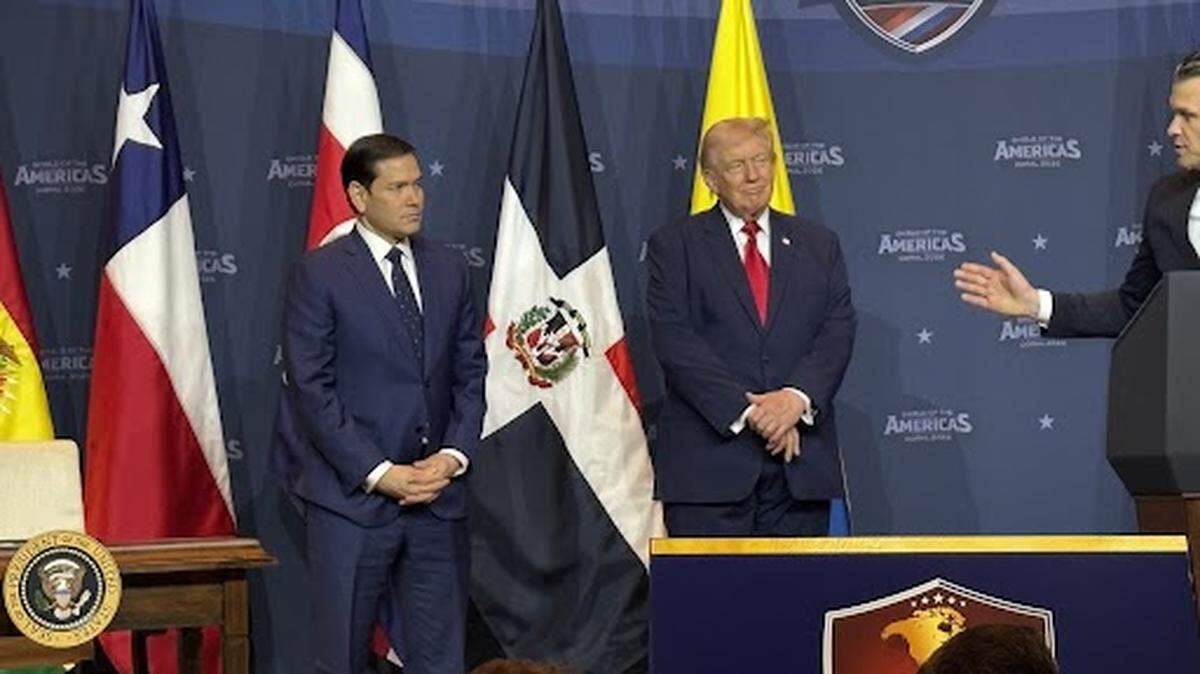
Secretary of State Marco Rubio said Tuesday that measures announced by Cuba on Monday to allow Cubans living abroad to own private businesses on the island are not “dramatic enough” to fix the country’s dire economic problems and that the country needs “new people” in charge.
“Cuba has an economy that doesn´t work, and a political and governmental system that can’t fix it, so they have to change dramatically. What they announced yesterday is not dramatic enough. It’s not going to fix it, so they’ve got some big decisions to make over there,” he told reporters at the White House at the beginning of a meeting with Ireland’s prime minister.
In response to another question, Rubio insisted that Cuba’s economy does not work and has survived thanks to subsidies, first from the Soviet Union and later from Venezuela.
“They don´t get subsidies anymore, so they are in a lot of trouble, and the people there don´t know how to fix it, so they have to get new people in charge,” he said.
Rubio’s comments are the clearest indication yet that the Trump administration, which is in talks with Cuba, does not view the announced changes as sufficient for the United States to ease pressure on the communist island. Rubio suggested last month that Cuba could reform its economy as a first step to ease U.S pressure, adding that the U.S. is not expecting Cuba to change overnight.
His remarks on Tuesday also appeared to confirm earlier reporting by the Miami Herald that U.S. officials have told people close to Raúl Castro, the country’s ultimate authority, that the country’s handpicked president, Miguel Díaz-Canel, is an obstacle to any agreement and needs to be replaced.
President Donald Trump cut off most oil supplies to the island in an attempt to pressure Cuban leaders to negotiate changes to the country’s six-decade-old communist system. Trump has recently mused about a “friendly takeover of Cuba,” a country he has described as a “failing” nation ready to “fall.” On Monday, he said he thought he would have the “honor of taking Cuba.”
“I think I can do anything I want” with Cuba, he added.
After finally admitting that the countries are indeed in talks, the Cuban government announced on Monday new measures allowing Cubans in Miami and elsewhere to invest in and own private businesses on the island, confirming the Herald’s earlier reporting.
In an interview with NBC News, the country’s deputy prime minister, Oscar Pérez-Oliva Fraga, said those investments could go into sectors previously off-limits to Cuba’s private sector, including the country’s crumbling infrastructure. Perez-Oliva, who also serves as the country’s minister of foreign trade and investment, said Cuba was also “open to having a fluid commercial relationship with U.S. companies” and “also with Cubans residing in the United States and their descendants.”
But later on Monday, it became clear that Cuba wants to welcome investments from Cubans abroad only within the limits allowed by its current system.
Lack of protections
While Pérez-Oliva said Cuba will open up several business opportunities for Cubans living in Miami and elsewhere, including in banking and agriculture, he ruled out major legal changes to accompany them, suggesting Cuba’s leadership is shying away from an overhaul of the country’s laws, which currently lack guarantees and protections for investors and do not uphold rule-of-law standards.
He made the comments during a pre-recorded interview aired on state television Monday evening, when most Cubans were unable to watch it because of an islandwide blackout after the country’s grid collapsed earlier in the day.
Perez-Oliva said Cuban nationals abroad will be able to own private businesses on the island without having to reside in Cuba permanently. They could also invest in other private businesses, partner with a state company or put their money into an investment fund to finance other projects on the island. For the first time, Cuban authorities would also allow private banking, decades after Fidel Castro nationalized all privately owned financial institutions.
Perez-Oliva said the government would make it easier and shorten the time to approve potential investments, a long-time promise never realized, and one of the many reasons the country attracts little capital from abroad.
The measures described by the deputy prime minister will require changes to regulations restricting ownership of private businesses only to Cubans legally residing on the island, as well as those making key economic sectors, including mining, agriculture and those linked to the country’s infrastructure, strictly off-limits for private enterprises.
Limited scope
But he let slip the limited scope of the economic opening when he stated it could be put in place without significant changes to Cuban law.
“These decisions can be implemented very quickly from the point of view that they do not require major changes to legal regulations,” he said.
Cuba’s foreign investment law, for example, does not include third-party arbitration for conflicts between companies or between companies and the state. Cuba’s constitution enshrines the socialist system as irrevocable, and the Communist Party as “the superior driving force of the society and the State.”
Absent were also any talks about the sale of land. Instead, he announced that the government could lease land to private business owners to try to improve agricultural production, one of the country’s main problems.
The deputy prime minister said little about attracting U.S. companies to invest on the island, pivoting instead to a familiar theme: criticism of the U.S. embargo.
Perez-Oliva said Cuba’s “doors” were open for trade with American companies, but said the embargo would not allow it, calling on the U.S. government to make a “bold move” to lift sanctions preventing U.S. companies from freely investing on the island.
In past negotiations with the Obama administration, Cuban officials made demands for the U.S. to lift the embargo before embarking on more significant reforms.
Pushing back
Talking to reporters on Tuesday, Rubio hinted the administration is not inclined to do so.
Asked whether he supported easing the trade embargo if Cuba cooperates more with the United States, he declined to discuss what the administration would do, but added: “Suffice it to say the embargo is tied to political change on the island, the embargo is codified,” he said in reference to the 1996 Helms-Burton law that requires a democratically elected government be in place before the president can lift the trade embargo.
In Miami, local Republican politicians, including U.S. Reps. Maria Elvira Salazar and Carlos Gimenez, had pushed back against a potential deal with Cuba that would leave members of the Castro family or the communist system in place. Gimenez, for instance, has denied the existence of talks between Rubio’s team and Castro’s grandson, revealing how difficult it is for local Republicans to deal with the controversial subject, despite their support of Trump and Rubio.
Said Salazar: “Count me out if it’s about maintaining the Chinese model, which is they have political power in their hands and they hand the economy over to the masses and the businessmen. Perpetuating the Castros or some of their cronies…. Don’t count me in.”