
Radio Marti’ is back on the air. Here’s why its signal is likely not reaching Cuba
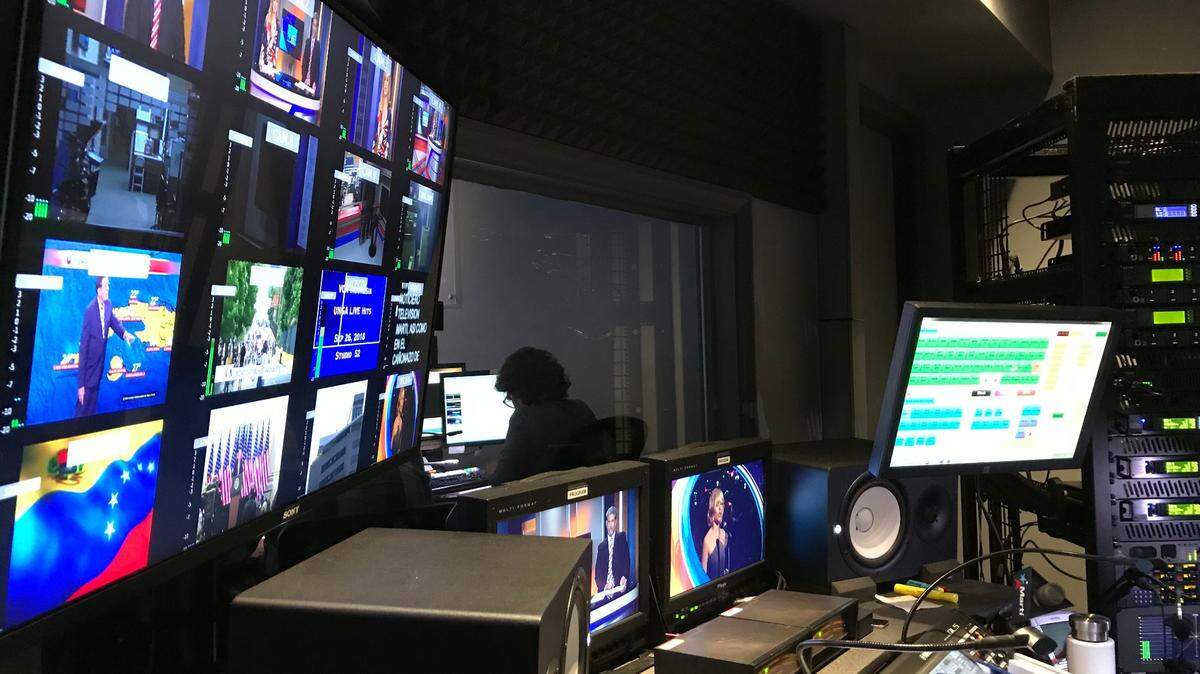
Despite an earlier announcement that Radio Martí was back on the air following a presidential executive order that suddenly halted the U.S.-funded radio broadcasting to Cuba, its signal is probably not reaching the island because its shortwave transmitters remain silent.
Early in March, President Donald Trump issued an executive order mandating that the U.S. Agency for Global Media — the parent agency of Voice of America and the Office of Cuba Broadcasting, which oversees Radio and TV Martí and the online news site Martí Noticias — reduce operations to a minimum. All Martí employees and senior management at the Office of Cuba Broadcasting were placed on leave, and the radio station stopped transmitting for the first time in four decades.
Following intense criticism in South Florida and lobbying efforts by members of the Republican congressional delegation from Miami, Martí’s full-time employees and seven contractors were called back to work. But the station’s shortwave radio signal, which is less likely to be jammed by Cuban authorities, was never restored.
An attendant at the Greenville Transmitting Station in North Carolina, which carries the station’s signal, confirmed to the Miami Herald that transmitters used to broadcast Radio Martí’s shortwave signal to the island are off. A source knowledgeable about the station’s internal decisions who was not authorized to speak publicly said that the station’s programming is only available online and through a secondary AM signal transmitted from Marathon in the Florida Keys. The AM signal is easier for Cuban authorities to jam.
The person said only one contractor had been called back to work to ensure the safety of the old technology used at the Greenville station.
Last month 14ymedio, an independent news outlet based in Cuba, reported that no signal was detected in Havana nor in Villa Clara, in central Cuba, on the shortwave frequency where Radio Martí used to broadcast.
Though full-time staffers were brought back to work at the station’s office in Doral, Radio Martí has been unable to resume its full programming. In recent days, seven contractors previously fired have been called back to work, but some produce videos for social media or write for the news site and are not involved in radio-related work.
The U.S. Agency for Global Media did not reply to a request for comment.
Trump’s orders to reduce the U.S. Agency for Global Media’s “performance of [its] statutory functions and associated personnel to the minimum presence and function required by law” has upended the work of Voice of America, Radio Marti and other stations that the agency funded. Several employees have sued the administration over its plans.
Central to their claims is how the agency’s top leadership has interpreted the functions mandated by Congress. The 1983 law creating Radio Martí specifically names the Marathon facility and states it can be used for radio broadcasting to Cuba. It also says the station can use frequencies other than AM, but it appears to tie their use with a requirement to broadcast Voice of the America content. Voice of America is still off the air and is the subject of several lawsuits.
In recent years, the Office of Cuba Broadcasting has tried to modernize the stations — redirecting resources from controversial television programming that could not be watched on the island because of signal jamming — to produce videos for Martí Noticias and social media.
While past administrations and some members of Congress have questioned the spending on radio, Cuban American members of Congress have supported Radio Martí as a vehicle for news on an island where internet access is expensive, blackouts are common, and the government shuts down the internet during protests.