
Radio Martí resumes broadcasting to Cuba, but its future remains uncertain
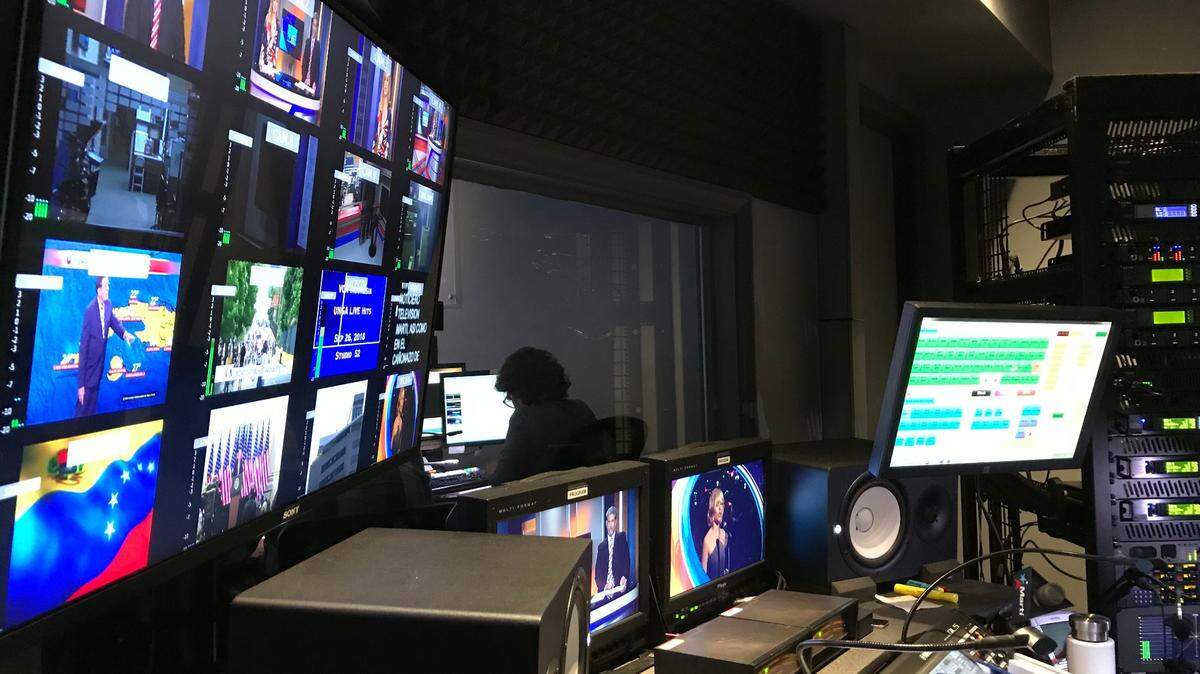
With its familiar theme, a century-old song honoring Cuban independence hero José Martí, playing once again, Radio Martí resumed broadcasting to Cuba on Wednesday, reversing a controversial decision following President Donald Trump’s order to reduce its parent agency to the minimum.
The U.S. Agency for Global Media, which oversees Radio and TV Martí and the Martí Noticias website through its Office for Cuba Broadcasting, notified federal employees who had been placed on leave on March 15 that they could return to work at its Doral location, sources with knowledge of the decision told the Miami Herald.
Radio Martí announced Wednesday it was returning to the air in a publication on X. The Martí Noticias website also resumed publishing stories on Wednesday.
In an executive order signed on March 14, Trump ordered the U.S. Agency for Global Media to reduce its functions and personnel to the minimum required by law. The order also affected Voice of America and other outlets it funded, including Radio Free Europe/Radio Liberty, Radio Free Asia and the Middle East Broadcasting Networks.
Radio Martí first aired in 1985, and its temporary shutdown sent shockwaves throughout the Cuban-American community. The founder of the Cuban American National Foundation, Jorge Mas Canosa, spearheaded the effort to create Radio Martí under President Ronald Reagan to facilitate the flow of uncensored information to Cubans on the island. The foundation called on Trump to “reconsider his decision” to dismantle it, saying shutting the station down is “a long-cherished desire of the Castro dictatorship.”
“Radio Martí has been a beacon of hope, allowing both the United States and the entire world to understand the reality of Cuba, while also serving as a vital source of information for Cubans on the island,” the foundation said in a statement. “This cut comes at a critical time for the Cuban people, who are facing total internet disconnections, power outages lasting longer than 48 hours, food and medicine shortages, and constant repression. In this context, Radio Martí not only informs but also represents a lifeline for an unarmed and dying population.”
Several Cuban dissidents and recently released political prisoners also criticized efforts to dismantle the station, calling it a “bulwark” against government abuses.
The U.S. Agency for Global Media did not immediately answer questions about the decision to resume Radio Martí´s operations. Previously, Kari Lake, appointed by Trump as the agency’s senior advisor, had said it would “shed everything that is not statutorily required.”
She also said that “waste, fraud, and abuse run rampant in this agency” and that it was not “salvageable.”
Radio Martí returned to the air after Cuban American Republican members of the Florida congressional delegation made terse statements — without overtly criticizing the administration — that they wanted to see the iconic radio station back on the air.
Rep. Mario Díaz-Balart, the vice chair of the powerful House Appropriation Committee and a staunch supporter of the Martí stations, had said he was working with the administration “to see how we can reverse it, or at least find a way to provide radio and communication services for the Cuban people, which is essential.”
Still, much of the Martí stations’ future is up in the air.
Contractors fired due to Trump’s executive order have not been rehired. They make up almost half of the about 75 workers at the Office for Cuba Broadcasting and mainly produce content for the radio station, the website, and an audiovisual production unit that substituted for television programming.
Under new leadership, the Office for Cuba Broadcasting has been devoting more resources to the station’s digital operations in recent years and has revamped its social media strategy. The Office also rebuilt a network of collaborators inside the island who, at the risk of being arrested by Cuban authorities, could report on issues and send videos for Martí Noticias and its social media accounts.
Some of those leading efforts to focus on the digital side were recently hired employees who were also fired under a separate executive order targeting probationary employees.