
Trump orders the dismantling of Radio and TV Martí, and employees are placed on leave
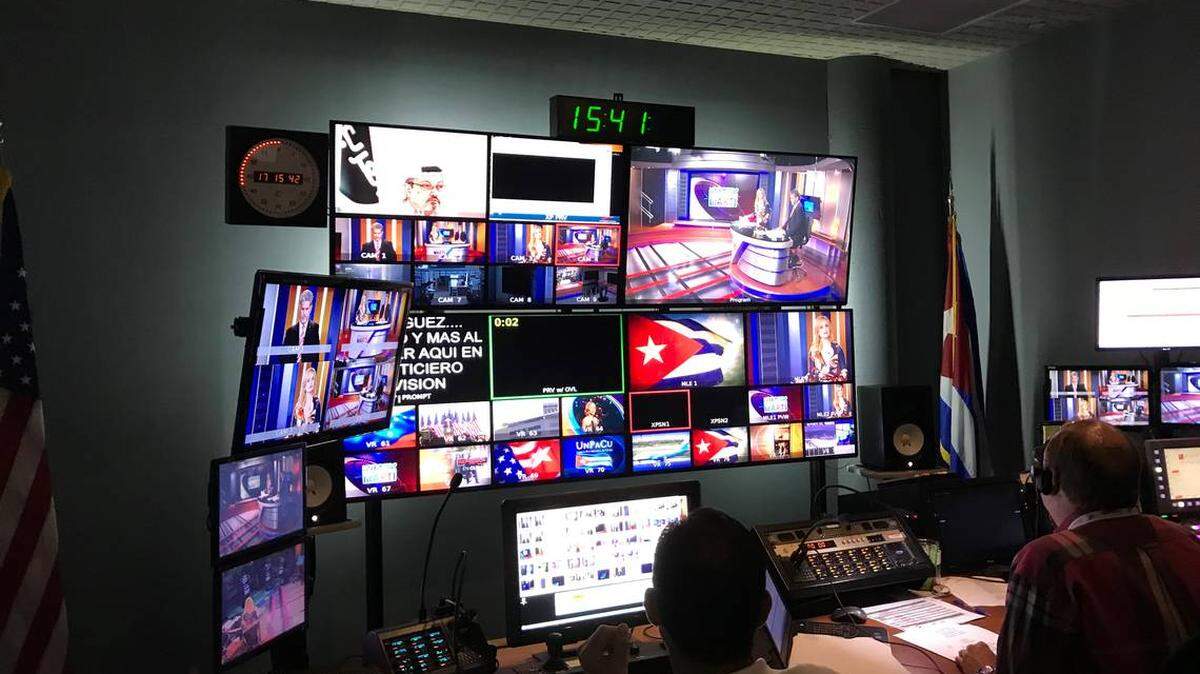
President Donald Trump has ordered the dismantling of the parent agency of the Office of Cuba Broadcasting, which oversees Radio and Televisión Martí, a Reagan-era effort to promote democracy and the free flow of information to Cubans on the island.
In an executive order late Friday to “continue the reduction of the federal bureaucracy,” Trump mandated the U.S. Agency for Global Media and six other small agencies to “reduce the performance of their statutory functions and associated personnel to the minimum presence and function required by law.”
On Saturday, all full-time employees and some contractors at the Martí stations, which are based in Miami-Dade County, were placed on administrative leave with full pay and benefits, according to sources familiar with the decision.
“During the period that you are on administrative leave, you are not to enter USAGM premises,” the email obtained by the Miami Herald said. ”Since you will not have any official business during this time, on request, you will be immediately expected to surrender your official USAGM identification badge, press pass, telephone devices, and other equipment.”
The executive order also affects other U.S. government media outlets overseen by the U.S. Agency for Global Media, including Voice of America. According to media reports, the agency also placed all VOA full-time staffers, including journalists with the Haitian Creole service, on leave and ended all contracts for the private nonprofit broadcasters it funds, including Radio Free Europe/Radio Liberty, Radio Free Asia and the Middle East Broadcasting Networks.
The Office of Cuban Broadcasting had an annual budget of $12 million, after reductions in recent years. Previously, it received more than $20 million annually from Congress.
The gutting of the stations is good news for Cuban authorities. Since its creation in 1983, Cuban diplomats regularly requested their dismantling during talks with their American counterparts.
Over the years, the Martí stations weathered budget reductions, controversies surrounding their directors, plans to fuse with the Voice of America, and criticism about their journalistic standards. At every turn, Cuban-American members of Congress from South Florida helped them survive.
Its television programming was kept running for decades, even if it could not be watched on the island because signals were jammed. However, Radio Martí could be heard in many parts of the country and succeeded in breaking the information monopoly of the Cuban state media for many years before Cubans could consume news online and on their cellphones.
In recent years, television programming, which was mostly watched locally in Miami, was discreetly shut down as the office focused on promoting the online news site Martí Noticias and video content for social media.
It’s unclear how the cutbacks will affect the radio and online efforts.
The director of the Office of Cuban Broadcasting, Sylvia Rosabal, did not immediately reply to a request for comment.
This story was originally published March 15, 2025 at 3:39 PM.