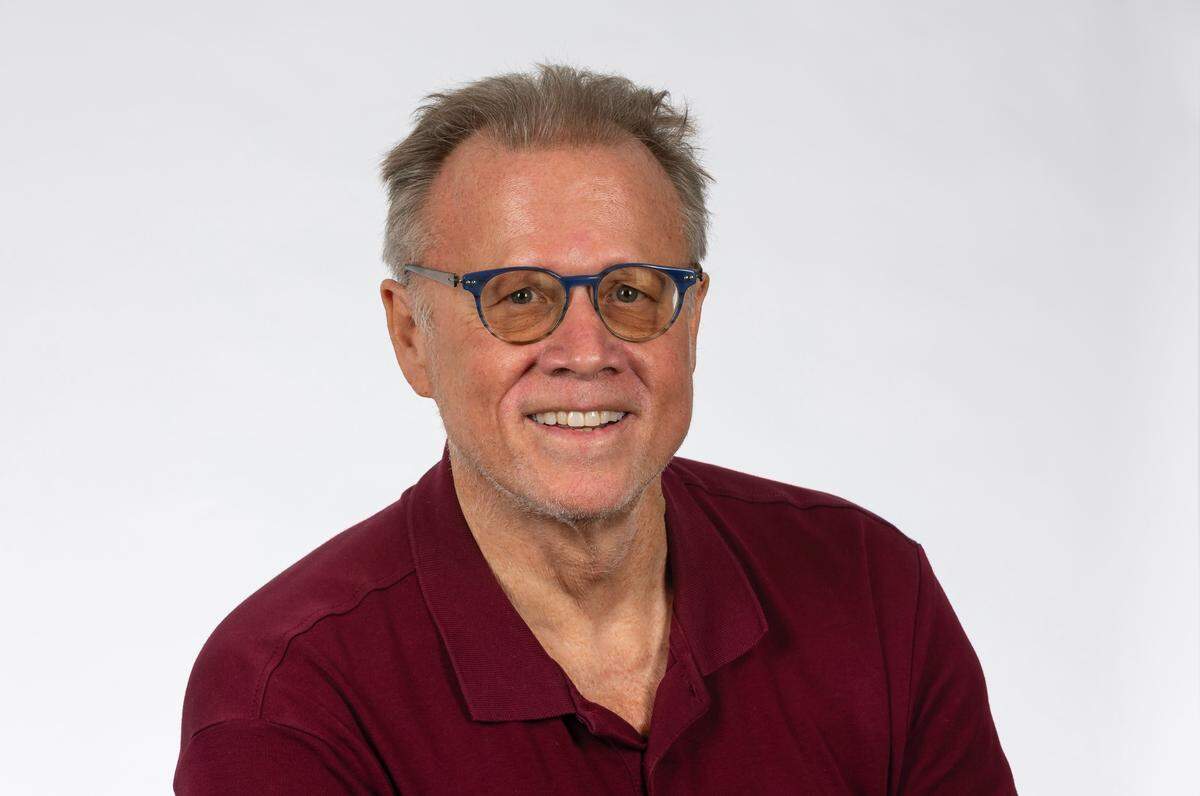
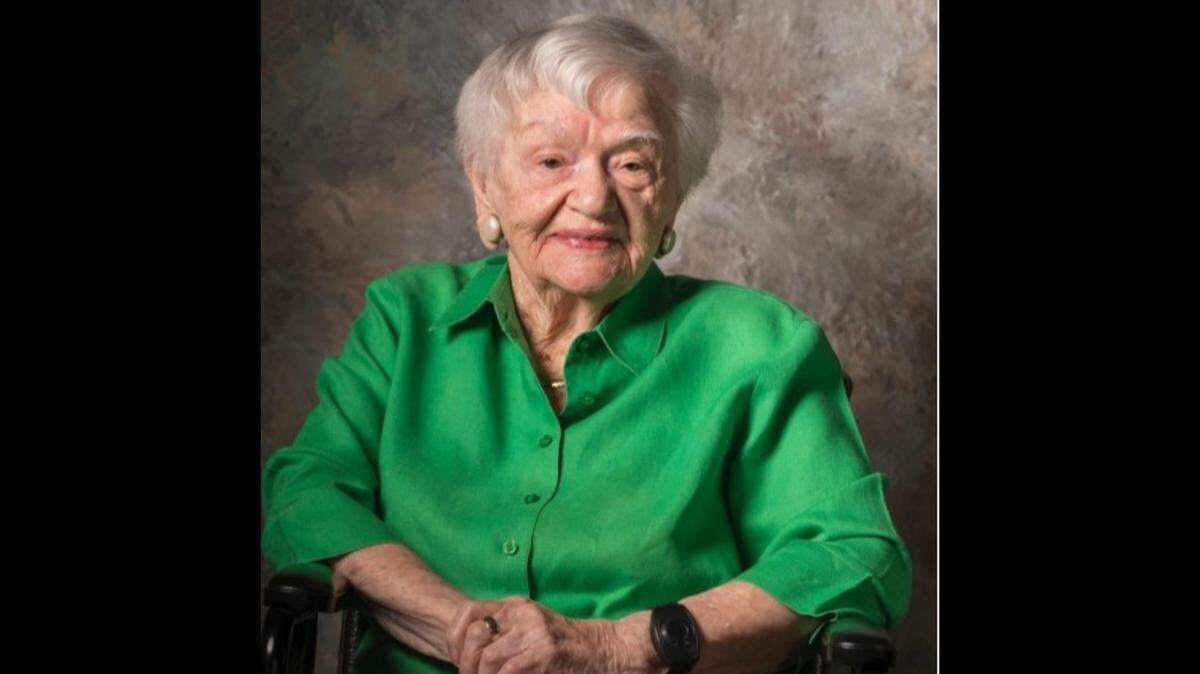
Holocaust survivor Helen Fagin created memorials from Miami Beach to D.C. She died at 104.
READ MORE
South Florida Holocaust stories
Over the years the Miami Herald has written obituaries on several Holocaust survivors who made their lives in South Florida. Here are some of their stories.
Expand All
Holocaust survivor spent his life honoring his mother’s last words. Leo Rosner dies at 92
Holocaust survivor, who fought to ‘right the wrongs’ of Nazi Germany, dies at 92
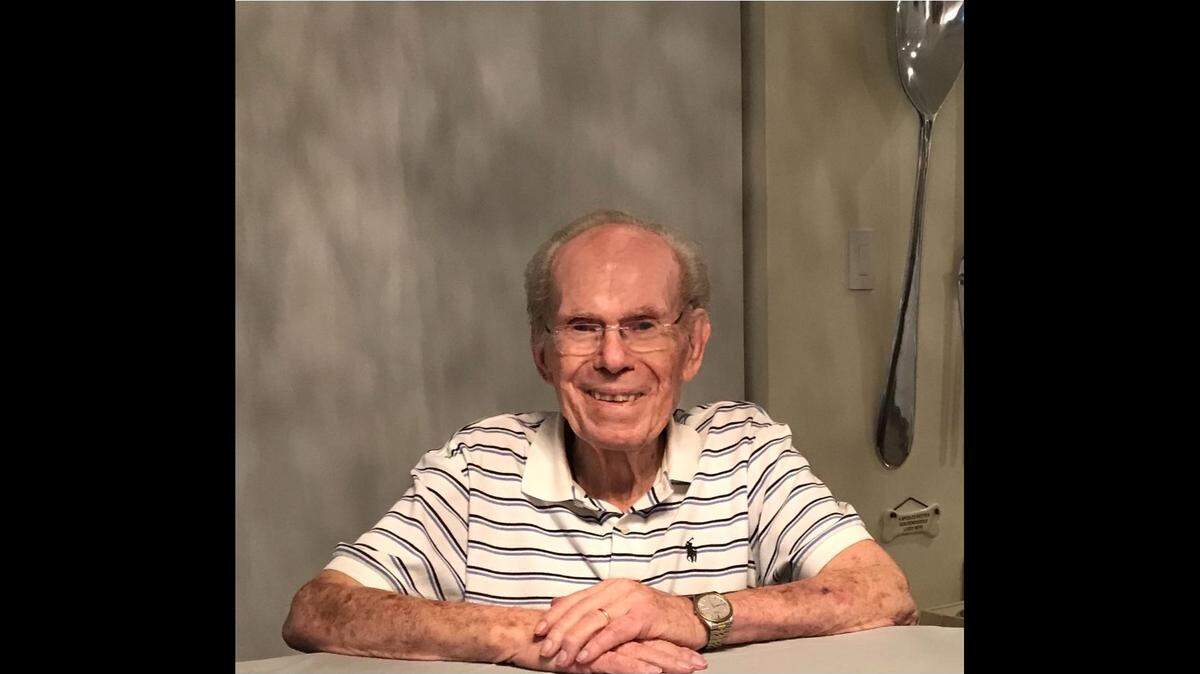
Passenger on 1939 ‘Voyage of the Damned’ and Holocaust survivor dies at 94
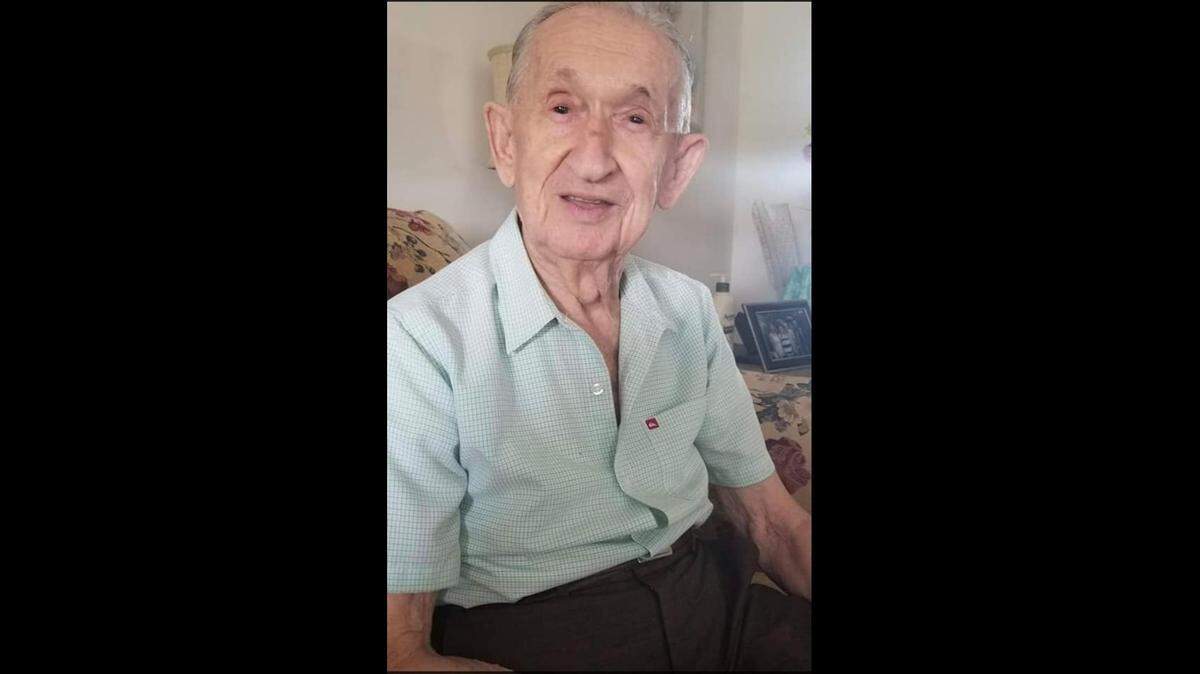
He ‘really thought he was a lucky man.’ Man who survived the Holocaust dies at 99.
Helen N. Fagin, who died March 13 in Sarasota at age 104, survived the Holocaust, taught about it as an internationally renowned professor at the University of Miami and was at the heart of efforts to build nationwide memorials to its millions of victims — starting with the iconic and poignant sculpture park in Miami Beach.
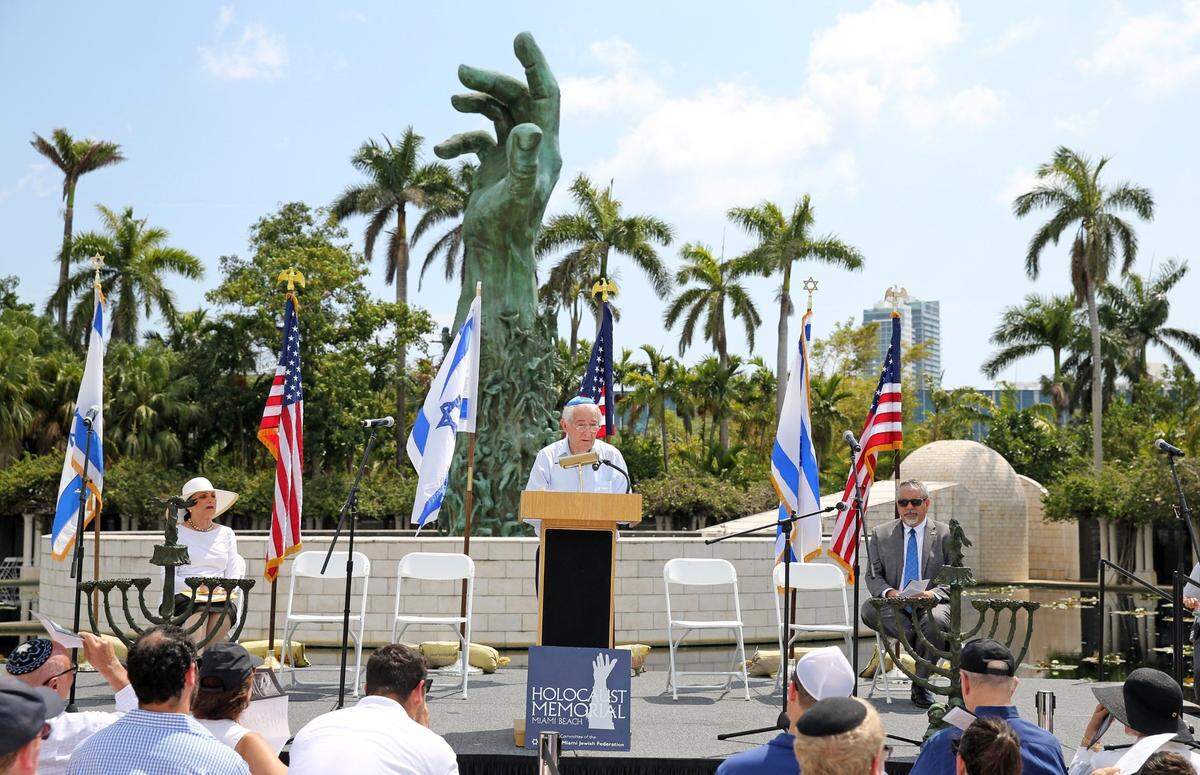
The Holocaust Memorial, at 1933-1945 Meridian Avenue, began when three passionate locals met in Miami in the mid-1980s.
Norman Braman chaired the committee behind the Holocaust Memorial. Coconut Grove architect Ken Treister designed the bronze sculpture of an arm and hand reaching toward the sky. Fagin, tapping her memories and culling through thousands of photographs from UM and archives at Yad-Vashem Holocaust memorial in Jerusalem to tell the history, gave the Holocaust Memorial its soul.
She gave the memorial its light, and its purpose — because she knew.
“I always say when people ask me about the memorial I say Treister wrote the music and Helen took care of the words,” Braman told the Miami Herald.
“Helen told the story of the Holocaust. That was her role in the creation of the memorial. And she did so as an educator because she was a survivor. And as a survivor, to be certain that the story and the history of the Holocaust never be forgotten, she was remarkable. Her focus was always there and she understood it better than anybody else. She held on to the highest principles among our very small group and kept us on the right path from the very beginning when we all met in 1985, to when the memorial came about in 1990,” Braman said.
Memories of the Holocaust
Her children, Judith and Gary Fagin, culled stories of their mother’s life to share in the family obituary.
Born Helen Neimark in Radomsko, Poland, on Feb. 1, 1918, Fagin grew up in a home steeped in Jewish tradition and culture, Gary wrote.
Fagin was in her second year at the Jagiellonian University in Krakow, Poland, when World War II erupted in 1939. Soon after, her parents were sent to the Treblinka concentration camp, where they were killed.
Fagin’s memories of the horrors of World War II began earlier with the event that has come to be known as The Night of the Broken Glass, Kristallnacht, on Nov. 9, 1938. The Nazi regime coordinated a wave of antisemitic violence in Nazi Germany, the United States Holocaust Memorial Museum noted.
Members of Fagin’s family and relatives who were living in Germany were arrested, their homes destroyed and their businesses and synagogues desecrated and looted, Fagin told Miami Herald columnist Bea Hines in 1988.
“My family, who lived in Berlin, was deported as Polish Jews to Zbaszyn, the town where thousands of German Jews of Polish origin were sent,” Fagin told the Herald. “They were dispossessed of all their belongings and were totally uprooted.”
Until then, Fagin told the columnist, the German Jews had considered themselves quite assimilated into the German culture. “They even served in the German army and were proud of their German citizenship. It came as a shock. They were deprived of the right to live.”
The Holocaust ultimately claimed the lives of her parents and 87 members of her extended family.
Fagin and her two sisters survived the war, spending five years in ghettos and in hiding, separate and apart, before they were reunited, her son wrote.
Coming to America
Fagin arrived in New York City in 1946 — “straight from a displaced-persons camp in Austria,” she told the Herald in 1988. She spoke little English.
In 1948, she married Sidney Fagin. Three years later, in 1951, with their daughter Judith, Helen and Sidney moved to Miami, where their son Gary was born.
Making history at UM
In 1971, Fagin joined the University of Miami’s English department faculty, having earned her bachelor’s and master’s degrees at UM by 1968. She was a fast favorite among students. Fagin won the Freshman Teacher of the Year and the Panhellenic Council Best Professor awards.
Fagin, as every accomplished scribe and skilled editor will tell you, was a master of the “show me, don’t tell me” school of thought.
In a letter to the editor of the student newspaper, The Miami Hurricane, early in her career, a group of students wrote: “Mrs. Fagin cares about us as people, not as numbers or just as faces. She is teaching us the concept of morality towards other human beings; showing us the wrongs of man’s inhumanity to man and how we can correct the embedded philosophy. She teaches us by showing us.”
Norma Orovitz, a retired journalist and author who spent decades serving Miami Jewish Home and Hospital (now Miami Jewish Health), was one of her students. Orovitz says Fagin was a strong influence.
The two met in 1973 when Orovitz went back to UM as a second-time-around student after she had three children. This was about 10 years after her first period of study at UM had ended in 1964. An English major, Orovitz was about to register for an upper-level English course but a former teacher encouraged her, instead, to take advantage of a new class Fagin had just developed, Literature of the Holocaust. Fagin’s curriculum was one of the earliest of its kind in the U.S., according to UM.
“Helen’s class was an old-fashioned seminar with perhaps 20 students. There was no traditional homework, per se. She assigned us different genres and had us write personal but critical essays on what we read,” Orovitz recalled.
“What was also unique was that she opened her home to us on Tuesday nights to meet her colleagues — Elie Wiesel, for example — or just to chat with fellow students in an informal way. After I graduated and became a reporter for The Jewish Floridian, she introduced me to those she knew who would be good ‘stories,’” Orovitz said.
Orovitz’s friend Marty Wasserman, a Miami Beach attorney and “third generation Hebrew Academy parent,” was her classmate in Fagin’s first Holocaust literature course.
“I only learned recently through Helen’s daughter Judy that our class was actually a test case to see if there was student interest. How truly fortunate Norma and I were to have the opportunity to be in Helen’s first class,” Wasserman said in an email to the Herald.
“For me, it was a unique experience on multiple levels that opened a new perspective on my knowledge and feelings towards the Holocaust. Although I had extended family members and my parents had friends with numbers on their arms the Holocaust was not something talked about, or perhaps not in my presence. Through the literature we read for the course, our unconventional classes, and my many sessions in Helen’s office, I developed an entirely new awareness and psychological perspective of man’s inhumanity to man,” Wasserman said.
“Out of an experience filled with hatred and cruelty, Helen Fagin implemented lessons of compassion and understanding, of tolerance and inclusivity,” the University of Miami Alumni Association published in a newsletter in 2016.
“Her open houses, held regularly in her home, were immensely popular. At a time when tensions over race, religion and the Vietnam War were high, students had a place to come together and talk,” the University of Miami Alumni said of Fagin in its feature.
But, as her family said, for more than 20 years Fagin “had rarely, if ever, spoken of her own experiences, the memories too painful to share.”
All of that changed, however, when “Night” author and future Nobel Laureate Wiesel was invited to speak at the University of Miami Hillel House. Fagin was asked to hold a reception in his honor at her home. Wiesel encouraged Fagin to talk about her experiences so that others would not “describe it from their imaginations,” according to the UM Alumni Association.
Fagin’s resulting Literature of the Holocaust course would become part of a newly created Judaic Studies program at the University of Miami. Fagin became program director in 1978, after receiving her doctorate at UM in 1977.
“I became strongly convinced that the Holocaust could serve as a constructive lesson in teaching personal morality to young men and women,” Fagin had said.
Holocaust memorials
In 1979, Fagin became education adviser to Wiesel in developing what would become the United States Holocaust Memorial Museum in Washington. The museum opened in 1993. She later served as chair of its Education Committee.
“I first met Helen about 35 years ago and worked very closely with her in developing the Museum’s educational outreach strategy, well before the Museum opened,” said Sara J. Bloomfield, director of the United States Holocaust Memorial Museum.
“She helped lay the foundations for the national and international impact the museum has today. Helen had a rare combination of talents: she was smart, funny, courageous and tough, a woman with very high intellectual and moral standards. It was a great honor to work with her. She taught me so much,” Bloomfield said.
In addition to the creation of the Holocaust Memorial in Miami Beach, Fagin was instrumental in forming the Florida Holocaust Museum in St. Petersburg. She was appointed by President Bill Clinton to serve on the committee that created the World War II Memorial on the Mall in Washington.
Fagin’s daughter Judith honored her mother’s legacy by setting up the Dr. Helen N. Fagin Holocaust Education Endowment Fund at the United States Holocaust Memorial Museum in Washington as a legacy gift in 2016.
“I was honored to serve as the national chair of the museum’s Legacy of Light Society,” Judith Fagin said of a position she served from October 2017 to January 2022. She does so, and established the fund, to honor her mother’s commitment to ensure that subsequent generations never forget the history of the Jewish people and those who suffered the lasting results of the Holocaust.
“My mother changed a lot of lives during her career, through her teaching and through the institutions that she helped establish,” Judith once said for the museum’s Generations newsletter.
“She was remarkable,” Norman Braman said. The two kept in touch after Fagin moved to Sarasota in 1993 several years after retiring from UM, even as she passed the centennial mark.
“Her focus was always there and she understood it better than anybody else,” Braman said. “Everything there in terms of the themes of the memorial, that was all done by Helen. She never lost her interest in what was happening at the memorial. As I said before, music by Ken Treister. Lyrics by Helen.”
Survivors, donations
Fagin’s survivors include her children Judith and Gary Fagin, granddaughter Cora and her sister Teresa, nieces and nephews and “descendants in the U.S., England and Israel of relatives who survived the Holocaust and myriads of admiring colleagues and students,” her son said for the family obituary.
The funeral service was livestreamed and held on March 15, at Toale Bros. Funeral Home in Sarasota.
Donations can be made in Fagin’s honor to the Dr. Helen N. Fagin Holocaust Education Endowment Fund at the United States Holocaust Memorial Museum. Information: Sara Eigenberg, 202-834-8644. Or send to her collection at New College of Florida. Information: MaryAnne Young, 941-487-4800.
This story was originally published March 17, 2022 at 5:33 PM.