
He ‘really thought he was a lucky man.’ Man who survived the Holocaust dies at 99.
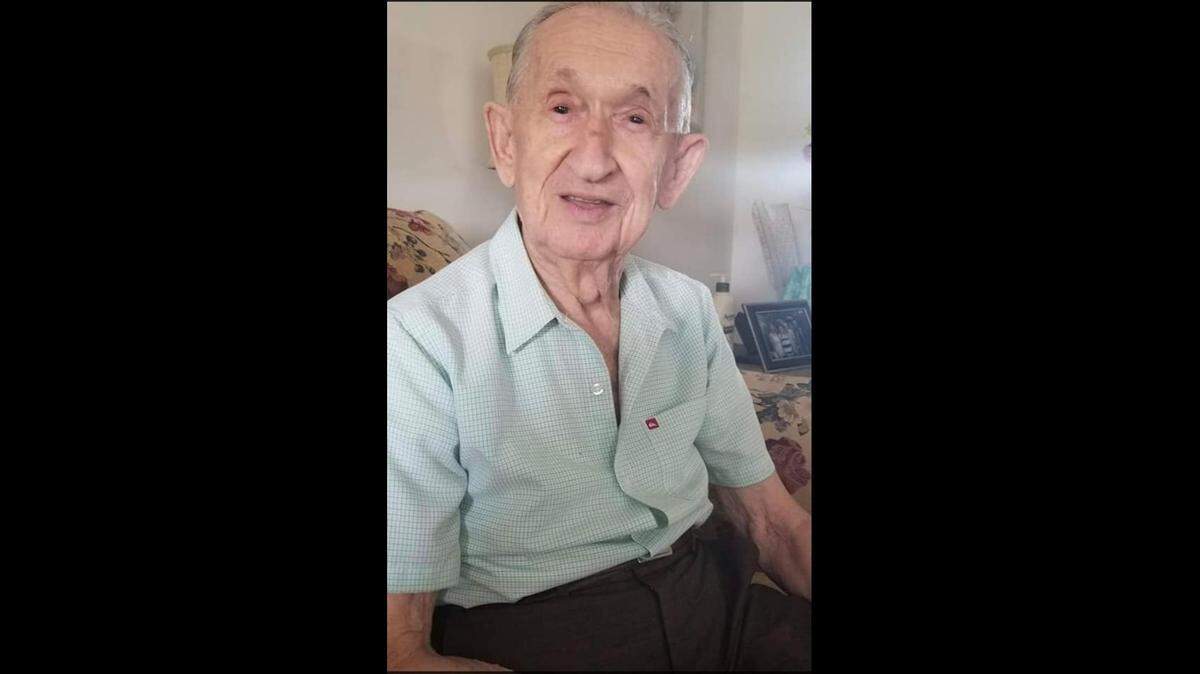
Kuba Markusfeld always said the reason he survived the Holocaust was because of luck, not by being smart.
“He just really thought he was a lucky man to be alive,” said his granddaughter Nicole Wines. “He lived his life that way.”
Markusfeld, who survived two ghettos and seven concentration camps during World War II, died at the age of 99 in his Sunrise home Oct. 12.
Born on April 9, 1921, in Wolomin, Poland, Markusfeld — whose birth name was Kiwa, but whose name was changed when he arrived in the United States — was the youngest of seven brothers. He was the only member of his immediate family to survive the Holocaust.
As a young boy in pre-WWII Poland, Markusfeld lived in a two-room apartment with his father and six brothers and attended Jewish schools. His mother died when he was a small child.
Germany invaded Poland on Sept. 1, 1939, and Markusfeld’s life completely changed.
The Nazis forced him and his family to leave their home, sending them to the Wolomin ghetto, near Warsaw. The Nazis then sent the family to the Warsaw ghetto, which the German government established on Oct. 12, 1940.
Over time, the Warsaw ghetto, which was sealed off from the rest of the city, held nearly 400,000 Jews in an area of 1.3 miles, according to the U.S. Holocaust Memorial Museum.
In 1942, Markusfeld was separated from his father and brothers. Over the next three years, Markusfeld was transported to seven concentration camps, including Majdanek, Skarzysko-Kamienna, Buchenwald and Bautzen.
On May 8, 1945, Polish soldiers liberated Markusfeld. He later learned his father and brothers had been killed in Treblinka in Poland, a Nazi killing center where an estimated 950,000 Jews were killed from 1942 to 1943, according to the Holocaust Museum.
By this time, Markusfeld was 24 and alone. He traveled to Czechoslovakia and ended up at the Lansberg D.P. (Displaced Persons) Camp, near Munich, in the American zone.
In 1949, Markusfeld left the camp and moved to New Rochelle, New York. He began working at Franklin Laundry, which was owned by his cousin Joe Markusfeld. He worked for the business until he retired in the 1980s.
There he met his future wife, Eleanore, who was also a Holocaust survivor. The two were married in 1951 and had two daughters.
His granddaughter Nicole Wines wrote about her grandfather after his death.
“Kuba always reflected positively on this period of his life,” she said, adding a quote from Markusfeld about that time. “Those were the good times, everything was simpler then. We didn’t have much, but we were happy.”
In the early 2000s, he and his wife retired to Florida.
Markusfeld loved being with family and friends, playing cards, singing to his grandchildren and two great-grandchildren and eating chocolate or a slice of cake after dinner, Wines said. In 1996, Markusfeld gave his testimony to the University of Southern California Shoah Foundation Institute, which has archived more than 50,000 testimonials from the Holocaust.
Kuba is pre-deceased by his parents, his six brothers Ziskind, Leibel, Moshe, Aron, Sane and Munish, and his wife, who passed in 2010.
He is survived by his daughter, Evelyn and son-in-law Joseph Hillenbrand and daughter Deborah and son-in-law Alfred Malinoski, granddaughters Nicole Wines, Danielle Frenzel, Brittany Wines and Erica Hillenbrand and his two great-grandchildren.
Services were held. Markusfeld was buried next to his wife in New Jersey.
