How family and a segregated Miami led Sidney Poitier to develop his greatest film roles
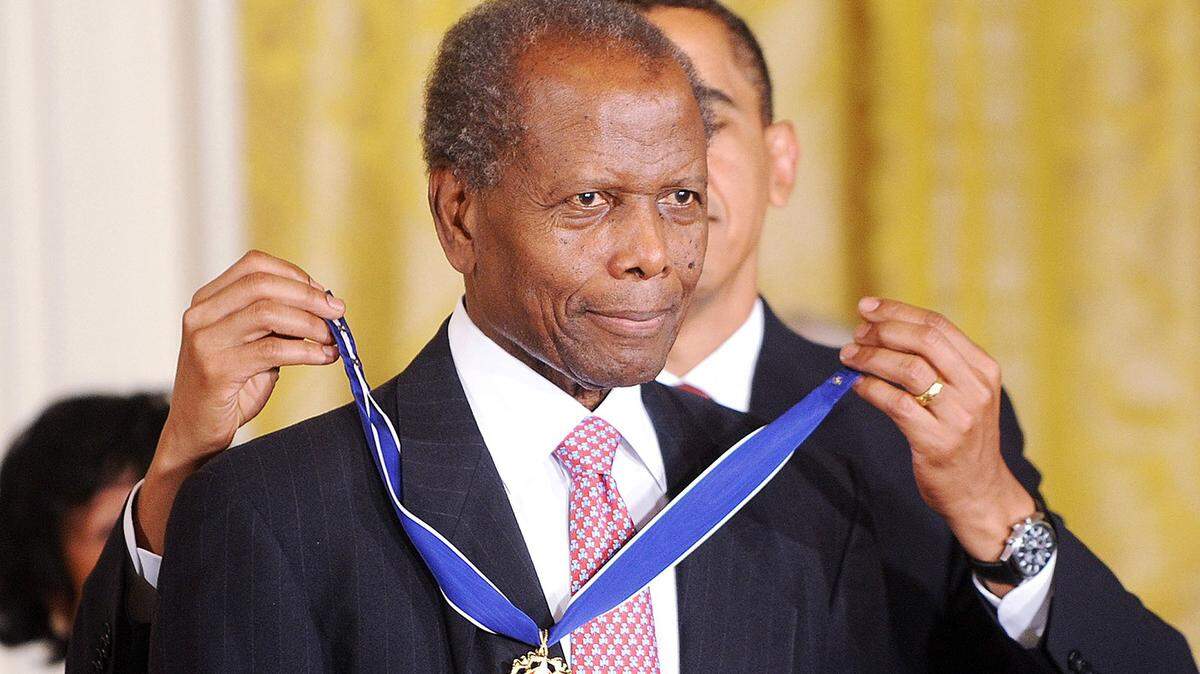
Actor Sidney Poitier’s family in Miami and local historians will tell you that the star of the 1960s film classic,“To Sir, With Love,” came to world prominence, with love, from Overtown.
And they will tell you of the pain Blacks endured here in South Florida, which would fuel one of the most distinguished acting careers in contemporary cinema.
Evalina Williams Bestman, retired chief executive officer of the Dr. Evalina Bestman New Horizons Community Mental Health Center, which was renamed in her honor in northwest Miami, recalls her second cousin’s tough times in Miami in his youth as both “positive” and “negative.” But the hardships were significant, too, in helping her kin thrive on film and stage in his 63-year acting career.
Born in Miami
Poitier was born in Miami on Feb. 20, 1927, by happenstance. His parents lived in the Bahamas but while they were visiting family in the Miami neighborhood, nature had other plans.
Poitier’s premature birth in the States gave him instant citizenship and his first three months were spent in Miami. The family then returned to their home in Cat Island in the Bahamas.
But as historian Dorothy Jenkins Fields noted in a 2014 Miami Herald column that celebrated the 50th anniversary of his historic Academy Award, Poitier, “a rambunctious teenager,” was sent back to Miami to live several years with his older brother, Cyril, and their great aunt, Ida Celeste Poitier, in Overtown.
Poitier, who died at 94 at his home in Los Angeles on Thursday night, was the first Black man to win the Best Actor Oscar in 1964 for his starring role in “Lilies of the Field.”
Poitier’s other film hits include landmark 1960s films like the crime drama “In the Heat of the Night” and “Guess Who’s Coming to Dinner,” about an interracial couple, featuring lead characters that Poitier imbued with grace, dignity and strength.
Miami shaped Poitier’s film portrayals
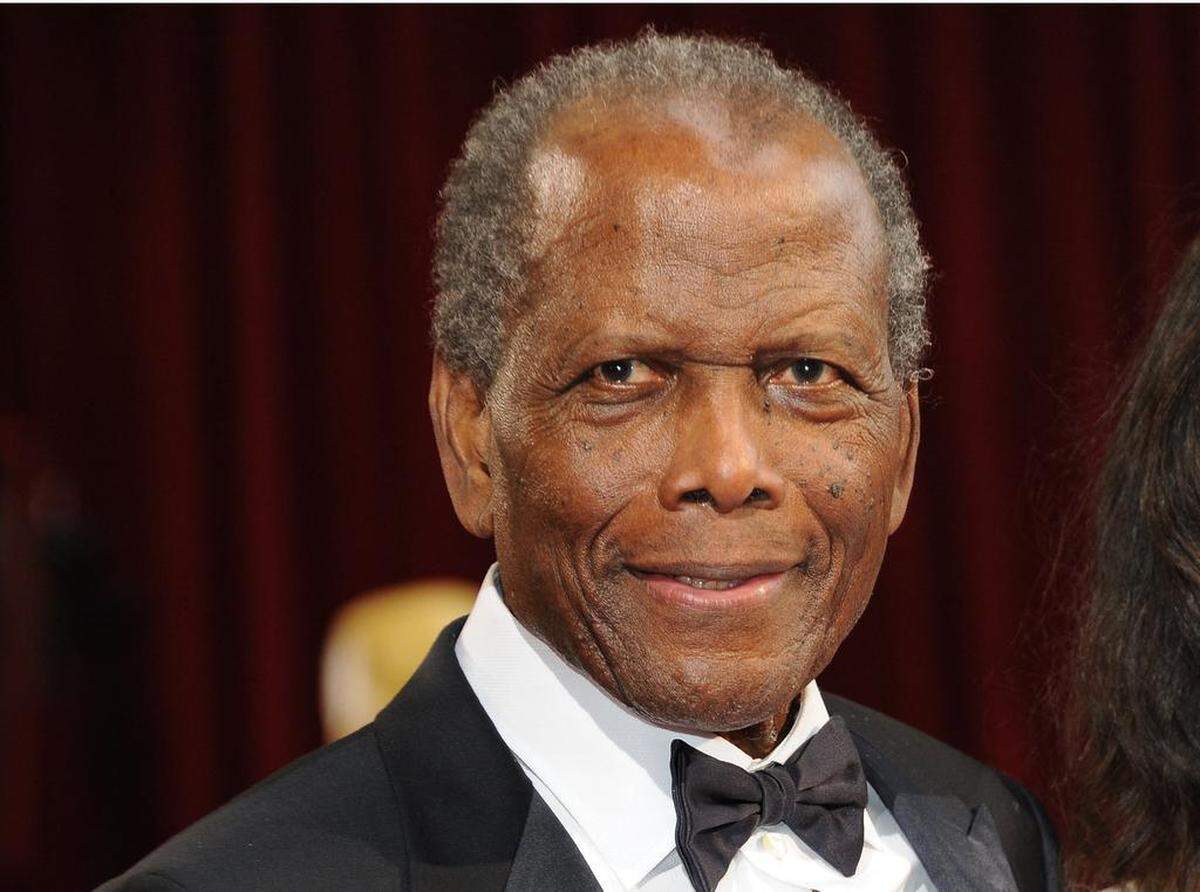
Matinee idol handsome, with a sonorous voice to match, Poitier’s unlikely stardom in that segregated era coincided with the burgeoning civil rights movement in America.
“His roles tended to reflect the peaceful integrationist goals of the struggle,” The New York Times opined in his obituary on Friday. “Although often simmering with repressed anger, his characters responded to injustice with quiet determination. They met hatred with reason and forgiveness, sending a reassuring message to white audiences and exposing Mr. Poitier to attack as an Uncle Tom when the civil rights movement took a more militant turn in the late 1960s.”
Bestman, whose grandfather was a brother to Poitier’s father, believes that short time spent in Miami shaped Poitier’s outlook and style in how he played so many of his iconic roles.
“It was positive in terms of the fact that his father made a decision to send him to his brother to get him away from the kind of life that he didn’t want him to get into over in the Bahamas. But here, his experience was that he encountered racism and discrimination, which was not what he was accustomed to in the Bahamas,” Bestman said.
She describes the time a teenage Poitier, working menial jobs in Miami, was tasked with delivering a package to a home in a white neighborhood. “He left it at the front door rather than take it to the rear. Well, that was unheard of, in terms of a proud, young Black man from the Bahamas. And so he left it at the front door and, from there, some Ku Klux Klan members came after him,” Bestman said.
As Poitier himself shared in interviews and memoirs over the years, that decision with the package was a “capital offense for a Black man” in the Miami of the 1940s. But being from the Bahamas, Poitier had not encountered such “rules” earlier on.
“That experience is a bitter taste, you know, Florida from that perspective,” Bestman said. “But I say that the impact was the reverse of what I guess they thought would happen with him. It spurred him on to stardom. He went north. He experienced homelessness. He knew what it was to be poor. He went to school to improve his language and he became a star. So had it been different the question would be, ‘Would he have gone as far as he did if he had stayed here and just succumbed to what was expected of him?”
In 1986, when Bestman worked for the University of Miami in its psychology department, the university bestowed Poitier with an honorary doctorate of Fine Arts. That, she said, meant a lot to the established star.
“That was important to him. He really advocated education. In spite of having natural talent, he wanted to pursue education because he thought that was very important,” Bestman said.
Poitier as role model

Fields, founder of the Black Archives, History and Research Foundation of South Florida, also sees Poitier’s rough times in Miami as a life lesson others could learn from.
Poitier’s youth in Overtown “was a time in Miami’s history when Black people provided the primary workforce for the building of the city. In fact, several decades before Poitier’s birth, more than one-third of the men who stood for the incorporation of the City of Miami were Black. If it had not been for the Black men who expressed hope for Miami’s future at that time, Miami would not have been incorporated,” Fields said.
“Despite their contribution to helping incorporate the City of Miami, and using their physical skill to plant dynamite so that the roads could be built and sidewalks laid, and construction, housekeeping, and nursing babies, the Black community was not recognized and many times ill-treated. Poitier’s family returned to the Bahamas where he grew up. When he returned to Miami as a teenager, the climate was the same or worse,” Fields said.
“He used community and personal setbacks as stepping stones to success,” Fields said.
“For instance, I remember him writing somewhere that when he parked cars on Miami Beach, he didn’t really know how to drive. But they didn’t ask him that. They just used Blacks so they figured he knew how to drive. And I think on one or two occasions he may have had several accidents parking people’s cars. And so he apologized. He tried to pay. But he didn’t let that stop him,” Fields said.
“So many times our youth think that because they get into one situation that their life is over. It’s important to encourage them to read about what has happened to other people during hard times.”
Though Fields did not know Poitier when she was growing up in Miami, she was so taken with the actor that when she delivered her daughter in a Miami hospital, Poitier’s film, “Guess Who’s Coming to Dinner,” was simultaneously playing on nearby movie screens. She named her daughter Katharine, now an attorney in New York, after Poitier’s co-star in the film, Katharine Hepburn, Fields said with a laugh.
“Because of Sidney’s portrayal with Katharine. That was an influence on my life,” she said.
Family ties
Family, in Miami and the Bahamas, was also key to Poitier’s development — personal and professional, his cousin said. Several members of Poitier’s family, in addition to Bestman, still live in Florida, including the actor’s niece Bernadette Poitier and her brother Joseph Poitier Jr. and his daughter Joni Poitier.
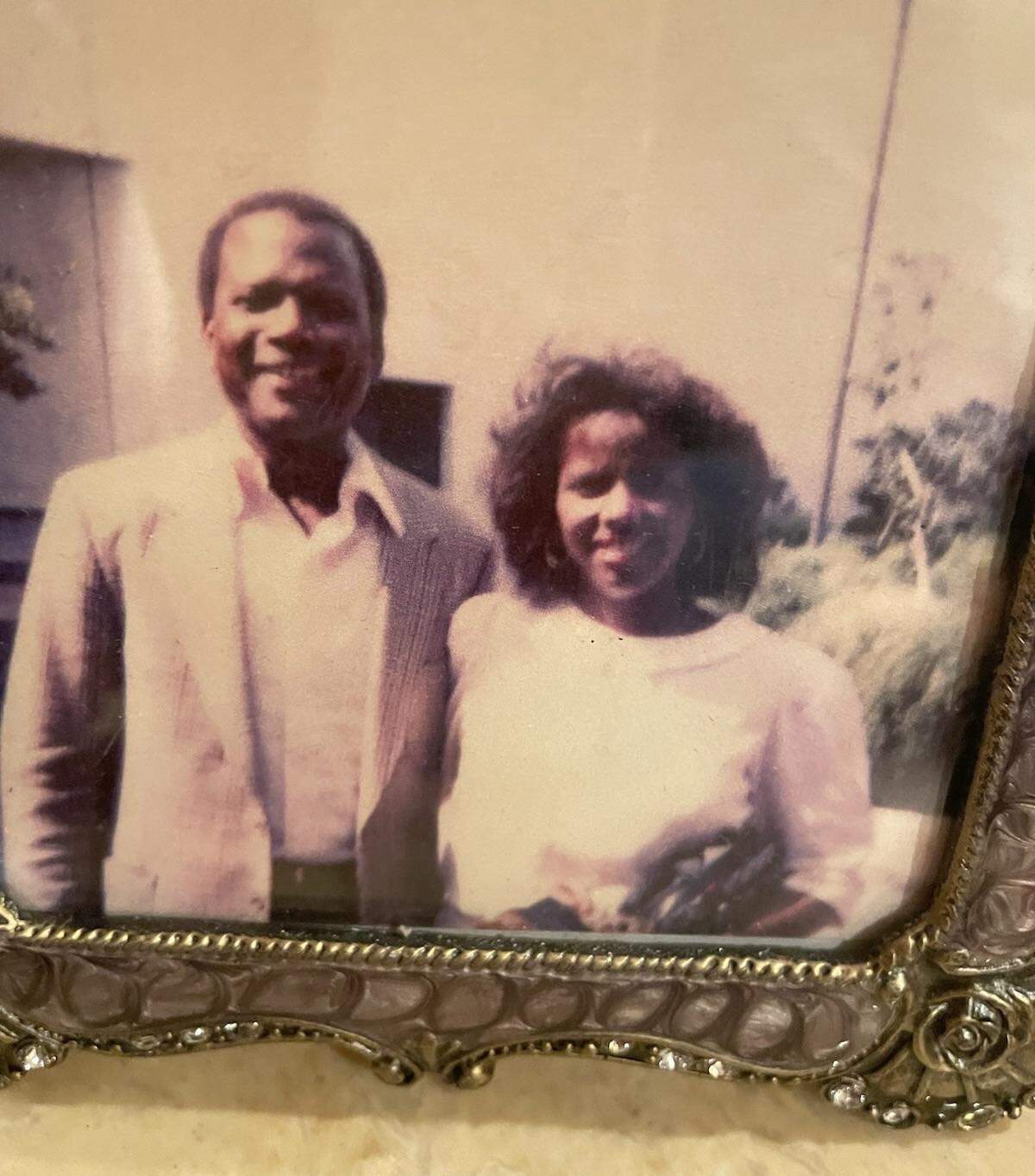
Bernadette Poitier, a retired career administrator with Miami-Dade County Public Schools, earned recognition and numerous awards for her service to her church and the community. In 2016, the Office of Black Catholic Ministry of the Archdiocese of Miami presented her with the Saint Martin de Porres Award for Excellence. During the 1990s, she worked closely with Mother Teresa’s Missionaries of Charity in Overtown, Fields wrote in a Herald column in 2016.
Joni Poitier, an attorney in Jacksonville, was recognized in 2016 by the American Bar Association as one of the top young lawyers in the country.
Joseph Poitier Jr. is a graduate of the University of Miami School Medicine and a psychiatrist in North Miami.
The late Bernard Poitier, who died on Oct. 31, 2021, was the nephew of Sidney Poitier. Bernard graduated from Miami’s Dorsey High School in 1955, became a teacher at Charles R. Drew Middle School and started Poitier Funeral Home more than 50 years ago. Bernard once told his friend, Miami Herald columnist Bea Hines, his Uncle Sidney had given him the startup funds.
Sidney Poitier, Bestman said, would often come back to Miami to visit his large family. “He had that support and his family encouraged him along the way. So, yes, it was a positive aspect for him, too,” Bestman said.
And, she noted, Poitier exhibited none of the pretensions of other stars.
“That was not Sidney. He was a Bahamian-American who grew up in a family that loved him. And he, in turn, loved family affection. He loved all people. That was just his nature,” Bestman said. “And he had gone through life experiences which humbled him in a way. But he was such a gentleman and meeting him you just felt the warmth.”
This story was originally published January 7, 2022 at 8:34 PM.