
Miami certainly has come a long way in its 125 years. A look at where it’s going
Miami, Miammah, Myami, Myamuh, MIA and 305 are all names referring to Miami, the Florida city incorporated on July 28, 1896.
Over July 26-31, a series of events were held to commemorate Miami’s 125th birthday. Local artists and culinary experiences showcased Miami’s rich diversity.
The events reflected Miami’s birth in the 19th century in the segregated Jim Crow South, its development into the diverse city it is today and its projected evolution from “Miami, the Magic City” to “Miami, the capital of capital.”
Miami Mayor Francis Xavier Suarez and businessman Larry Gautier were the co-chairs. Gautier’s fraternal great-grandfather, T. N. Gautier, settled in Miami in the late 1890s. Other committee members included Christine Rupp, executive director of Dade Heritage Trust, city staff members Keith Carswell, Barbara Sweet and Gail Seay and Clarke Smart Solutions.
On Monday, July 26, Suarez shared his vision of Miami’s future at the Innovation Luncheon for industry leaders held at the Rusty Pelican Restaurant. Among those on the panel, according to Miami Today: Manny Medina, founder of Medina Capital and eMerge Americas, and Jaret Davis, co-managing shareholder of the Miami office of Greenberg Traurig.
The discussion topic was changing Miami’s narrative “from a place where you just go to retire or have fun to telling the success stories of new businesses and financial corporations” relocating to Miami, Suarez said, according to Miami Today.
On Tuesday, Suarez hosted a “Cafecito talk” and workshop on the emergence of non-fungible tokens (NFTs) in the world of art at the Bakehouse Art Complex.
On Wednesday, local historic preservationists were honored at the Pérez Art Museum Miami. Video profiles of the honorees are available at www.mia125.org.
.jpg "IMG_6498 (1).jpg")
On Thursday, Suarez and Miami Commissioner Jeffrey Watson visited Overtown for a community summit at Red Rooster restaurant, 920 NW Second Ave., and “Origins,” entertainment and historical exhibits at The Black Archives Historic Lyric Theater and Plaza, 819 NW Second Ave.
On Friday, there was Little Havana Fridays, a celebration of Latin music and art at the Historic Domino Park Plaza.
On Saturday, closing events throughout the city during “Miami Day’‘ celebrated Coconut Grove and other heritage neighborhoods.
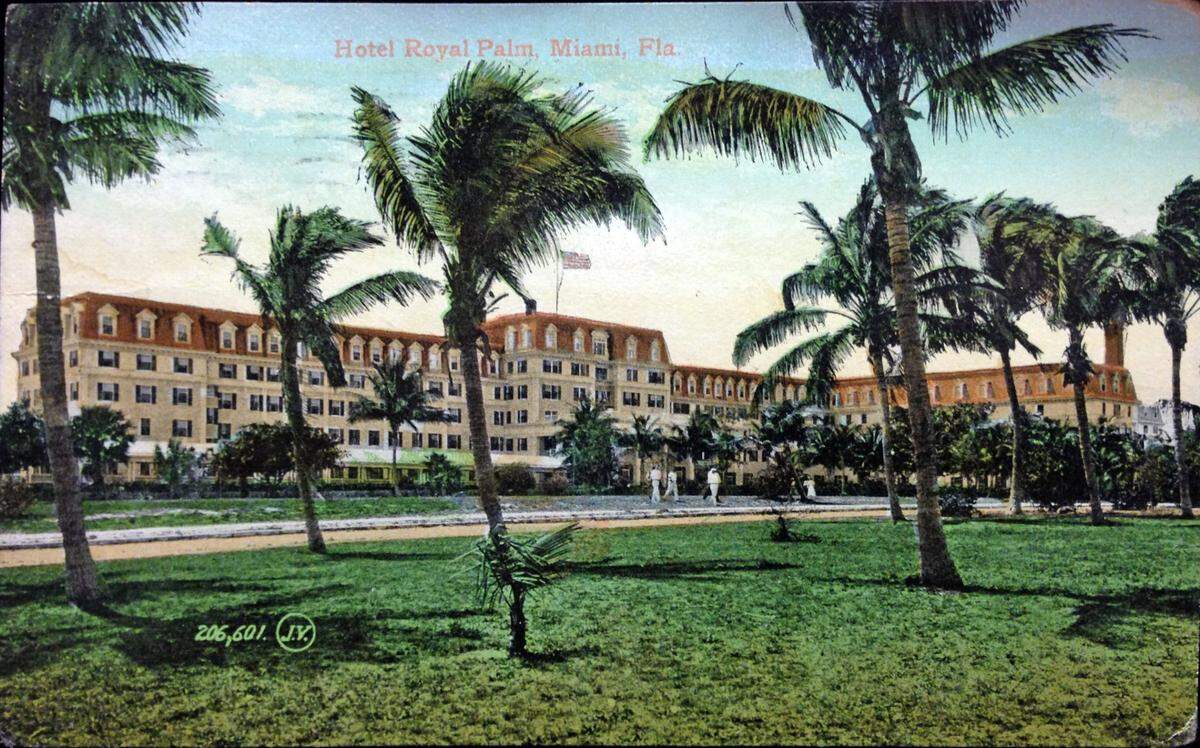
Royal Palm Hotel
In March 1896, before Miami became a city, Henry Flagler, a white industrialist, a founder of the Standard Oil Company and founder of the Flagler East Coast Railway, sent his white foreman, John Sewell, and 12 back male laborers from Palm Beach to the area now known as Miami. They cleared the land for the Royal Palm Hotel on the bay, which Flagler built to attract tourists. (The site is now home to Met Square, at Southeast Third Avenue.)
Black laborers were Miami’s primary workforce then and for the first half of the 20th century. Voters for Miami’s incorporation were white and black men. Bahamians and Americans were some of the Black men who may have served during the Civil War in the United States Colored Troops (USCT).
Crucial vote by Black laborers to incorporate Miami
In 1896, Florida law required a minimum of 300 registered voters for a city’s incorporation. In his memoir, Sewell boasts of his “Black Artillery,” 100 qualified black voters recruited and brought in as a surprise move that swung the election.
On July 28, 1896, 162 Black men constituted 44 percent of the voters who established Miami.
After the election, the black laborers were no longer allowed to vote. Blacks were disenfranchised and not allowed to vote again until the 1940s.
No woman voted in Miami’s 1896 election. Women were not allowed to vote in the United States until 1920. Ironically, Julia Tuttle, a white woman, acquired the land on which the original Miami was built and convinced Flagler to extend his railroad to South Florida. Known as “ the mother of Miami,” Julia Tuttle was the first woman to start a major city in the USA.
William and Mary Brickell, a white couple, settled 20 years before Tuttle in the South Florida wilderness. They gave land rights to Flagler in Miami to create a town north of Miami. It became Fort Lauderdale.
.JPG "IMG_brickellbook.jpg_6_1_BN300E8C (1).JPG")
Accounts about the Brickells by author Beth Brickell in “William and Mary Brickell: Founders of Miami and Fort Lauderdale” and author and historian Cesar Becerra reveal the couple’s role in Miami’s birth. Becerra refers to Mary Brickell as “Miami’s other mother” in his recently published book, “Orange Blossom 2.0.”
Howard Kleinberg, retired editor of the Miami News, formerly The Miami Metropolis, boasts that Miami had a newspaper before it became a city.
His research reveals that according to Isidor Cohen, one of Miami’s first merchants and Jewish residents, a black laborer, A.C. Lightburn, a member of Greater Bethel AME Church in Miami’s Colored Overtown, delivered the best speech for incorporation. Thus began “Miami, the Magic City.”
Historians tell Miami’s story
Collecting, researching and writing history is an adventure. Seth Bramson, collector, historian and author, began his adventure over six decades ago and now has one of the largest collections of Miami memorabilia.
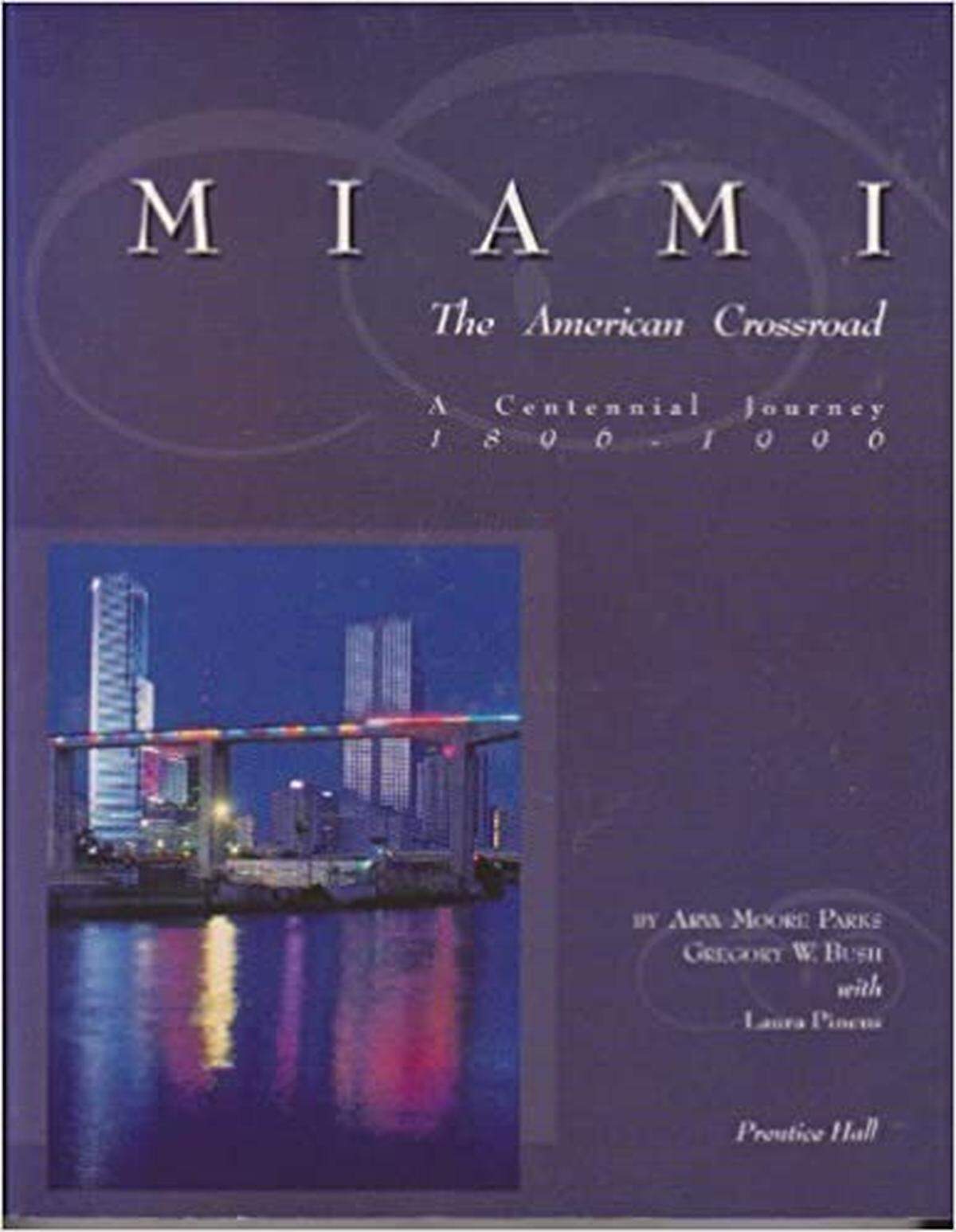
In the preface of their book for “Miami, The American Crossroad, A Centennial Journey, 1896-1996,” Arva Moore Parks and Gregory Bush tell readers, “History does not contain a fixed set of facts, a limited body of knowledge or a one-dimensional view of the world. It involves a continuing struggle for deeper meaning through fresh insight and interpretation.”
Native New Yorker, the author Helen Muir, relocated to Miami in 1934. In her 1953 book, “Miami, U.S.A.,” she wrote, “Miami ... is still in the process of being created.”
Nearly 70 years later, Miami is still being created as its narrative broadens to include new businesses and non-fungible tokens, along with memorabilia, documentaries, books and primary sources that provide the foundation for making the next Miami, the new Miami.
Happy Birthday, Myami, and long live the 305!
Dorothy Jenkins Fields, PhD, is a historian and founder of the Black Archives, History & Research Foundation of South Florida Inc. Send feedback to djf@bellsouth.net
This story was originally published August 6, 2021 at 1:20 PM.