
‘Shut it down’: May Day protesters rally outside Alligator Alcatraz
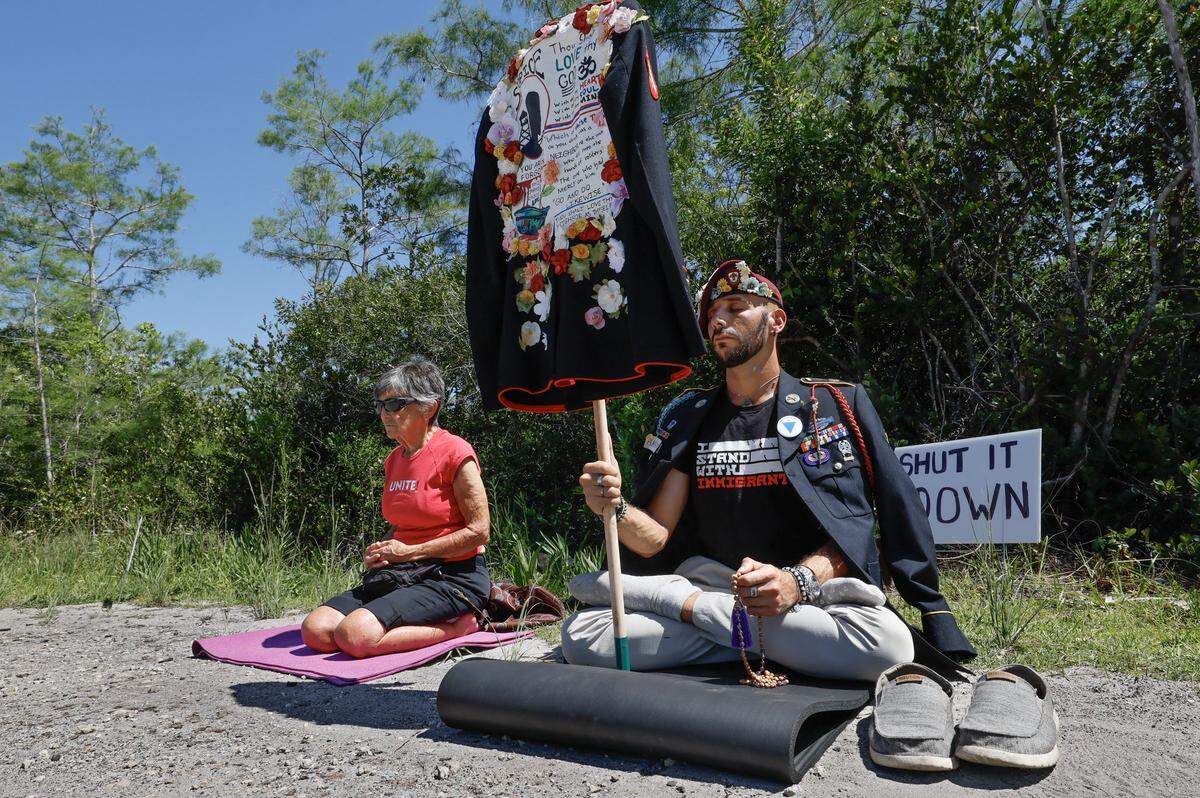
Under the blue skies of the Florida Everglades, dozens of protesters, sheltering from the sun under blue canopies, gathered outside the gates of Alligator Alcatraz on Friday to commemorate International Labor Day by calling for the shutdown of the controversial detention center.
Debbie Clark Wehking, who organized the event, said that though most May Day protest events center around affordability and taxing billionaires, she wanted to spotlight the first-of-its-kind state-run immigration detention center and the conditions of the detainees being held there.
“We’re saying Alligator Alcatraz has to be shut down and so do all the other detention centers in the country that are already built or being built,” she said. “Because they’re all modeled on this one, which means they’re all places of deliberate cruelty.”
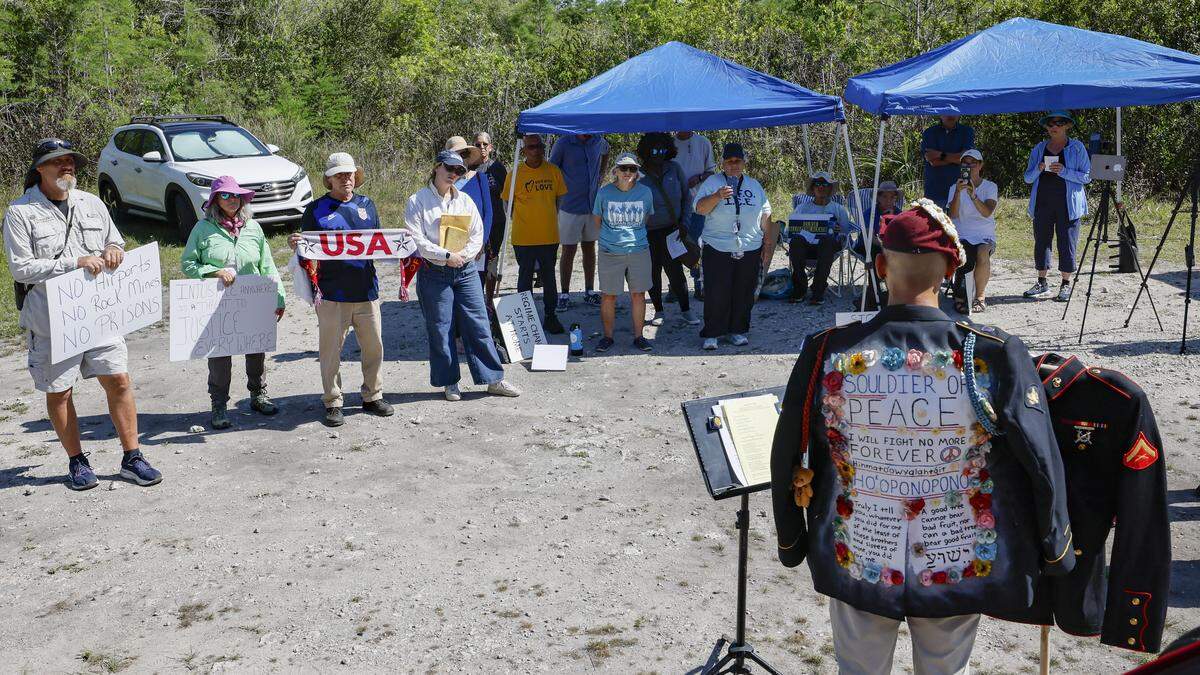
Wehking, 75, a retiree who now works at the Episcopal Church Center on the University of Miami campus, has organized protests at Alligator Alcatraz since Gov. Ron DeSantis opened it last summer on an airstrip in the Big Cypress National Preserve off U.S. 41. The group has been documenting who comes and goes and has served as an unofficial welcome committee for family members traveling to the detention center hoping to see their loved ones.
“I want the staff and the administration to know that we’re still here and we still disapprove,” she said.
Friday’s crowd of more than 30 protesters was a mix of faith leaders, community organizers and affected families who alternated between prayer, protest songs and calls to action. Some signs called attention to allegations of cruelty and human rights violations at the facility. One protester’s sign read “Humans are tortured here.”
The DeSantis and Trump administrations have denied allegations of torture and human rights violations at the site and called it a “hoax.”
For 58-year-old Conny Randolph of Ochopee, who works in the area and regularly hikes the Everglades trails, the impact on the environment was top of mind. She held a sign that read “Save the glades,” and “Justice for All, including our wetlands.”
Conny said the Everglades is “beauty abounding everywhere here, and we just keep paving it. And it just hurts.” When she heard DeSantis was building a network of trailers and industrial tents to detain thousands of immigrants on site, “it was like a knife” in her gut. And when the state and federal governments argued in court that the detention center had minimal environmental impact, she said she was left in “disbelief.”
“I couldn’t believe what I was hearing, because you put that amount of people, or that much equipment and vehicles in an area that’s so sensitive like this, there’s such a disconnect when somebody says that there is no impact here. It’s just, it’s mind-blowing,” she said.
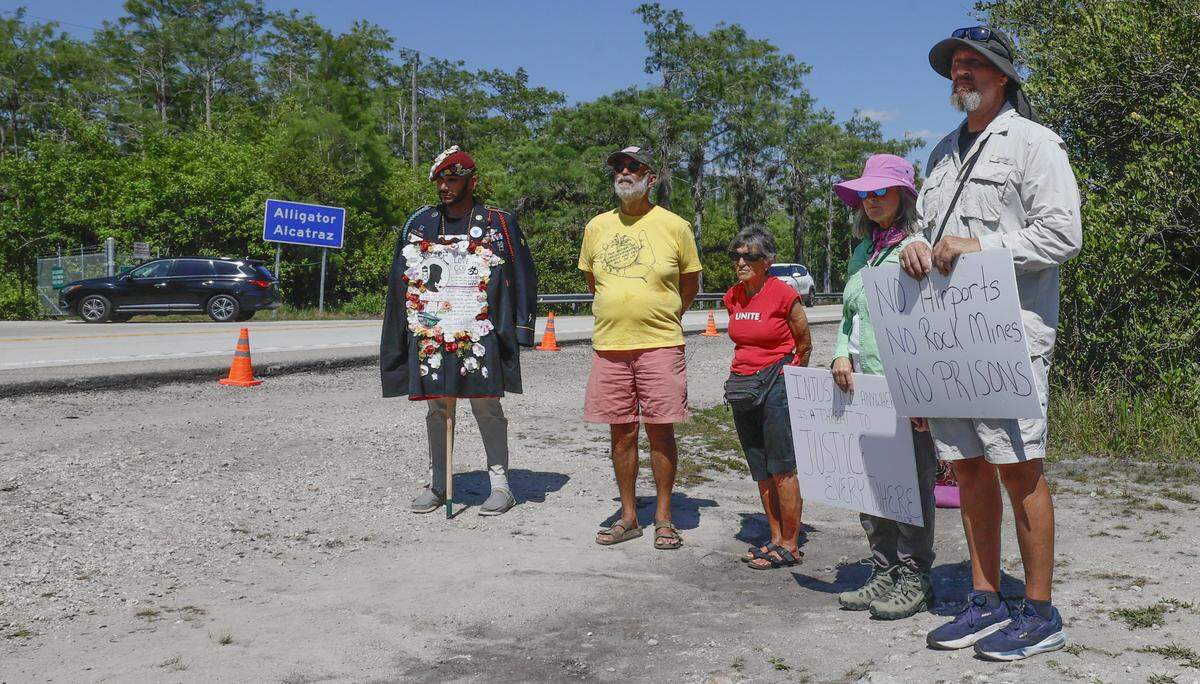
Her husband, Scott Randolph, 58, works a few miles down the street at Clyde Butcher’s Big Cypress property, where he oversees habitat recovery. He said he was “horrified” that the detention center was opened, remembering the 1970s fight here that stopped plans to build the world’s largest airport.
Randolph said the bright lights alone from the facility are disturbing the nearby nocturnal creatures’ ecosystem.
“This is a place of freedom, I’m just appalled against the whole Alcatraz, as is. Even to its name,” he said.
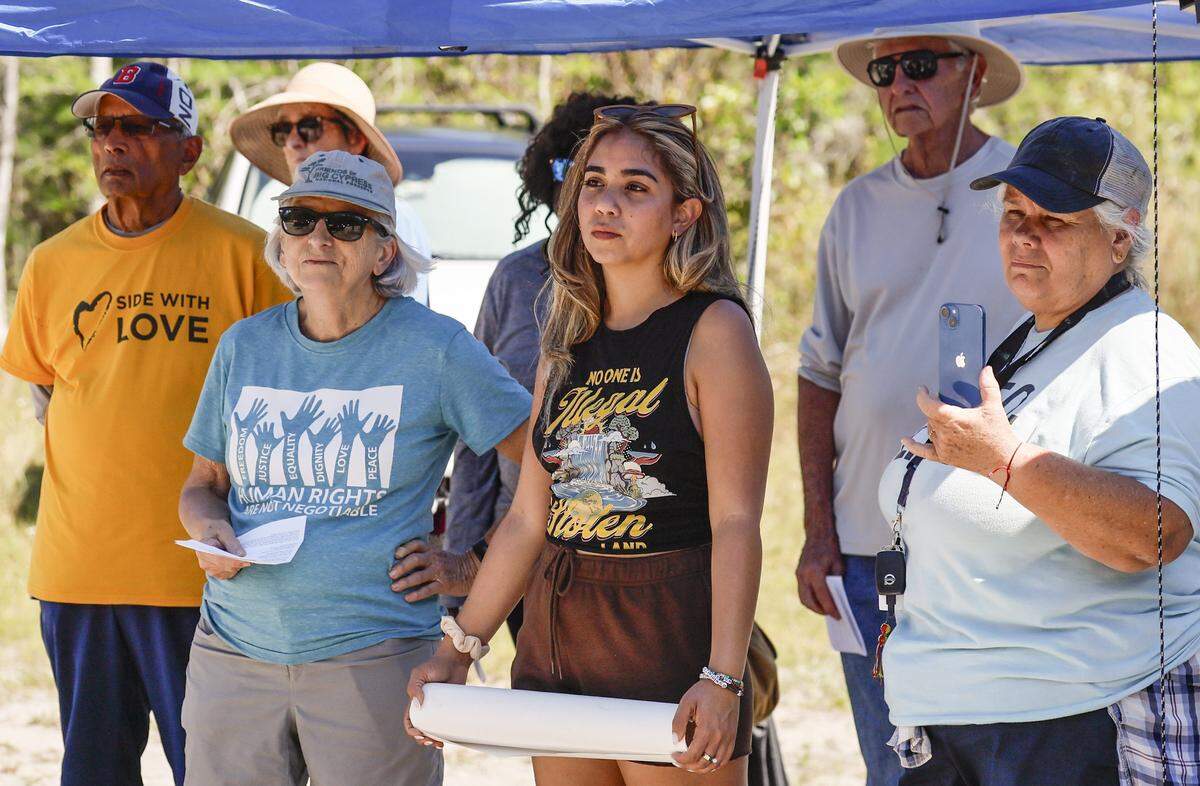
Arianne Betancourt, 33, said that since immigration officials detained her father six months ago, she has come to learn “that no effort is small, because everything is interconnected.”
Betancourt, a community advocate with the social justice organization Workers Circle, is part of a freedom vigil group that for 40 weeks has gathered every Sunday outside the gates of Alligator Alcatraz to pray and stand in solidarity with the detainees. That includes her father, Justo Bentancourt, who has been transferred twice in and out of the facility since he was detained in October 2025.
“This is us standing on our morals and saying, ‘No. Enough is enough,’ and ‘We will not go away,’” she said.
Betancourt said she receives at least one call a day from a family member of a detainee saying, “I think I should give up.” She tells them not to let up. And if they lose? She says, “Find another way to fight.”
“You want to keep this place here, then we’re going to continue to come here, and we’re going to continue to highlight the abuses,” she said. “We’re going to continue to highlight the cruelty, we’re going to continue to highlight the lack of due process. We’re going to continue to highlight how our constitution is being violated and everything else that this place represents, because we will not give up.”
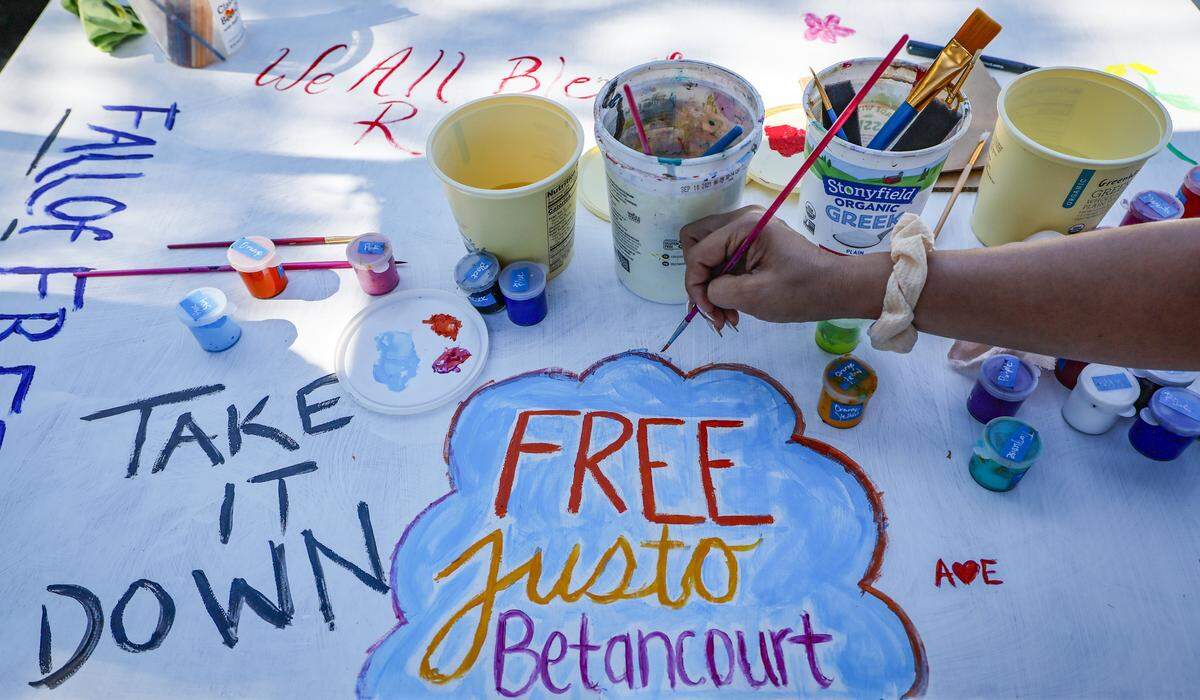
As protesters spoke, cars driving down Route 41 honked in support. A woman in a black truck pulled over and listened to the speakers for a few minutes. She drove off west toward Naples, shouting an expletive and “Shut it down.”
Other drivers were not so supportive. A group of young men in a red truck leaving the detention center honked and booed at the protesters, flashing a thumbs-down.
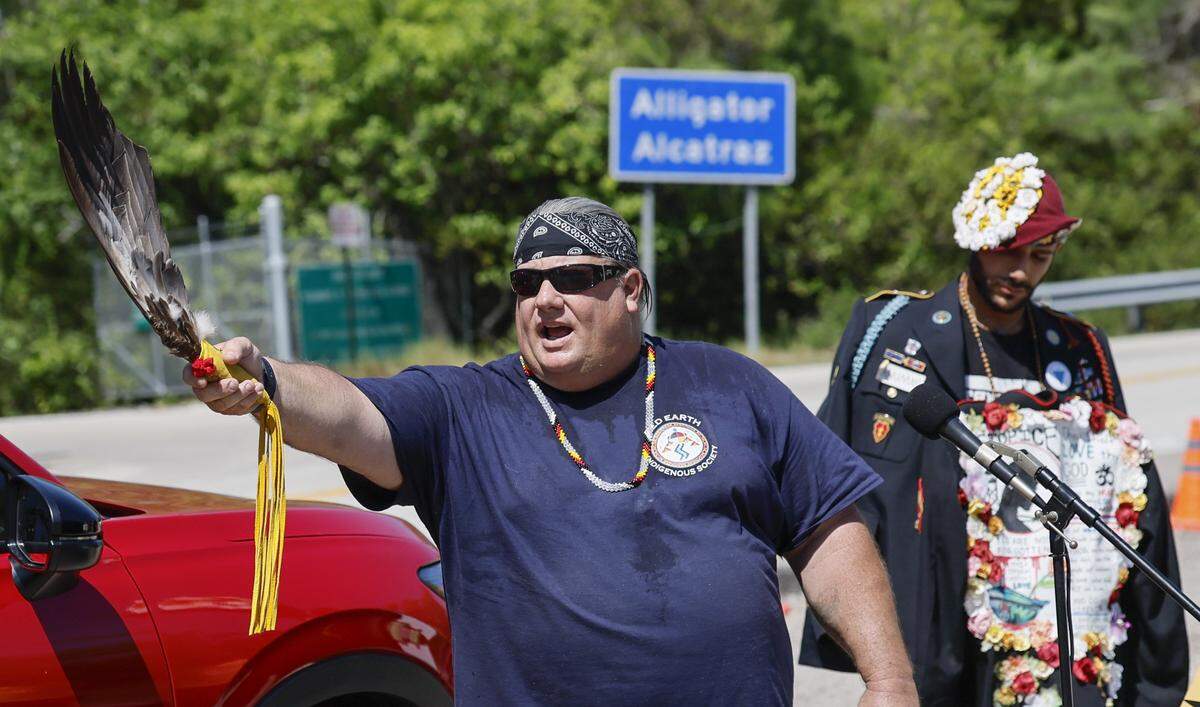
Gary Wilcox, a member of the Pamunkey Indian Tribe, concluded his opening remarks at the May Day protest with a blessing of the Miccosukee Tribe’s land, which is adjacent to the makeshift immigration detention camp, saying real suffering is happening to those being caged under the tents.
“Remember, we get to go home. They don’t,” he said.
An earlier version of this article included an inaccurate description of the weekly vigil held at Alligator Alcatraz and has been updated.
This story was originally published May 2, 2026 at 1:19 PM.