‘Sunday church in the Everglades.’ Faith movement grows at Alligator Alcatraz protests
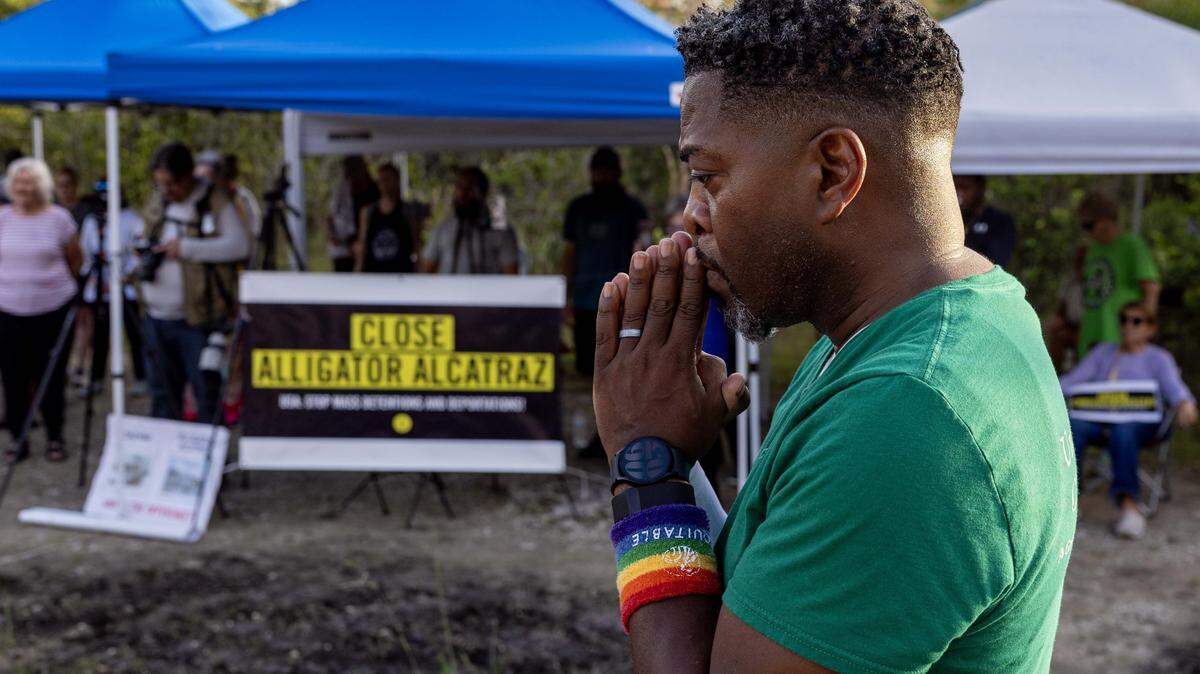
They’re out there, deep in the Florida Everglades every Sunday evening — rain or shine — holding signs, singing songs and praying.
Since it opened at the beginning of July, Florida’s migrant detention center dubbed ‘Alligator Alcatraz’ has sparked a slew of controversy surrounding its existence, including multiple lawsuits from environmental and civil rights groups seeking to shutter the detention camp.
With pending lawsuits and now a government shutdown, the future of the controversial facility remains uncertain, but one thing has been constant: The group of Florida faith leaders has showed up week-after-week throughout all of it.
The growing group of clergy and immigration activists are organizing across the state to protest Alligator Alcatraz, the $608 million detention center funded by the federal government and run by the state of Florida housing more than 1,800 men.
Since the beginning of August, the faith leaders and activists, which include groups like the Florida Interfaith Coalition and the Southwest Florida Interfaith Alliance, have been hosting weekly prayer vigils outside the detention center to raise awareness about the conditions of the facility and protest immigration policies that they believe are not only immoral, but against God’s will. Their efforts have attracted more than 2,000 people in Florida alone and spurred new vigils across the state protesting similar detention sites, according to the vigil’s organizers.
Their goal is twofold: halt operations at Alligator Alcatraz and, while it is open, let clergy inside to provide religious counsel to detainees.
“We, across faiths, believe that this is opposed to what God would like us to live together as. Human rights are important, and we may not be able to do a lot, but we’re here, and we care, and that has power in itself,” said Rev. Candace “Candy” Thomas of Christ Congregational United Church of Christ in Palmetto Bay.
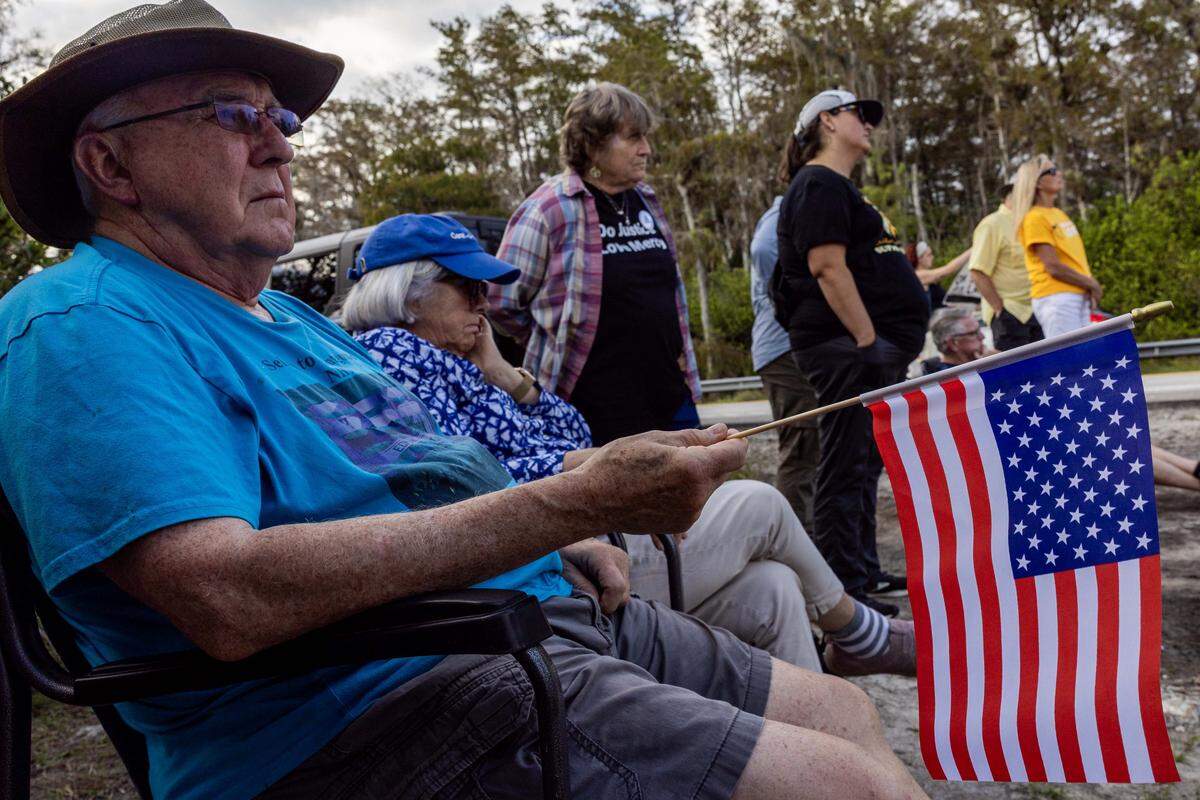
“We don’t know what the outcome will be, but we know what we can do, even though it just seems like a little. There’s comfort in being together in community doing that,” she said.
The faith leaders, who come from various denominations — from the United Methodist Church to Unitarian Universalism to Judaism — have vowed to show up every week as long as people are being detained at the center.
“Those are our brothers. Those are our fellow citizens. Many of them have no charges, have done nothing wrong and committed no crimes,” said Rev. Arthur Jones III, Minister at the Unitarian Universalist Congregation of Fort Myers, at a recent Sunday vigil.
Shortly after his speech, Jones led the crowd of some fifty people in a rendition of “We Shall Overcome,” a song popularized by leaders of the Civil Rights Movement.
“We’re here to pray, we’re here to chant, we’re here to sing. We are here to let them know that they are not forgotten, that they are loved, that they are respected,” Jones said.
Far from easy-breezy activism
Going on their 13th week, the vigils are peaceful prayer circles lead by a different Florida pastor each week and are open to anyone, regardless of their faith. The speakers offer special sermons dedicated to detainees, testimonies from family members of people being detained or personal stories.
Pastor Thomas, for example, shared a story at recent vigil about a Colombian friend who was picked up by U.S. Customs and Border Protection in Miami nearly two months ago. That friend, who does not want her name used out of fear, has not been granted citizenship but said she applied for political asylum and has been living in Miami for 10 years with a work permit and Florida driver’s license. After her arrest, she was transferred to three different detention facilities, ultimately being released in Arizona. The woman, now free on bond while fighting her case, ended up losing her job and her apartment as a result of the weeks-long arrest and must wear an ankle monitor.
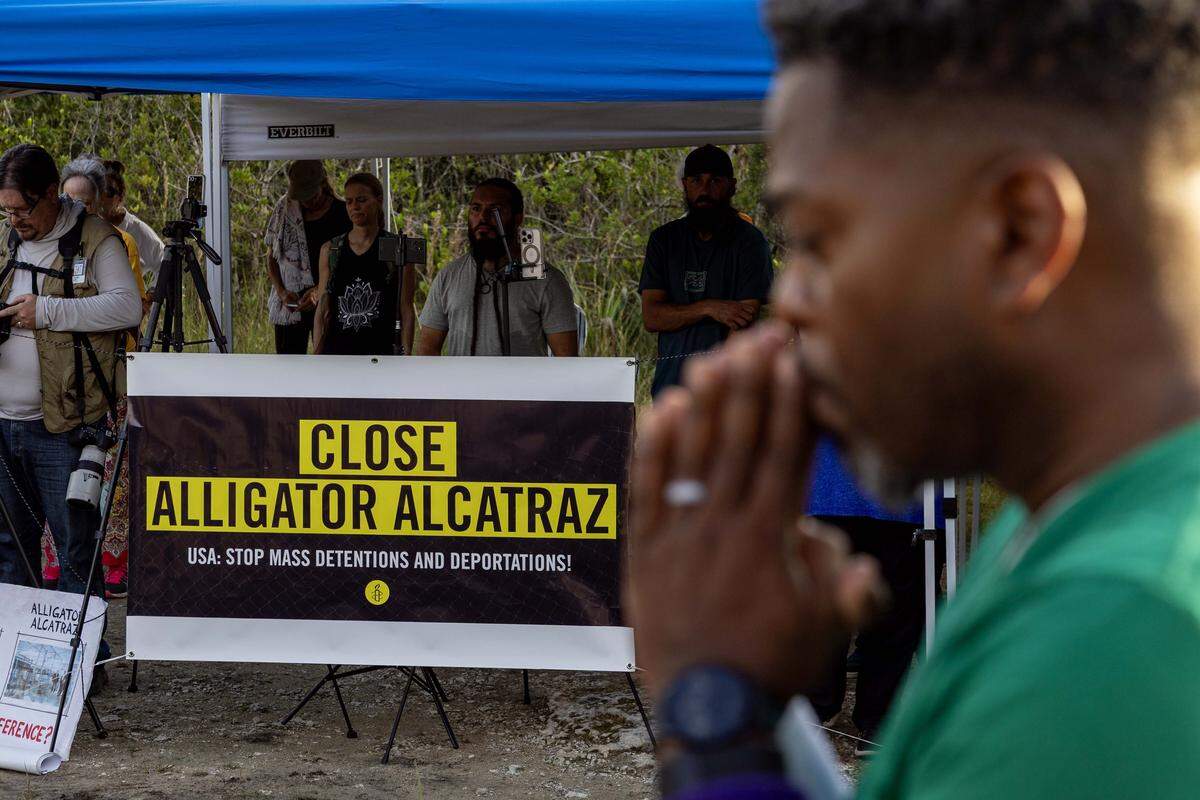
At the height of the vigils, there were 300 people, according to organizers, but attendance dipped after the center was ordered by a federal judge to slowly empty the facility in August. The decision was short-lived. Soon after, an appeals court paused the decision in September, leaving the facility open for the time being. And the vigils ramped up again.
Though the results are marginal so far, organizers hope that the vigils can help spotlight the “inhumane conditions” of the center and slowly influence the wider public, said Noelle Damico, one of the vigil’s core organizers and director of social justice at The Workers Circle, a culturally Jewish nonprofit that advocates on social justice issues.
The impact is hard to measure. Though the vigils have been attracting continuous participation from different groups of people, there’s no way to know for sure if protests impact public opinion or the courts in charge of the center’s fate.
Pastor Thomas points out that many clergy do often talk about their vigil experience with their own churches and houses of worship. But, knowing the immediate impact is also beside the point for faith leaders.
“For us, we’re called to be faithful. You can’t determine what the outcome is, you can only do what you can do. I do think that they’re important,” she said. “I there’s something about being right there, where you’re looking at the sign, and you’re looking at the facility, that is a different sense ... It’s just powerful, is all.”
Over the summer, as immigration policies quickly began changing in the United States, the folks at The Workers Circle were looking to get involved in a more meaningful way.
“I said look, what we need to do is mount something that is continual, that is ongoing, that is like a heartbeat that doesn’t let up,” Damico said. “Something that is a point from which we can build and organize all across the country.”
Damico said she called a few local pastors and environmental activist and Miccosukee member Betty Osceola to start planning the vigils. The Miccosukee Tribe of Indians and environmental advocacy group the Friends of the Everglades filed an early lawsuit that resulted in halting the construction of Alligator Alcatraz, arguing that the facility harms the fragile ecosystem of the Everglades.
Osceola had already been organizing protests of her own across from the center and was vital to sustaining the weekly protests, said organizers — lending tents, sound equipment and initially, a camera set-up to help livestream the protests. On social media, Osceola promotes the vigils every week, describing them succinctly in one post: “Think Sunday church service in the Everglades.”
“I’m a very spiritual person. I pray every day,” Osceola said at last week’s vigil.
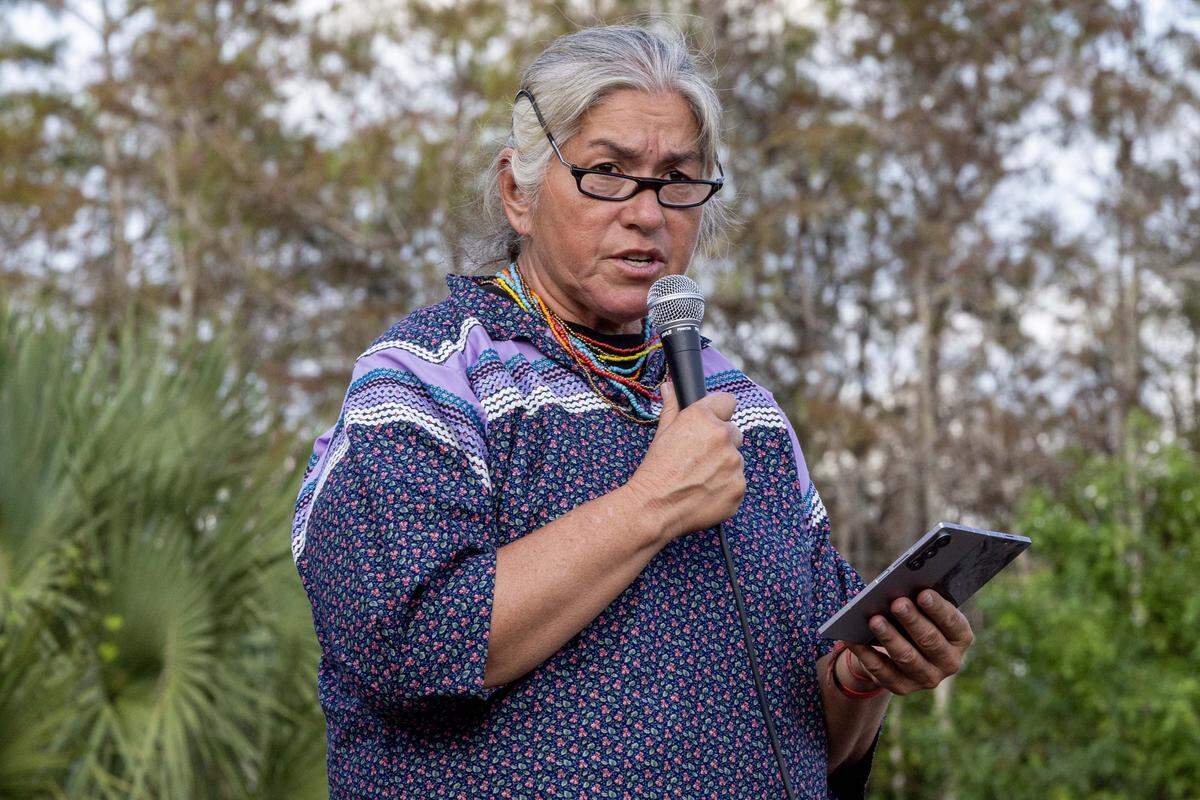
Due to the remote conditions of the center — located at an isolated Everglades airfield surrounded by mosquito and alligator-filled swamps — Damico said she wasn’t sure if people would show up to the first one, let alone week after week.
“This isn’t easy, Saturday afternoon activism. This is, you gotta make a plan, you gotta commit,” Damico said.
Soon after the start of the vigils, more and more faith leaders began showing up, many bussing their congregants to come along with them from places as far as North and Central Florida.
Now, they’ve expanded across the state, mobilizing more than 150 faith leaders and attracting thousands of people in Florida alone. The movement is inspiring vigils in Tallahassee, Sarasota, Orlando, and in other states protesting similar camps, such as ‘Deportation Depot’ near Jacksonville, the “Louisiana Lockup” and the ‘Speedway Slammer’ in Indiana, which appear to be modeled after Alligator Alcatraz in terms of their state/ federal partnerships. The rapid expansion is a fact that Damico finds troubling.
“You have this vague state/federal government cooperation going on. But it doesn’t have any of the protocols that federal detention centers like Krome have,” Damico said. “The blueprint is horrible.”
Damico said the immigration advocacy work is a part of the DNA of The Workers Circle, which is a 125-year-old organization founded by Eastern European immigrants who came to the United States fleeing persecution and seeking democratic freedoms, according to Damico.
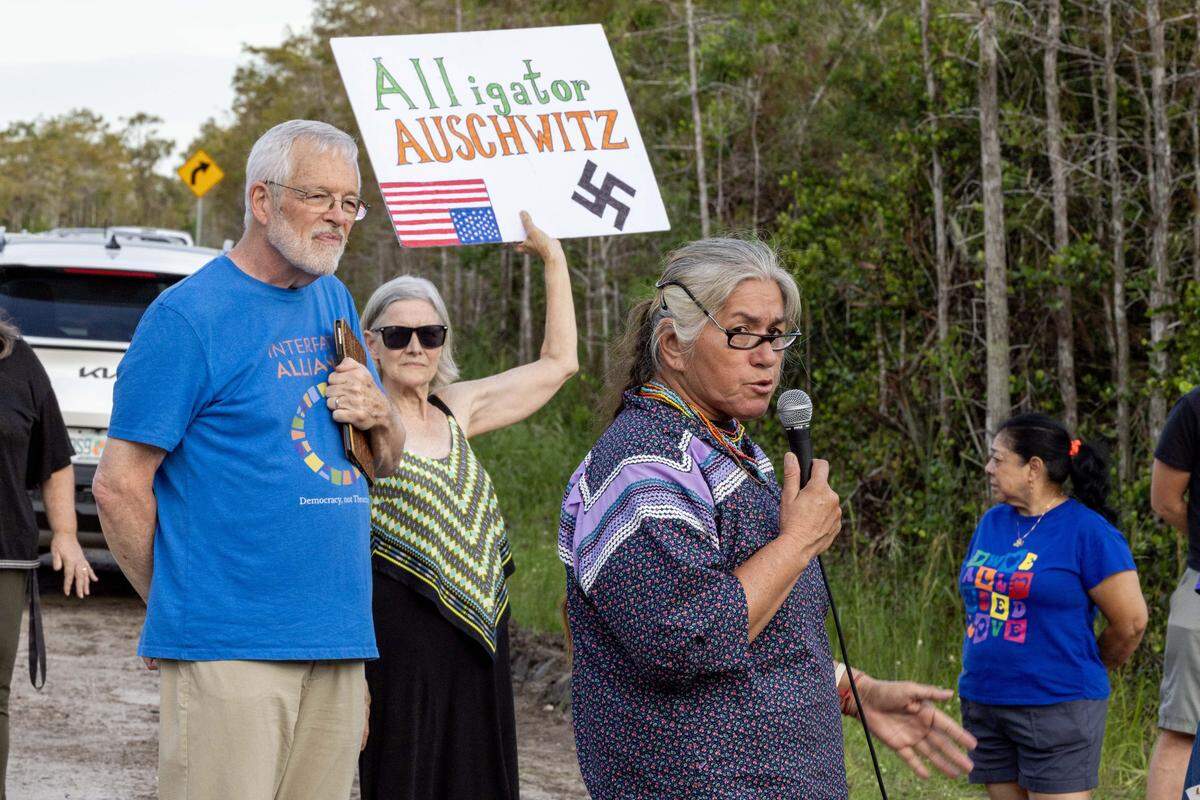
Clergy request access to migrants
In addition to the interfaith group, the Catholic Church has also been involved in pushing back on the Trump administration’s immigration policies. Archbishop Thomas Wenski, Miami’s top Catholic leader, condemned Alligator Alcatraz earlier this year, calling it “alarming” and “unbecoming of public officials.”
Just this week, various Catholic and Jesuit organizations showed up to the Krome Detention Center in Miramar to pray for detainees, an action that was a part of a larger day of prayer vigils, organized by Catholic groups across the country. The movement builds on a mass held by Catholic Bishops at the U.S.-Mexico Border in San Luis earlier this month, according to a statement from organizers.
In addition to the protests, faith leaders a part of the coalition have also been seeking direct access to detainees. The group sent a letter to the Florida Department of Emergency Management seeking permission from the state to provide one-on-one chaplaincy services at the detention center, a practice that’s common in most other correctional facilities in Florida.
When they didn’t hear back, except for a vague promise to forward the email along, leaders hand-delivered another letter to FDEM’s office in Tallahassee. The response that time was more promising, but the faith leaders still haven’t heard back about whether they are allowed inside.
“As clergy, we take a sacred vow to support all people with spiritual care, regardless of their race, of their nationality, of their religion or their legal status,” Rev. David Williamson told the Miami Herald previously. “It’s a matter of recognizing someone’s constitutional right to receive this kind of care based on the First Amendment.”
As of now, the Catholic Church is the only faith denomination that has been granted access inside Alligator Alcatraz to hold mass for detainees and staff.
The Herald asked the Florida Division of Emergency Management about the detention center’s chaplaincy policy multiple times, but they did not respond to request for comment for this story.
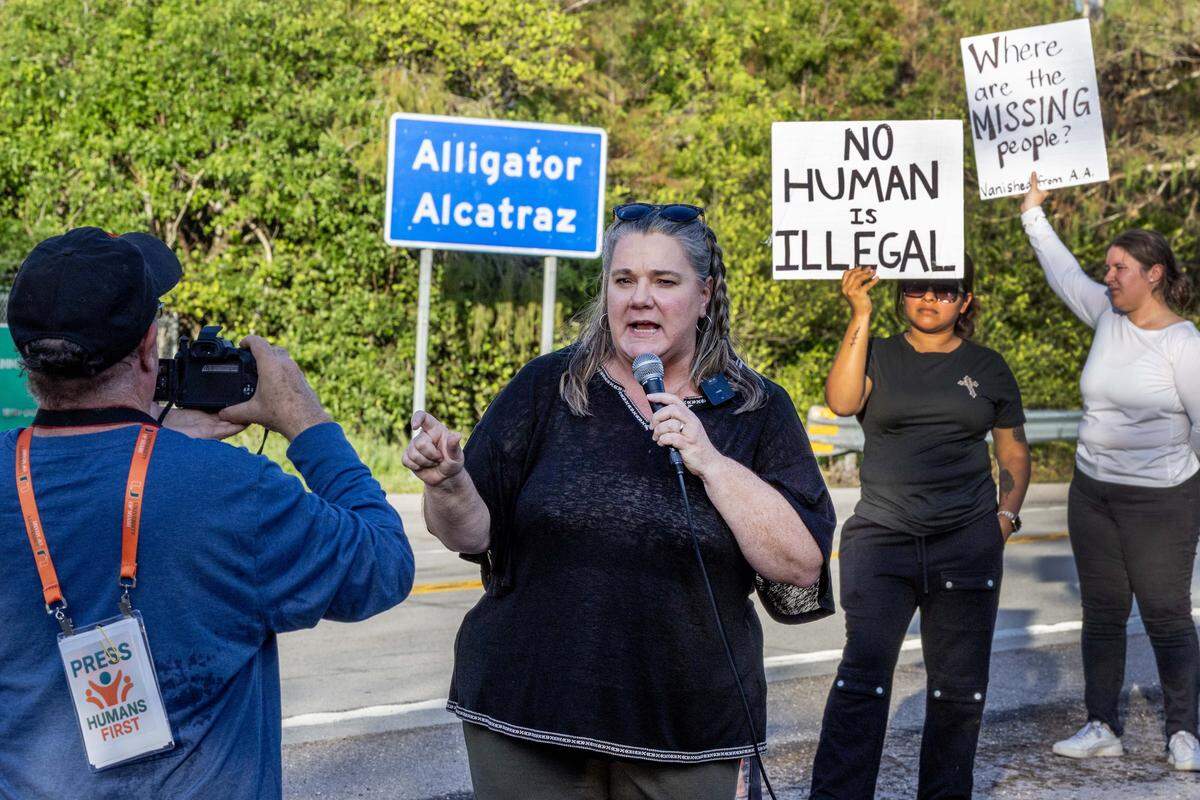
At the weekly Miami vigils, the treatment of the migrants held across the street is often a topic of discussion. Organizers reference reporting from local outlets including the Miami Herald, that detailed poor treatment of detainees and reported on hundreds of people who went unaccounted for after leaving the facility.
“This is not American,” said Michael Finkel, a Unitarian Universalist from Naples, on Sunday after the vigil. “What’s wrong is the way the people are being held, if they are in cages... The fact that they don’t have due process, there should be no deportation without legal representation.”
Another point that activists bring up: not all migrants being detained are criminals nor illegal immigrants. Kim Torres from the United Methodist Church in Florida City shared a story about someone she knew who had a legal permit, who was picked up at their immigration appointment and deported to Mexico.
“I think it’s people of faith that we have to fight that if we believe it’s unjust ... we need to do something. And especially as a Christian, I think right now, there’s all these voices from Christians who I don’t believe represent Jesus.”
Gov. Ron DeSantis has repeatedly rejected the reports of poor treatment of detainees, and the Department of Homeland Security maintains that Alligator Alcatraz houses “some of the worst of the worst criminal illegal aliens including murderers, pedophiles, weapon traffickers, and drug dealers,” said Assistant Secretary Tricia McLaughlin in September.
Next week, the protests will resemble a blend of religion and environmental activism. Osceola invited the crowd to a “Hands Across the Land” demonstration, which is set to include live music, nature-inspired costumes and a synchronized “holding of hands” symbolic action, all which will take place before the 5pm vigil.
“We need [to] remind state leadership, we have not gone away, we continue to stand for accountability,” Osceola wrote.
Correction: An initial version of this story incorrectly stated that Pastor Thomas’ friend who was picked up by federal agents was a legal citizen.
This story was produced with financial support from Trish and Dan Bell and from donors comprising the South Florida Jewish and Muslim Communities, including Khalid and Diana Mirza, in partnership with Journalism Funding Partners. The Miami Herald maintains full editorial control of this work.
This story was originally published October 24, 2025 at 5:30 AM.