‘Can’t do nothin’ for you, man’: Nigeria rejects U.S. pressure to accept deported Venezuelans
Nigeria’s foreign minister has delivered a pointed rebuke to the United States, rejecting what he described as mounting pressure from Washington to accept deported Venezuelan nationals — including some with criminal records — as part of a controversial third-country resettlement plan.
Speaking during a nationally televised interview Thursday night, Foreign Minister Yusuf Tuggar said it would be “unfair” and “unrealistic” for Nigeria to absorb hundreds of Venezuelan deportees who have no ties to the West African country. He added that Nigeria, with a population exceeding 230 million, is already dealing with its own internal challenges.
“We already have enough problems of our own,” Tuggar said. “We cannot accept Venezuelan deportees in Nigeria, for crying out loud.”
To emphasize his point, he quoted a line from American rapper Flavor Flav of the 1990s hip-hop group Public Enemy: “Flava Flav has problems of his own. I can’t do nothin’ for you, man.”
Tuggar’s candid remarks follow reports that the Trump administration is lobbying several African nations to accept deportees who cannot be sent back to their home countries — Venezuela chief among them — due to diplomatic or logistical hurdles. According to documents reviewed by The Wall Street Journal, the U.S. has approached at least five West African countries with formal requests to take migrants whose repatriation has stalled.
Nigeria, one of the most populous and strategically important countries in Africa, is the first to publicly reject the proposal.
The tug of war over deportations reflects a broader shift in U.S. immigration policy, where enforcement is increasingly intersecting with international diplomacy. The idea: If certain countries won’t take back their citizens—whether due to political tensions or human rights concerns—third-party nations would be asked to accept them instead.
Critics of the policy, including U.S. immigration advocates, have called it “migrant dumping.”
“It would be unfair for Nigeria to accept 300 Venezuelan deportees,” Tuggar reiterated. “You would be the same people criticizing us if we agreed.”
The issue resonates particularly in Florida, home to one of the largest Venezuelan expatriate communities in the United States. South Florida, in particular, has become a focal point for immigration and asylum cases related to Venezuela’s ongoing humanitarian crisis.
Nigeria is not alone in rejecting Washington’s approach. Liberia’s Foreign Minister, Sara Beysolow Nyanti, told the BBC this week that her country had not agreed to accept deported Venezuelans and was not in negotiations with the U.S. over such an arrangement.
“We have not had discussions about deportees or criminals coming to Liberia,” she said.
Still, the Trump administration appears determined to expand the use of “safe third country” agreements, including in Africa. At a White House summit with five West African leaders on Wednesday, Trump expressed hope that the U.S. could reduce visa overstays and “make progress on safe third-country agreements.”
Earlier this month, the U.S. deported eight people to South Sudan following a legal standoff that left them stranded in Djibouti for several weeks.
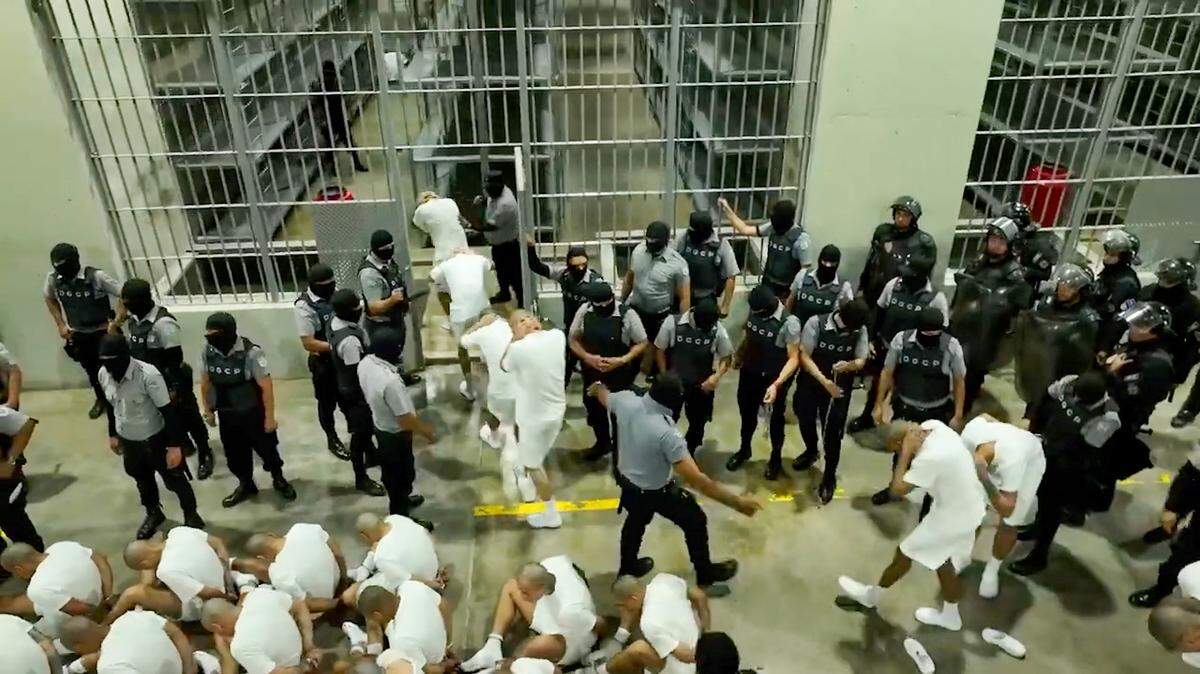
Invoking the Alien Enemies Act of 1798, the Trump administration deported a group of 230 Venezuelans in March to El Salvador, accusing them of being criminals or members of the feared Tren de Aragua gang. They have been incarcerated at the CECOT maximum-security prison, although critics argue that those sent were selected without any real evidence that they had done anything wrong other than trying to seek refuge in the United States.
While the administration’s plans to send unwanted migrants to third countries was challenged in court, a U.S. Supreme Court ruling issued in June made it easier for the government to proceed.
In a brief, unsigned order that did not explain its reasoning, the court put on hold a federal judge’s ruling that said affected immigrants nationwide should have a “meaningful opportunity” to argue they would face torture, persecution, or death if sent to countries the administration has designated to receive deportees.
As a result, the administration will be able to proceed with rapid removals to such third countries. Affected immigrants can still attempt to bring individual claims in court, but only on a case-by-case basis.
“The ramifications of the Supreme Court’s order will be horrifying,” said Trina Realmuto, executive director of the National Immigration Litigation Alliance, one of the groups that brought the legal challenge. “It strips away critical due process protections that have been shielding our class members from torture and death.”
This story was originally published July 11, 2025 at 12:40 PM.