Trump officials’ conflicting Venezuela negotiations torpedo prisoner swap, NYT reports
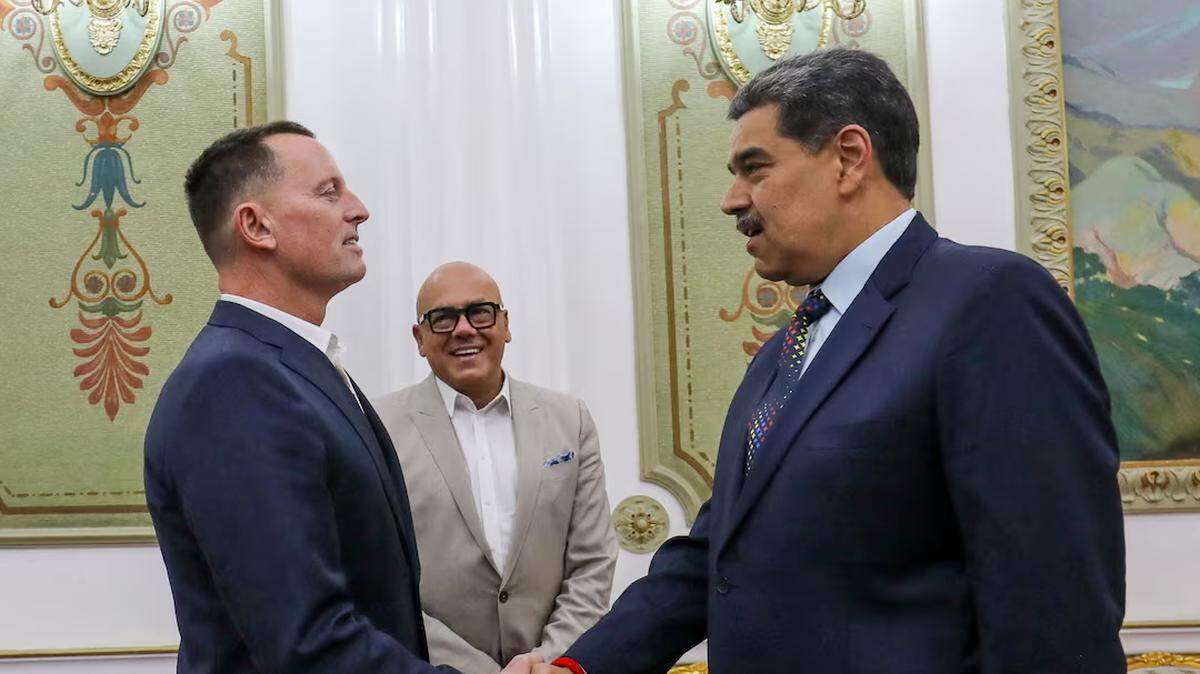
A high-stakes effort to free a group of detained Americans and dozens of Venezuelan political prisoners collapsed earlier this year due to internal conflict within the Trump administration, as two top officials pursued conflicting negotiations with Caracas, The New York Times reported.
According to sources cited by the Times, Secretary of State Marco Rubio had been leading advanced talks with Venezuela to swap roughly 250 Venezuelan migrants—previously deported from the U.S. and held in El Salvador—for 11 American citizens and approximately 80 political prisoners jailed by the Nicolás Maduro regime. The plan, brokered by senior U.S. diplomat John McNamara, had progressed to the point of scheduled flights and finalized logistics in May.
However, the effort unraveled after Richard Grenell, President Trump’s special envoy to Venezuela, launched a parallel negotiation offering a separate deal that included lifting oil sanctions in exchange for the American detainees.
Grenell’s proposal, which was not coordinated with Rubio or the State Department, involved renewing Chevron’s license to operate in Venezuela—providing critical economic relief to Maduro’s regime. The plan appealed to Caracas but clashed with Rubio’s diplomatic effort, creating confusion among both Venezuelan and U.S. officials.
Venezuelan authorities were reportedly uncertain which envoy truly represented President Trump. The discord recalled similar turf battles during Trump’s first term, when competing factions within the administration often pursued their own foreign policy agendas.
“The sense that we parents had was that you had various people talking, but they weren’t working together—one negotiator would say one thing, and another would say something else,” Petra Castañeda, whose son, a Navy SEAL, is being held in Venezuela, told the Times.
For months, Grenell had been privately negotiating with senior Maduro officials on a broader economic deal that would allow Chevron to continue exporting Venezuelan oil to the U.S. In return, Caracas would accept thousands of Venezuelan migrants expected to lose legal status in the U.S. later this year.
While the Chevron deal was originally centered on renewing an oil license first issued under the Biden administration, Maduro reportedly used the talks to press for sweeping concessions—including removal from U.S. sanctions lists and dismissal of drug trafficking charges filed against him and other top officials.
Both Maduro and Interior Minister Diosdado Cabello are under federal indictment in the U.S. for allegedly leading the Los Soles drug cartel.
The negotiations ultimately failed. In March, the Trump administration revoked Chevron’s special license and ordered the company to wind down operations by the end of May. That 2022 license had allowed Chevron and other firms to operate in Venezuela despite U.S. sanctions targeting the regime’s finances and oil sector.
A key U.S. objective in the talks has been securing Venezuela’s cooperation in accepting the return of potentially hundreds of thousands of its nationals. While Maduro has allowed an estimated 6,000 deportees to return from the U.S., Mexico, and Central America, recent court rulings enabling the Trump administration to rescind Temporary Protected Status for Venezuelans could lead to mass deportations in the coming months.
The push to normalize relations with Venezuela has drawn support from powerful oil industry advocates, including conservative activist Laura Loomer, who has publicly championed lifting sanctions on Venezuela’s energy sector.
On social media, Loomer claimed Trump had already agreed to extend Chevron’s license—a move she attributed to Grenell. But she warned of internal resistance, particularly from Cuban American lawmakers and senior State Department figures like Mauricio Claver-Carone.
“Some officials are letting personal biases cloud their judgment on what is best for America’s energy independence,” Loomer wrote on X, arguing that failing to renew Chevron’s license would hand Venezuela’s vast resources to geopolitical rivals like China.
“Venezuela holds the largest proven oil reserves in the world—over 300 billion barrels—alongside enormous deposits of gold, coltan, bauxite, diamonds, and nickel,” she added. “Why would we want China to benefit from those resources instead of the United States? It’s insanity.”
Venezuela’s oil production has plummeted from a peak of 3.2 million barrels per day in the late 1990s to just 400,000 by 2020. Today, foreign oil companies account for nearly half of the country’s output—an economic lifeline for Maduro’s embattled regime.