Federal judge rules in favor of Haitians with TPS, restores February 2026 deadline
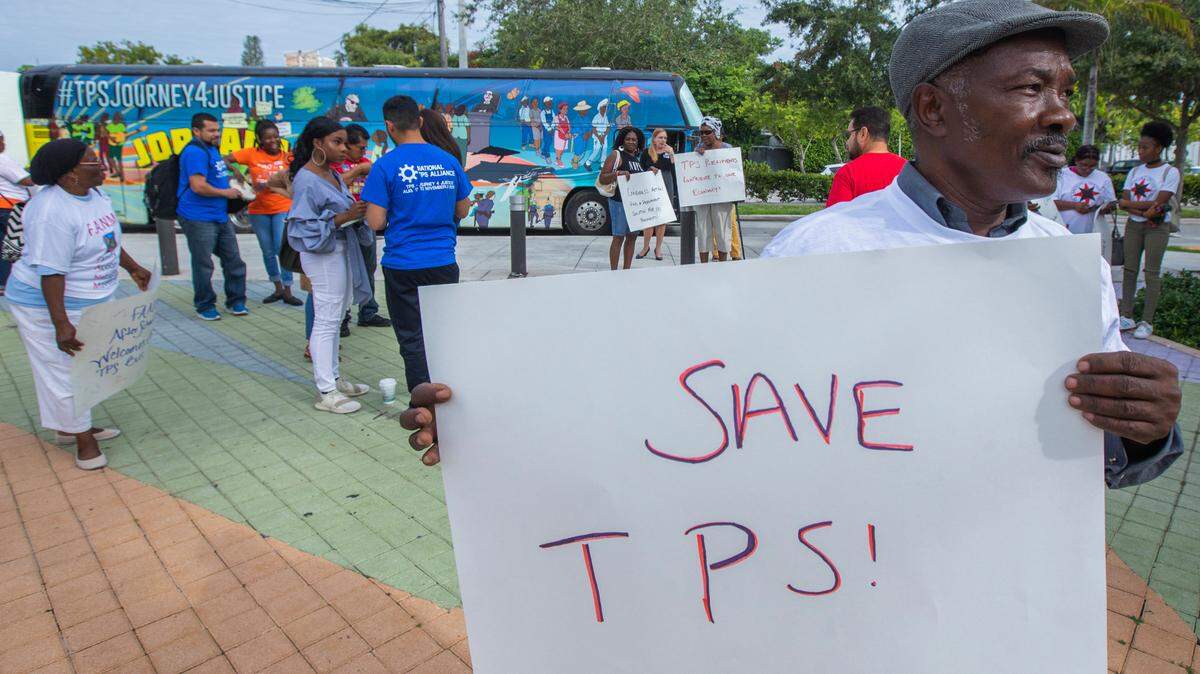
A New York federal judge has ruled in favor of Haitians with temporary legal status in the United States, deciding on Tuesday that the Trump administration was wrong in deciding to cut short their end date by six months.
U.S. District Judge Brian M. Cogan’s ruling means that Haiti’s Temporary Protected Status designation should return to its original February 2026 date, giving more than a half-million Haitian nationals with TPS more time to shield themselves against losing their work permits and deportation protections in the United States.
Cogan found that Homeland Security Secretary Kristi Noem exceeded her authority when she shaved off six months from the 18-month TPS extension that the prior Biden administration had granted to Haitian nationals.
“Secretary Noem’s [decision] was in excess of her authority and was thus unlawful,” Cogan wrote, noting that he was granting partial summary judgment to the Haitian immigrants who challenged her because they “are likely to prevail on the merits” in their lawsuit against the Department of Homeland Security.
“Plaintiffs have also shown they will suffer irreparable injury without postponement” of the Trump administration’s TPS end date for Haitian immigrants, Cogan added.
In his ruling, Cogan also partly denied the administration’s motion to dismiss the Haitian immigrants’ lawsuit, filed in federal court in the Eastern District of New York.
Cogan, who was appointed to the federal bench by Republican President George W. Bush, issued his decision days after the U.S. Supreme Court ruled on Friday that three federal judges in other states lacked the authority to grant nationwide injunctions in lawsuits challenging President Donald Trump’s executive order on birthright citizenship.
Cogan, however, did not issue a nationwide injunction in the Haitian immigrants’ TPS suit. Instead, he ruled on a summary judgment motion that challenged the Homeland Security secretary’s power to shorten their protective termination date as a matter of law — an opinion that the Trump administration is likely to appeal all the way to the Supreme Court.
At the same time, Cogan’s decision also differed from another recent Supreme Court order overturning a federal judge’s nationwide injunction for hundreds of thousands of Venezuelan nationals whose TPS termination deadline was also shortened by the Homeland Security secretary.
In May, the high court lifted the federal judge’s stay that had blocked the government’s plan to cancel deportation protections and work permits for hundreds of thousands of Venezuelan immigrants living in Florida and other states.
The Supreme Court’s brief order, which provided no explanation and did not address the judge’s issuance of the nationwide injunction, allowed the Homeland Security secretary to revoke TPS for the Venezuelan immigrants, even as they battle with the government over its revocation policy in the federal district and appeals courts in San Francisco.
But the Supreme Court’s order also indicated that individuals with pending applications for other immigration benefits could challenge the government if authorities try to cancel their work permits or remove them from the country in the meantime.
In the latest dispute, Noem, the Homeland Security secretary, shortened by six months Haiti’s 18-month extension for Haitian TPS holders in the United States. Her order, issued earlier this year, meant that instead of enjoying the legal protections against deportation until February 2026, Haitians nationals in the U.S. were only protected until Aug. 3. That was later moved to Sept. 2 in the Federal Register when the administration failed to publicize its decision within 60 days of the original termination date.
TPS is a humanitarian benefit given to countries in turmoil and allows their nationals in the U.S. to live and work legally here on a temporary basis. Noem’s initial decision to overturn an order by the Biden administration to extend the benefit for Haitians before leaving office prompted nine Haitian nationals with TPS and two associations to file suit in the federal court in Brooklyn, asserting their due process rights and racial discrimination on the part of the Trump administration.
The administration had asked for the suit to be dismissed and argued that it had the sole authority to end TPS for Haitian nationals in the U.S. Cogan, meanwhile, had been waiting on the administration to decide on Haiti’s TPS designation before ruling on the lawsuit.
“We are appreciative of the judge’s recognition that Secretary Kristi Noem and the Trump administration engaged in illegal conduct when they vacated part of the 18 months that had been given to Haitians under the Biden administration,” said Ira Kurzban, a Miami immigration attorney who is among the lawyers that brought the lawsuit. “This means that Haitians’ TPS is restored to the original 18 months until February 2026.”
This story was originally published July 1, 2025 at 6:50 PM.