Can ICE agents raid churches? Yes, but it’s unlikely, say South Florida faith leaders, lawyers
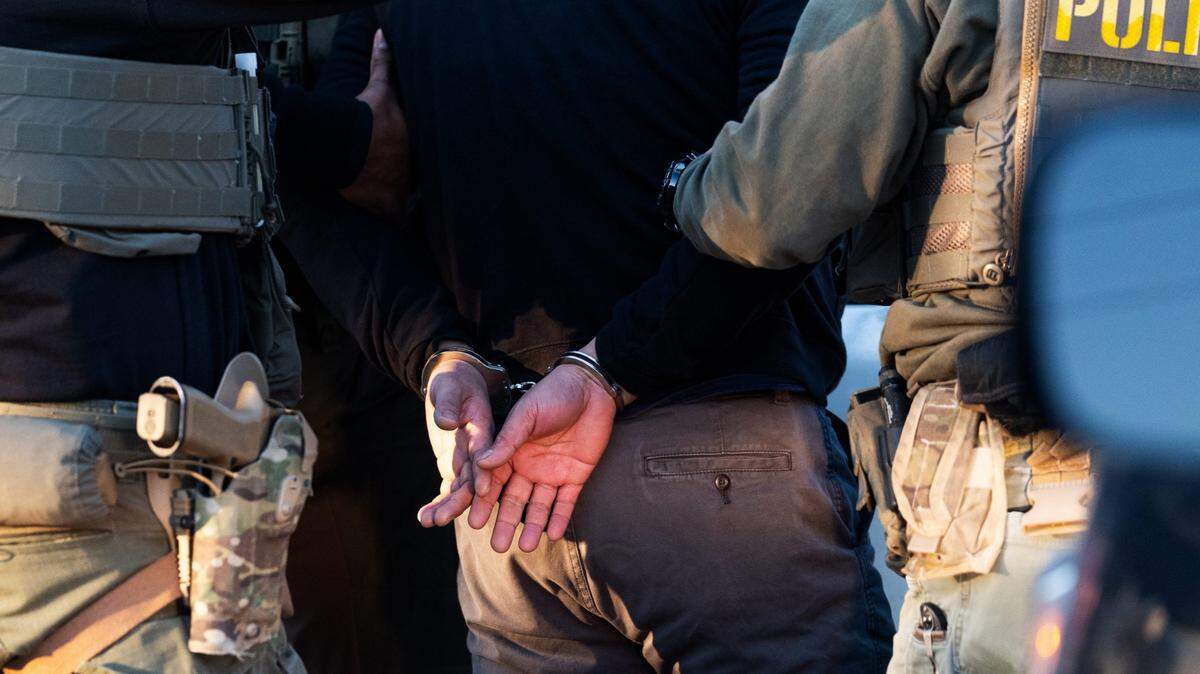
When the Trump administration rescinded a federal policy that discouraged immigration enforcement actions in churches, temples, and other “sensitive locations,” it came with a strongly worded warning:
“Criminals will no longer be able to hide in America’s schools and churches to avoid arrest,” the Department of Homeland Security announced in a statement last month, declaring that ending a long-standing practice of avoiding enforcement actions in religious buildings was critical to carrying out the President’s crackdown on illegal immigration in the name of public safety.
For many faith leaders and congregants across Florida — particularly in churches with large Hispanic populations — the directive has triggered both concern and confusion about their legal rights if Immigration and Customs Enforcement (ICE) comes knocking at the door. Some national and state groups are already raising concerns about the move violating religious freedom protections.
While the directive does not grant unrestricted access, legal experts told the Miami Herald that the move has potentially opened the door for federal agents to question or search for people in churches. That’s if — here’s the key — they have secured proper legal warrants. That means one issued by a court or judge, not just the administrative warrants that ICE agents frequently use.
But practically speaking, lawyers and faith leaders that spoke to the Miami Herald also believe it’s unlikely that immigration agents will show up arbitrarily for sweeping raids in the middle of services. If agents visit, it’s likely meant to target what the government considers “people of interest,” possibly undocumented immigrants with criminal records. But immigration lawyers say that could also have the side effect of ensnaring relatives who might be there with them.
Archbishop Thomas Wenski, the Roman Catholic Church’s top representative in South Florida, said he understands that vulnerable people are “nervous” and even “frightened” right now — but he believes that churches, temples and other religious institutions will remain places of sanctuary and comfort for the the faithful, including the undocumented. Wenski cited the Fourth Amendment, which protects private areas from “unreasonable searches.”
“Churches are private property,” he said. “No government official can enter the church without permission or without a warrant.”
But the law is a bit murky about what’s private and public in a church. If a member of the public could walk in, then potentially so could a federal agent
Wenski, along with immigration experts and others, say that the federal government doesn’t have enough personnel, resources, or infrastructure to carry out mass deportation that President Trump has touted.
And others point out that targeting churches, temples and other religious institution remains a politically touchy issue.
“Trump, in his typical fashion, has been able to focus attention on it, but at the same time, he’s a negotiator,” Wenski said. “I would say that he knows, everybody knows, that you’re not going to deport 12 million people. Ain’t going to happen. Can’t happen.”
Legal experts say it can be up to the schools and churches on how they decide to respond if faced with a warrant, but that enforcement agents can usually find other ways to conduct the search if denied access — like simply waiting outside to approach an individual.
“The system itself is, if you will, dysfunctional ... and you don’t have to go into the church. People misunderstand that,” said Juan Carlos Gomez, a law professor at Florida International University who also practices immigration law. “I can’t imagine scenes of people, of officers going into churches, because the truth is they don’t have to.”
Gomez, who is also the director of the Carlos A. Costa Immigration Human Rights Clinic at FIU, said his clients are facing an array of challenges: socioeconomic factors like education and language barriers, not understanding the complex justice system around immigration, and getting caught up in “legal limbo.”
“We’re not talking about convicted felons. No, no, I’m talking about just regular, working people, some of them have been here for decades .. but yet again, because of Congress not taking action, there have been no solutions to solve this.”
Some religious groups are already taking step to address the directive. The National Latino Evangelical Coalition, for example, launched training for 500 of its pastors on how to respond if there’s an immigration enforcement action, the group’s leader Pastor Gabriel Salguero told WUSF-Central Florida Public Media.
“People should feel free to come to worship and to serve God and sing and clap and have their children come to Sunday school without the fear of them being separated,” said the Pentecostal pastor, who leads a bilingual service at The Gathering Place in Orlando. “This is a holy place, and holy places need to be respected.”
Historic safe spaces
Historically, houses of worship and clergy have been at the forefront of helping immigrants and refugees who came to America escaping hardship in their home countries.
Wenski said the Church will continue to be an “advocate for immigrants.” Wenski himself has been a staunch advocate for decades, stretching as far back as when unaccompanied Cuban minors started coming to South Florida alone.
The federal government also has long-relied on the church as a partner to “resettle refugees into our community .... in a way that enhances their integration and adaptation to the American way of life,” Wenski said.
The United States Conference of Catholic Bishops, for instance, received more than $100 million annually in recent years from the federal government to support migration and help resettle people who been cleared to live here.
“There are more refugees in the world today than there have been since World War II, and some of these people are looking for a permanent home,” Wenski said. “We want other countries to offer that permanent home to people that cannot go back to their homelands. And we should lead by example.”
The immigration issue has emerged as an ideological divide. Some national religious groups representing Jews, Muslims and Evangelicals, have also spoken out against Trump’s plans to launch mass deportations. But his immigration policies also have won support from some faith leaders in South Florida and nationwide. The National Faith Advisory Board, for example — a group made up of 32,000 leaders across the country and representing millions more — endorses Trump’s mass deportation pledge as a win for border security.
READ MORE: Miami-Dade schools brace for potential immigration stings. Here’s what you need to know
Even Wenski, despite the Catholic Church’s advocacy of immigrants, said that does not mean the institution supports open borders.
“We recognize the right of a country to control its borders, the right of sovereignty, but at the same time, we say that that right is not absolute,” he said.
The legal technicalities
Since entering the White House, President Trump has eliminated deportation protections for Venezuelans and ended a parole process for Cubans, Haitians, Nicaraguans, and Venezuelans. The tsunami of executive orders has left churches, synagogues, temples, and mosques working to understand what that means for their day-to-day operations and worship activities.
The Biden administration had specifically directed agents to not carry out enforcement actions, such as arrests, apprehensions, surveillance, and inspections “to the fullest extent possible” in or near “protected areas” like playgrounds, schools, hospitals, demonstrations, and places of worship.
“This principle is fundamental. We can accomplish our enforcement mission without denying or limiting individuals’ access to needed medical care, children access to their schools, the displaced access to food and shelter, people of faith access to their places of worship, and more. Adherence to this principle is one bedrock of our stature as public servants,” read the memo.
There were exceptions for a national security threat, a hot pursuit of someone who was a danger to public safety, and an imminent risk of physical harm or death to a person.
Though Trump has lifted those restrictions, several lawyers told the Miami Herald that other constitutional protections and federal laws remain in place for people in churches.
The power of law enforcement immigration agents is limited by the Fourth Amendment, which says that people have a right to “be free from unreasonable searches and seizures of persons or objects,” according to a fact sheet from the National Immigration Law Center. The Fourth Amendment protects areas where people have a “reasonable expectation of privacy.”
So, immigration officers like ICE and CBP may not enter private areas — like someone’s home — unless they have either a judicial warrant or consent of the person to enter them — but places where people gather in public aren’t recognized.
The National Immigration Law Center recommends that since ICE agents can enter areas open to congregants, places of worship concerned about the risks of arrests can identify non-public spaces like clergy housing or office.
Some states are beginning to put out guidelines aimed at helping faith leaders understand state and federal laws while ensuring their houses of worship remain accessible places for all congregants.
This guidance from New Mexico, for example, further explains the Fourth Amendment protections including what kind of enforcement actions are allowed to take place in private and public areas. The advice is nuanced, explaining the difference between administrative warrants, court warrants and subpoenas.
ICE administrative warrants “authorize an immigration enforcement officer to arrest a person suspected of violating immigration laws when that person is in a public location.” They are issued by an authorized immigration official but do not permit officers to access nonpublic, restricted areas of privately owned property.
A federal court order, however, which is issued by a federal district or magistrate judge, would authorize a search or seizure in a nonpublic place and an arrest of the named person, according to the guidance.
When an intrusion onto commercial property would be a trespass for a member of the public, law enforcement officers cannot enter the property without the owner’s consent, a warrant, or certain special circumstances. But when a non-residential private property owner allows access by the public, law enforcement officers, as members of the public, may enter the property at the times that the property is open to the public.
According to Miami immigration lawyer John De La Vega, law enforcement still may go to these sensitive areas if they are looking to detain a person of interest, but he doesn’t expect random searches to take place.
“In theory, it’s only for people are considered a danger to the community, a danger to national security and people that have a final order of removal,” he said “But other than that, I’m not expecting that the Trump administration is just going to randomly go to a church, and say “Hey, who has papers? Who doesn’t have papers?”
But De La Vega said that in some cases, ICE has targeted a person of interest, but will stay to interrogate the family members or friends in the same vicinity.
“We see ICE going to detain a person of interest, and ... maybe they’re with family members, or with friends or with neighbors, and ICE will also ask for their immigration status in the U.S. and if they’re undocumented, they also detain this person, even if they don’t have a record, even if they’re not considered a priority of deportation.”
De La Vega says someone in this situation should remain silent, refrain from answering any questions and find a trusted attorney.
“Make sure that you have an attorney, because anything that you say may be used against you in the future,” he said. “If you’re not arrested, you don’t need to answer any questions.“
READ MORE: ‘It’s about love.’ Christian groups bring Christmas joy to Miami’s most vulnerable
Push back from religious groups
The Catholic Church isn’t the only denomination that has long opened doors to vulnerable populations including newly arrived migrants. Jewish and Muslim groups have issued statements pushing back on the aggressive tactics.
Last week, the Union for Reform Judaism, which represents nearly 900 congregations across North America, and the Religious Action Center released a statement opposing the Trump administration’s executive orders on immigration. Just this week, groups aligned with Conservative Judaism also signed on to a letter denouncing Trump administration policies.
“As 88 organizations that represent millions of diverse American Jews across the country, we write in opposition to the Trump administration’s plans to launch mass deportations, build massive detention camps, and conduct sweeping raids,” the letter wrote.
The letter referred to the history of Jewish persecution as a reason for opposing mass deportations.
“We have been forced to flee, denied access to safety, scapegoated, detained, and exploited. This history and our Jewish values make immigration policy ... deeply personal to the Jewish community.”
The Council on American-Islamic Relations (CAIR), which is the nation’s largest Muslim advocacy organization, released a “Know Your Rights” guide to help educate the community on their legal rights during interactions with ICE and other law enforcement agencies.
The main goal of some faith-based organizations, like Hermanos de la Calle in Miami, is to help resettle newly arrived migrants seeking asylum. Leaders say the future of their work, which relies heavily on federal grants, is also unknown.
“We are working as if we are not going to have [the funding],” said Narciso Muñoz, the founder and president of Hermanos. “Nevertheless, if there are families in the streets, we are going to help them.”
The non-profit helps connect Miami’s homeless population — many of whom are immigrants — with affordable housing, employment and spiritual support. Muñoz said he expects that a place like Miami will be more understanding towards those who come to the U.S. looking for better opportunities.
“The Miami approach, at least what I see ... it’s different from other cities, here is more like a compassionate approach. And we are a city of immigrants,” he said.
“On the other hand, we think that to target families, to target kids in schools, to target immigrants that go to church. It’s a horrible way to do it.”
This story was produced with financial support from Trish and Dan Bell and from donors comprising the South Florida Jewish and Muslim Communities, in partnership with Journalism Funding Partners. The Miami Herald maintains full editorial control of this work.
This story was originally published February 10, 2025 at 5:30 AM.