
Can you still find a hotel room in Miami for the World Cup?
The World Cup promised to put a cafecito jolt into Miami tourism, filling hotels to their rooftops. Less than two months before the opening match, it’s been more like a watered-down cup of decaf.
Reservations aren’t matching the hyped expectations. FIFA has returned rooms reserved for fans at several hotels. And fewer hotels signed contracts with the tournament’s organizing body than anticipated.
The global soccer tournament is still expected to provide a boost — just not the size Miami hospitality leaders had hoped. And unless things improve quickly, still a possibility, the largest World Cup ever held may turn into a missed opportunity for South Florida.
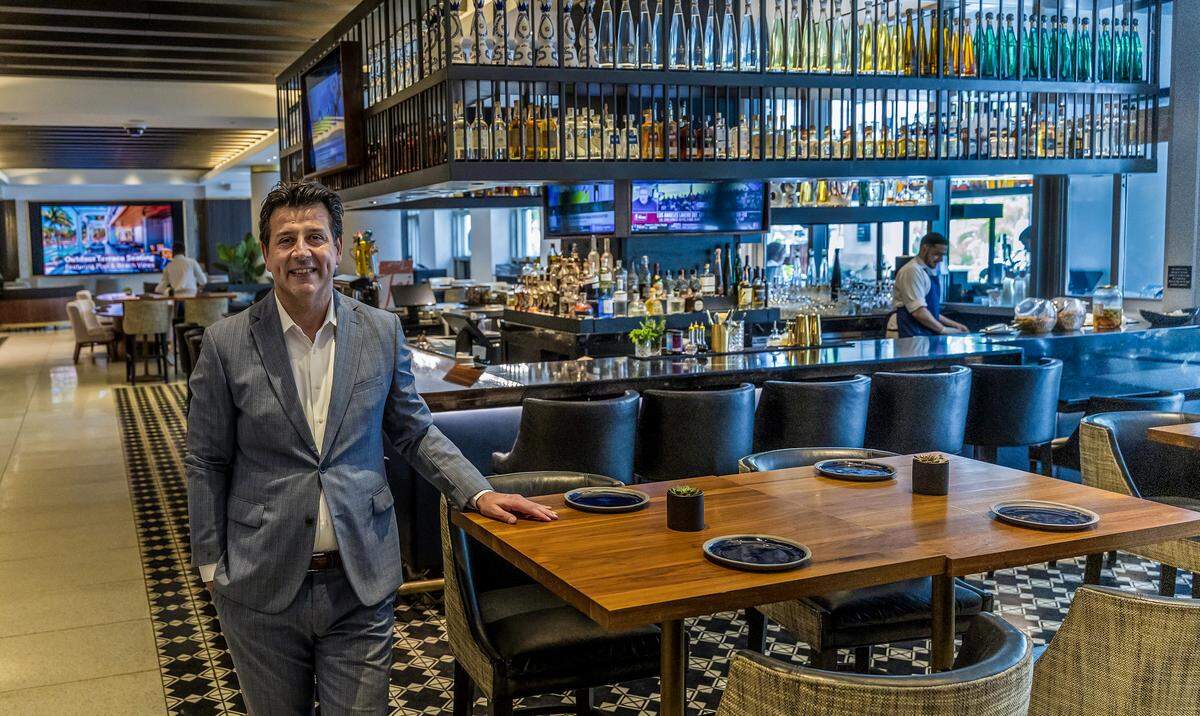
“The expectations were sky-high, and I worry we may not be able to reach them,” said Mutluhan Kucuk, managing director of Loews Miami Beach Hotel.
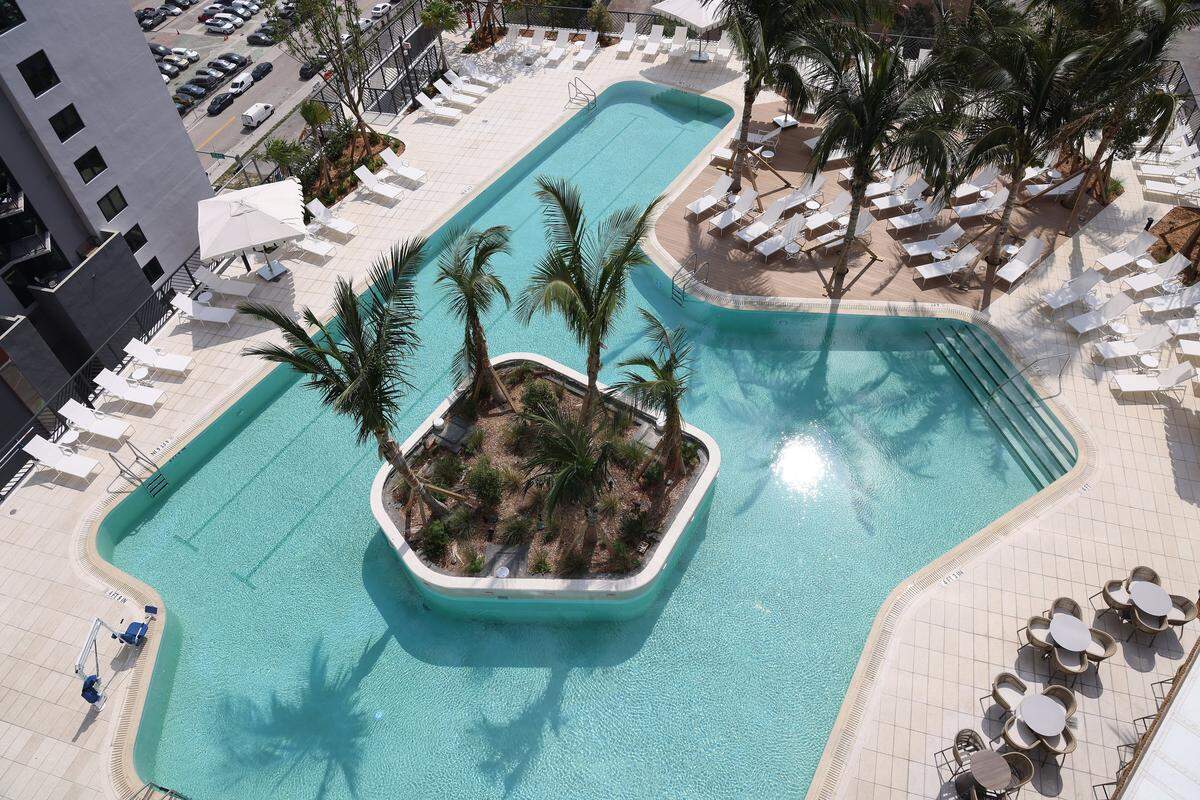
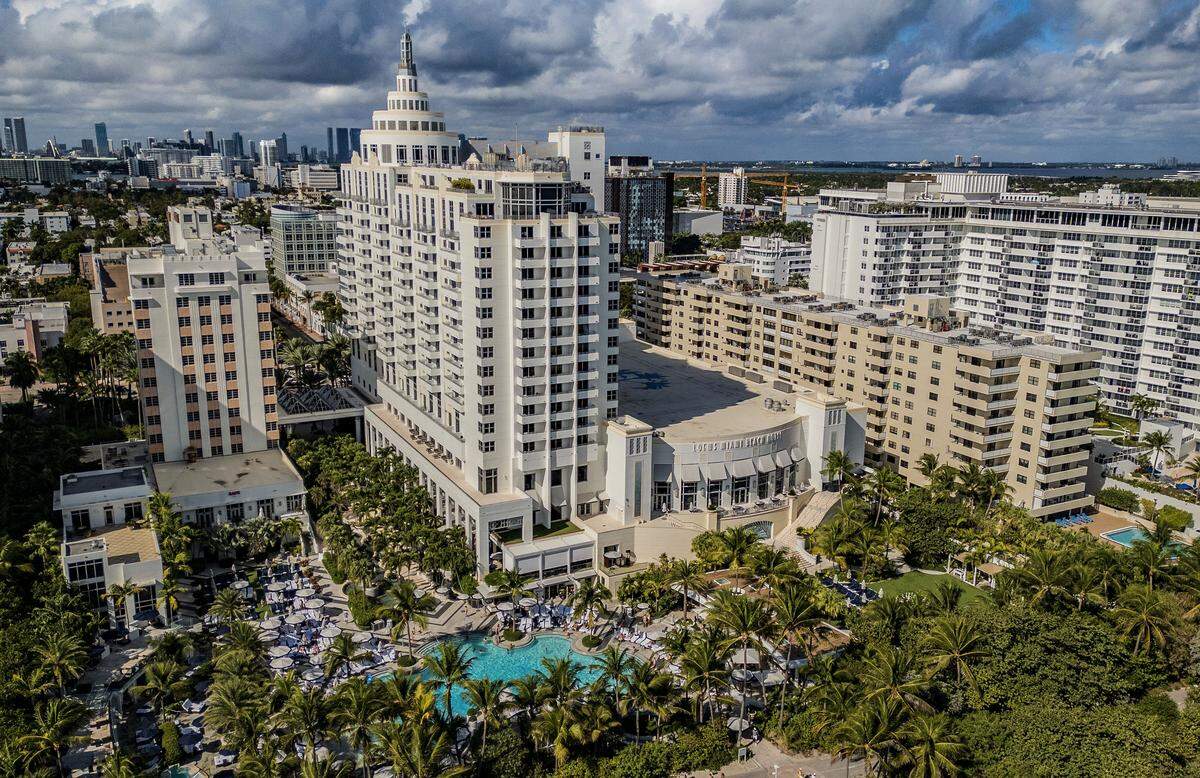
And that’s coming from one of the hotels that has booked the most rooms so far. The Collins Avenue resort, which completed a $55 million renovation in December, initially reserved about a third of its 790 rooms for the World Cup. Most of those have been booked, but FIFA returned some to the hotel, Kucuk said.
Loews Miami Beach still had rooms available for the World Cup as of May 5. A search found a low-end of $419 per night on June 15, the day of Uruguay vs. Saudia Arabia match at Hard Rock Stadium in Miami Gardens. Kucuk said they’ve brought down the prices from what was planned six months earlier, as others have done.
At several other hotels that signed contracts, “FIFA is returning blocks of rooms due to lack of demand,” said Antonio Paz, vice president at Absolut Sport, a Germany-based global sports travel agency. Those hotels are telling his agency they now have rooms available for significantly lower prices than three months ago, he said.
Not much time remains before the first whistle. The World Cup opens June 11 in Mexico City, with Mexico playing South Africa. The final is July 19 in New Jersey. For the first time, there are multiple host countries: the United States, Canada and Mexico.
Miami is one of 11 U.S. host cities and will have seven games at Hard Rock Stadium in Miami Gardens spanning June 15 to July 18.
Drawing Europeans may be a challenge. England, the Netherlands and Germany aren’t sending as many fans as they did to Qatar in 2022 or to Brazil in 2014, travel experts say. They’re typically the top three sources of travelers to the quadrennial tournament.
“They are much lower this time” in demand, said Paz, who is based in Miami.
The diminished interest is due to several factors, according to travel agents and World Cup experts who say high ticket costs are turning off fans. That’s made worse by FIFA using the secondary market for the first time. Overall travel costs in the United States aren’t helping either.
Then there are the uncertainties surrounding President Donald Trump’s immigration policies and sagging confidence in his leadership.
James Rendall and two friends, all Scots, were initially thrilled that their country qualified for the World Cup. They’d been waiting 28 years.
“My plans were to go,” the 61-year-old who lives in Edinburgh told the Miami Herald. “But we resolved before the draw only to go if we ended up in Canada or Mexico.”
All three of Scotland’s games are in the U.S. “That’s a no-no,” he said. So they’re staying home.
Their decision came before the U.S.-Iran war led to higher oil prices, airfare and general volatility across the world.
“We’re not really looking at [the World Cup] as a whole anymore,” said James D’Agostino, complex general manager of the Gale Miami Hotels & Residences in downtown, walking distance to the FIFA Fan Festival. “We’re really focusing on specific dates and adjusting rates as needed,” meaning the hotel is no longer expecting tourists to come for the entire tournament or even large chunks of it.
Miami, one of 11 U.S. host cities, is in some ways faring better than the others. The region has higher booking growth compared to last year than Atlanta or New York.
Should Argentina win its group, as expected, Inter Miami captain Lionel Messi would have a chance to play in South Florida.
So far, the matches in Miami producing the most demand for hotels are Brazil-Scotland on June 24 and Colombia-Portugal on June 27. That’s the case at Loews, Gale and others.
Average daily rates at Loews for those nights are more than 30% higher than one year ago, Kucuk said.
Meanwhile, “group matches with Brazil and Portugal appear to be more popular than earlier matches in June,” said Glenn Sampert, general manager at InterContinental Miami.
“July matches are not yet in demand,” he noted. But he said it wasn’t clear if that was because they are two months away or that the teams aren’t known.
Hotel booking numbers
Of the seven matches in Miami Gardens, the one with the highest hotel occupancy is Brazil-Scotland on June 24. Bookings for that night total 31%, meaning slightly less than a third of hotel rooms are reserved. That’s 13% higher than the figure for the same date a year earlier, indicating the game is having an impact even as plenty of hotel rooms remain available.
Colombia-Portugal ranks second, in both bookings with 29% and an 8% improvement from 2025.
Yet, the other five matches show tepid demand. Two games, June 15 and July 18, have decreased booking compared to 2025 while the other three show increases of 2%, 2% and 0%.
The hotel booking information was provided to the Miami Herald by hotel data analytics firm CoStar for reservations made as of April 6, 2026.
When looking at all Group Stage matches across all host cities and how attractive they are for hotels only on game days, Brazil-Scotland has the highest booking and Colombia-Portugal is third.
Examining all match days, Miami ranks first among host cities CoStar measures, with current average booking of 24%. When looking at the entire tournament, from first game played to last at a particular city, Miami also ranks first at 20%.
For this World Cup, “Miami is one of the better performing markets,” Chantal Wu, senior director of hospitality market analytics covering the Southeast U.S. region, said in an interview with the Herald.
But the U.S. overall is underperforming. In Atlanta for example, bookings on seven out of eight match days are down compared to the same dates one year ago, according to CoStar. For the other match, they show no change. In New York, all eight matches are seeing decreased bookings, including the July 19 Final, down 7%.
Looking at growth, or comparing this coming summer to last summer, Miami ranks fourth with a 3% increase for match days only and fourth with a 1% increase for the full range of World Cup dates. Dallas, Houston and Los Angeles are first through third in both, respectively.
The data indicates that the World Cup is having a positive impact on Miami hotels, albeit a small one. Costar doesn’t have a large enough sample size to do the same analysis for the Fort Lauderdale area but some preliminary data shows bookings are a few percentage points higher than Miami hotels.
Many Super Bowls?

The FIFA World Cup 2026 started with massive hopes and expectations. The tournament would have multiple hosts for the first time. Stadiums were already built and experienced with big games. Cities mostly had enough hotels. There wouldn’t be any last minute worries about preparedness as there were in South Africa and Brazil. After the last two World Cup tournaments in Qatar and Russia, the beautiful game was returning to a democracy for the first time since 2014.
And for the first time, the tournament expanded to 48 teams from 32, a boon for African countries.
FIFA President Gianni Infantino said in terms of TV viewership, the World Cup is like 104 Super Bowls. Local officials have been more modest but still said the overall economic impact on tourism would be like having seven Super Bowls in about one month, each game representing one.
“There was talk of how this would be 30 Super Bowls or 7 Super Bowls for the local market,” said Kucuk, the Loews hotel executive in Miami Beach. “That’s not what we’re seeing.”
Virtually no one is coming for the whole World Cup, he said, and visitors are coming mostly for three-day and in some cases seven-day blocks, shorter than what hoteliers previously expected. Kucuk predicts average occupancy in June and July at his hotel to increase 10% to 15% and average daily rate to go up 20% to 25% compared to 2025.
One reason the hotel isn’t getting a bigger boost is “things have gotten more expensive,” he said.
In addition, “there’s the notion that international travelers are not as welcome as they used to be in the U.S.” Kucuk said. “Our success is heavily predicated on international travel.”
For all the hype of expanding the number of African nations in the World Cup, it’s unclear if people on the African continent can obtain visas to enter the United States. But South America expects to send many fans to Miami.
D’Agostino, the Gale hotel executive in Miami, says he’s also seeing stronger demand for Brazil-Scotland and Colombia-Portugal. But he’s getting fewer guests book for longer stays.
“It’s very much game-specific,” he said. “It’s a little slower than maybe was expected.”
When the tournament was first announced, the Gale and many other hotels pushed up their rates. That was to gauge interest. Gale has since brought down some of them.
“We made some adjustments,” he said.
D’Agostino observed that “some properties started at rates that weren’t going to be attainable.”
Gale isn’t an official FIFA hotel but could benefit from proximity to the FIFA Fan Festival at nearby Bayfront Park in downtown Miami. They’re also looking into bringing in business groups that want to plan events around the World Cup, including dinners or banquets for clients or employees.
“That’s generally what I like to do” for these big events, D’Agostino said.
Travel experts remain concerned about international travel, which Miami has tried to recover since the COVID-19 pandemic. Even games doing well, such as Brazil-Scotland, could be doing even better. They’re losing loyal fans.
A last-minute comeback for hotels?
Rendall, the Scotsman, and his two mates are turned off by the U.S. president.
“Many are coming. Such is the desperation to see Scotland,” he said, given his country has gone nearly three decades without qualifying for the tournament. “Others won’t go, like me, because of Trump.”
Rendall, who has been to five World Cup finals including in Russia and Qatar, feels that “America isn’t considered safe, politically and otherwise.”
The high costs are also a big turnoff.
“Everything I read about fleecing fans, not just tickets, but charging for fan parks and charging ridiculous fees for transport to stadia, etc.” is helping keep him from Miami and the U.S. this summer, he said.
Not everyone agrees with Rendall and new demand could emerge as the opening of the World Cup nears. Some hoteliers are expecting that.
Separate from CoStar’s booking data, which measures reservations already on the books, the firm also makes projections that are forward-looking estimates.
The firm’s most recent forecast has hotel occupancy in the Miami metro area in June averaging 73.2% and in July 71.5%, as of March 31. So, more than a quarter of all hotel rooms in the area are still available during the World Cup.
Do these numbers show a bump resulting from the tournament?
The estimated occupancy for this June is 3.5% higher than it was one year ago. July is 3.2% higher. That indicates that hotels will see an increase in activity from the World Cup, although a modest one.
CoStar’s projections also provide insight on room prices.
Average forecasted daily rate in June is $194.91 per night, and in July $185.40. Those are 10% and 9.6% increases, respectively, compared to the same time in 2025. So hotels are able to charge more this year than last year.
The firm has provided the Herald the same data on three different occasions, initially on Nov. 30, 2025. Each time, occupancy for June and July have risen slightly, as has percent increase compared to the prior year. That suggests demand is slightly increasing over time.
Prices, however, seem to have stabilized. Average daily rate for June was $194.77 on Nov. 30, 2025. It’s $194.91 as of March 31, 2026. For July, it went from $185.50 to $185.40.
Hoteliers hope the next six weeks will boost their business.
At the Gale, D’Agostino says, “30 days prior to game you’ll see a lot more bookings.”
Kucuk, the Loews executive, notes that if their current pace of reservations continues, the hotel will have a better summer than it did one year ago.
“We’ll take a summer with the World Cup,” he said, “than one without the World Cup.”
This story was originally published May 6, 2026 at 12:29 PM.