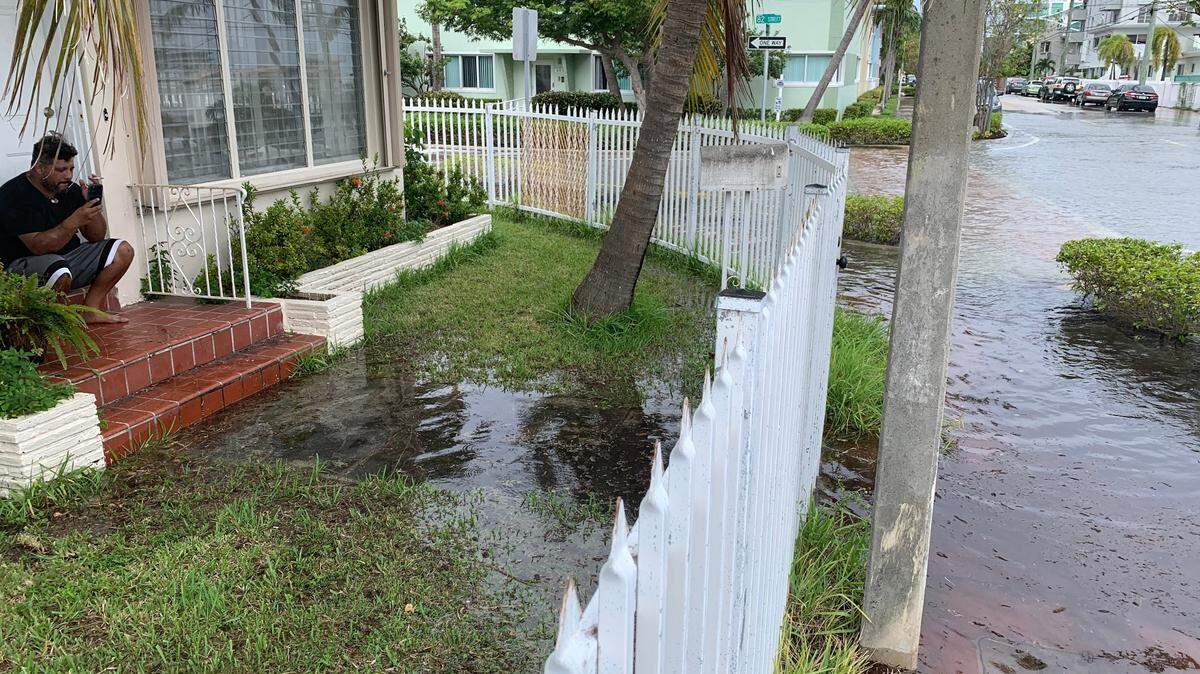
Miami Beach residents want sea level rise fixes. But finding the right spot is a battle
READ MORE
Road raising in Miami Beach
Miami Beach is the first city in the U.S. to dramatically raise roads ahead of the two feet of sea level rise expected by 2060. Residents have pushed back with concerns about aesthetics, the need for the projects and what they will do to low-lying properties. The city contends the projects work well and will reduce flooding.
Expand All
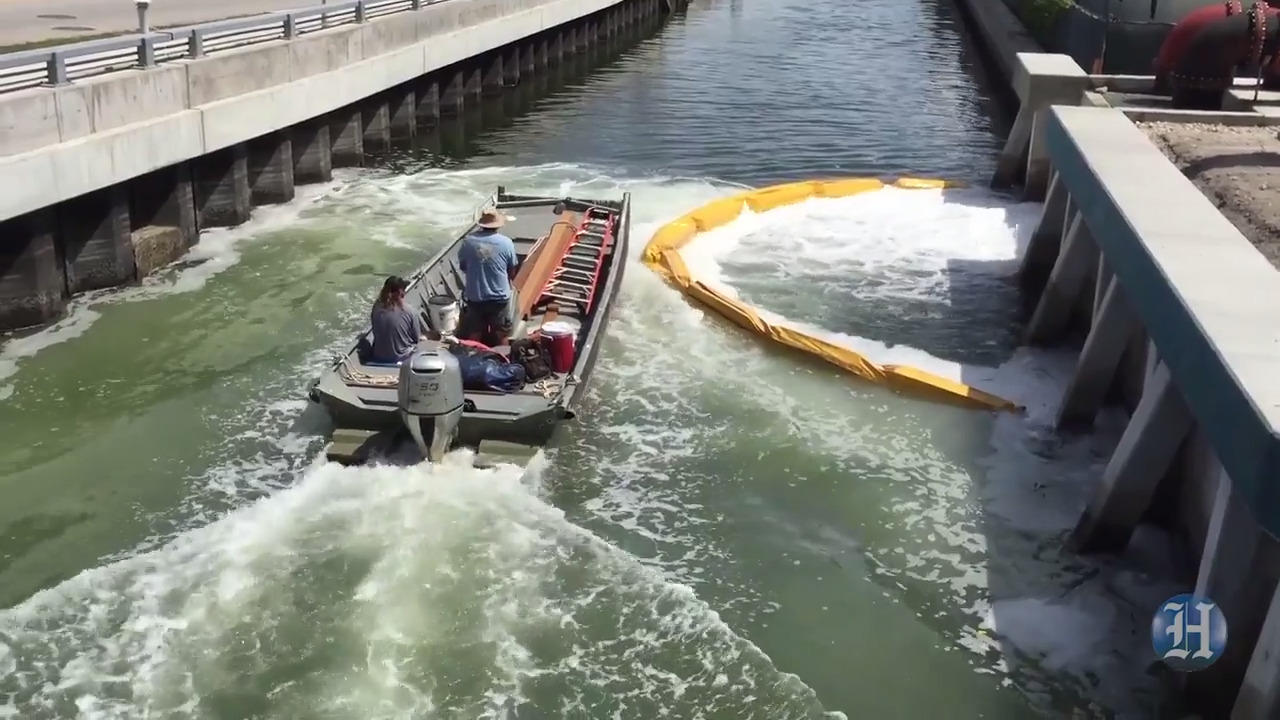
Miami Beach has more than $40 million ready to spend to keep the upscale South of Fifth Street neighborhood dry in the face of sea level rise. It involves underground pipes, a giant stormwater pump and a control panel topped with a large backup generator. The big question is where to put it.
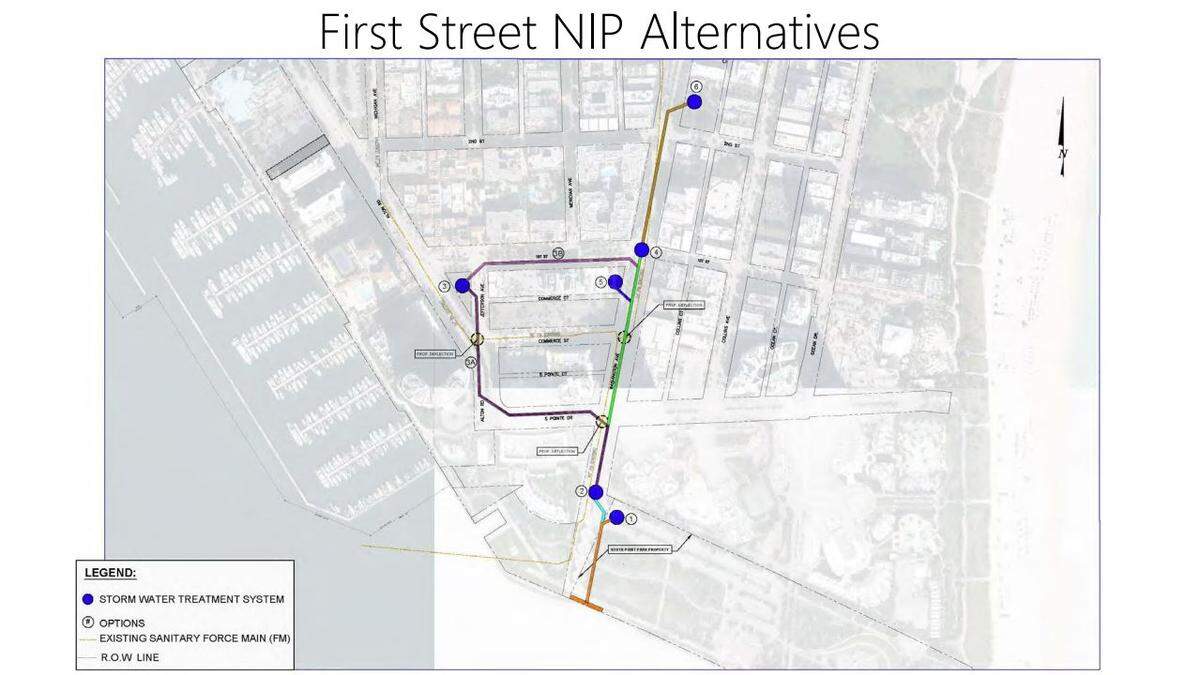
How about a patch of grass near the marina? Nope, the marina won’t give up its property rights because it doesn’t want the flow of freshwater to attract manatees to a high boat traffic area.
Well, how about the city-owned parking lot for South Pointe Park? In public meetings, the overwhelming resident response was no, and if you do, we’ll sue you.
How about the nearby dog park? Fliers left in the park urge the public to “SAVE OUR DOG PARK” and a banner plane flew a sign advertising a website dedicated to protecting the dog park.
Hoping to avoid conflict, the City Commission voted Wednesday for a new option not previously discussed or debated: installing the above-ground pump station at a public parking lot on Washington Avenue and First Street.
Whatever their choice, the commission’s decision seemed sure to upset someone. That’s been the pattern for Miami Beach’s resilience projects in past years. Fights over the city’s plan have caused schisms in homeowners associations, arguments between neighbors, threats of lawsuits and, above all, delays.
The city’s efforts to fight advancing tides and rising seas with a $500 million series of pumps, pipes and elevated roads have been widely praised as cutting edge and an example for other coastal cities preparing for the projected two feet of sea level rise by 2060 — enough to permanently drench thousands of homes in Miami Beach alone.
But it’s also been a struggle to convince every resident that the years of construction and disruption are worth it.
In the latest instance, city staffers had seven possible locations for the First Street improvement project. They identified the parking lot of South Pointe Park as the best option in terms of cost and efficiency.
Dozens of longtime residents disagreed. They worry that the above-ground aspects of the system will be ugly, that the pumps could be smelly and that construction and continued maintenance would disrupt their world-class park.
“Who would purchase a 5-star condominium in such a setting? It’s unbelievable,” Margot Kurtz, a longtime resident, said in a public meeting last month.
Jean Kulick, an 83-year-old British retiree, said her grandson refers to the park as “granny’s back garden,” and told the Herald she views the potential project as a “desecration.”
“They said it doesn’t affect our condo. I’m not thinking about my condo, I’m thinking of the millions of tourists that come here,” she said. “They said revenues are down, tourism is down. Now they want to tear up the entrance to the park? It is dumb, dumb, dumb.”
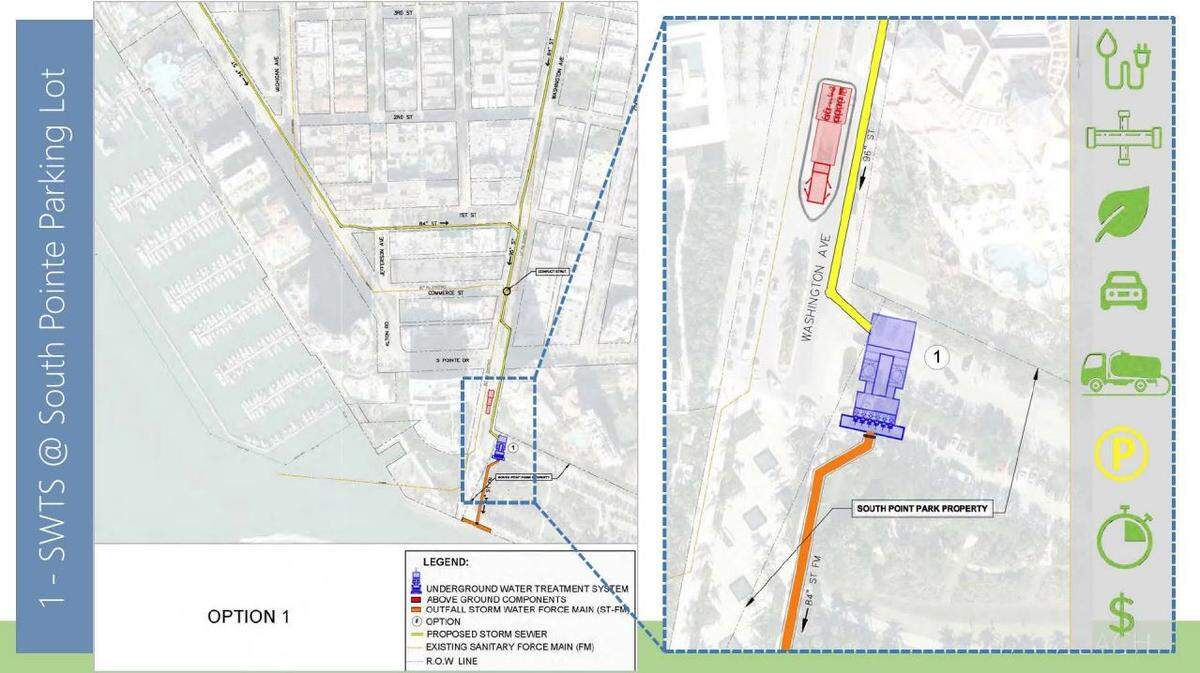
Other residents were more direct in their opposition. They say they’ll sue if the city picks the South Pointe Park location.
“If they approve Option 1, we will file a lawsuit,” said attorney Phillip Hudson, who was hired by the master associations for South Pointe Tower, Portofino Tower and The Continuum on South Beach.
Nick Weir, a 20-year resident and board member of Portofino Tower, was one of several residents in the public meeting who urged the city to use eminent domain to overcome the marina’s objections and run the water pipe through there instead — or else.
“You have some very smart, litigious people living in this area, whether you have eminent domain rights or not this is going to divide people and delay this project forever,” he said. “I’m not saying that in any way to be threatening. I also don’t want to be heard as not-in-my-backyard speak, but this is the reality of what you’re dealing with down here.”
Residents push back on proposed project site
Despite the several feet of sea level rise that threaten to swamp Miami Beach (and the rest of the coast) in the next few decades, the island city is more prepared than most.
The Beach has already raised key roads and installed mega storm water pumps and pipes — and there’s a city policy in place to let people elevate their homes. The city has the cash to do it and a tax base to keep project money flowing. It even has the political will, with outspoken mayors, commissioners and city staffers who’ve rung the alarm bells over climate change for years.
The major struggle: Getting some residents to buy in.
Miami Beach’s resilience initiative has been stymied time and time again by residents who don’t want the construction disruption, don’t trust the city to do it correctly or argue there’s no flooding in their neighborhood.
Despite this history, Roy Coley, Miami Beach’s head of public works, said that he’s seen the climate denial aspect melt away in recent years, including for the First Street project.
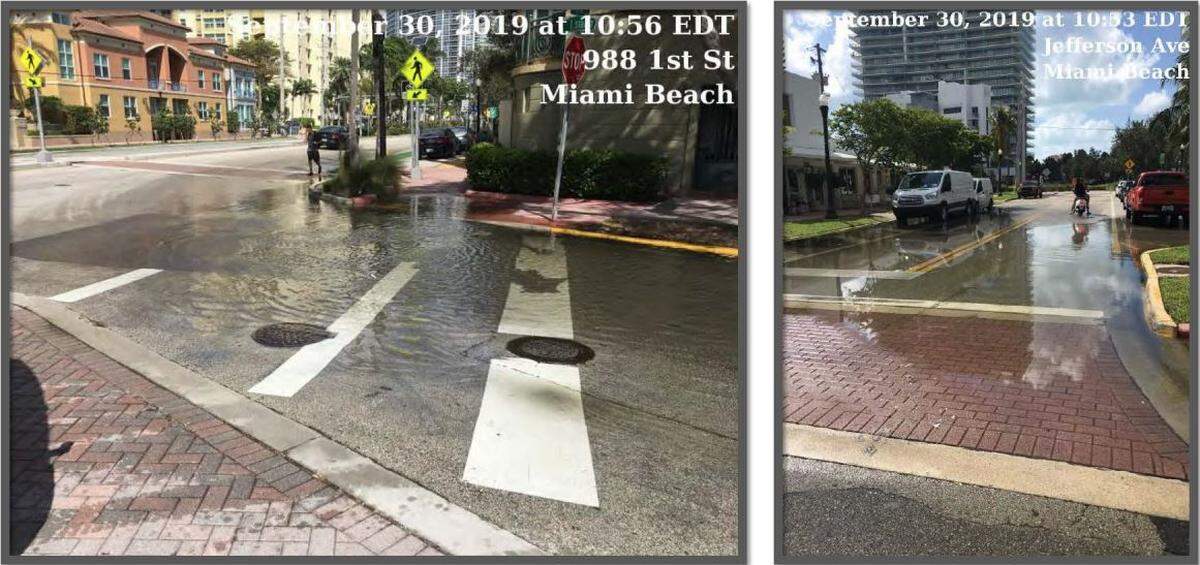
“We have not encountered a single resident that does not want the project. Everyone recognizes it’s what the city needs, it’s what the surrounding neighborhood needs,” he told the Herald.
Now, the main concern he hears is the disruptive nature of construction, especially among residents who might not be around for the benefits of a completed project.
“I’ve literally heard from people that say ‘Hey I’m 75. … Can you wait until I’m dead and gone before you tear up my neighborhood’?’ “ Coley said.
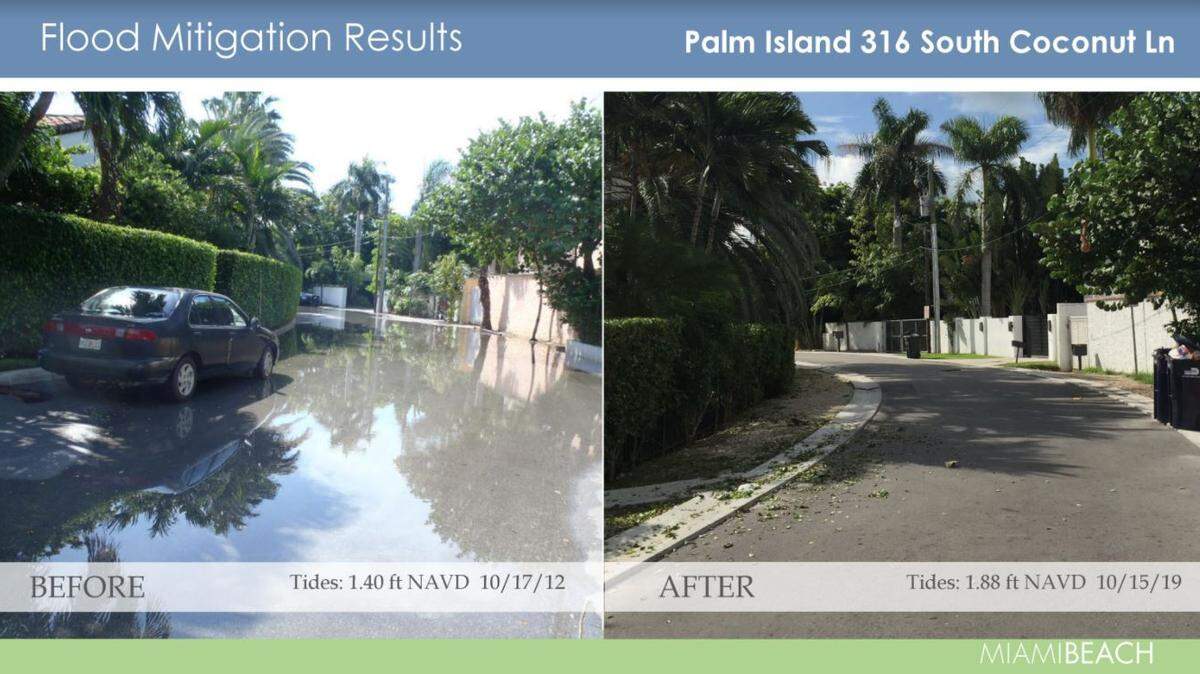
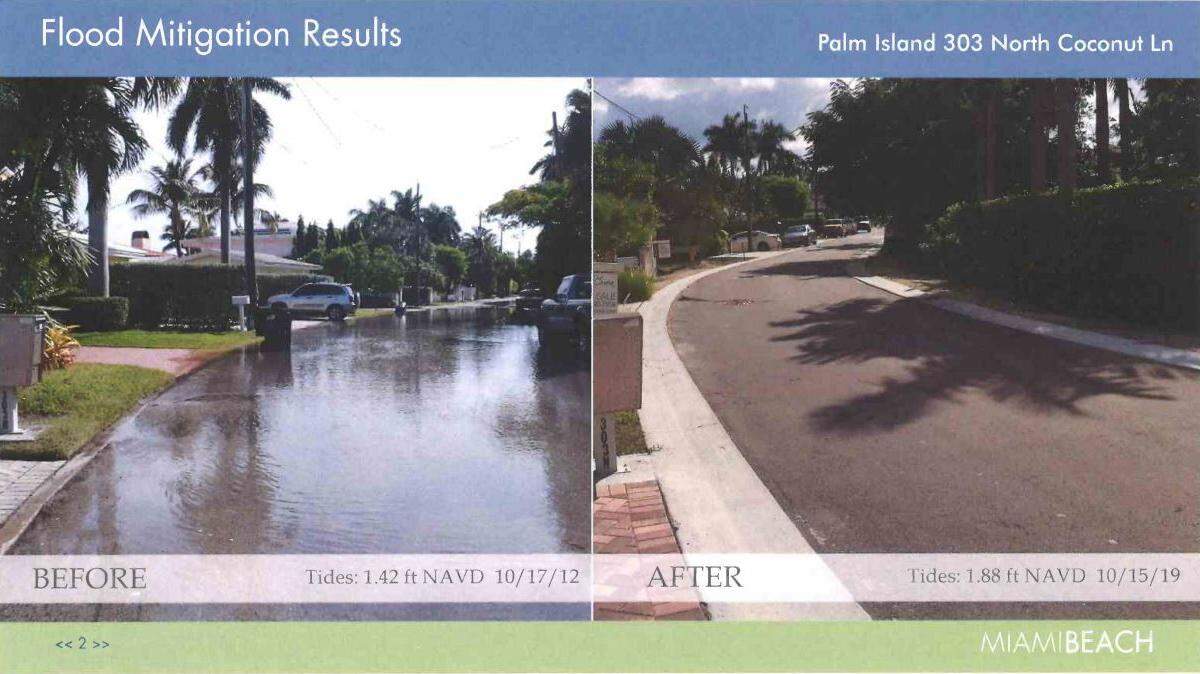
The city often touts the flood protection seen in its two marquee projects — Sunset Harbour and the residential neighborhoods of Palm and Hibiscus Islands — as proof of concept. But residents point to the business owners in Sunset Harbour who still deal with flooding and the headline-grabbing tangle with an insurance company that briefly tried to classify a ground floor restaurant as a basement.
And as for Palm and Hibiscus, the $40 million project began five years ago and still isn’t completely finished, angering residents in the ritzy neighborhood where homes list for nearly the price of the project. A recent report by the city’s inspector general blasted the city for “poor judgment” and “professional misconduct” over the work.
‘The Pause’
Discontent with the city’s floodproofing plans was a central feature in the 2017 election, where now-Mayor Dan Gelber and Commissioner Mark Samuelian campaigned on concerns over road-raising and called for a “red team” of experts to review the city’s strategy.
After the election, the Urban Land Institute sent a team to do just that. The consulting firm said the city was on the right track but needed to do a much better job of communicating its plans to skeptical residents.
Around this time, work slowed or stopped on several resilience projects. Critics called it “the pause” and pushed for the city to keep moving as aggressively as it did when former Mayor Philip Levine first kicked off the strategy.
Miami Beach Commissioner Ricky Arriola said he won’t accept that the “pause” is over until the city approves its first project. He hopes the commission moves forward with the South of Fifth project at Wednesday’s meeting, but he isn’t keeping his hopes up.
“This commission seems to want to satisfy 100% of the people 100% of the time,” Arriola said. “That by definition is impossible. It’s an unattainable goal, and we got elected to make hard decisions that sometimes will be unpopular.”
When the city tried to start its flooding improvement project on Upper North Bay Road in 2018, residents said there was no flooding (despite the temporary pumps assigned to the street every king tide), worried that the raised roads would flood their property and said construction would be a nuisance.
Commissioners agreed to move the neighborhood down the priority list and turned to the next spot, Lakeview. When the local homeowners association expressed support for the project, objecting residents spun off into their own group — We Love Lakeview — and attended commission meetings in matching lime green T-shirts to delay or dismiss the project.
It worked. The city bowed to the pressure and hired a new engineering firm, Jacobs, to re-evaluate the order of the city’s list of projects. Now Lakeview is at the lower end of the list, and North Bay Road is toward the top.
But a city engineer told Curt Dyer, a North Bay Road resident who’s struggled with repeated flooding over the years, that it could take 10 years or more to get to his neighborhood’s project. That’s a decade too long for Dyer. He and his husband have hired an architect and an engineer to elevate the lowest portion of their home and hope to have it done before hurricane season.
Dyer said it was “infuriating” to have his neighbors shoot down a project he and others so desperately need.
“It’s because of the people that didn’t want to be bothered, they didn’t want to deal with the dust, they didn’t want to be inconvenienced,” he said. “They couldn’t look beyond their own front door and realize that the situation is horrendous for their neighbors and they didn’t care. Now we have to wait 10 years longer and the issue is only going to get worse.”
Coley said the city has learned a lot in recent years about how to make a project more successful (and popular). And part of that knowledge is understanding that the loudest voices do not necessarily represent everyone.
“We’ve all learned together that sometimes what we think is the majority of the community speaking turns out not to be, and we’ve learned that everybody in the room saying that same thing doesn’t mean that’s the majority of the community,” he said.
Coley said resident feedback has changed the way the city approaches these projects. Besides the stronger communication strategy, the city now requires contractors to design 100% of the harmonization between the higher road and individual properties before it breaks ground so residents understand what they’re in for.
He also pointed to several projects that weren’t controversial and solved flooding issues, including Dade Boulevard, 11th Street and Flamingo Park.
“Miami Beach has the ability to set the trend around the world,” he said. “We’re doing real stuff. We’re not just talking.”
This story was originally published May 11, 2021 at 4:01 PM.
.JPG)