Report criticizes Miami Beach sea-rise project’s planning and permits. City defends it.
READ MORE
Road raising in Miami Beach
Miami Beach is the first city in the U.S. to dramatically raise roads ahead of the two feet of sea level rise expected by 2060. Residents have pushed back with concerns about aesthetics, the need for the projects and what they will do to low-lying properties. The city contends the projects work well and will reduce flooding.
Expand All
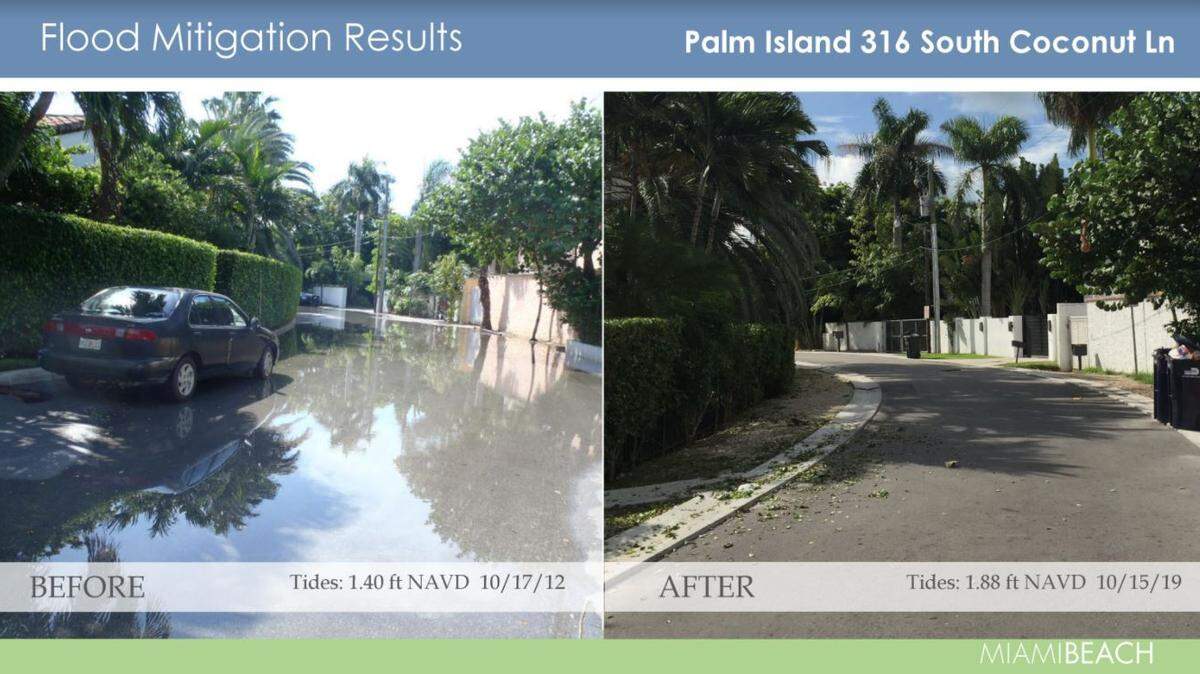
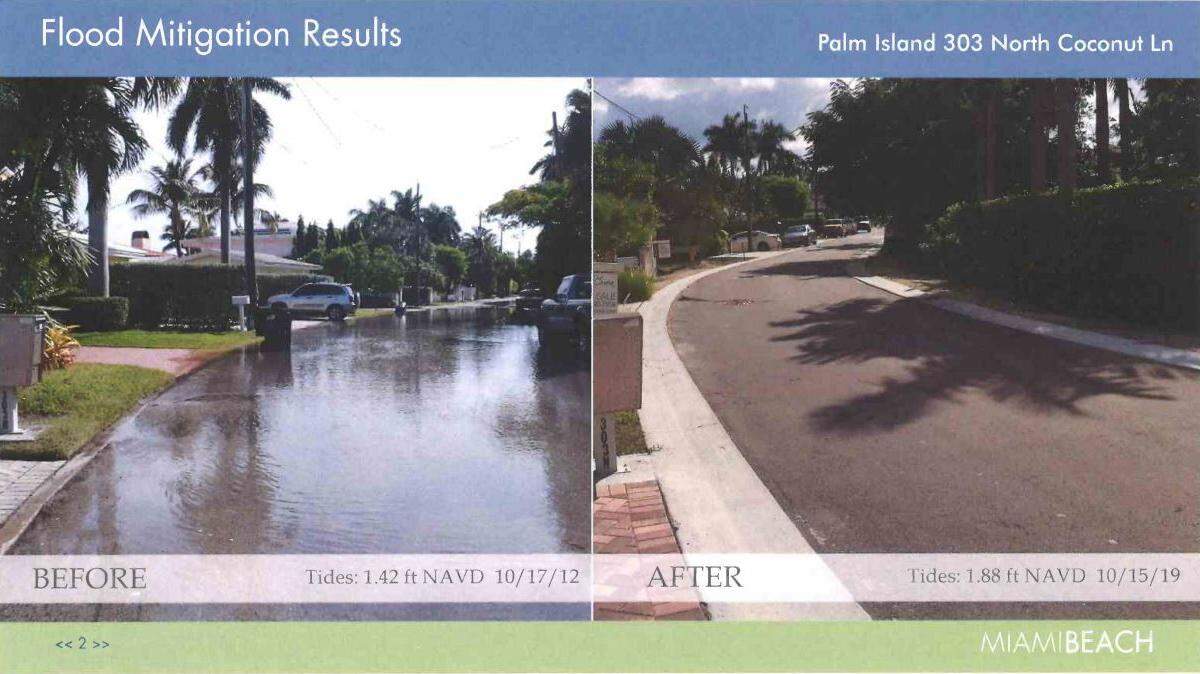
For the last five years, the city of Miami Beach has spent $40.9 million to elevate roads and install pumps in one of the lowest-lying parts of the city — the ritzy neighborhoods on Palm and Hibiscus Islands. From the before and after pictures of the once flooded, now dry streets, it looks like a success.
But a new report from the city’s inspector general paints a picture of a project that was hustled to the finish line faster than it should have been, at a higher cost and sometimes without proper permits. It sharply criticized the city for “poor judgment, professional misconduct and disregard for applicable... laws, regulations, and professional standards,” but stopped short of accusing the city of malice or criminal wrongdoing.
The joint response from several city leaders called the report editorialized and said it “insinuate[d] wrongdoing where none has occurred.”
The report could have a dual impact. One long term is that cities around the nation are watching closely as Miami Beach tackles a complicated phase of adapting to sea level rise, protecting suburban communities and single-family homes.
But the more immediate one was in City Hall, where backlash was building even before the report was released Monday night, with staffers and politicians slamming their own inspector general, Joseph Centorino, for being too aggressive. One assistant city manager has already hired an attorney, who likened the report to “defamation of sorts.”
The main takeaway from the report was that Miami Beach staffers and contractors were working with a set of plans that differed from the ones they submitted to the regulatory agencies for permits.
That difference is a subject of dispute. City leaders deny any wrongdoing, calling the changes minor and fully within the scope of the original permit. Miami Dade’s Department of Environmental Resources and the South Florida Water Management District disagree. Both agencies have since asked the city to file additional paperwork, but neither has required Miami Beach to change its strategy for draining or cleaning floodwaters or decided on levying possible penalties.
“They needed permits. They should have gotten them. They’re working on getting them,” said Lee Hefty, director of DERM. “I don’t know if we’re intending about following up with any specific enforcement at this point.”
Hefty also batted away the city’s contention that the contractor, Lanzo Construction, was contractually responsible for dealing with permits.
“I don’t think that the city hired someone to go do this work and was waiting until the end to see how it turned out,” he said. “They’re ultimately responsible.”
Lanzo Construction did not respond to a request for comment.
A major allegation raised in the report is that Daniel Garcia, an engineer with city subcontractor Wade Trim, tried to convince his bosses and Miami Beach to apply for a modification to the permit, but told the inspector general “I was effectively muzzled.”
Miami Beach denies this, and points to an email city staff sent to its subcontractors directly telling them to apply for a permit modification “if you need to.”
Assistant City Manager Eric Carpenter defended the project as preserving the city’s ability to provide services to neighborhoods even as seas are expected to rise as much two feet by 2060.
“The city is going through a transition in the next 50 to 70 years and hopefully, during that transition, the private properties and the roads are gonna come up with the rising seas, and we have to make sure we don’t leave anyone behind in the transition,” he said.
Miami Beach starts raising roads
Few cities are at risk of losing more than Miami Beach from sea level rise. With no adaptation, saltwater could permanently inundate up to 60% of the city by 2060, according to a Union of Concerned Scientists analysis.
Strengthening hurricanes and increasingly high tides threaten the physical safety of the wealthy island city, but the financial threat of lowered property values (and a smaller tax base) also terrifies residents and politicians.
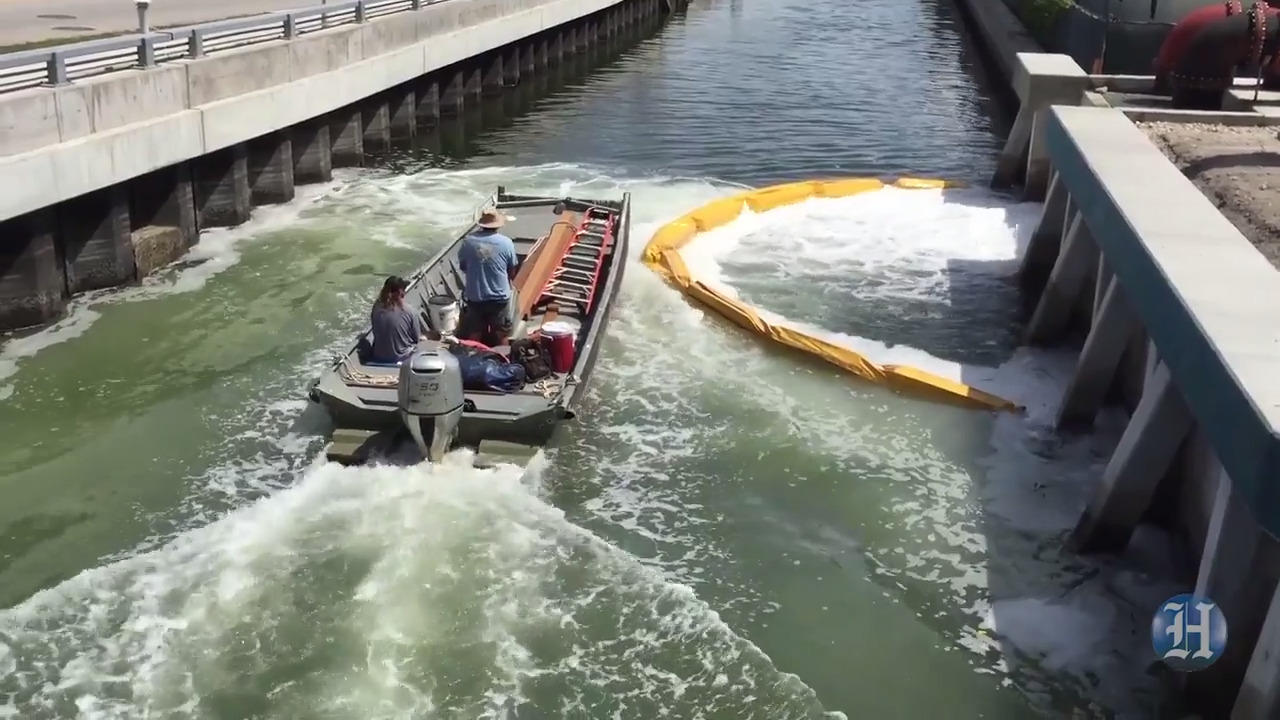
The city’s plan, which earned former Mayor Philip Levine international attention as a climate change pioneer, is to engineer itself dry with large, generator-studded water pumps, thicker pipes and — most importantly — higher roads.
In the first pilot project, in Sunset Harbour, the elevated roads, sidewalks and pumps mostly work as expected. A consultant hired by the city even suggested it helped raise property values, although some business owners still report flooding during heavy rainstorms.
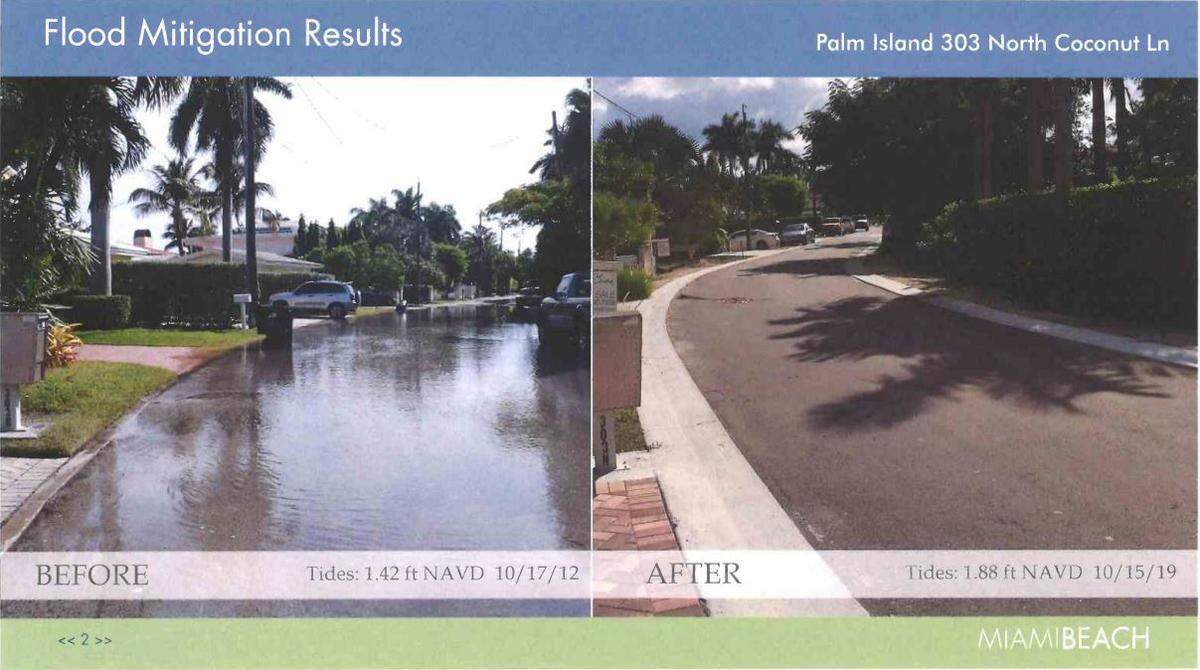
Since the city is one of the first in the county to commit to such a dramatic upgrade, cities across the nation are keeping a close eye on how the program works in practice. The Palm and Hibiscus project was the first foray into suburbia, making it even more relevant for other coastal cities.
The report found that there’s a lot to learn from.
To begin with, the report found that the city signed a “progressive design-build” contract with Lanzo that did not specify how high the roads should be or what should be done about the possibility that higher roads could exacerbate flooding on private property.
In 2012, consultants had warned that raising the road in west Palm Island would push water onto lawns and recommended against raising some parts of the road any higher than two inches. That clashed with the 2014 mandate from the city to raise all roads higher.
During the course of the project, the city hiked the road elevation several times. The bigger issue, according to the report, is that they put drains in each yard to handle the added rain runoff. Those changes weren’t cleared with county and state regulators.
The city justified it this way: this was “Akin to adding a second drain to your bathtub. Does it drain faster? Yes, but it’s the same water,” Public Works chief Roy Coley wrote in response to the report. Therefore, he argued, the city didn’t need to change the permit.
But when DERM found out about these extra pipes, through a whistleblower email sent in 2019, it forced the city to apply for new permits for each and every pipe. There are only two pipes that are still in the permitting process out of 70 total, Carpenter said.
“For more than a year now we’ve noticed a much more engaged communication between the city and DERM,” Hefty said. “The city has been working fairly diligently with us more than the last year to bring all of this into compliance.”
‘I’m not happy at all’
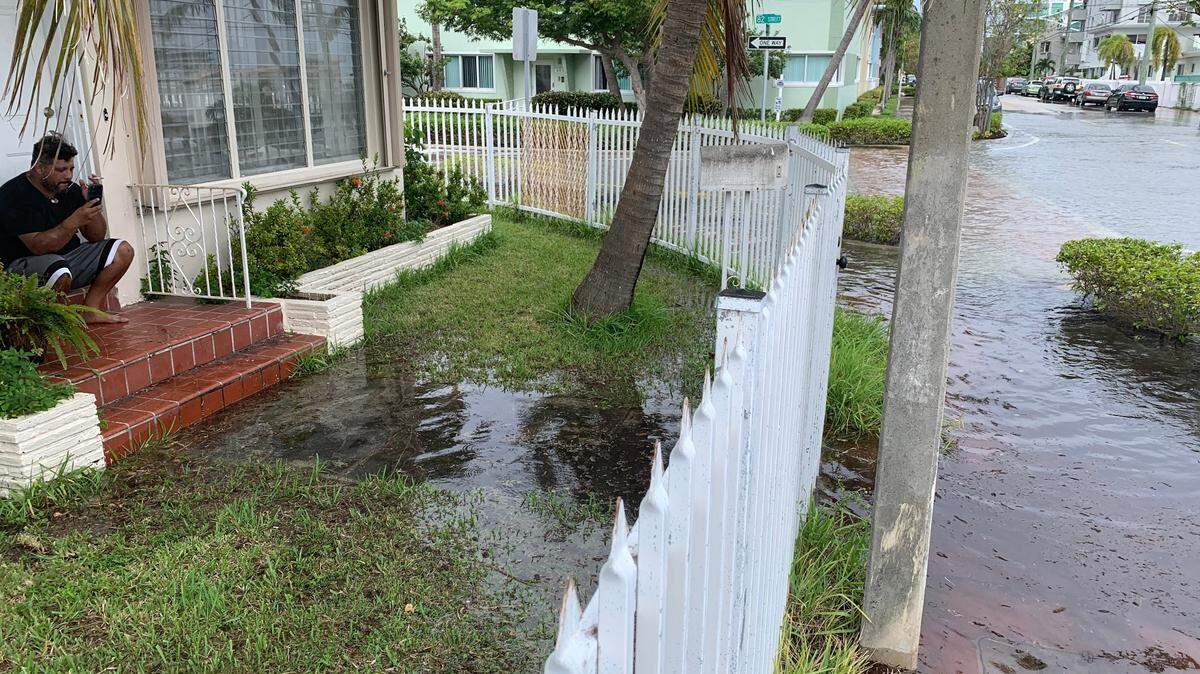
Some residents of Palm Island interviewed by the Miami Herald on Tuesday said they were frustrated with the road-raising project, which they said made their properties flood, a claim the city disputes.
“It has been terrible,” said Alicia Wucher, whose driveway was torn up and packed with sand to meet the newly raised road.
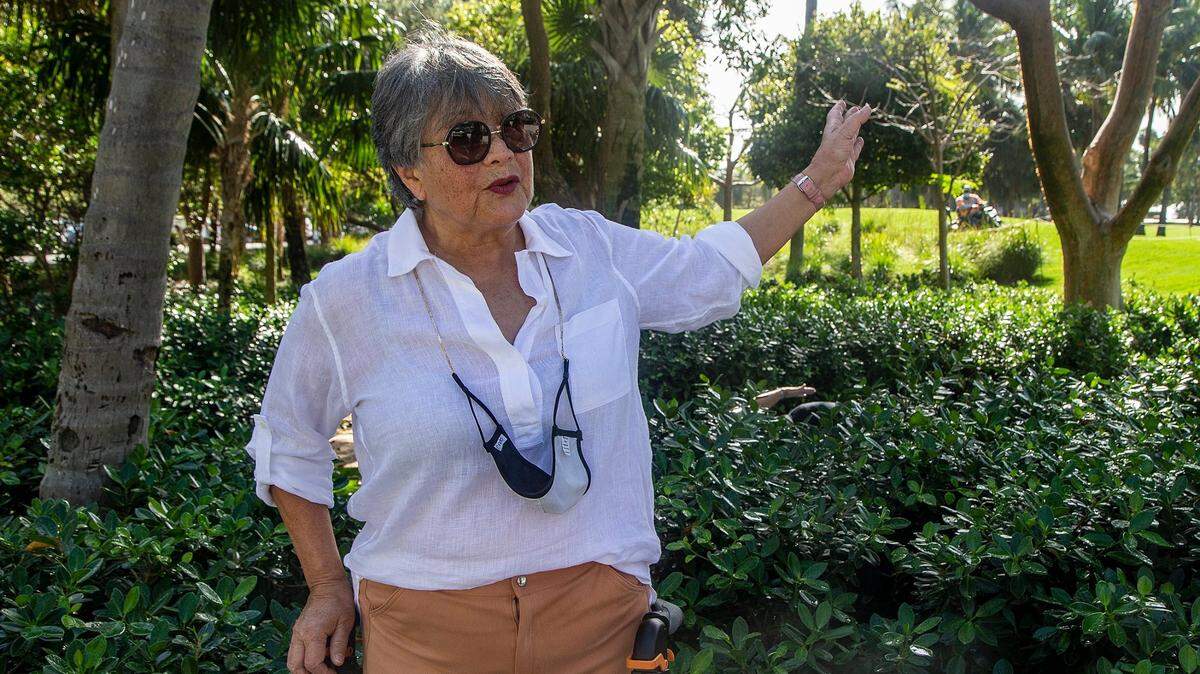
Last year, Wucher said she fell twice on her driveway after rain flooded the property and made it difficult to walk “up the hill” the city created. Previously, she said, it never flooded at her home on South Coconut Lane, where she has lived since 1978. The new drain the city installed on her yard is not level with the surface, making it difficult to catch excess water, she said.
“It’s going to be ugly, it’s going to be expensive. I’m not happy at all,” Wucher said.
Another resident, who did not give his name, said the project fixed his flooding problem but ruined the landscaping in the plum neighborhood where homes are listed for as much as $34 million.
The inspector general report found that when the homeowners’ association found out the original version of the plan called for getting rid of most trees and bushes along the road, it complained. The city paused the project and paid another $500,000 for a new landscaping plan that retained more of the original trees and bushes.
Laura Inguanzo, who has lived on South Coconut Lane since 2000, said she hates the dam-like sand embankment that sits at the front of her driveway but she does not have the money to fix it.
Most other homes on the island have renovated their yards and driveways to meet the new elevation of the roads fronting their properties, she said.
“We’re supposed to pay for this ourselves,” she said.
A ripple effect in city hall
The investigation also has rankled some city staff, who reported feeling caught off guard by investigators’ adversarial approach.
Assistant City Manager Eric Carpenter, who was named in the report, hired a lawyer near the conclusion of the investigation. Carpenter’s attorney, Michael Band, said Centorino rushed to judgment.
“For a guy who has dedicated his career — his life’s work — to public service and then for it to be attacked and diminished in a fashion where we believe all the facts were not either known or appreciated or misapprehended by the OIG, it’s just unfair,” Band said. “It amounts to a defamation of sorts.”
Band said his client rejected the report’s assertion that former Mayor Philip Levine “set a tone” in City Hall that led staff to “justify or rationalize ill-considered decisions and actions.”
In a text message to the Miami Herald, Levine said no one in the city ever complained that he pressured staff. He offered this analogy: Would you blame an airline passenger who said he was in a hurry with the decision of the pilot to fly recklessly?
“Of course not,” Levine wrote.
This story was originally published February 10, 2021 at 4:38 PM.