From a hole in their heart to ‘racism kills,’ Miami students talk about Trayvon’s death
READ MORE
A Decade of Growth and Grief
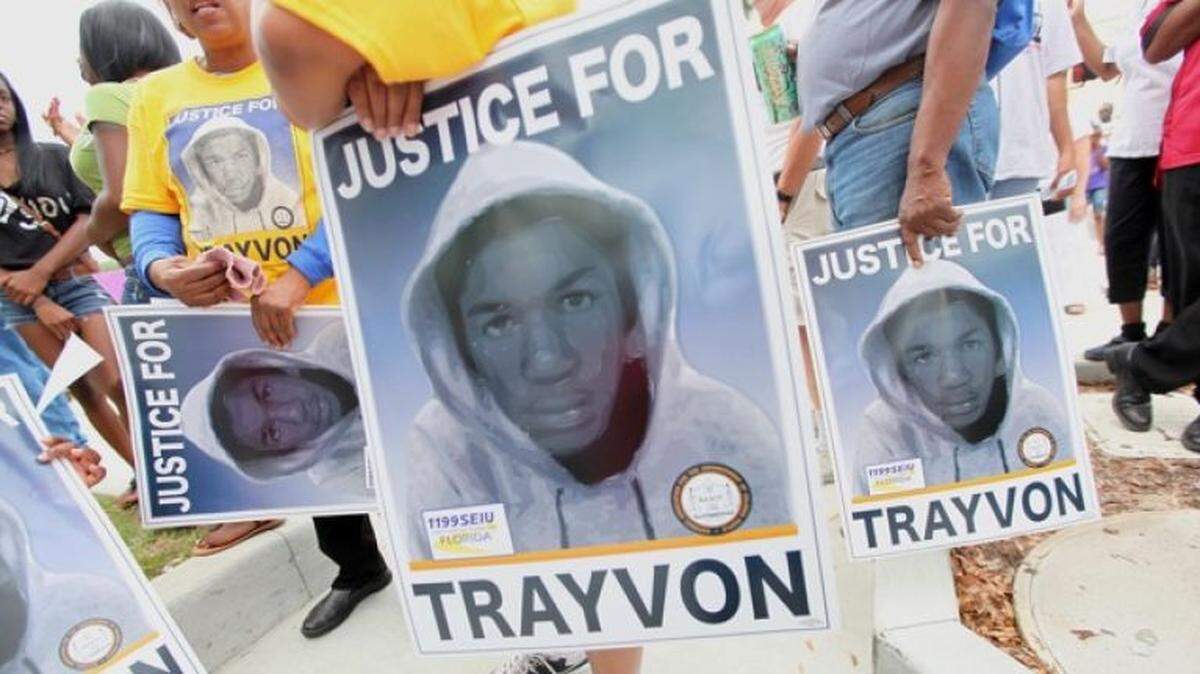
As the country remembers the 10-year anniversary of Trayvon Martin’s killing, it’s important to recognize how far we’ve came but also how far we have to go.
Expand All
“How many of you would feel 100% safe walking home from the corner store tonight? What if you were wearing a hoodie?”
In a classroom of about two dozen Black students, not one raised their hand.
Their teacher, Renee O’Connor, followed up with another question: “How many of you have been told to take off your hoodie before leaving the house?”
Students across the room raised their hands, acknowledging conversations they’d had at home.
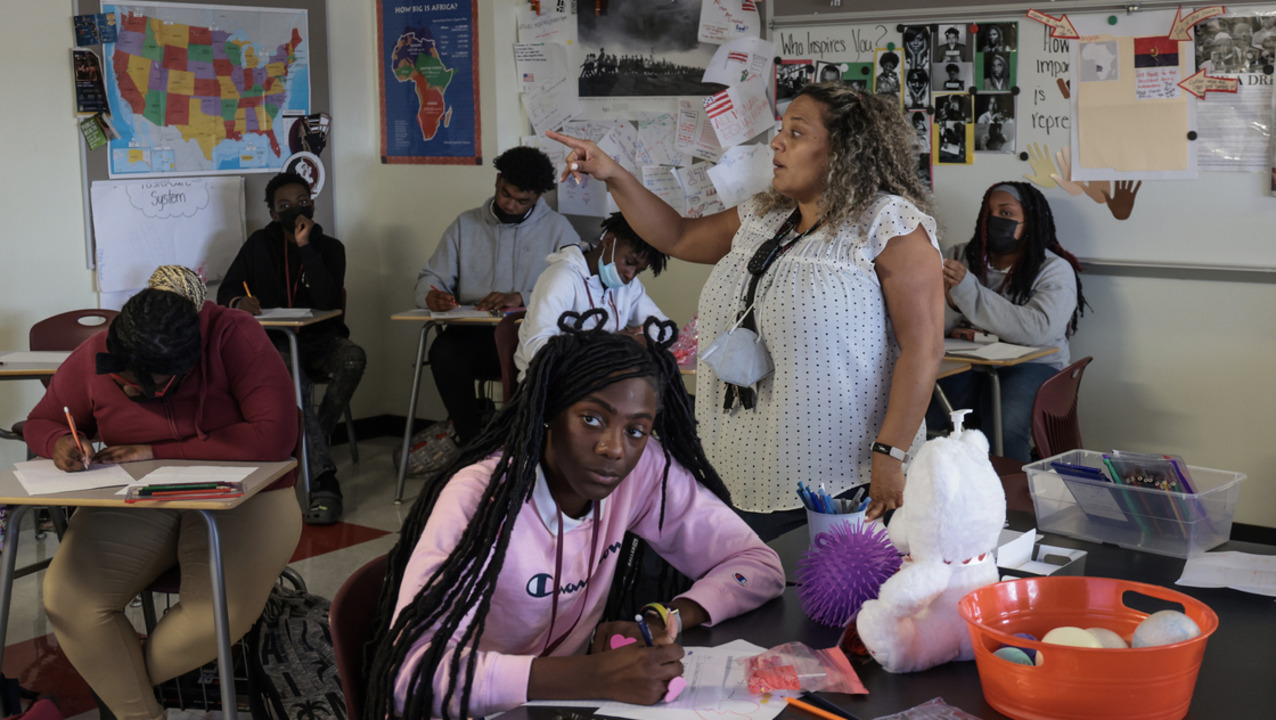
O’Connor, who teaches African-American history at Norland Senior High School in Miami Gardens and was a finalist for Miami-Dade Schools’ Teacher of the Year, was leading her class of ninth-, 10th-, 11th- and 12th-graders, through a discussion about Trayvon Martin.
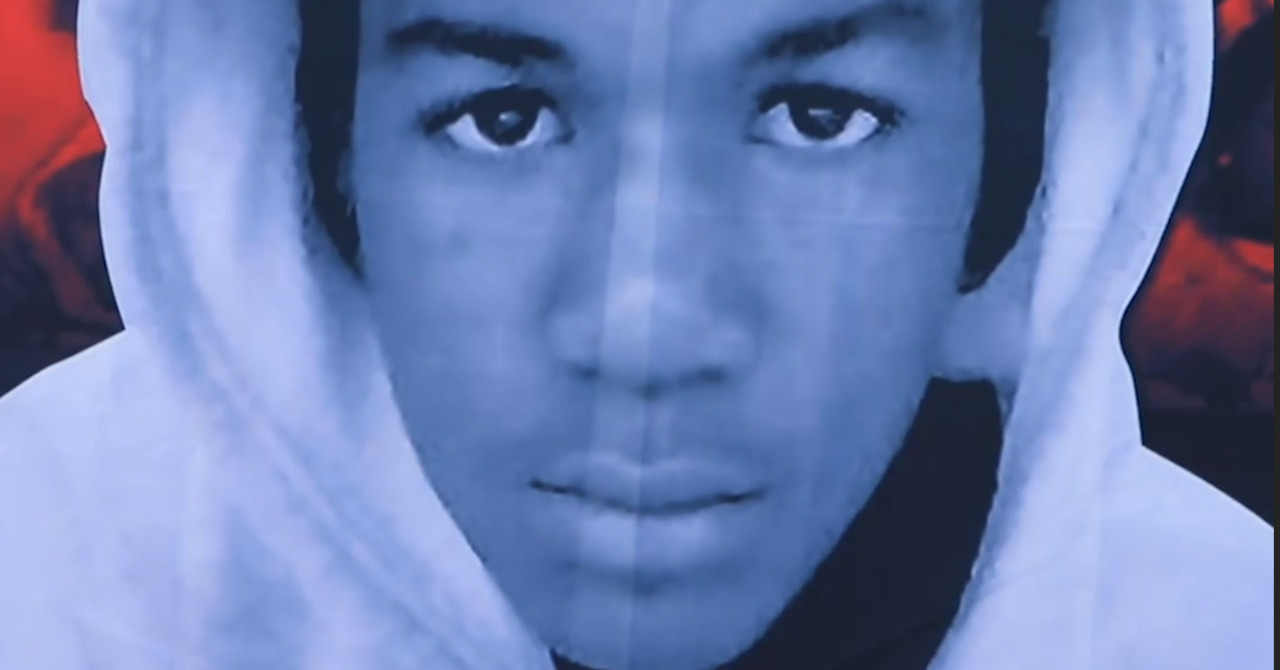
It was Valentine’s Day, about one week after what would’ve been Trayvon’s 27th birthday and nearly two weeks before the 10th anniversary of his death. Many students understood their parents’ desire for them to avoid hoodies was tied to the memory of Trayvon’s killing and the image of him that emerged in the days that followed.
Walking around the room, her voice carrying to every corner and capturing the attention of each teenager, O’Connor again asked her students a series of questions: Why is it important to discuss Trayvon’s murder year after year? And what, did they think, was so important about this year’s milestone?
“If we don’t, we may forget it,” one student said. Another, in an almost whispered voice, said, “Because it’s still relevant.”
‘It’s their reality’
When Trayvon was killed by neighborhood watchman George Zimmerman, then 28, on Feb. 26, 2012, he was just barely 17, wearing a hoodie and he was Black.
He was walking home from a convenience store where he went to buy Skittles and a canned ice tea. He was unarmed. Yet, Zimmerman, who was patrolling the gated community in Sanford where Trayvon was walking, followed him and an altercation ensued. Zimmerman shot and killed Trayvon, about 70 yards from the townhouse where he was staying. (In 2013, Zimmerman was acquitted of all charges.)
Trayvon was the same age as many of O’Connor’s students, a parallel that lingered throughout the discussion, even among the 15- and 16-year-old students. All of them are students at the alma mater of Trayvon’s mother, Sybrina Fulton.
Trayvon attended Norland and Highland Oaks middle schools but spent his freshman and much of his sophomore year at Miami Carol City Senior High School in Miami Gardens. He was enrolled at Dr. Michael M. Krop Senior High in northern Miami-Dade when he was killed. He was a junior.
“It’s the brunt I have to bear to teach this class,” O’Connor told the Herald. It’s challenging and difficult to relive the events of a decade ago over and over again, she said, “but it also helps connect what I teach — history — with reality. Because this is [my students’] reality.”
And it’s a reality she’s seen in her students throughout the past decade. O’Connor was a first-year teacher at Norland High when Trayvon was killed. She’s been teaching this class for the last seven.
She recalled one student coming to her after his encounter with police a few years after Trayvon’s death. It was raining, so the student, who was wearing a hoodie, was running home after school. He was stopped by police and asked why he was running and wearing a hoodie. The student, according to O’Connor, responded by saying it was raining.
“It’s not the kid’s fault,” O’Connor said. “It wasn’t Trayvon’s fault.”
In the days and weeks that followed Trayvon’s death, emotions in the school were tense. Some of her students knew him from middle school and had stories about him. Reporters and TV camera crews lined up outside hoping to catch Rachel Jeantel, a Norland student whom Trayvon was on the phone with right before he was shot. Eventually, O’Connor said, Jeantel just stopped coming to school. (In 2014, she graduated from the Academy for Community Education in Miami.)
O’Connor remembers students from across Miami-Dade walking out of their classrooms in support of Trayvon and in protest of Zimmerman’s case. At the time, no charges had been filed against Zimmerman.
“We weren’t the first school to walk out and I remember wondering why the kids weren’t ready. A lot of students thought they were going to get in trouble, but once they saw that they wouldn’t, they were gung ho about it,” she said.
“As the adult, I couldn’t leave my classroom, but there was absolutely no way I was blocking the door. I told [the students], ‘If you want to walk, I will hold the door open.’ Ninety-nine percent of my students got up and left, and I was so proud of them.”
Discussing Trayvon’s legacy
O’Connor’s class began with a “free hand doodle” exercise, where students wrote or drew words or images that came to mind while listening to the first few minutes of Fulton’s new book, “Trayvon: 10 Years Later,” and its forward, written by Benjamin Crump, a civil rights and social justice lawyer. (He’s garnered national recognition for representing the families of Trayvon, Michael Brown, Breonna Taylor and most recently, George Floyd.)
Some students shared with the class what stood out to them. One drew a heart with a hole in it; another said the day Martin was killed, Feb. 26, 2012, stuck out. Another wrote two words: Racism kills.
One student chose the word “hope.”
The students then wrote letters to Trayvon, Fulton or Tracy Martin, Trayvon’s father. In them, students asked questions and pledged to make change.
One student wrote to Trayvon: “The whole world knows your name, but we’re working on getting justice for you.” Another addressed his parents: “It’s been 10 years since the death of your son and the events surrounding Trayvon’s death is just horrible.”
O’Connor reminded students of the significance of words.
“[Trayvon] didn’t die. He didn’t have cancer; he wasn’t hit by a car,” she told her students. “He was murdered.”
O’Connor hopes talking about Trayvon will help students understand the need to be active citizens, to vote, to participate in jury duty. She believes in this country, but said there’s “still a lot of work to do.”
The students’ letters, if they desired, ended in their wish for their community and country.
Of those who shared their pieces, responses ranged from a desire to live in a country where the need to have conversations with children about how to react should they be stopped by police cease to exist to wanting to wear a hoodie without consequence.
O’Connor acknowledged another reality for her students: “You guys have basically grown up with [these events] your whole life.”
This story was originally published February 20, 2022 at 9:09 AM.
.JPG)