Killer facing death for UM linebacker murder came from dysfunctional family
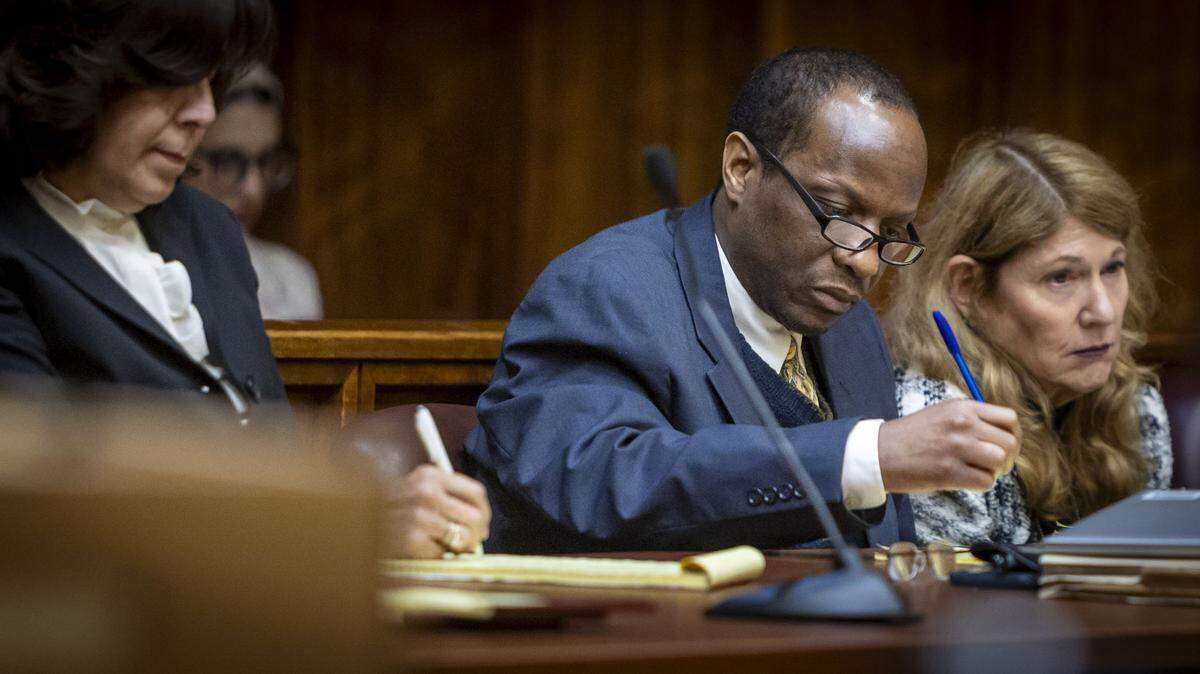
Family members of the man found guilty of delivering fatal blows with a shotgun to his ex and the UM football player she was seeing delved into the killer’s troubled childhood — hoping to spare him from the death penalty.
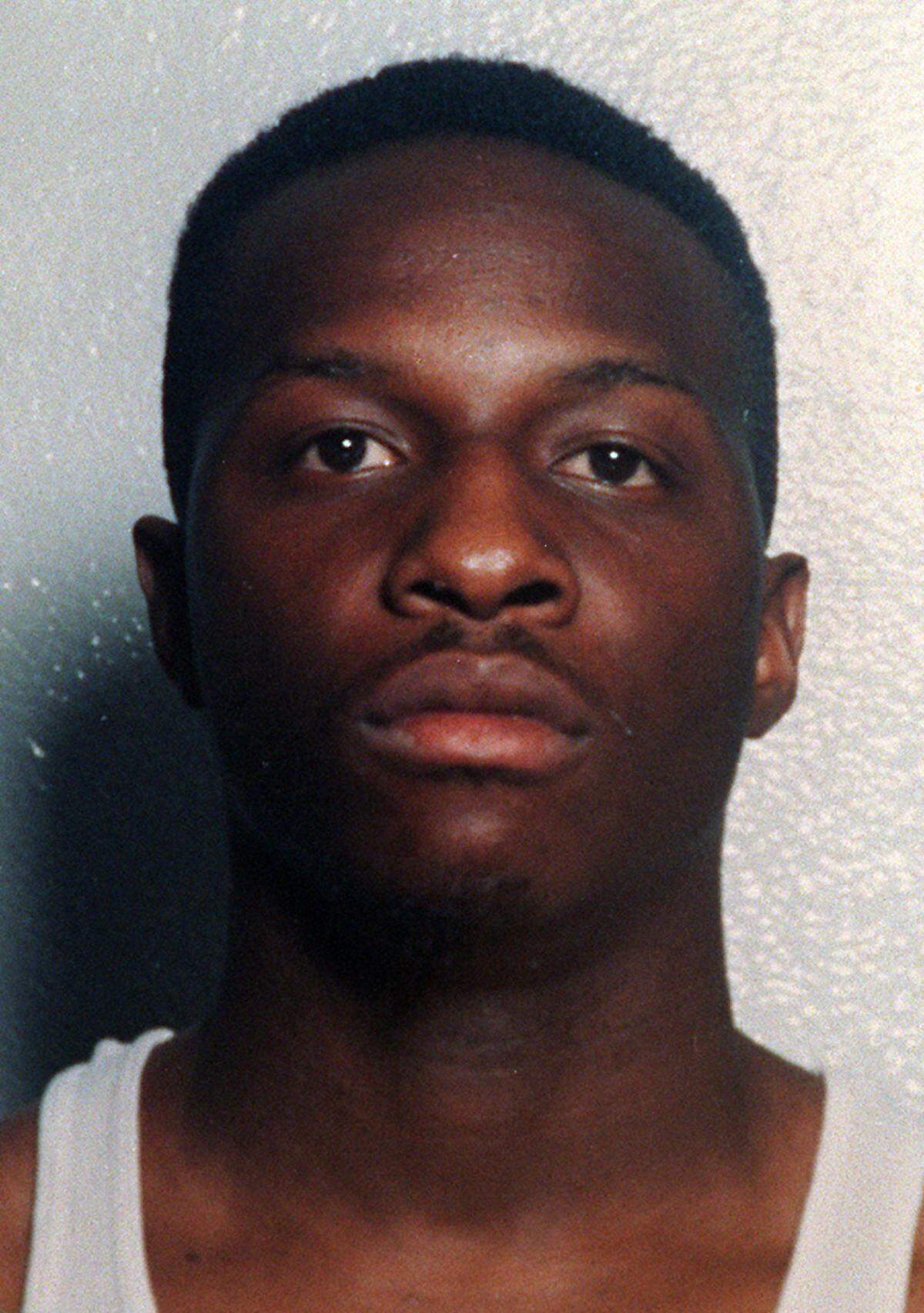
Labrant Dennis was convicted in 1998 of killing Timwanika Lumpkins, his ex-girlfriend, and UM linebacker Marlin Barnes at his apartment on UM’s Coral Gales campus. Dennis, 53, was on Florida’s Death Row from 1999 to 2017, serving time for the April 13, 1996, slayings, until he was granted a new sentencing trial due to constitutional issues surrounding the state’s death penalty.
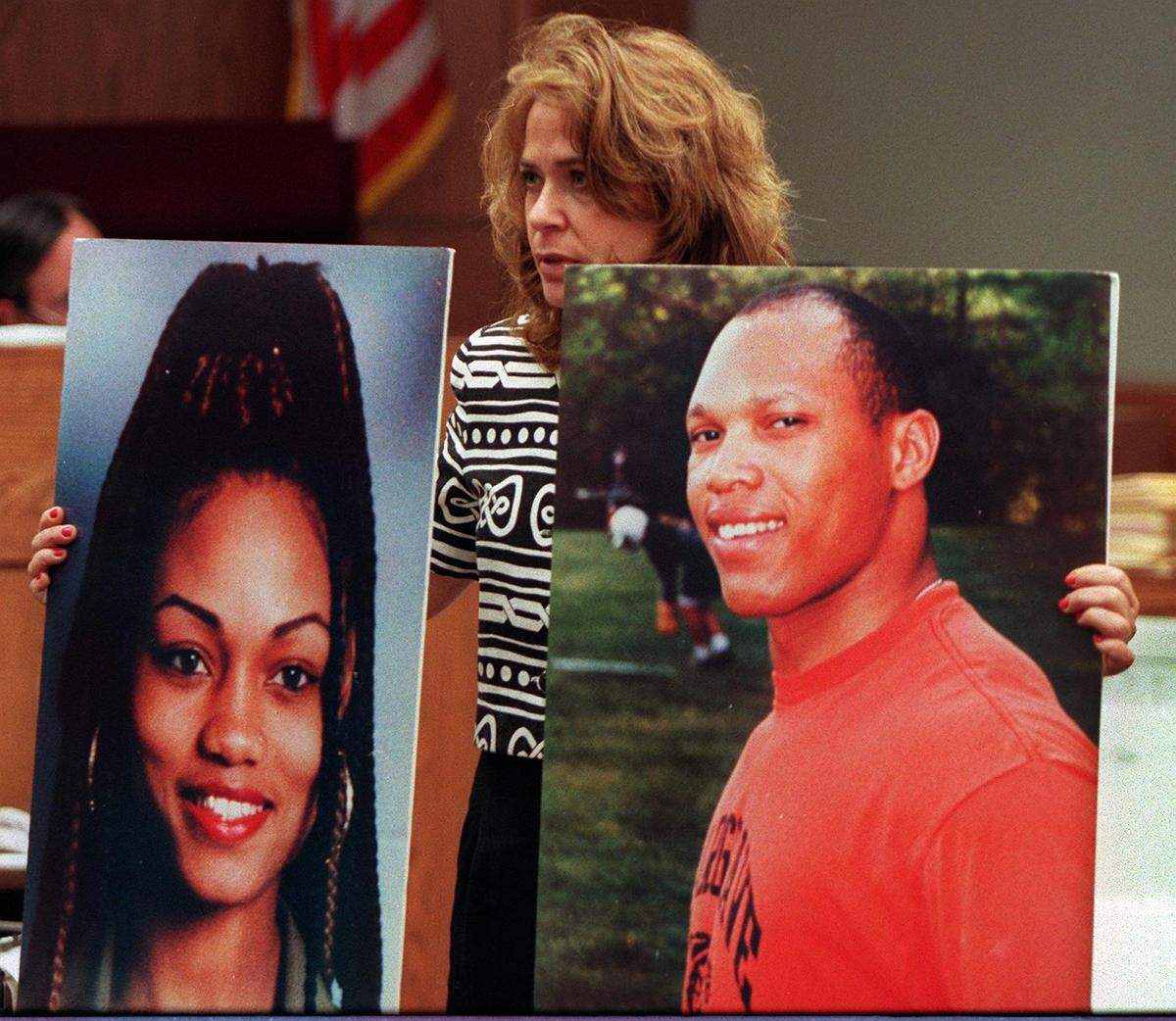
Dennis’ legal team argues he shouldn’t be condemned to die because of his troubled upbringing, including being abused by his father, and because Dennis has had “outstanding conduct” during his decades of incarceration. Prosecutors, however, say the brutality of the killings warrant jurors sending Dennis back to Death Row.
Loved ones of Lumpkins and Barnes testified Wednesday about the decades of pain they’ve endured after the 22-year-olds’ murders. Jurors heard grueling accounts from Barnes’ mother Charlie Postell, his childhood best friend and Hurricanes teammate Earl Little and Lumpkins’ best friend, Keisha Carter.
READ MORE: Mother of murdered UM football player recounts her pain in sorrowful detail
Later in the day, Michael Dennis Jr., Dennis’ half brother, told the jury that he and Dennis were raised in Liberty City, and grew up witnessing drug dealings, prostitution and drive-by shootings. The pair, he said, was close and often spent time together.
Michael Jr. said their father was an “absentee dad” who was rarely around. Michael Jr., who went to prison in 1996 for a year on a domestic violence case and has had several run-ins with the law, said he once beat up his father when his father tried to stab him over a crack deal.
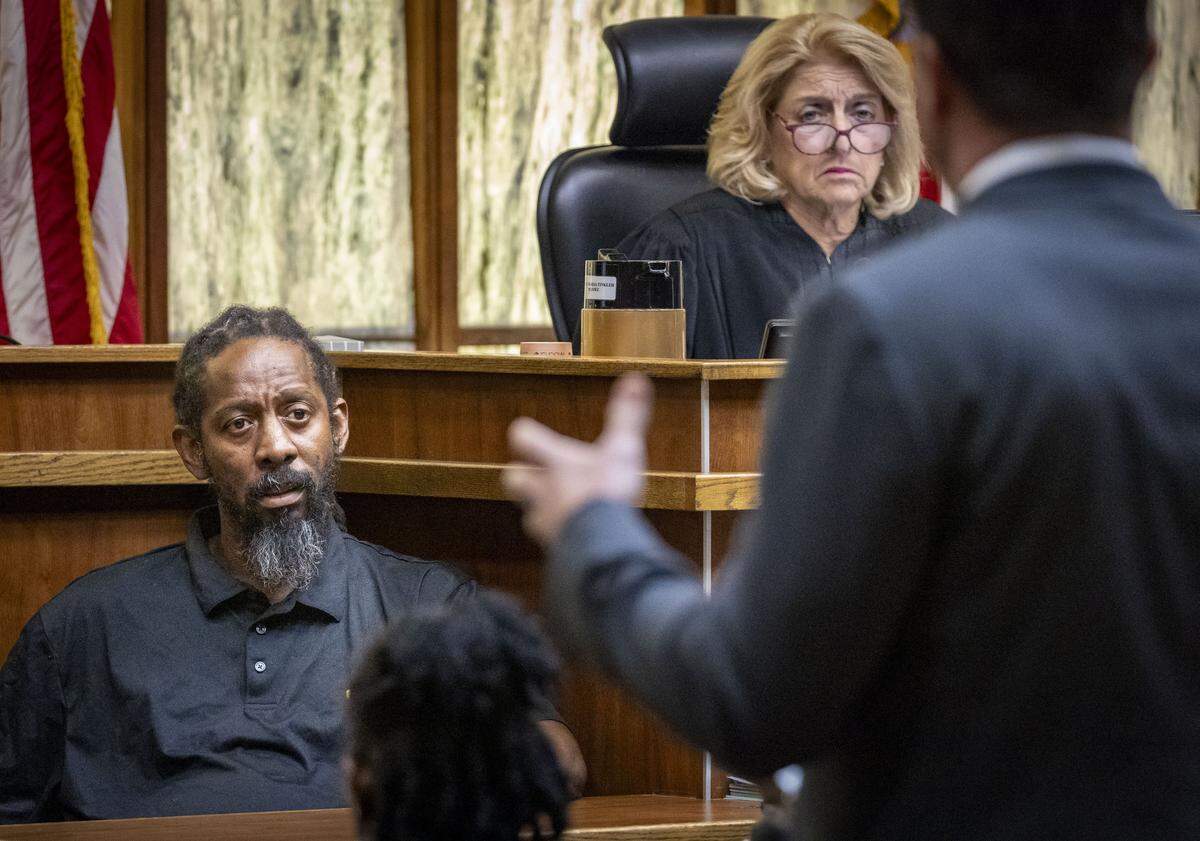
Michael Jr. testified that he was never sexually abused by his father but said he turned his father into authorities in the ‘90s for molesting a relative. After that, he said he discovered that more relatives — including Dennis — were molested by his father.
Dennis, according to Michael Jr., told him that their father sexually abused him — and that’s part of the reason Dennis was always a protective older brother. Michael Jr. couldn’t provide specific details about the abuse when asked.
Dennis, Michael Jr. said, kept him grounded and encouraged him from steering away from a life of crime. They still speak at least once a week, he said.
“He just tried to keep me out of trouble, out of the streets...” Michael Jr. said on the stand.
Father denies abuse
Dennis looked down and scribbled on a notepad throughout most of Wednesday’s testimony. But his body appeared to stiffen when corrections officers directed his father, Michael Dennis Sr., to the witness stand.
Michael Sr., a 19-time convicted felon who was dressed in an orange jail jumpsuit, is behind bars at the Dade Correctional Institution, where he’s serving a 23-year sentence for various sex crimes that victimized children under 10 years old.

On the stand, Michael Sr. denied sexually abusing any children — including his son Dennis — but admitted that he told police that he flashed his genitals to a boy. Michael Sr. provided brief answers to the attorneys’ questions. He testified that he was an alcoholic — and that Dennis’ mother drank while pregnant with him
‘Wasn’t much of a mother to him’
Sitting at the witness stand, Dennis’ aunt Rosalie Williams recounted how she, as 17-year-old girl, cared for Dennis. Dennis’ mother was 15 when she had him — and was more focused on hanging out, drinking and partying in clubs with her friends.
“My sister wasn’t much of a mother to him,” Williams told the jury. “She was drunk doing what teens do and didn’t take the time...”
Dennis, Williams said, was the youngest of 11 kids at the house. She used to call Dennis “her baby” and remembers his love of dance and singing as a kid.
READ MORE: Jurors hear 2 sides of man who beat to death his ex-girlfriend, UM football player
Dennis’ mother, she said, drank and did drugs while she was pregnant with Dennis. She was present only sometimes — and Dennis spent much of his childhood being shuffled from relative to relative, Williams said.

Lynnette Dorsett, Michael Jr.’s mother and Dennis’ stepmother, told jurors she has always considered Dennis one of her five kids. She planned birthday parties for Dennis — and said she was the only person in Dennis’ life who did. Dennis even called her “mom,” she said.
Dorsett said she speaks with Dennis almost daily, but added that he has never divulged any details about him being sexually abused. She recalls Dennis being a well-mannered, well-behaved boy who would say “Yes, sir” and “Yes, ma’am” when addressed by adults.
When Dennis was reaching stardom with The Dogs, a Miami rap and dance group that had two albums on Billboard’s Top 100 chart in the ‘90s, he would practice on her porch before concerts, Dorsett testified.
“A lot of people [showed up], it was like [you were] going to a block party,” she said.
Upbringing was ‘damaging:’ expert
The sexual abuse Dennis suffered — and his dysfunctional childhood — impacted him deeply, said Matthew Mendel, a psychologist and expert in child sexual abuse who interviewed Dennis and his half brother Michael Jr.
Dennis’ view of relationships, Mandel told jurors, were “contaminated” by the “destructive, damaging examples” of relationships Dennis grew up witnessing.
“When he got into [romantic] relationships, he wasn’t able to trust, feel safe, feel confident…” Mendel said.
Mendel called Dennis’ father a “serial sexual predator” who was in and out of Dennis’ life. He said Dennis opened up about the abuse; the first instance he remembers occurred when he was around 4 years old, according to the psychologist.
Dennis had minimal contact with his mother until he turned 8 years old, when he went to live with her, Mendel said. He was reared in an environment polluted with drugs, gangs and violence.
His resiliency — and lack of a criminal record before the murders — was “one of the things that struck me the most about Labrant,” the psychologist said on the stand.
“He somehow steered clear of that,” Mendel said. “He was not a drinker or drug user, was never involved with a gang.”
This story was originally published October 30, 2025 at 11:34 AM.