Feds seize over $21M from dead Miami man accused of corrupt dealings with Venezuela
Naman Wakil, a businessman accused of moving millions of dollars into Miami’s real estate market from his corrupt dealings with the Venezuelan government, died at his home in Coconut Grove in 2023 before a criminal trial in federal court.
But that didn’t stop prosecutors from going after the illicit profits that he made from paying bribes to Venezuelan officials for food contracts, according to court records.
This month, U.S. District Judge Melissa Damian ordered that $21,248,434 from foreign bribery and money laundering proceeds be turned over to the federal government. Under a civil settlement, the government will keep 90% — $19,123,591 — and Wakil’s wife will receive the other 10% — $2,124,843.
The agreement between prosecutors with the U.S. Attorney’s Office in Miami and Wakil’s wife, Ingrid Maria Sayegh Sakkal, was reached in December after her attorney, Howard Srebnick, advised the wife that it was in her “best interests,” court records show. Srebnick was also Wakil’s defense lawyer before he died on July 24, 2023.
Wakil, who was born in Syria and raised in Venezuela before settling in Miami more than a decade ago, was a rags to riches businessman who profited from his corrupt contracts with the Venezuelan government, U.S. authorities say.
Wakil was scheduled to go to trial in Miami federal court in October 2023. He faced charges of paying millions in bribes to Venezuelan officials in exchange for securing government contracts between 2010 and 2017, and investing part of his illegal profits in luxury properties, including his family’s condo at the Residences at Vizcaya on Hiawatha Avenue in Coconut Grove as well as in high-rise units on Brickell Avenue in downtown Miami and at the Porsche Design Tower in Sunny Isles Beach.
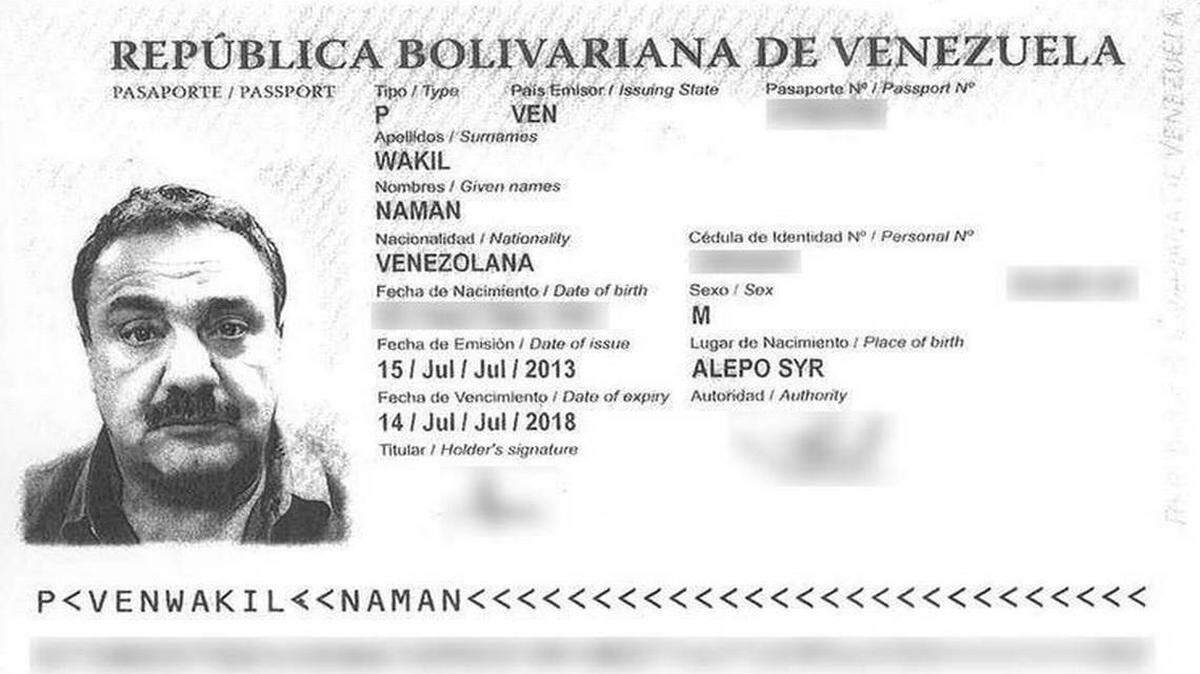
Wakil, 62, died in his sleep at the Coconut Grove home, where he had been living while free on a $50 million personal surety bond and a $21.3 million cash bond roughly equal to the forfeiture judgment approved Judge Damian on Jan. 7.
Wakil faced foreign corruption and money charges in Miami because authorities say he invested part of his illegal profits from the Venezuelan government in the United States. His assets totaled more than $50 million and, besides the luxury real estate properties, included a yacht and an airplane.
Wakil was among various targets in Venezuela’s politically connected business class to be accused in Miami federal court of exploiting cozy relationships with senior officials in the governments of the late President Hugo Chavez and current President Nicolas Maduro to enrich themselves through inflated government contracts, lucrative loans and currency exchange schemes. Most of their money ended up in Swiss and other foreign bank accounts, along with investments in South Florida real estate.
Federal prosecutors, with assistance from Homeland Security Investigations, have seized hundreds of millions of dollars over the past decade from dozens of connected Venezuelan businessmen and top government officials who moved some of their illicit proceeds to Miami. Wakil’s criminal and civil cases were prosecuted by assistant U.S. attorneys Michael Berger, Marx Calderon and Joshua Paster.
Wakil gained notoriety in 2016 when he was featured in a McClatchy series on the Panama Papers scandal that exposed secret shell companies set up in off-shore bank accounts by the wealthy clients of a Panamanian law firm, Mossack Fonseca. The accounts were set up to help the law firm’s clients hide money, make foreign investments and evade taxes, according to the McClatchy series.
In the spring of 2015, according to one McClatchy story, a Miami-based Citigroup banker emailed the Panamanian law firm with an inquiry about a wealthy client who needed assistance.
Mossack Fonseca’s leaked emails identified that client as Wakil, a globetrotting entrepreneur worth about $400 million with business interests in both North Carolina and Miami. He wanted to reduce his U.S. tax liability and protect his assets from creditors, his lawyer’s memo indicates.
The Panamanian law firm proposed creating a series of trusts and offshore companies for the client. A year later, Wakil was embroiled in a controversy that tied him to a Venezuelan general in an alleged procurement scam that reportedly netted $76 million.
In 2019, Bloomberg described Wakil as a former street peddler who accumulated vast wealth through the purchase of discounted meat products that were sold at vastly inflated prices to the Venezuelan government.
Wakil, who was born in Aleppo, immigrated to Venezuela and grew up in Caracas’ Petare district, one of the world’s largest slums. He rose from selling goods on the streets to immense wealth.
According to a Venezuelan audit commission’s findings, he had a close relationship with Carlos Osorio, a major general in Venezuela’s military who oversaw billions of dollars of food contracts as the nation’s food minister.
The embezzlement of billions of dollars from Venezuela’s socialist government, particularly from its main source of income, the national oil company known as PDVSA, has contributed to the South American nation’s drastic economic collapse, forcing millions of people to flee to neighboring countries and the United States, U.S. authorities say.