Miami-Dade’s missing persons detectives crack most cases but some remain painful mysteries
READ MORE
‘We won’t stop looking’
For families of Miami’s legions of the lost, hope persists -- even decades later.
Expand All
‘We won’t stop looking.’ For families of Miami’s missing, hope persists, even decades later
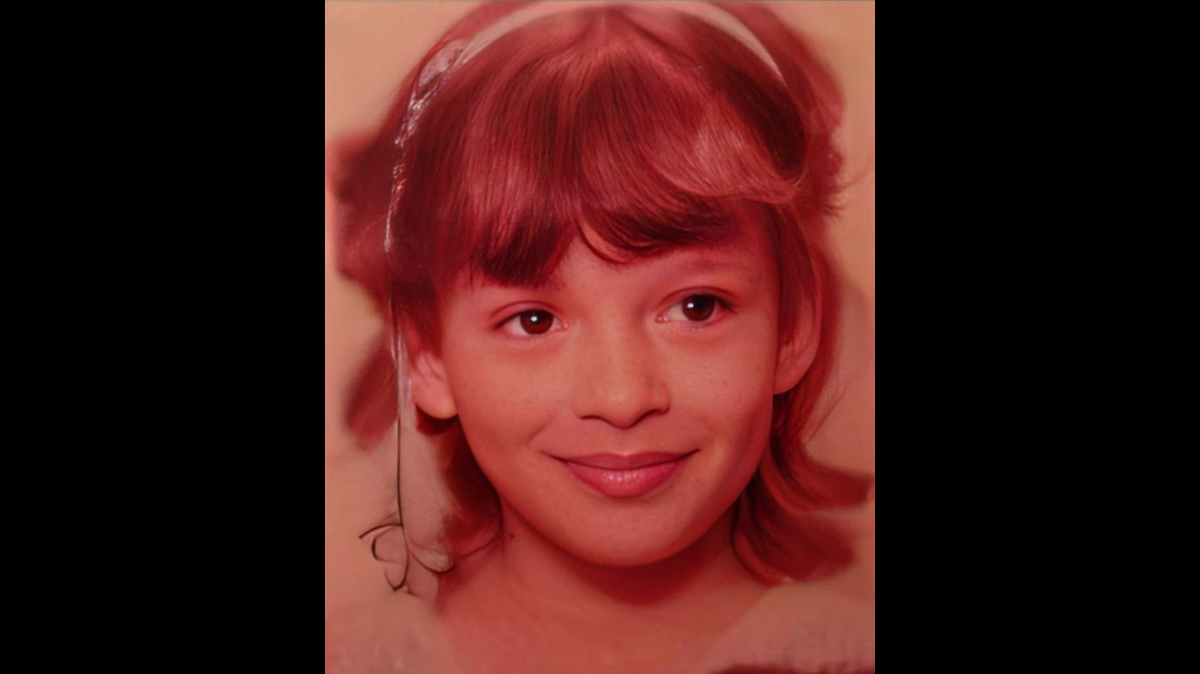
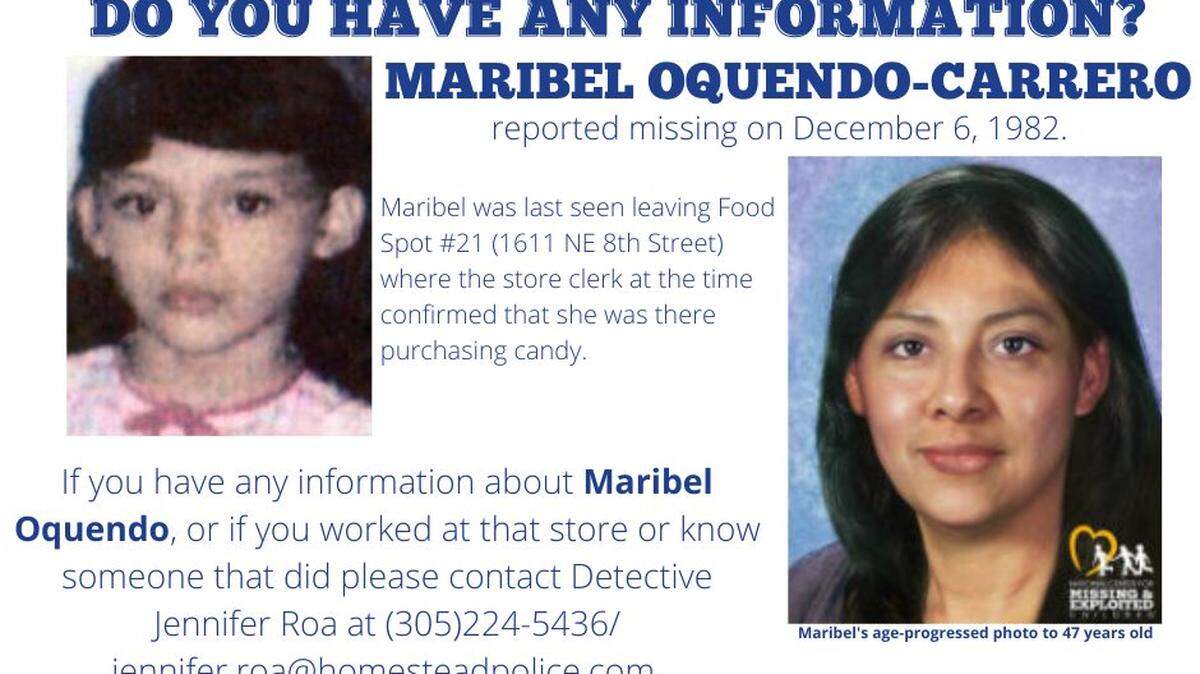
9-year-old Maribel vanished 40 years ago. Family and a Homestead detective still searching
Miami-Dade’s missing persons detectives crack most cases but some remain painful mysteries
‘Somebody has to know.’ In Miami, investigators work to identify hundreds of unidentified bodies
Want to search for missing persons, or help ID unidentified bodies? Here’s how you can help
Most of the time, the work is methodical at the Miami-Dade Police Department’s missing persons bureau. One case, one face on a poster at time. The detectives chase leads on social media, make phone calls, collect evidence from the last place someone was seen.
Some times, it’s a rush of bloodhounds and helicopters on a fresh vanishing, or maybe flashing sirens to the last spot a senior citizen was seen before going missing.
And then a once-a-generation disaster can change everything. When the Champlain Towers South condo collapsed in Surfside in June, it was quickly clear that the work would mostly be about identifying lost souls, not finding them.
“Remember, Surfside started off as a missing persons investigation,” said Miami-Dade Sgt. Carl Jeannot. “We had to follow every tip, every lead. It was all hands on deck. It was the experience of a lifetime and hopefully we will never have to do that again.”
Miami-Dade’s missing persons bureau, comprised of a dozen or so detectives, had the difficult task of gathering forensic evidence to identify the remains of the 96 bodies recovered at the site of the worst condominium collapse in U.S. history. In one case, a victim was only identified after DNA was taken from a limb discovered in the rubble transported to a warehouse several miles from the catastrophe site.
Such massive disasters with few human remains are mercifully rare. The last time the unit was involved in anything similar was in 1996 when ValuJet Flight 592 crashed and disintegrated in the Everglades muck about 10 miles west of what is now the Miccosukee Resort and Gaming casino at the corner of Tamiami Trail and Krome Avenue. Back then, instead of navigating jagged concrete, twisted steel and fires, missing persons detectives were searching through murky water while trying to avoid sharp-edged sawgrass and alligators.
Detectives also worked tirelessly accounting for more than 100 people that family members feared had died in the Surfside collapse. They later turned out to be very much alive, some in places as far away as South America and Europe.
High success rate
That’s the great upside of working on the missing persons unit. Most of the cases don’t make headlines. But with an overall success rate of more than 95 percent, the unit is a rarity as far as police work goes. Most of the time when a missing persons detective closes a case, it generally ends well.
“They’re a unit that works very much behind the scenes. Some of the work is tedious. But they do the noble work of reuniting family and friends,” said Miami-Dade Police Director Alfredo “Freddie” Ramirez. “They bring a lot of happiness and relief to loved ones.”
The more common cases are like a recent one involving a Miami Lakes man named Joseph Valentine Morgan. By all accounts, the 71-year-old was in good health, alert and not suffering any type of dementia when he disappeared just past midnight on Oct. 30. Morgan and his wife Joan moved to the Miami Lakes area 37 years ago. The couple recently retired and built a second home in St. Kitts. Their son still lives in the North Dade home, which they occasionally visit.
Morgan, who was back in town for medical appointments and was staying at his home with his son, was last seen leaving North Miami-Dade’s Fancy Loaf Restaurant just past midnight in his 2002 Jeep Cherokee. He was apparently headed home.
Known affectionately to friends as “Keg,” Morgan visited the restaurant frequently to hang out and joke around with friends from the Caribbean islands where he grew up.
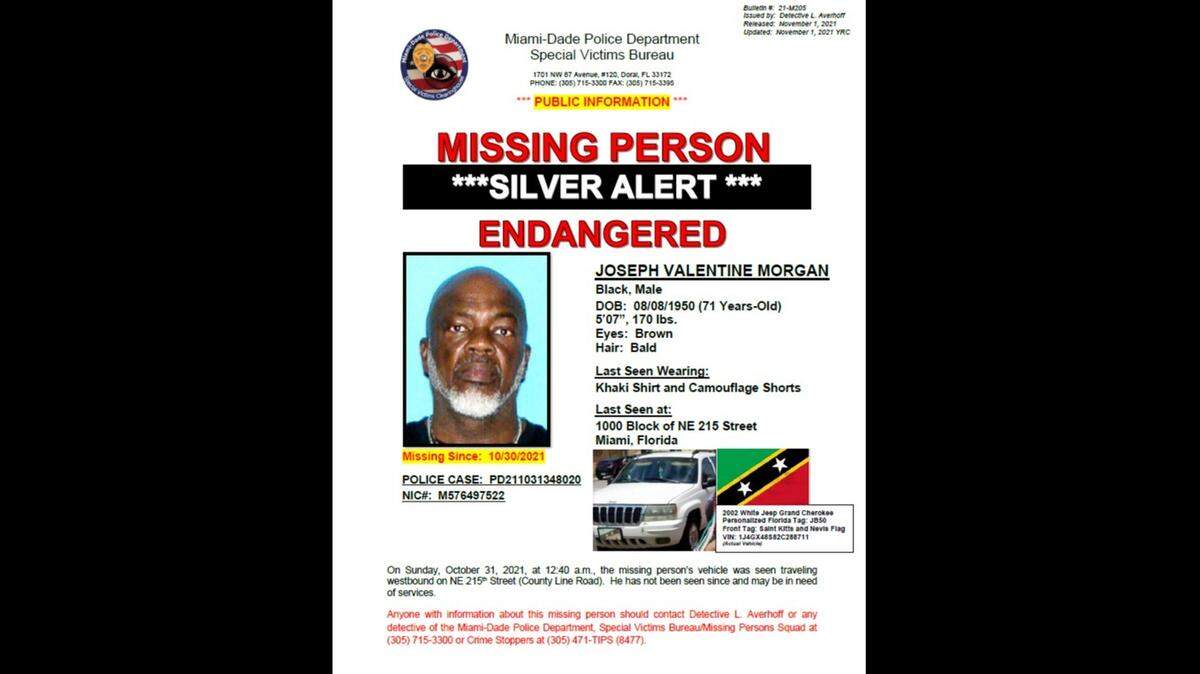
Desperate to find him, investigators unleashed bloodhounds, flew planes and helicopters scouring waterways, even used underwater drones to navigate muddy canals. The vehicle’s license plate was not captured by any toll booth or red light cameras. Morgan’s cellphone went dead minutes after he left the restaurant.
His name was entered into a national FBI database and alerts sent to U.S. Department of Homeland Security offices throughout the Southeastern United States.
“I feel out of body, I feel numb. How can he just disappear?” said Morgan’s daughter, Eva Morgan, in town from Maryland searching for her dad. “He works out every day. He walks and has his wits. He might be 71, but this isn’t feasible.”
This one, unfortunately, did not end well. Last week, Miramar police pulled a white Jeep belonging to Morgan from a canal along University Drive and Miramar Parkway. Morgan was inside.
Always more cases
Missing persons detectives typically work between 40 and 60 cases between them. Suzanne Gowdie is the unit’s cold case detective. Some cases are much colder than others. That’s because under state law, a missing person’s case can’t be closed for 100 years.
Most of Gowdie’s cases are at least three months old because after 90 days, under department policy, a supervisor reviews the case and determines whether it’s sent to her desk. Gowdie says she usually works on two or three cases at a time and decides which ones by the month the person was reported missing.
Gowdie, a 20-year Miami-Dade police veteran who teaches at the police academy, has spent the past seven years in missing persons.
Her oldest active case right now is focused on Ronald Boykin, who was 6 years old in 1967 when a woman posing as a nurse took him from his family’s home, saying she’d return the child after he was vaccinated. Boykin was never heard from again, according to newspaper articles.
The case went cold until 2019, when police received a tip. What that tip was, they wouldn’t share publicly. But after such a lengthy drought, Gowdie said she had to start from scratch and “rebuild” the case.
Unfortunately, the lead didn’t pan out.
“My goal is to close two cases a month,” she said. “I’ve been pretty good at maintaining that goal. But I keep receiving more and more cases, so it almost always stays the same because of that.”
Social media provides clues
Social media has become a powerful tool for the department and Gowdie said it’s fairly common to solve cases that are 10 or even 15 years old. But too often, she said, the end result can be crushing to family members — even when a person is found.
“Lots of times they say they don’t want their family to know where they are and they have that right,” said Gowdie. “So I have to go back to the families and they try to pull information out of me.”
Sometimes detectives are limited in their search because going missing isn’t considered a criminal act. Until there is probable cause that a crime has been committed, investigators can’t even secure search warrants.
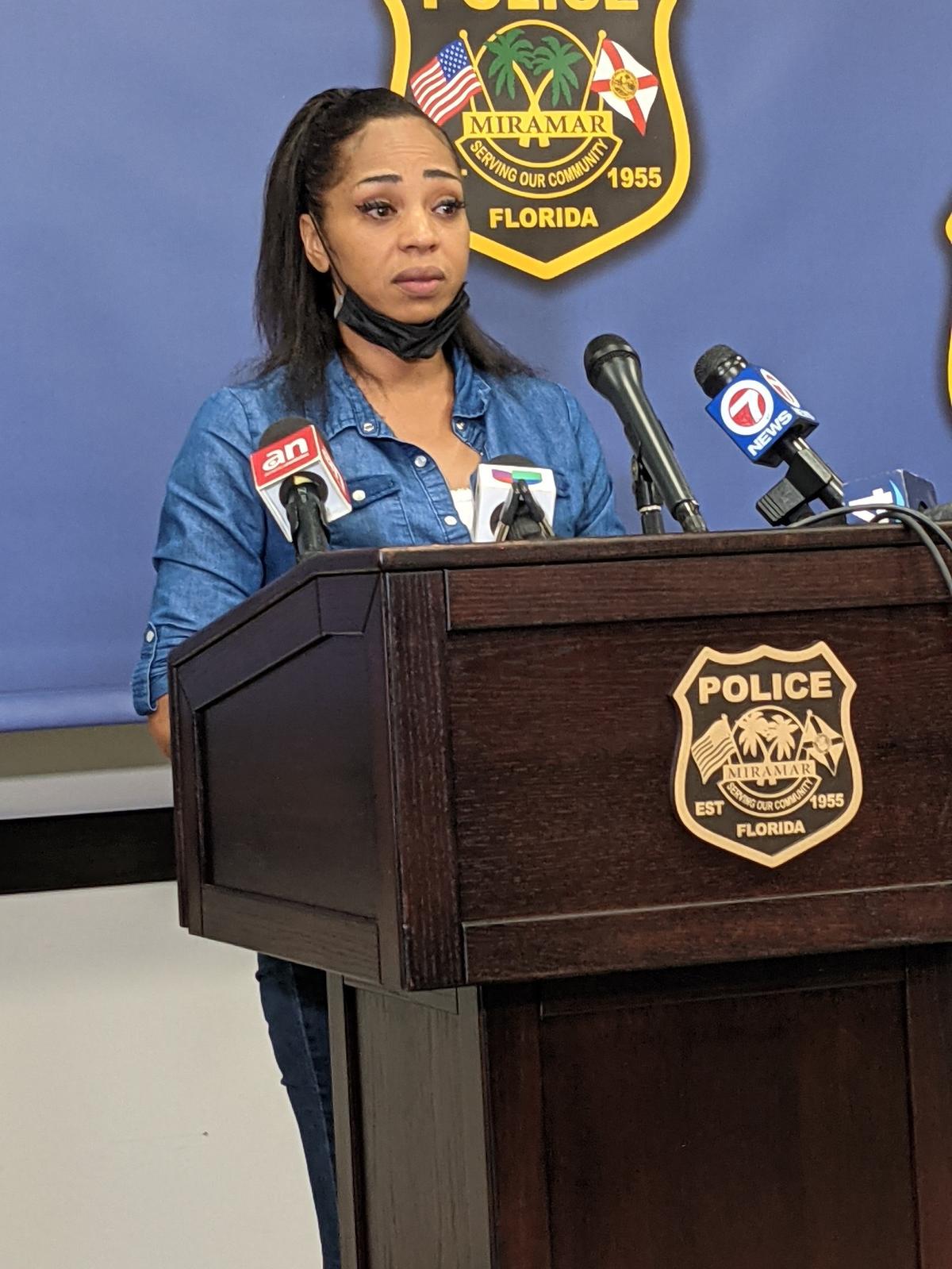
That’s the case with Victoria Sophia Gonzalez, a 13-year-old Miramar girl who has been missing since she left school in mid-September and who investigators are certain has been logging on to her Instagram account from another person’s cellphone. Her family held a recent press conference with police to urge her to come home.
Much of Gowdie’s time is spent reviewing files and reaching out to family members. Often she goes through keepsakes loved ones have boxed up. Once in a while that leads to DNA samples, through a baby tooth or a lock of hair. She says detectives try to gather biometrics, like dental work and fingerprints.
Often closing out cases turns bittersweet, usually when someone is found deceased.
“You watch the family break down after you’ve formed a bond with them,” said Gowdie. “You’ve been talking to them about pretty intimate things. You feel like you know the family.”
Missing persons detectives have been involved in a myriad of cases that eventually turn into homicide probes.
Like last year when 9-year-old Alejandro Ripley, who is non verbal and autistic, was reported kidnapped in West Kendall. His mother, Patricia Ripley, claimed two Black men ran her off the road and abducted the child. But the boy’s body was quickly found in a nearby lake — and the child’s mother was charged with murdering her son.
Detectives from the bureau were also involved in the long, agonizing search for missing foster child Rilya Wilson, who went missing nearly two decades ago in a case that roiled the state’s child welfare agency. Her body was never found. But caretaker Geralyn Graham was charged with murder and eventually imprisoned for kidnapping.
Remarkably, Gowdie said, in all the years she’s been searching for missing people, only two families told her to stop looking because they had made peace with their loved one being gone. More common is the odyssey of the sister of a man missing for three decades. She is glad Gowdie is on the case.
“I haven’t found him yet, unfortunately,” Gowdie said, “but that hasn’t stopped me from looking.”
Miami Herald staff writer David Ovalle contributed to this report.
This story was originally published November 17, 2021 at 7:00 AM.