Miami Beach said homeless tax referendum won’t count. Results show it was likely to pass
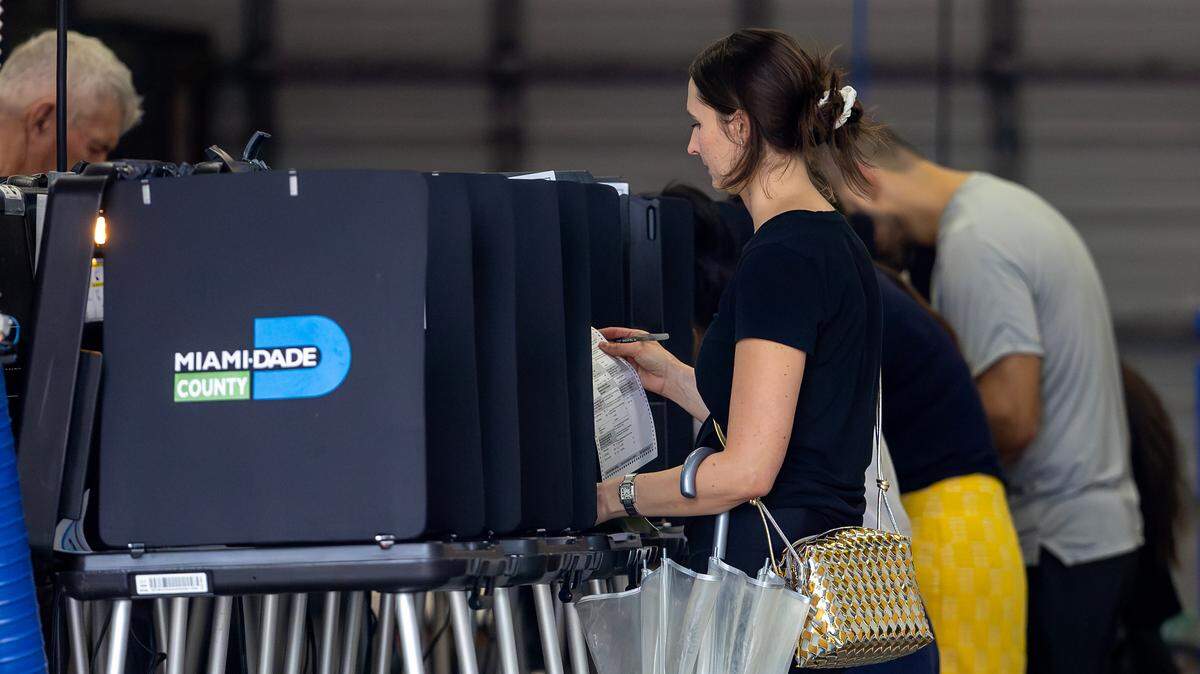
A Miami Beach ballot question that city officials rescinded last week on whether to impose a 1% food-and-beverage tax for homeless and domestic violence services likely would have passed, according to unofficial results from the Miami-Dade Elections Department.
The item received 52% “yes” votes, with more than 16,500 people wishing to approve it.
Despite the city’s move to rescind the question last Wednesday, more people — 31,647 — voted on the question than they did on any of the seven other Miami Beach referendums, which involved changes to the city charter. Each passed by a wide margin.
The question on the homeless services tax remained on voters’ ballots even after the City Commission decided that the results shouldn’t count. But after a judge upheld the city’s decision on Friday, notices were placed in each voting booth in Miami Beach to inform voters that the question had been rescinded.
The Elections Department reported 4,635 “undervotes” on the referendum, meaning those voters left the question blank or the machine determined that a vote wasn’t properly cast.
Still, more than 6,000 voters answered the question at the polls on Election Day.
Ron Book, who leads the Miami-Dade County Homeless Trust — which stood to receive millions of dollars annually if the referendum passed — told the Miami Herald on Wednesday that the tally “speaks for itself.”
“It says that the people knew what they were voting for,” Book said. “The taxpayers of Miami Beach understood the issue, supported the issue ... and have confidence in the [Homeless] Trust to know what we’re doing.”
READ MORE: Court rules in favor of Miami Beach, says votes on homeless tax won’t be counted
More than 20,000 Miami Beach voters had cast their ballots prior to the reversal by the City Commission, which voted 4-3 to rescind it. Commissioner David Suarez proposed the move, saying the referendum had been “purposely engineered to mislead and take advantage of taxpayer money.”
The decision has set off a flurry of political finger-pointing.
On Friday night, after the city of Miami transported more than 50 people from the Camillus House shelter to a hostel in South Beach, some Miami Beach officials accused their Miami counterparts of using people experiencing homelessness as “pawns” for political retribution.
The city of Miami denied that the move was political, saying it was a result of failed negotiations over the cost of shelter beds.
At the county level, Miami-Dade commissioners voted Wednesday to demand $10 million in property taxes from a Miami Beach-controlled taxing district around the Lincoln Road shopping area to make up for the fact that the 1% tax won’t be imposed.
Miami-Dade County Commissioner Eileen Higgins, whose district includes Miami Beach, said at Wednesday’s meeting that the unofficial referendum results showed that the measure “would have passed.”
The tax would have been collected on food and beverage sales at businesses that sell alcohol for on-premises consumption and have gross annual receipts above $400,000. Facilities in hotels and motels would have been exempt, pursuant to a state law that allows for the tax.
Miami Beach, Bal Harbour and Surfside are the only three cities in Miami-Dade that do not impose the tax to support the Homeless Trust and local domestic violence shelters.
In Bal Harbour, 67% of voters shot down a referendum on the tax Tuesday.
“It’s time for Miami Beach, Surfside and Bal Harbour to pay their fair share,” Book said.
Miami Beach Mayor Steven Meiner, who voted to rescind the ballot question on the food-and-beverage tax, has argued that the city already does its part by spending millions of dollars each year on homeless services, as well as policing to enforce a municipal camping ban and other laws.
In a recent email to residents, Meiner said he believes “the money is better spent staying in Miami Beach and not an additional tax sent to an unelected County Trust for which we have no authority or decision making input.”
This story was originally published November 6, 2024 at 6:22 PM.