
After scrapping homeless tax vote, Miami Beach is getting a $10M bill from Miami-Dade
Miami-Dade County is demanding that Miami Beach pay millions of dollars for countywide homeless services after the city recently rescinded a referendum asking voters if they approved of a restaurant tax to fund those services.
On Wednesday, county commissioners voted to demand up to $10 million in property taxes from a city-controlled taxing district around the Lincoln Road retail area. The redevelopment district is funded with both city and county property taxes.
“We have been forced to play hardball,” Miami-Dade Commissioner Raquel Regalado said.
READ MORE: Miami Beach officials rescind ballot question on homeless tax. Votes on it won’t count
After the vote, Miami Beach Commissioner Alex Fernandez, who voted against scrapping the referendum, told the Miami Herald he was appalled at the county demanding money before the city could come up with a potential compromise.
“It’s highway robbery,” Fernandez said. “There are ways to solve this. But this is not the way to do it.”
Fernandez joined other city commissioners who crossed Biscayne Bay to attend a County Commission meeting where fury at Miami Beach over the canceled vote was hard to miss.
The first clue was an item to approve Miami Beach’s request to rename part of 13th Street “Gloria Estefan Way.” Sponsor Eileen Higgins, the Miami-Dade commissioner representing South Beach, delayed that vote, along with a vote on another routine street-renaming request from Miami Beach.
Two other pieces of legislation that were drafted after the city pulled the referendum are now targeting a pair of Miami Beach redevelopment tax districts — the one around Lincoln Road and another in the North Beach area — that allow the city to keep county property-tax dollars and spend them on local expenses.
Both legislative proposals are aimed at replacing the roughly $10 million for homeless services that Miami-Dade expected from Miami Beach had it adopted a 1% restaurant tax already charged at most restaurants across the county.
In 2023, Miami Beach commissioners voted to put the tax on the 2024 ballot, but newly elected commissioners scrapped the referendum late last month. City commissioners voting to kill the ballot question said they weren’t aware of the scheduled referendum when they took office and saw the measure as flawed because city restaurants already pay an extra tax to fund city expenses. While the question still appeared on Miami Beach ballots, the votes became meaningless after city commissioners rescinded the item.
READ MORE: Miami Beach said homeless tax referendum won’t count. Results show it was likely to pass
County commissioners said they were ready to strip Miami-Dade money from both redevelopment districts if Miami Beach doesn’t find a new revenue stream for the county’s homeless services. Oliver Gilbert, the county board’s chair, noted that Miami-Dade had authorized the creation of the North Beach district last year as part of a negotiation with Miami Beach leaders, who committed to expand collection of the homeless tax.
“We made a deal,” he said. “And then they went back on the deal.”
The County Commission didn’t take action on the North Beach district but voted to demand that Miami Beach agree to turn over $10 million in surplus funds from the Lincoln Road district.
David Suarez, a Miami Beach commissioner, said the city is planning to bring the tax proposal back to voters in 2026 with improved language and safeguards to govern how the revenue is spent.
He told county commissioners he’s not opposed to Miami Beach making payments until voters can decide on the tax but said the city wanted to make its own proposal to Miami-Dade.
After the meeting, Fernandez released a statement saying he wanted to turn down a $75 million county subsidy for a privately developed Miami Beach Convention Center hotel and use the money for new affordable housing options to address “one of the root causes of homelessness.” “It is our moral duty to prioritize [housing needs] over subsidies to wealthy developers,” Fernandez said.
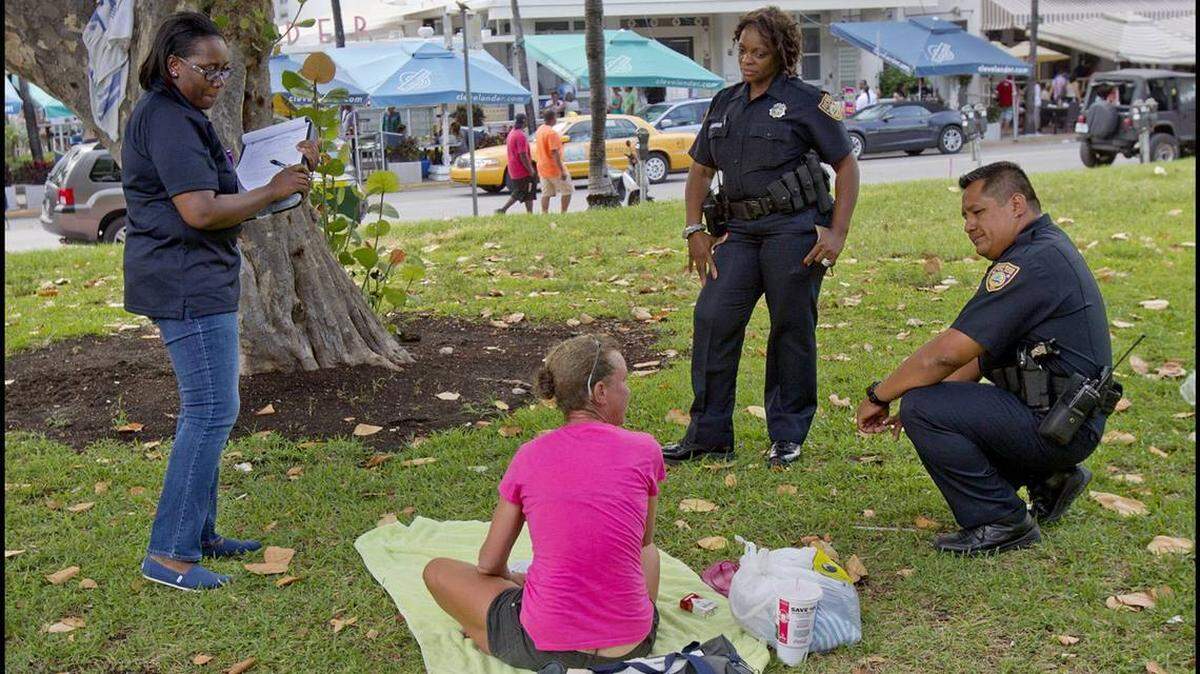
Miami Beach regularly cracks down on people sleeping in public, with city officers sometimes taking the individuals to Miami-Dade jails at a cost to the county.
Miami-Dade’s restaurant tax funds shelters and other housing options for people experiencing homelessness, including people living on the streets in Miami Beach. But the city, along with Bal Harbour and Surfside, was exempted from the tax when the Florida Legislature first authorized it in 1992. The tax also funds domestic-violence programs in Miami-Dade.
County leaders lobbied both Miami Beach and Bal Harbour to hold votes on adopting the tax, after a change in state law allowed the expansions if approved by residents. Bal Harbour voters rejected the tax on Tuesday.
An unofficial county voting tally from the Elections Department showed 52% of Miami Beach voters supported the tax. “It would have passed,” Higgins said.
Kristen Rosen Gonzalez, a Miami Beach commissioner, urged Miami-Dade to reconsider its threats.
“These types of retaliatory actions — I think they’re off base,” she said. “Will there be punitive measures for Bal Harbour, too?”
This story was originally published November 6, 2024 at 6:32 PM.
CORRECTION: This article was updated to correctly describe a proposal by Miami Beach Commissioner Alex Fernandez to divert a planned hotel subsidy into spending on affordable housing.