
Miami moves 50 homeless people from shelter to South Beach hostel. Was it political?
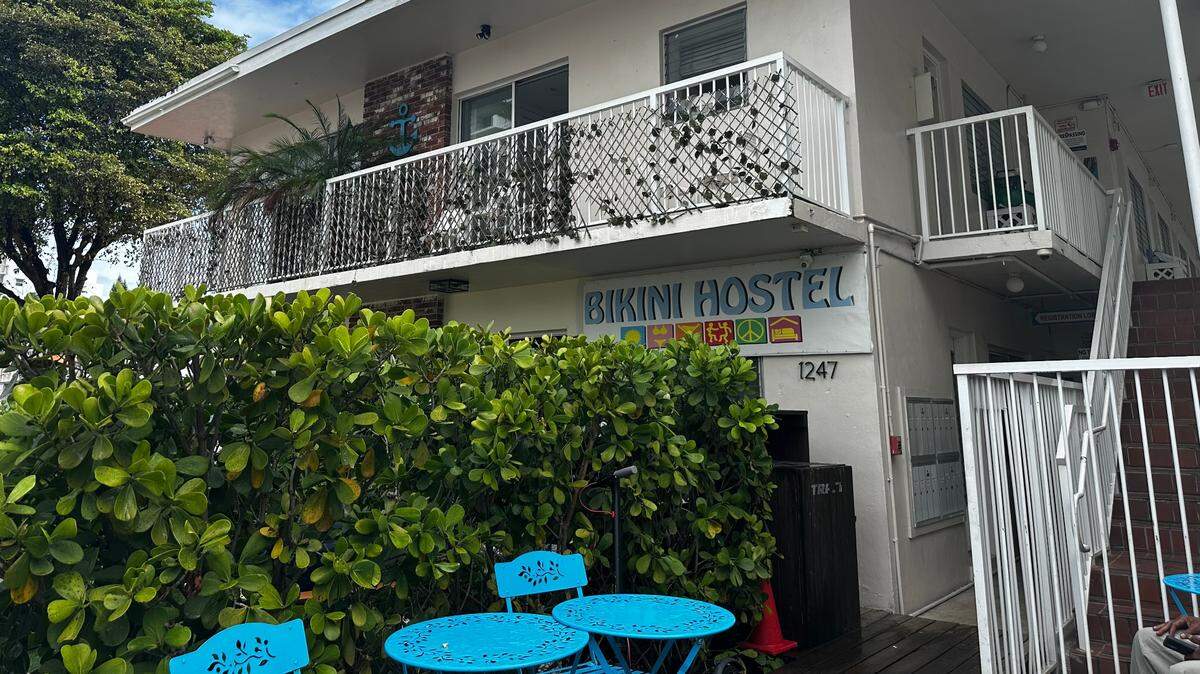
Approximately 50 homeless people were relocated from the Camillus House shelter in Miami to a hostel in South Beach on Friday, catching Miami Beach officials by surprise and raising questions about whether politics played a role after Miami Beach rescinded a ballot question on a tax for homeless services earlier this week.
After receiving word Friday night that city of Miami employees had transported people to the Bikini Hostel in South Beach, Miami Beach elected officials and city employees rushed over to the hostel to see what was going on.
In a post on social media Saturday morning, Miami Beach Vice Mayor Alex Fernandez said the people arrived “unfed, disoriented, and with no desire to be here.” Fernandez told the Miami Herald that Camillus House staff had informed people on Friday afternoon that they were being relocated and had an hour to gather their belongings.
“Using vulnerable individuals as pawns to attempt sending a message runs counter to the human dignity they deserve and stands in stark contrast to our principles of housing, family reunification, and job placement,” Fernandez said.
City of Miami spokeswoman Kenia Fallat confirmed that the city transported about 50 homeless individuals from Camillus House to the hostel at 1247 West Ave. She said the move wasn’t political but rather a logistical decision as the city scrambled to relocate people quickly.
Fallat said an email this week from Camillus House — which had been in negotiations with the city over the price of shelter beds — prompted the transfer.
READ MORE: No room at the inn: Dispute over shelter bed costs displaces homeless in Miami
On Thursday, Camillus House CEO Eddie Gloria had emailed an assistant city manager saying that it would “shut down its shelter operations for the City effective tomorrow, November 1st as discussed. This will affect 53 people.”
“We can ramp up services again once we have a contract in place,” Gloria added.
That meant the city of Miami had until Friday to relocate more than four dozen individuals, Fallat said. The city then got into contact with the Miami-Dade County Homeless Trust, which provided a list of locations in the county offering shelter beds.
Bikini Hostel, via the Trust’s hotel/motel program, was able to provide beds for the 53 individuals, Fallat said.
“Our primary concern was to provide a safe transition from one roof to another,” Fallat said. “We didn’t want these people displaced on the street.”
Gloria told the Herald that he and Camillus House staff were unaware that the city of Miami planned to relocate people from Camillus shelter beds to the hostel in Miami Beach. Gloria said Camillus staff were told on Friday afternoon that Miami outreach workers were en route to the shelter and that, when the workers arrived, they said they did not yet know where the people would be taken.
“We weren’t told, and we weren’t involved in the plan,” Gloria said. “We had no idea what was going on.”
A contract between the city of Miami and Camillus House for shelter beds expired at the end of September, but Gloria said an extension was granted through the end of October.
Gloria said that, after he emailed the city on Thursday saying the shelter would shut down its operations for the city the following day, he didn’t receive any more communication from the city. He said that Camillus planned to relocate people “carefully” and would have ensured that no one ended up on the street after the Nov. 1 deadline.
“We would have done it in a careful, compassionate way,” Gloria said. “No shelter operator would take 50 people and put them on the street overnight.”
READ MORE: ‘They just sprung it on us’: Homeless Miamians face repercussions of shelter displacement
Miami-Dade County Homeless Trust Chairman Ron Book told the Herald on Saturday that the Homeless Trust was similarly unaware of the plan. He acknowledged that the Homeless Trust had scoped out the Bikini Hostel in recent months as an option to comply with a new state law that bans outdoor sleeping and that the hostel was one of several locations included in a list that the Homeless Trust shared with the city of Miami on Thursday.
“I had no idea that someone had decided to place people there yesterday,” Book said. “It was complete news to me.”
Steven Crist, 50, had been a resident at Camillus House for eight months when on Friday, with a few hours’ notice, he learned that he and about 50 other residents were being moved to Bikini Hostel in South Beach that night.
Sitting at the hostel’s patio Saturday morning, he told the Miami Herald he was not exactly sure why they were moved but said Camillus House and the city of Miami have been slowly moving residents to other locations.
Crist said he welcomed the change, appreciating the hostel’s relaxed environment and friendly staff.
“Here there is no curfew — we can basically do what we want as long as you don’t act like idiots,” he said.
Unlike Crist, who has had a permanent spot at Camillus House since April, 35-year-old Yadier Montoya has spent months living on the streets, struggling to secure a bed there.
Originally from Cuba, Montoya has lived in Miami for nearly three years and has been without a permanent home since losing his job eight months ago.
“What I want is to be able to work,” he said in Spanish. “I’ve always been independent.”
He often prefers to sleep in a tent under a bridge in downtown Miami but has repeatedly been told by police that he can’t stay there. Fearing arrest, he has sought shelter at Camillus House, but getting a bed has become increasingly difficult.
“Some days they give you a bed, and some days they don’t. It is no way to live,” he said.
On Tuesday, Montoya was granted a seven-day stay at Camillus House after being told by police he could no longer remain on the street. However, on Friday night, he learned he would be moved to Bikini Hostel —a decision he was unhappy with but felt he had no choice but to accept. Montoya is uncertain how long he will be able to stay at Bikini Hostel.
Miami Beach officials said a number of others who were relocated from Camillus House had no desire to live in Miami Beach and didn’t know how they would get to work on Saturday.
“They were left with no bus passes or any way to get to their work,” Fernandez said.
Miami Beach Commissioner Joseph Magazine said that, when he visited the hostel on Friday night, city officials were “focused on the humanitarian effort” rather than any political aspects of the situation.
“Last night we mobilized city leadership at the drop of a dime and we mobilized to come together to help these people that had just arrived in our city unbeknownst to us,” Magazine said.
Miami City Commissioner Miguel Angel Gabela, whose District 1 includes Camillus House, said Saturday morning that he was not aware of the city sending dozens of homeless people to Miami Beach.
But he said that, if homeless individuals were sent across the causeway, it would be a “double standard” for Miami Beach to take issue with it.
“They can ship to us year in and year out, and when it happens to them, they don’t like it?” Gabela said, referring to Miami Beach utilizing shelter beds in Miami. “They have to do something about their homeless situation, not just export them to a different municipality.”
The Miami Beach City Commission voted Wednesday to rescind a ballot question on whether to authorize a 1% food-and-beverage tax to fund the Miami-Dade County Homeless Trust and local domestic violence shelters.
That move prompted a lawsuit by Miami Beach voters who said it was improper to take away their voice just days before the Nov. 5 election. But a Miami-Dade Circuit Court judge sided with the city on Friday afternoon, meaning the results of the ballot question won’t count and the 1% tax won’t be imposed.
READ MORE: Court rules in favor of Miami Beach, says votes on homeless tax won’t be counted
Miami Beach is one of just three cities in Miami-Dade County, along with Bal Harbour and Surfside, that do not impose the tax.
In recent months, Miami Beach has ramped up arrests for violations of a municipal camping ban aimed at getting homeless people off the street. The city’s approach has drawn criticism from Book and other homeless advocates.
This story was originally published November 2, 2024 at 11:23 AM.

.jpg)