Homeowners fight new development on old golf course in Kendall
Should a defunct, overgrown golf course be turned into a natural sanctuary for birds and bats, or a gated community for people? Are real estate developers entitled to alter zoning rules and build homes on park land if they own property where housing demand is high? Is it time to draw a line in the grass to save disappearing green space from suburban sprawl in Miami-Dade County?
A showdown on the fate of the old Calusa Country Club is on Wednesday’s agenda at County Hall. The zoning hearing starts at 9:30 a.m. Commissioners’ decision on whether to allow 550 single-family homes on 168 acres designated as parks and recreation land under the county’s master plan will have implications far beyond Kendall, say homeowners who have fought the project for years.
“We’re asking the county to prevent razing trees, filling lakes and displacing wildlife on land that was never intended to be developed,” said Amanda Prieto, leader of the Save Calusa citizen activist group representing 2,300 homeowners. “Don’t degrade the character of a neighborhood. Zoning should not be determined by the highest bidder. That’s not how government should work.”
Developer GL Homes will argue that the best use of the land is residential, especially since county studies show the supply of building sites for new single-family homes will be exhausted by 2025. The developer also says it could have sought permission to build 1,000 homes on the property, but reduced the number to 550, which makes it the lowest density of any golf course redevelopment in the county, including those in Fontainebleau, Doral and Williams Island.
High demand, dwindling supply of single-family lots
“We need to put single-family homes somewhere and here we have a vacant lot sitting in the middle of a residential area,” said Dick Norwalk, executive vice president of GL Homes. “The opposition talks about the golf course as if it’s wilderness. It is not a real wildlife site no matter how they want to paint it. And we are not taking away a beautiful public green space. It’s private property and always has been. It was only accessible to the public if you paid to play golf.”
Norwalk said his company has negotiated extensively with residents whose homes abut the former golf course — the ring homeowners — to design a site plan sensitive to the surrounding community.
“The mentality that this is a zero-sum game isn’t productive. We need to build an appealing place to sell,” he said. “We shouldn’t be fighting. We should be working together to make improvements.”
Calusa residents who are not ring homeowners plan to show up in force Wednesday — they are chartering a bus to shuttle people downtown — and argue that land categorized as parks and recreation by both covenant and county master plan should maintain its designation. That’s why they bought there, after all. They dread increased traffic on already gridlocked streets, decreased property values, overcrowded schools and flooding.
“Let’s implement what I’ll call the Bacardi Rule,” said attorney David Winker, who represents the non-ring homeowners, in reference to Facundo Bacardi, the rum empire chairman who purchased the property in 2003 and now co-owns it with GL Homes. “Let’s stop converting parks and recreation land into subdivisions. Hands off our parks. We need green if we want to have sustainable places to live.
“And let’s be clear. This is not affordable or workforce housing, which we lack in Miami. This is luxury single-family housing throwing all its impact on the existing homeowners with no community benefits.”
A long fight against development
The homeowners’ dispute with Bacardi dates back a decade. The original 1967 Calusa covenant required the property to remain a golf course for 99 years unless 75 percent of abutting homeowners agreed to lift it. Bacardi bought the country club for the bargain price of $2.7 million in 2003 — knowing it was restricted by the covenant and zoned as parks and recreation — and soon after golfers began to notice its deterioration. After hurricanes Wilma and Katrina hit in 2005, the damaged clubhouse wasn’t repaired and was replaced by a trailer and Porta-Potties. The course was closed in 2011 and reclaimed by nature.
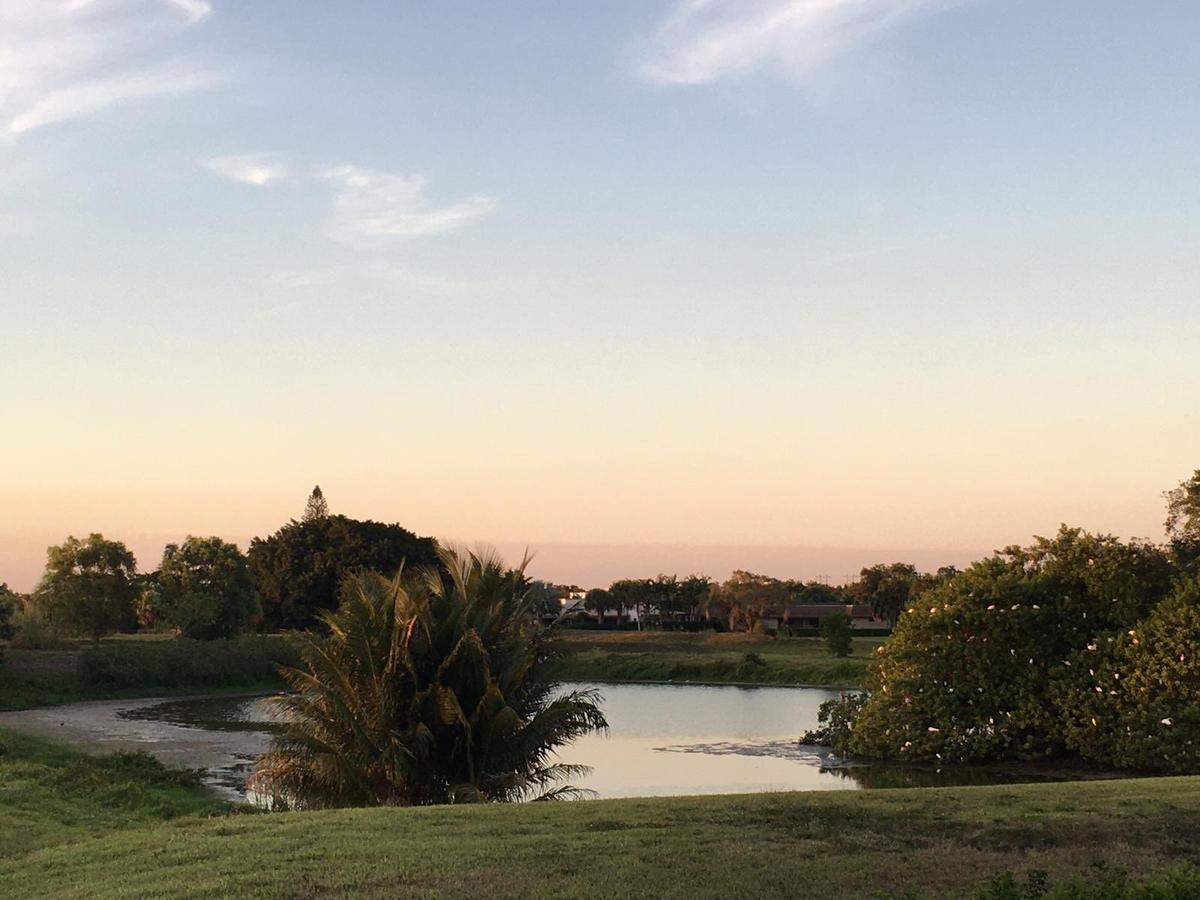
Bacardi offered ring homeowners $50,000 each to waive the covenant. They didn’t, so Bacardi sued them. The covenant was upheld in a court ruling in 2016, but Bacardi said he’d continue the legal battle to invalidate it, then paid off worn-out ring homeowners with individual settlements of up to $300,000, neighbors said. Of 146 ring homeowners, 123 accepted payments and signed waivers and nondisclosure agreements, fracturing the community. County commissioners released the covenant in October 2020, paving the way for new houses on the old course. GL Homes paid Bacardi $32 million for the property and he has a 35 percent stake in the development venture.
The Calusa neighborhood runs from Kendall Drive to Killian Parkway between Southwest 127th Avenue and 137th Avenue.
Winker will tell commissioners that what happened at Calusa is an example of handing too much power to property owners and developers to manipulate zoning and make huge profits.
“We can’t set a precedent where homeowners are weaponized against their neighbors when speculators buy them off and use political muscle to turn parks into housing developments,” he said. “I have property rights, but I don’t have the right to buy the house next to you and turn it into a strip club because I can afford to.”
Environmental preservation questions persist
Winker and the homeowners he represents will oppose the development on environmental grounds.
The discovery of the endangered Florida bonneted bat foraging for food on nocturnal flights over the old fairways prompted a survey by Bat Conservation International during which researchers logged an average of 287 calls over 42 nights.
Homeowners asked the county to take a close look at a bird rookery on an island in a lake that was once a water hazard where egrets, anhingas, sandpipers and red-headed ducks thrive and a threatened tri-colored heron built a nest.
Norwalk said the environmental consultants he hired found no signs of bats roosting on the property and a small rookery that requires more study during nesting season. He promised to comply with the county’s Department of Environmental Resources Management (DERM) during the permitting phase of the development.
“If that island needs to be preserved or buffered we will develop a plan of action and do what DERM tells us to do,” he said. “We are not minimizing the presence of the tri-colored heron but the majority of birds are cattle egrets at a lake that does not have a lot of fish life because it’s a habitat that was degraded by fertilizers and pesticides. We could make a better habitat.”
As to homeowners’ criticism that 577 trees will be removed and 13 acres of lakes will be filled to make way for houses, Norwalk responded that GL Homes will plant 5,000 new trees and create 23 acres of new lakes.
Winker maintains that the developer’s environmental impact studies were limited in scope.
“The studies are not complete and do not convey enough accurate information to the commissioners so they can make informed decisions,” he said. “Get us the right reports now instead of stalling until it’s time to apply for permits.
“Once the zoning cat is out of the bag, it’s hard to stuff it back in.”
This story was originally published November 17, 2021 at 7:00 AM.