Are Hialeah subsidy promises sustainable? Mayoral candidates defend their proposal
From rebates to tax cuts, candidates running to be the next mayor of Hialeah are competing with giveaways to residents, even though experts warn the city can’t afford them.
From lowering the property tax rate to issuing rebate checks, absorbing water and sewer fee increases, and even eliminating property taxes altogether, the promises are multiplying as the city’s mayoral election nears.
But are these proposals financially feasible, or just politically convenient?
For months, Hialeah’s Finance Department has cautioned elected officials that “Hialeah is a poor city” that is on the verge of bankruptcy. Despite those warnings, interim Mayor Jacqueline Garcia-Roves and Councilman Jesus Tundidor, both running for mayor in the Nov. 4 election, have led efforts to expand resident subsidies and relief programs.
During this year’s budget discussions, Garcia-Roves proposed lowering the city’s millage rate by 1%, a change that would have cost the city roughly $1.3 million in lost revenue. Tundidor went further, proposing a 10% reduction, which the city’s finance staff estimated would cut revenues by $13 million. Neither proposal was approved.
But this week, the City Council approved a one-time $200 rebate for 32,100 homesteaded property owners. The relief will cost the city about $6.4 million, reduce its general fund by $4.6 million, and delay 18 public projects, including park upgrades, lighting improvements, and building repairs. Critics have dismissed the move as an election-year giveaway that deepens Hialeah’s fiscal troubles.
The two politicians aren’t alone in making financial promises. Former councilman Bryan Calvo, also a mayoral candidate, has vowed to eliminate property taxes for seniors, a decision that isn’t up to Hialeah but to the state, something that his competitor said is misleading. Calvo also proposed to cut water and sewer costs.
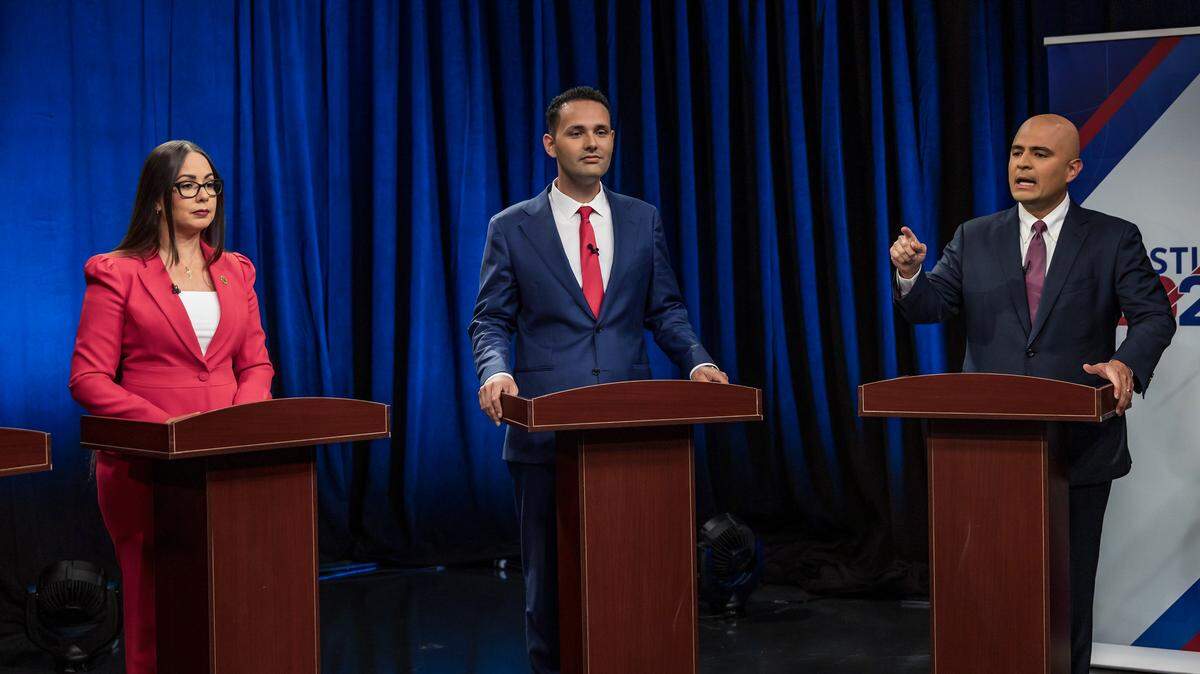
On Wednesday night, the five mayoral candidates — Garcia-Roves, Tundidor, Calvo, Marc Anthony Salvat,and Bernardino “Benny” Rodriguez — faced off in a televised debate at Univision 23, where journalists from the Miami Herald, WLRN and CBS4 were part of a panel questioning the candidates.
Among the key questions raised:
“Does your plan include subsidies for all four years of your administration, or only for next year? And if for all four years, is it financially sustainable for the city?”
Garcia-Roves, interim mayor since April when Esteban “Steve” Bovo stepped down, defended the recently approved rebate, calling it a one-time relief measure, but said she would continue subsidies as long as the city can afford them.
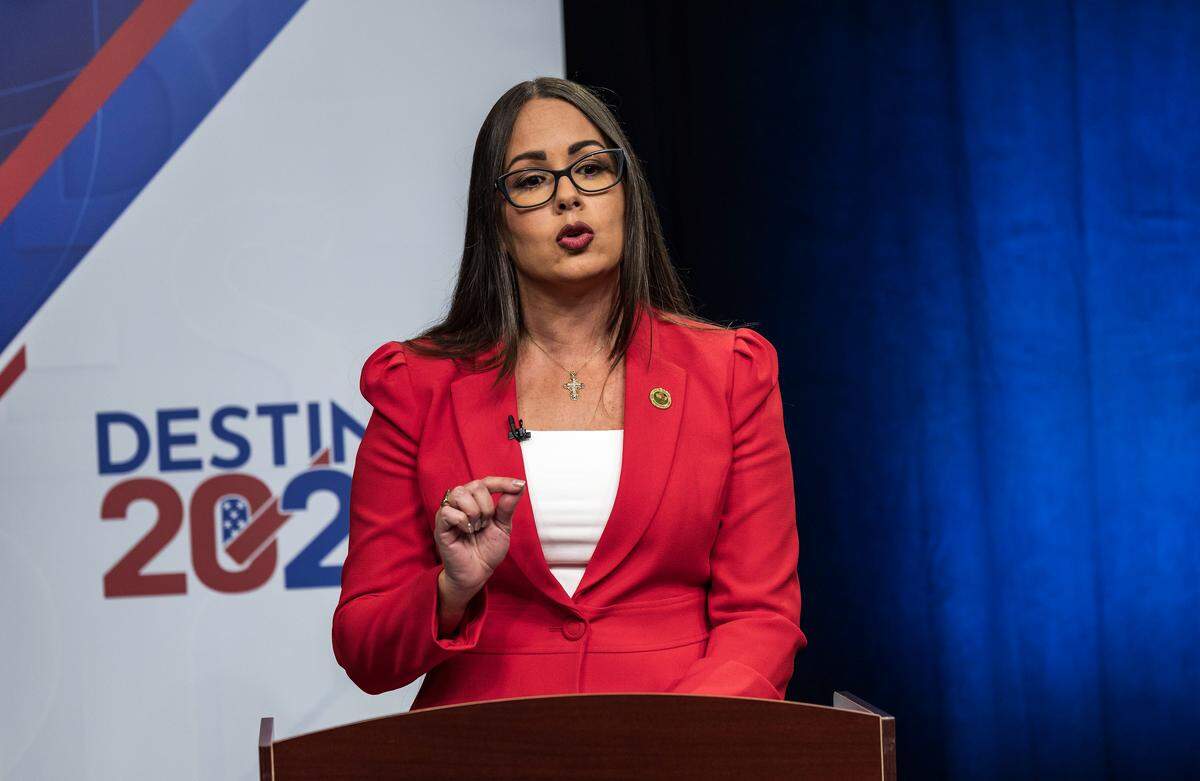
“It’s in my power to help the residents of Hialeah as long as I can give them relief,” she said. Garcia-Roves, first elected to the City Council in 2019 and reelected unopposed in 2023, added that she is “working directly” with state officials, including Florida CFO Blaise Ingoglia, on a plan to eliminate school property taxes for residents 65 and older.
Calvo, who was elected to the City Council in 2021 and who resigned in 2024 to run for Miami-Dade tax collector, took a harder line on the city’s financial reality.
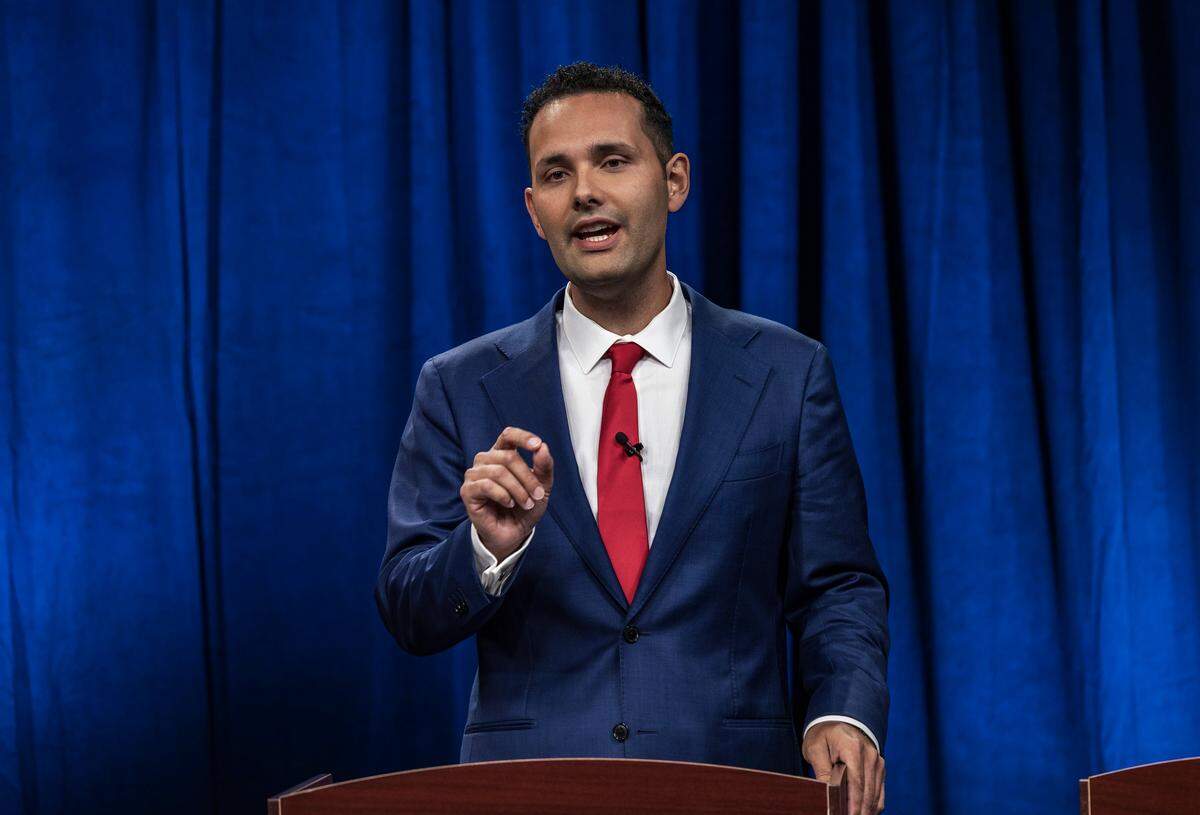
“The city of Hialeah doesn’t print money, it takes it out of our pockets,” he said. “What the people next to me are doing is trying to fill one hole by opening another. They’re trying to subsidize the water department with our taxes, and that’s why rates keep rising. With their candidacy, you’ll get more of the same, higher costs of living and fewer services.”
Salvat, a real estate agent who has branded himself an anti-establishment outsider, accused his rivals of hypocrisy.
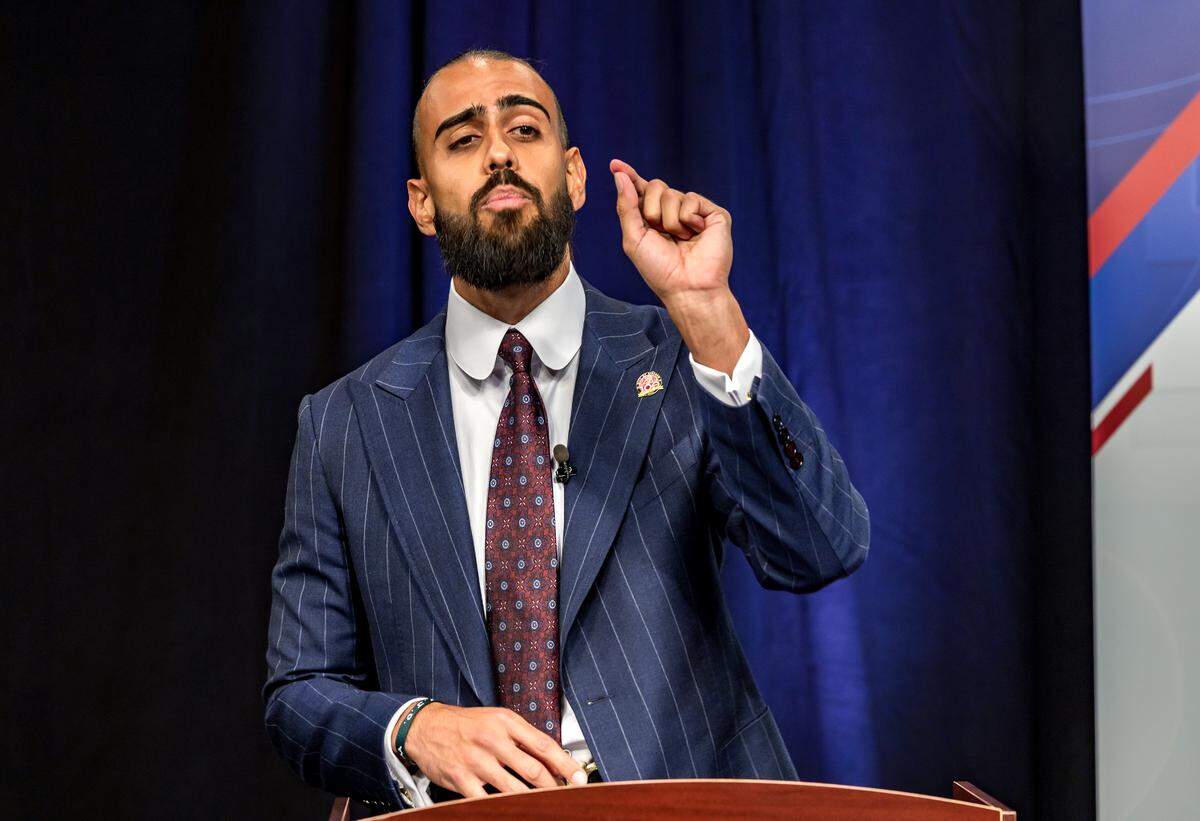
“All these people have already been in power. They should have taken action before, because the city’s residents are hurting,” he said. “We need to lower the cost of living over four years by dedicating part of the annual budget to a reserve of strategic assets. The city should invest capital to grow, then use those returns to fund essential services.”
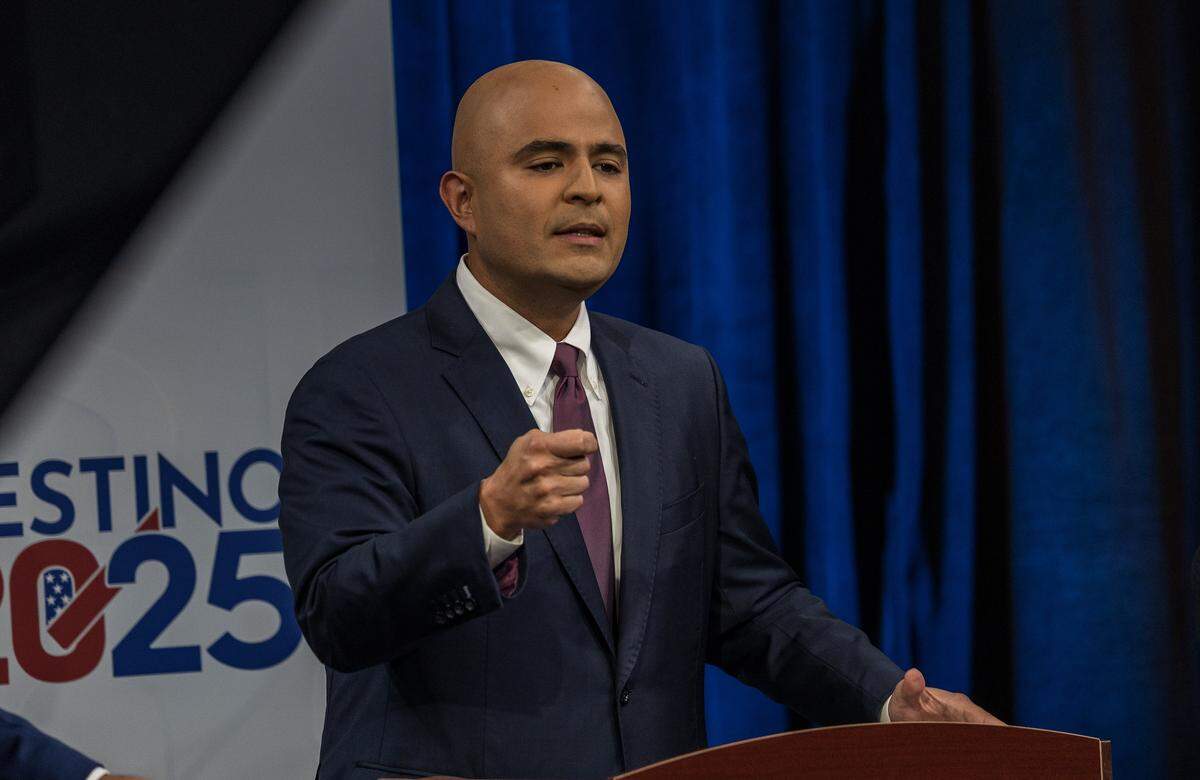
Tundidor, elected to the council in 2019 and reelected unopposed in 2023, defended the rebate plan, saying it followed the council’s rejection of his proposed 10% property tax cut, which would have cost the city $13 million.
“We need to provide relief, and that’s what we did,” he said. “Over the past four years, we’ve made historic investments in police and infrastructure, especially in eastern and southern Hialeah. And when it comes to property taxes, the person who’s actually going to eliminate them is named [Gov.] Ron DeSantis, that’s a state issue.”
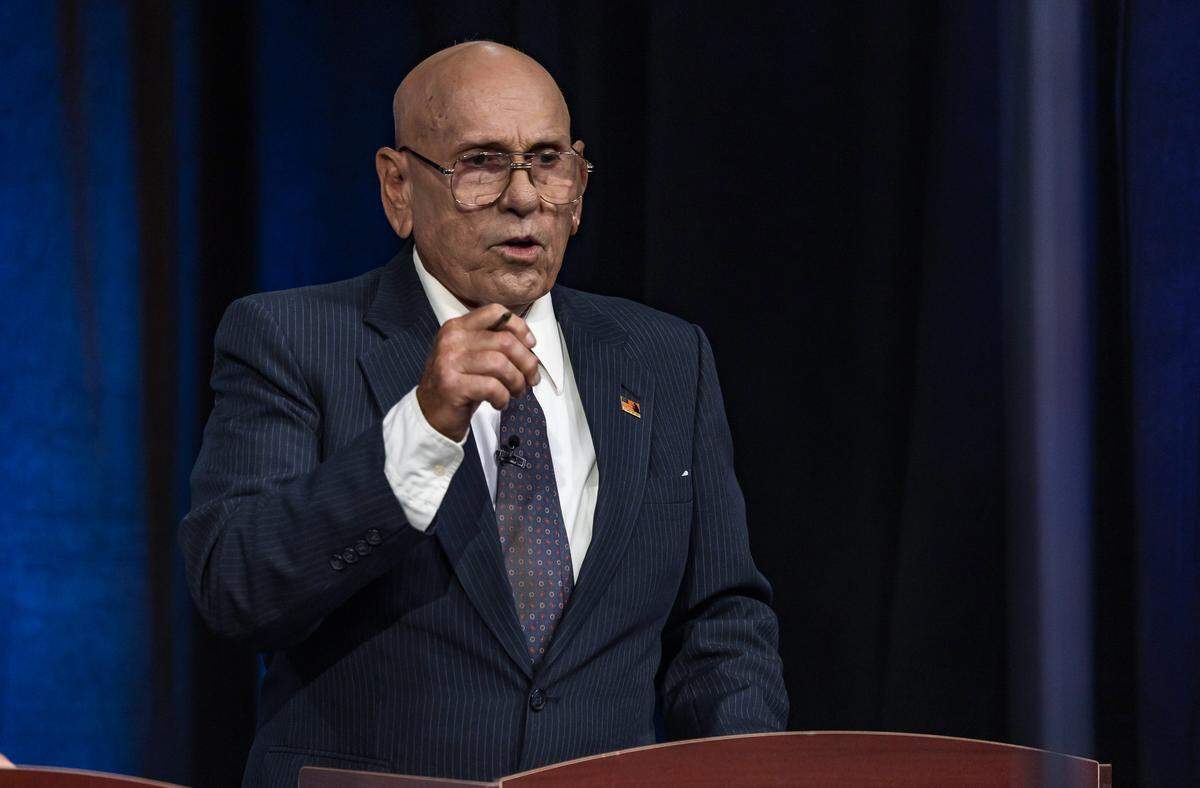
Rodriguez, a long-time Hialeah business owner, proposed improving staffing in the water department, which he said “has enough money,” and ending water-bill readings. He also promised to eliminate property taxes, a move that would require state action.
The city’s revenues have room to grow, we just need to bring in new industries,” he said. “From a business perspective, I know how to do it.”
Despite the wave of proposals, none of the candidates have presented a detailed plan explaining how their initiatives would be funded over time. The city had been on a path toward new infrastructure and technology investments, but those plans are now expected to be delayed until 2027, largely because of the $6.4 million cost of the recently approved homeowner rebate program.
It remains unclear whether, by then, Hialeah will be able to revive the postponed improvement projects, or whether the mayor in office at that time will be able to continue offering financial relief to residents without cutting services or closing parks, as occurred during a fiscal crisis under former Mayor Carlos Hernández.