Hialeah mayor promises property-tax cut, despite city’s troubled history
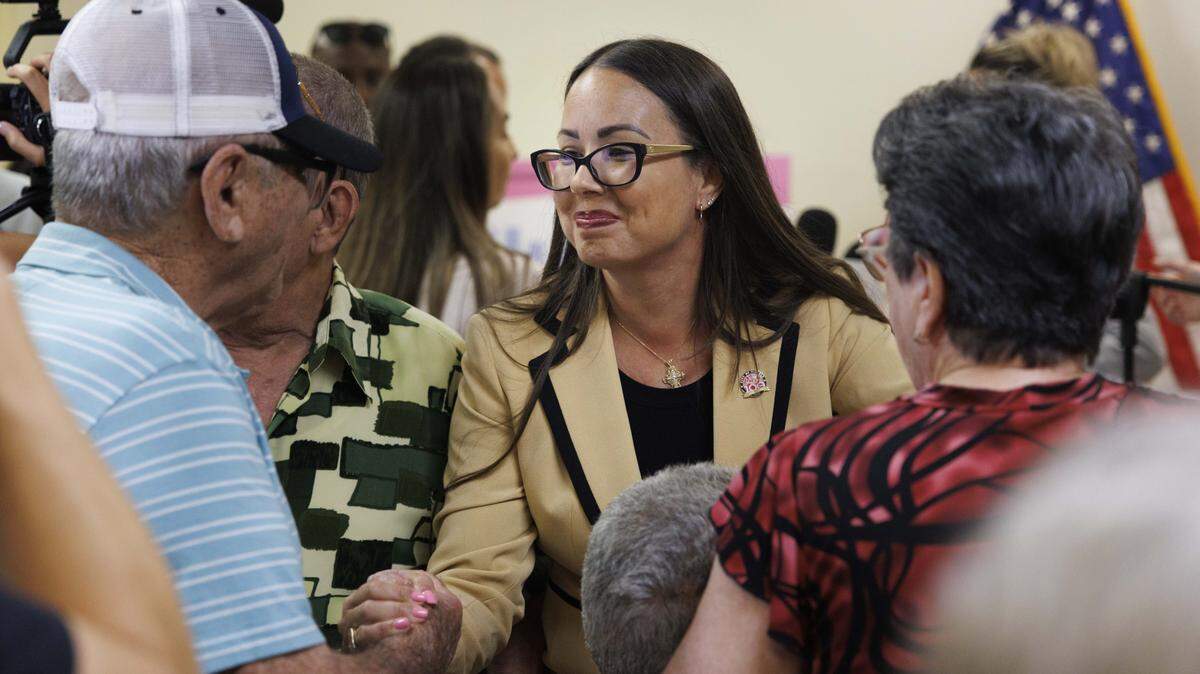
As Hialeah prepares for elections this fall, interim Mayor Jacqueline Garcia-Roves, campaigning to remain in office, is promising to lower property taxes, a bold political move that in the past has plunged the city into financial distress.
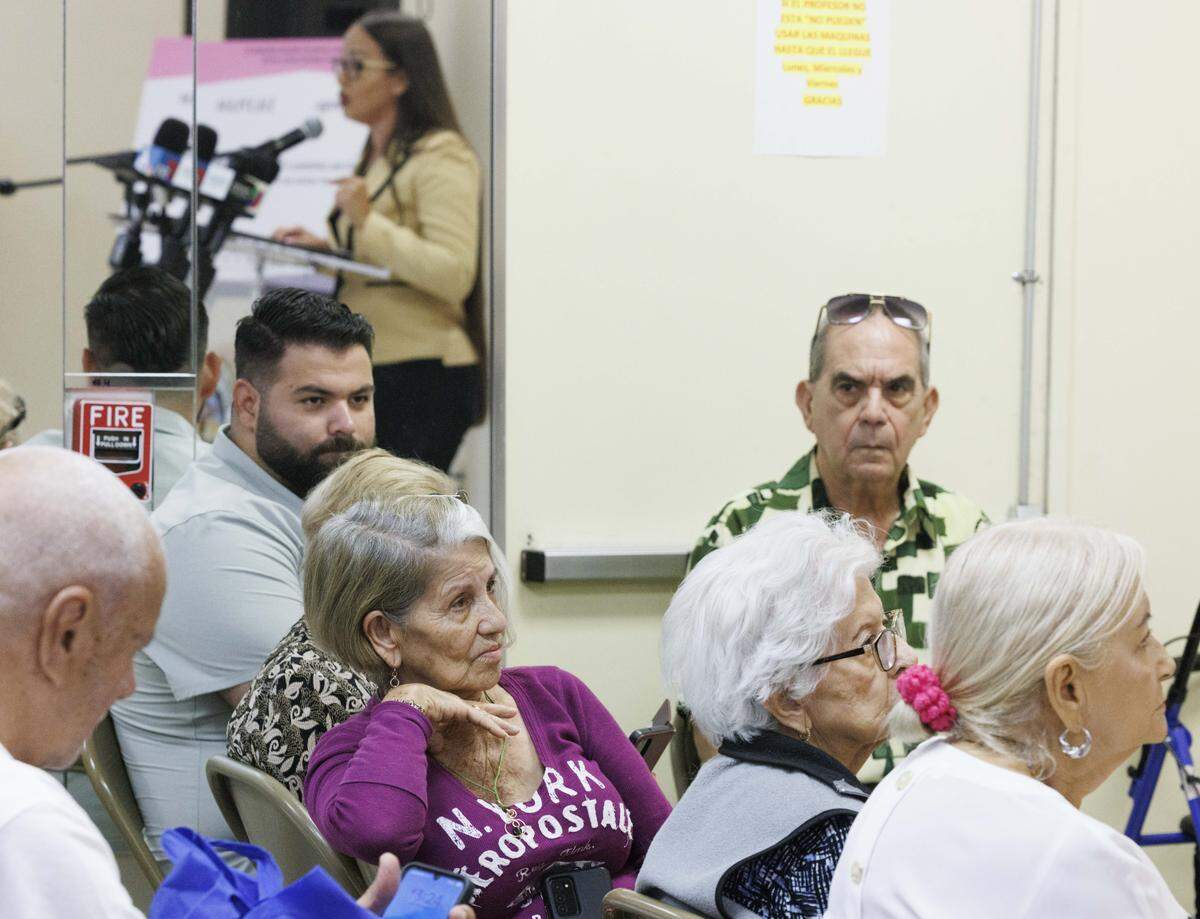
At a press conference Tuesday, Garcia-Roves told elderly residents at a Hialeah housing complex that she plans to reduce the city’s property tax millage rate by 1%. The proposed cut could save residents an average of $306 in the next fiscal year, or about $25 per month. It would also reduce the city’s revenue by an estimated $1.3 million.
The last time Hialeah lowered its millage rate was in 2013, under Mayor Carlos Hernandez. That tax cut reduced city revenue by $3.2 million and left the city scrambling to recover.
At the time the city was already in financial distress, and lowering the tax rate resulted in severe consequences: citywide furloughs, mandatory pay cuts, closed parks and libraries, pension eliminations and the departure of more than a hundred first responders. More than a decade later, the effects still linger, with neglected infrastructure, shuttered pools and deteriorating parks. Over the past three years, the city has started to address long-overdue repairs—reopening pools, restoring lighting, and fixing building roofs, efforts largely neglected during Hernandez’s administration.
Despite that history, Garcia-Roves insists the outcome will be different this time. Her predecessor, former Mayor Esteban “Steve” Bovo, who stepped down in April, refused to lower the tax rate during his three-year tenure. Bovo dismissed the idea as “politically expedient” in a staunchly Republican city and called a proposal by former council member Bryan Calvo to cut the rate “irresponsible.”
“Why don’t we try to lower the rate—give the people a little money back—so they don’t have to deal with all these increases?” Calvo asked at the city’s first budget hearing in September 2024, months before resigning to run in the Republican primary for Miami-Dade tax collector, a race he ultimately lost. In response to Calvo’s proposal, Bovo warned the council last year that cutting taxes could jeopardize the city’s long-term financial stability. Calvo is now running for mayor.
“The mayors of the past made a mistake when they lowered the millage rate because everyone wanted to outdo each other — ‘I can do more with less,’” Bovo told the council at the time. “That’s how you end up with wrecked pensions, employee departures.... We’ve invested heavily in police and fire, and we’re still losing trained personnel. This isn’t about making employees happy. It’s about keeping residents safe.
“If this council were to take the irresponsible position of lowering the millage rate because it’s politically expedient, you would put the city in a deficit,” he added.
$18 million in subsidies
Garcia-Roves is also pledging to shield residents from rising utility costs. Her plan includes absorbing the increased water and sewer fees passed down by Miami-Dade County, which the city estimates will cost over $12.5 million in the next fiscal year. In addition, she has proposed eliminating the franchise fee—a tax included in water and sewer bills that generates approximately $3.7 million annually—and covering an $852,000 increase in solid waste fees.
The franchise fee was introduced under Hernandez to help offset the financial strain caused by a prior reduction in the tax rate. Over the past decade, the city council gradually reduced the fee from 10% to 4%, and it was suspended last year under Bovo’s administration. Now, Garcia-Roves is proposing to eliminate it completely.
Garcia-Roves’s proposals would reduce the city’s revenue by more than $18.3 million. She claims the city can afford it because there is a reported budget surplus of over $61 million. However, the budget she proposed shows only $49.3 million in available reserves.
Garcia-Roves said during the press conference that she has asked each department director to lower their costs “to bring me a 5% savings, to show me where they’re going to save, how they can save, and that’s how the money will be replenished.” When asked whether first responders or parks would face cuts as they did a decade ago, she said they would not—though she did not provide details on which departments would be affected.
The proposed budget published on the city’s website outlines operating expenditures totaling $471.7 million, which is 11.8% lower than the current year’s total and represents a $13.8 million decrease from the adopted 2025 budget. However, that budget proposal assumes the current tax rate remains unchanged. If Garcia-Roves’s proposal to lower the rate is approved by the council, the city’s budget would shrink further.
Garcia-Roves told the Herald that the proposed budget does not include the lower millage rate because the city was drafting the plan based on what was realistically possible—not necessarily on what was worth doing.
“If it’s going to happen,” she added, “it has to be decided by the Council.”
Her proposal will require support from at least four of the six council members during the upcoming budget hearings in September. The council remains evenly split 3–3 after the interim mayor was unable to secure the appointment of a tie-breaking member to fill her vacated seat.
Four council members are up for election this year, including Jesus Tundidor, who is running against Garcia-Roves for mayor.
Some council members, including Luis Rodriguez, who is up for reelection, and Monica Perez, who was reelected in 2023, have previously criticized the past financial distress the lower tax rate had on the city’s parks and services.
The two other council members on the ballot, Melinda De La Vega and Juan Junco, were both appointed last year and are competing for the same at-large seat. Neither has publicly addressed the city’s past financial distress, but last year, every council member—except Calvo—voted in favor of Bovo’s budget, which kept the millage rate unchanged. Junco wasn’t a council member at the time.
In addition to the proposed subsidies, Hialeah is currently being sued by Miami-Dade County over $18 million in unpaid water and sewer bills. While Garcia-Roves has publicly said the city will not pay the disputed amount, the outcome of a lawsuit over the debt could ultimately increase the city’s financial liabilities.
Eric Johnson, president of the Hialeah firefighters union—who frequently reminds city leaders during council meetings of the financial crisis that followed the last millage rate cut—told the Herald that Garcia-Roves’s proposal, while “sound[ing] good as political statements,” would “place the City of Hialeah in a budgetary shortfall, just as it did under Carlos Hernandez, who left the city in financial shambles.”
Johnson said the city appears to be putting politics ahead of the public—something he said Bovo “refused to do.”
“What sacrifices are we willing to make today for a financially secure tomorrow?” Johnson asked. “A few dollars per household per year? Is it worth closing parks for our children? Is it worth reducing public safety, where mere seconds could affect the outcome of lives?”
This story was originally published August 28, 2025 at 12:35 PM.