A council member proposes to redevelop East Hialeah. What’s the plan?
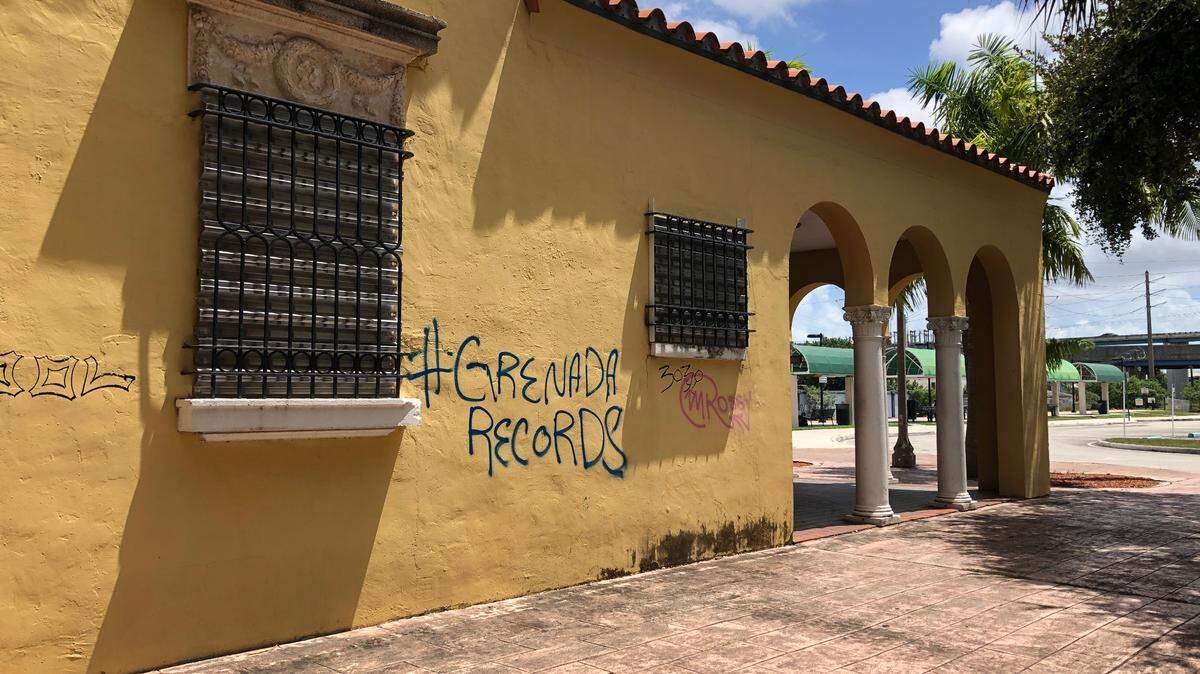
The East and Southeast slices of Hialeah represent the oldest and most overpopulated areas of the city, with unoccupied sheds and inadequate structures, and with a greater presence of homelessness.
But that could change with a proposal by Councilman Bryan Calvo . He is seeking to reactivate a plan to redevelop the area through a Community Redevelopment Agency, an initiative approved in 2015 that never came to be.
For Calvo, the main reason for reactivating the Hialeah CRA project, is because the city “lacks a housing plan, a development plan. ... If there is no way for the city to plan what these developments look like, what we have is a building here and another there,” he told el Nuevo Herald.
“What is the vision for the future of the city?” Calvo wondered. “ERAP (Emergency Rental Assistance Program) is not sustainable, it is limited money from federal funds. I don’t think that’s the future, to subsidize rents. The future is to encourage the growth of housing for workers, affordable housing.”
James Carras, director of Carras Community Investment Inc., a company that developed the needs study carried out by the city in 2015, told el Nuevo Herald that the real estate market has changed drastically for the benefit of Hialeah.
“Now there is a stronger market in areas that hadn’t received investment in the past. I think this would be an excellent moment to do a CRA in Hialeah,” Carras said.
Councilman Calvo believes that with a CRA “we would be able to encourage that growth to take place in the area designated by the city and provide all the services and benefits to have a fast growth. We can talk about development, but if it takes 10 years for these buildings to start coming up, we’re not helping anybody now. The idea would be that the city does this quickly and in 2023 they can start giving monetary incentives.”
But not everyone is so enthusiastic about the plan.
Frank Schnidman, a retired professor of urban and regional planning at Florida Atlantic University, told el Nuevo Herald that “the city should ask itself if it is financially solvent to assume that for 30 years it will not receive additional tax revenue in the area.”
What’s the plan about?
In 2015, the city conducted a needs study to determine in which area a CRA would be appropriate.
The study was conducted in the Hialeah Market Station District, a 121-acre area bounded on the north by Hialeah Drive, on the south by State Road 112 and on the west by Southeast Ninth Court near Tri-Rail’s Market Station.
The 121 acres that were approved have not changed much since then. The Tri-Rail station is surrounded by vacant businesses, the streets have potholes, there are a lack of sidewalks. Thanks to these characteristics, the area can qualify for redevelopment through a CRA.
However, Calvo proposed in the city council four larger boundaries.
Schnidman, the university expert, is cautious when talking about the limits of a CRA.
“Hialeah should do a realistic fiscal analysis of the impact the loss of additional taxes will have on the city in the area they want to define. The larger the limits, the greater financial impact it will have on the city’s operation capabilities. In addition, Miami-Dade County might not be interested in losing that additional revenue for 30 years.”
Next steps
During the special session in August, leaders agreed not to vote until the Sept. 13 meeting in order to find out more about the benefits of creating a CRA.
“We have all knocked on the door in southeast Hialeah and all the residents have told us that they have been forgotten, there is a need for infrastructure there. There are abundant economic opportunities and I agree with Calvo to establish the area between the Metrorail station and the railway station, but I would proceed with caution, because there have been CRAs that have not worked,” said Hialeah Mayorf Esteban “Steve” Bovo.
Currently, there are 10 CRAs established in Miami-Dade: Florida City, Homestead, Miami Beach, Miami Gardens, Midtown, North Miami, North Miami Beach, Omni, Opa-locka, and Southeast Overtown / Parkwest.
At a time when the internal debate is taking place in Hialeah, there is the recent precedent of one of the oldest neighborhoods in Miami, the West Grove, which after years of seeking to preserve its historic territory through a CRA was unable to obtain the county’s final approval. Commissioner Raquel Regalado, whose district includes this area, was against it.
“A CRA can be a good tool in some areas to address housing, jobs and infrastructure issues, but it takes many years to accumulate enough tax increases to fund projects that will make a real difference,” Regalado said in a statement. “I don’t think we have that kind of time.”
In the case of Hialeah, County Commissioner René García, representative of District 13, would be in charge of defending the need for financing in the area designated by the city council members.
Councilman Calvo explained that “once we establish the limits, we must identify the new projects that are being developed in that area and automatically after the first year, these projects by themselves will finance the CRA and in the next five years, depending on the vision we have of the agency, we would focus on repairing streets, trees, sidewalks that help the neighborhood to make it more attractive for other investors who want to build there.”
Professor Schnidman said that “the real purpose of establishing a CRA is that cities like Hialeah can take county taxes to spend in areas of need, as well as issue bonds without having to hold a referendum on the matter.”
This story was originally published September 9, 2022 at 4:15 PM.