
‘A danger to American society’: Miami pastors sound alarm on Christian nationalism
Far-right Christians — often described as Christian nationalists — have become increasingly vocal and influential in the United States, but there’s a growing number of progressive religious voices in Miami and beyond that are challenging the claim the religious right has on Christian values.
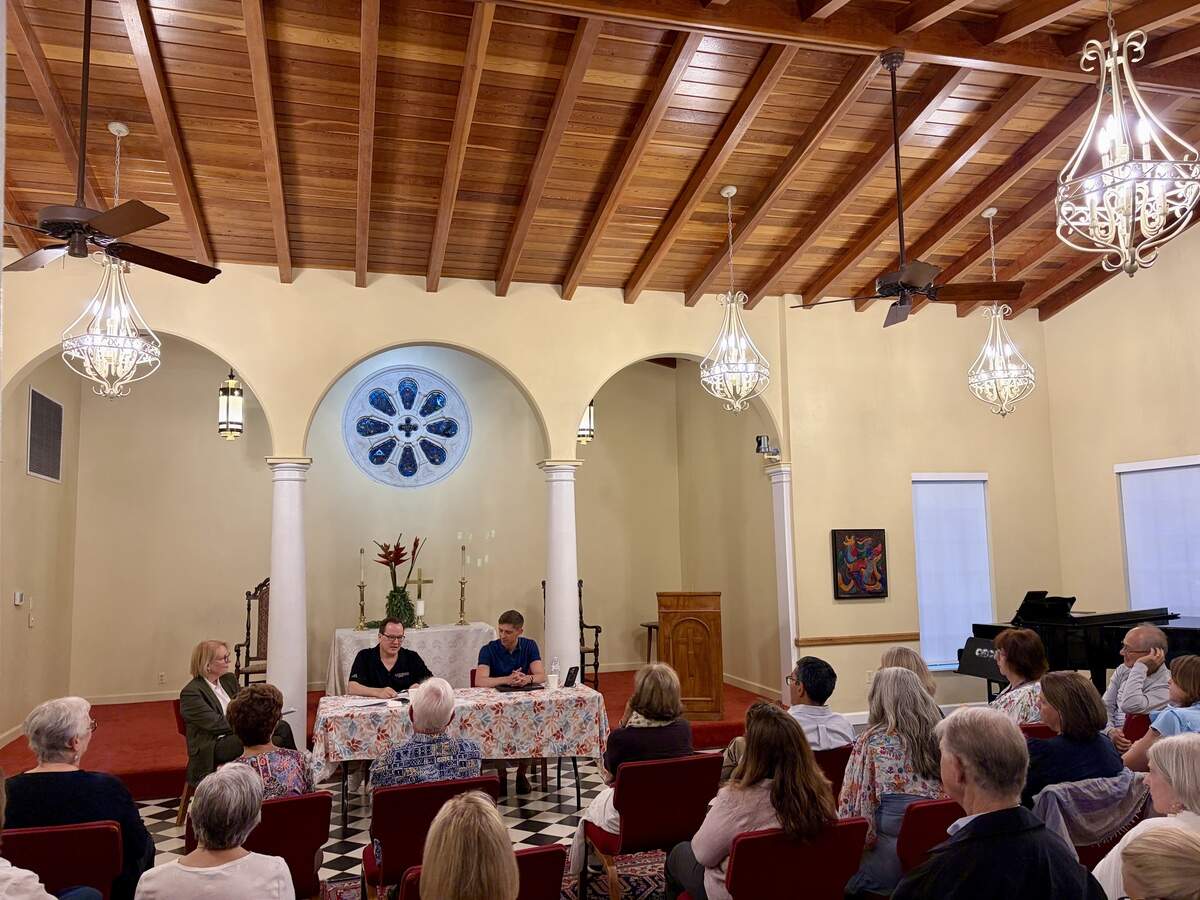
At a recent event at Coral Gables Congregational United Church of Christ, a few dozen congregants listened as a panel of theology and history experts discussed the threat of the Christian nationalist movement — and discussed how progressive Christians can fight back.
Panelists warned about a future where Christian nationalists subvert democratic systems in order to achieve a larger goal of garnering special power and privilege for Christians. Rev. Brandan Robertson, the theologian in residence at Coral Gables United Church if Christ, said the goals of Christian nationalists go beyond evangelizing and proselytizing. The leaders can be described as having more of a “colonizer mindset,” he said.
“They don’t really care if you’re a Christian or not. You’re going to adhere to the Christian values of their understanding, whether you like it or not,” said Robertson, who is also an influential LGBTQ+ pastor widely known as the “TikTok Pastor.” He continued: “And if you can’t adhere to those values, you don’t have a place in this country.”
The audience — all Christians themselves — darted worried looks to one another, shifting uncomfortably in their seats.
For the religious right, churches have long been a place where politics meet ideological beliefs. Politicians have been ushered on the stages of megachurches to receive a pastor’s endorsement despite IRS tax laws that forbid it. Christians with political influence have made their beliefs known in the fight to blend religion and government, including infusing more religion into public schools.
“Imagine a state in which, as a matter of state law, they don’t want you to actually learn about the history of the country that you live in. They want you to learn the sanitized version of that history,” said University of Miami political science professor Dr. Greg Koger. “Imagine a state in which they try to demolish the public education system.”
The progressive Christian left is now suggesting congregants take bolder steps in fighting back against the far-right. Robertson said church leaders can mirror some of the tactics that the religious right use, such as discussing policy issues from the pulpit.
“A lot of progressive churches are really afraid because we really want to adhere to IRS rules and things like that. Well, the good news is Trump has basically stripped all the IRS rules, so churches can do whatever they want to do,” Robertson said.
The pastor didn’t suggest endorsing candidates, but instead focusing on issues, like advocating for immigration reform, and using religion as a tool for community organizing.
‘A danger to American society’
For over an hour, the panelists, which also included Coral Gables United Church of Christ senior pastor Laurie Hafner, discussed how Christian nationalists are merging their religious and American identities to gain power and privilege for certain expressions of Christianity.
Koger said that he’s most concerned about “the extent to which some Christian nationalists are willing to engage in violence or subvert institutions in order to achieve the policy goals that they articulate. I think they’re a danger to American society as we know it,” he said.
Christian nationalists — once existing in the margins of American Christianity — have become mainstream in recent years, establishing churches that host some of the nation’s most powerful politicians. Their fundamentalist, literal understanding of the Bible is one that drives them to take bigger, bolder actions to affirm their belief that the United States is a Christian nation. A key part of that is advocating for Christians with the same beliefs to take over positions of influence in society, panelists said.
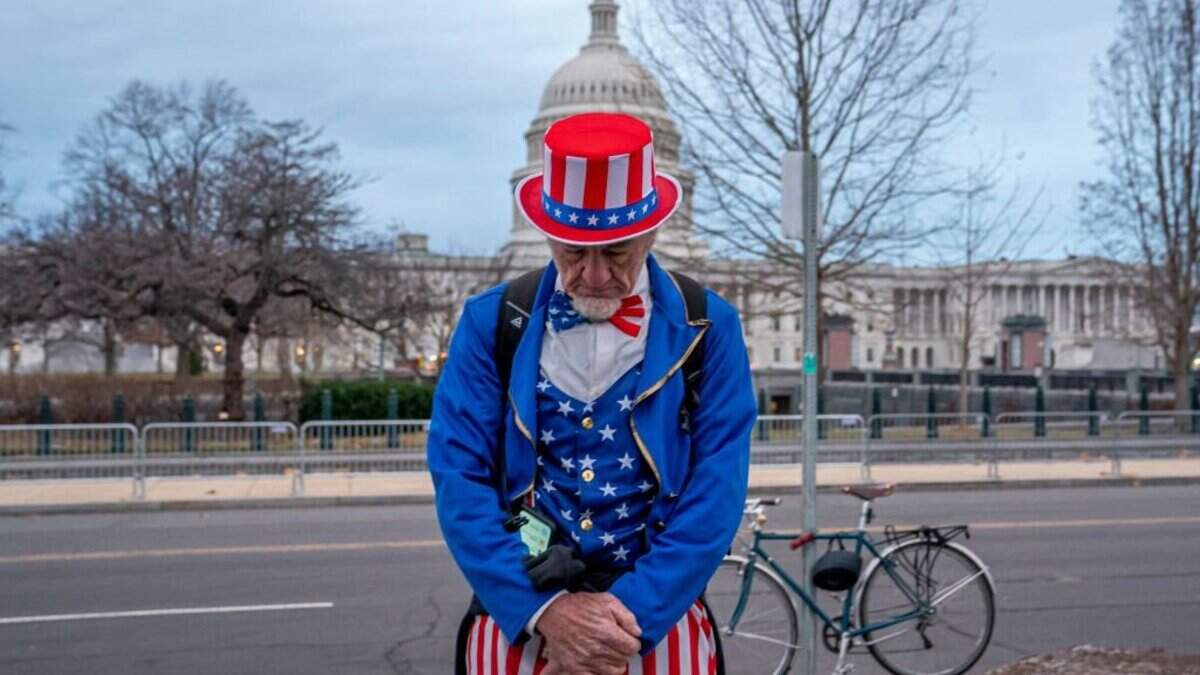
Hafner pointed to the far-right religious rage that she and many scholars believe helped fuel the attack on the U.S. Capitol on Jan. 6, 2021, in an effort to overturn the election of President Joe Biden.
.JPG "Imagn-25280126 (1).JPG")
“In the midst of all of that violence there were Christian flags being raised, and people wearing crosses, and very much their faith was on display,” she said.
After an hour of intense discussion, panelists opened the floor for questions from the wide-eyed congregants. Among them was “What can we do about it all?”
One thing Robertson said he wants progressive Christians to do more of is to speak more openly about their faith.
“I think it’s incumbent upon us as a spiritual and religious responsibility to be louder about our faith. Progressive Christians tend to be very afraid of sounding or looking like conservatives, so we don’t talk about the Bible,” he said.
Progressive Christian leaders are also encouraging congregants to use their faith as the basis for their social justice activism.
“Don’t be afraid, as a community of faith, to get involved in politics because politics simply means the affairs of the people, and that is what Jesus was all about,” Robertson said.
The “Christian left” has been around for a long time. Leaders like Dr. Martin Luther Jr. and Dorothy Day led major social reform movements based on their progressive Christian faith.
Today, leaders like James Talarico, a Democratic state representative in Texas running for the U.S. Senate, are using Christianity to promote values that appeal to all Americans.
Other Democratic candidates whose faith intertwines with their liberal political agendas include Kentucky Gov. Andy Beshear, New Jersey Sen. Cory Booker, former Secretary of Transportation Pete Buttigieg, Maryland Gov. Wes Moore and Georgia Sen. Raphael Warnock.
“The reason I think these leaders are giving a lot of us hope is because it feels like finally, there’s an authoritative counter voice to Pete Hegseth, JD Vance, whoever else,” Robertson said.
Religious groups fight back
In Miami, religious activism aligning with traditionally progressive movements has been emerging in recent years.
Christian pastors and Catholic leaders spoke out against the Trump administration’s recent decision to overturn Temporary Protected Status for Haitian immigrants, advocating for residents to take action by calling elected officials. Last year, faith leaders led a weekly vigil in the Everglades to protest the state’s creation of the now-shuttered Alligator Alcatraz immigration detention center. A large group of Miami-Dade County’s most civically engaged believers — called PACT — recently organized to get county leaders to commit to long-delayed mental health services and redefine how the county defines and incentivizes affordable housing.
Nationally, interfaith organizations are fighting back against what they view as the Trump administration’s attack on religious freedom and pluralism.
In June, over a dozen religious leaders from various backgrounds and a few elected officials wrote a scathing report expressing concerns over the Trump administration’s creation of a Religious Liberty Commission in May 2025.
“Restoring the balance between free exercise and non establishment, as well as between religious freedom claims and civil right protections, is the most urgent religious liberty challenge America faces,” wrote Rabbi David Saperstein, senior advisor for policy and strategy of Union for Reform Judaism. “If we do it right, we can enhance our national comity. If we do it wrong, our divisions will be inflamed and contribute to the undermining of democracy and religious freedom for all.”
Back at the panel in Coral Gables, Robertson assured the concerned congregants that he has seen a rise in progressive Christian communities across the country.
Last year he traveled to 67 churches across the U.S., many in the South, he said, “and I found communities just like this one, gathering together for inclusion, for equality, to resist what was happening in their community.”
This story was produced with financial support from Trish and Dan Bell and donors in South Florida’s Jewish and Muslim communities, including Khalid and Diana Mirza and the Mohsin and Fauzia Jaffer Foundation, in partnership with Journalism Funding Partners. The Miami Herald maintains full editorial control of this work.