‘A death sentence.’ Pastors demand TPS extension for Haitian nationals
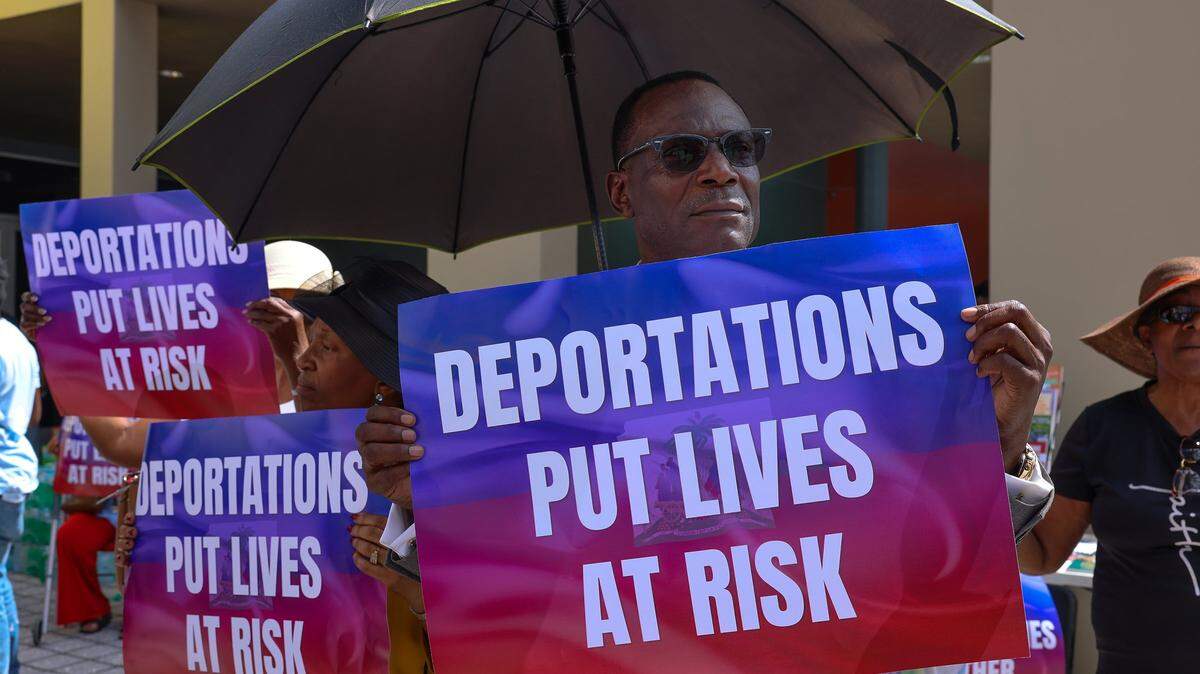
As North Miami pastor David Eugene prepares for a Tuesday night service at Haitian Evangelical Baptist Church, he has one prayer request on his mind: protecting the lives of hundreds of thousands of Haitian nationals who are at risk of deportation.
On Wednesday, the U.S. Supreme Court will hear oral arguments on the possible termination of Temporary Protected Status for Haitian immigrants, a benefit they’ve enjoyed since a devastating earthquake nearly destroyed their country 16 years ago. With so much at stake in his homeland, now reeling from deadly gang violence and one of the world’s worst humanitarian crises, the reverend said he’s thinking of his congregants.
With ongoing gang violence and increasing instability in the regions, going back to Haiti now is not an option, he said.
“They’re in need of the Supreme Court’s protection because sending them back to Haiti is automatically a death sentence to all of them,” Eugene said. “And that’s a fact.”
Eugene joins hundreds of religious leaders across the country who have been advocating for the reversal of the Trump administration’s decision to end TPS — through lawsuits, prayer vigils, rallies and collective action including a recent letter to lawmakers signed by over 600 clergy.
Advocates are calling attention to the issue ahead of Wednesday’s hearing. The hearing was scheduled after two lower courts blocked the Trump administration’s decision from ending to Haiti’s TPS designation in February and the Department of Homeland Security appealed to the nation’s high court. The hearing will decide the future of the protected status for 350,000 Haitian as well as 6,100 Syrian immigrants, who also face the risk of being returned to a country that advocates say is not safe.
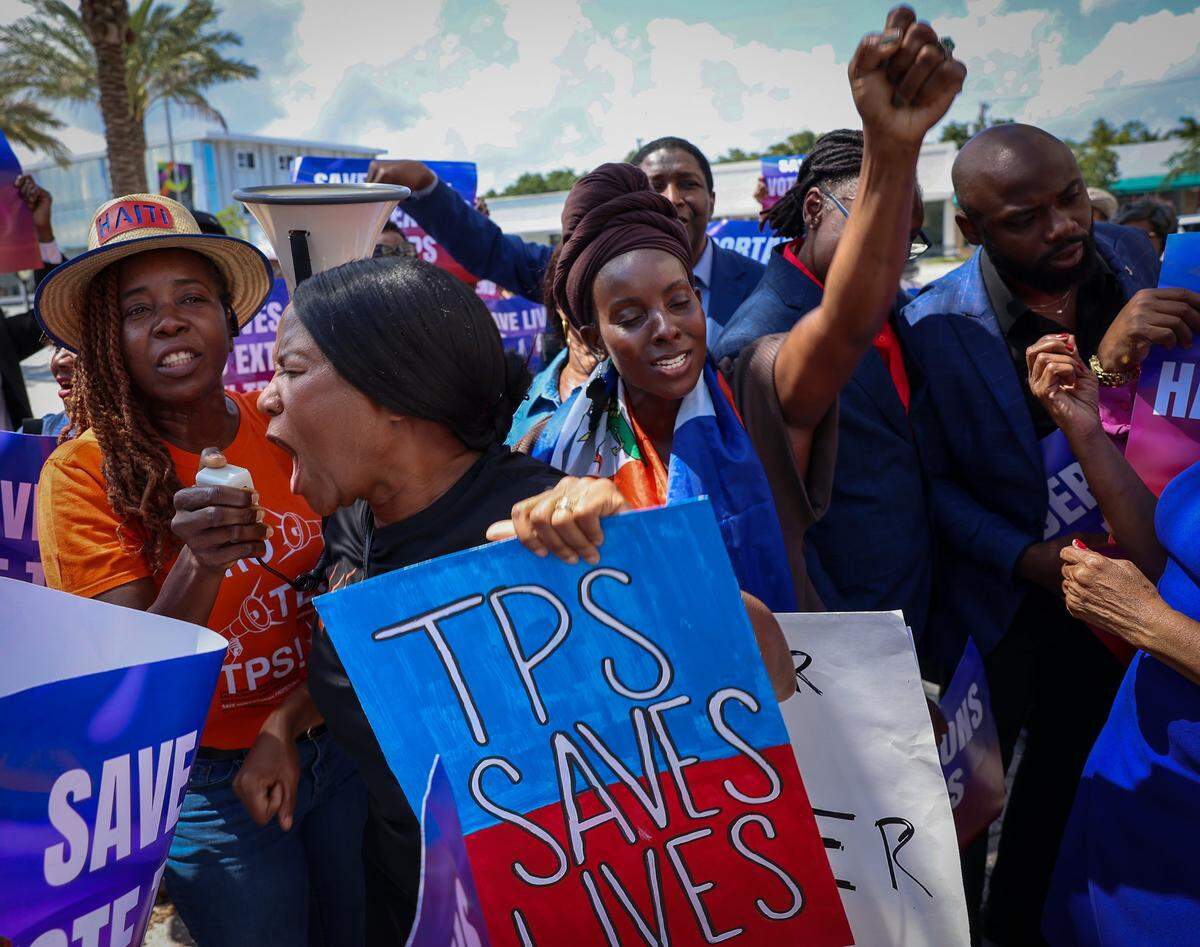
In Florida — a place that’s home to the largest group of Haitians in the country — faith leaders have been leading the cause, and on Sunday rallied alongside elected officials and advocates in North Miami to press Congress to extend TPS. The group of Haitian clergy members also filed a “friend of the court” brief in the case Trump v. Miot, arguing that the decision to end TPS will force families back into the arms of danger.
“It’s truly inhumane,” said the Rev. Keny Felix, senior pastor of Bethel Evangelical Baptist Church in Miami Gardens. “When we think of sending them back, we’re really sending them back pretty much to conditions that would ensure their lives would be put at risk.”
The clergy are a part of a larger immigrant advocacy network called Family Action Network Movement, and join other local groups including the Haitian Bridge Alliance and the American Civil Liberties Union that have been calling attention to Haiti’s ongoing humanitarian crisis.
A nation in deep crisis
Haiti is one of more than a dozen countries that Trump has targeted to revoke TPS from its citizens. Trump and his allies have argued that humanitarian programs like TPS that were designed to be temporary have become dominant pathways for migrants to enter the U.S. legally, and that too many people are using them to claim asylum.
Advocates and clergy members argue that Haiti is a country still in the midst of a deep crisis, “where murder, sexual violence, internal displacement, and housing- and food-insecurity run rampant” according to the amicus brief — which provides supplemental information to the courts.
Nearly 1.5 million people are displaced in Haiti while more than half the country of nearly 12 million residents, is suffering from hunger. Gangs control large swaths of the capital and have shut down schools and most hospitals. U.S. Commercial aircraft are banned from landing in Port-au-Prince, and the country is under the highest State Department “Do Not Travel” warning — a reality not lost on the clergy members leading the fight to keep Haitians protected.
The pastors and others stress that the people at risk of deportation are longtime friends, neighbors, business owners and people who are “law-abiding” contributing members of the community.
“If an individual is a criminal, we are not advocating for them,” Eugene said. “We are focusing on those who are living peacefully with the neighbors and are contributing to this community.”
Aside from the humanitarian arguments, Eugene said he hopes the justices will consider the economic impact of removing hundreds of thousands of working immigrants. “Those individuals are nurses, school teachers, they work in hospitality, management. ... By removing them, we’re creating a hole also in the community and that will affect us tremendously,” he said.
Since it was first created in 1990, TPS has provided a safe haven, including lawful status and access to work permits, for foreign nationals whose countries are experiencing a humanitarian crisis, armed conflict, fallout from natural disasters or other extreme conditions. TPS has been repeatedly extended for Haitians since it was granted in 2010 after the earthquake in Haiti.
Earlier this month the U.S. House of Representatives rushed to approve legislation to extend deportation protections for Haiti until April 2029, marking a significant victory for advocates but still leaving things uncertain as the measure heads to the Senate.
The bill — which passed 224–204 — received bipartisan support from South Florida lawmakers, including U.S. Reps. María Elvira Salazar, Carlos Gimenez and Mario Diaz-Balart — all Republicans from Miami — along with Democrats, including U.S. Reps. Debbie Wasserman Schultz, Frederica Wilson, Lois Frankel and Jared Moskowitz. But the measure still needs to be approved by the Republican-controlled Senate.
“We’re asking for senators to look at the law, look at what is happening in Haiti and not make this a partisan issue, but make this a human life issue. We can’t close our arms to the destitute,” the Rev Felix said.
READ MORE: Dozens rally in North Miami for Haiti TPS extension ahead of Supreme Court hearing
Love thy neighbor
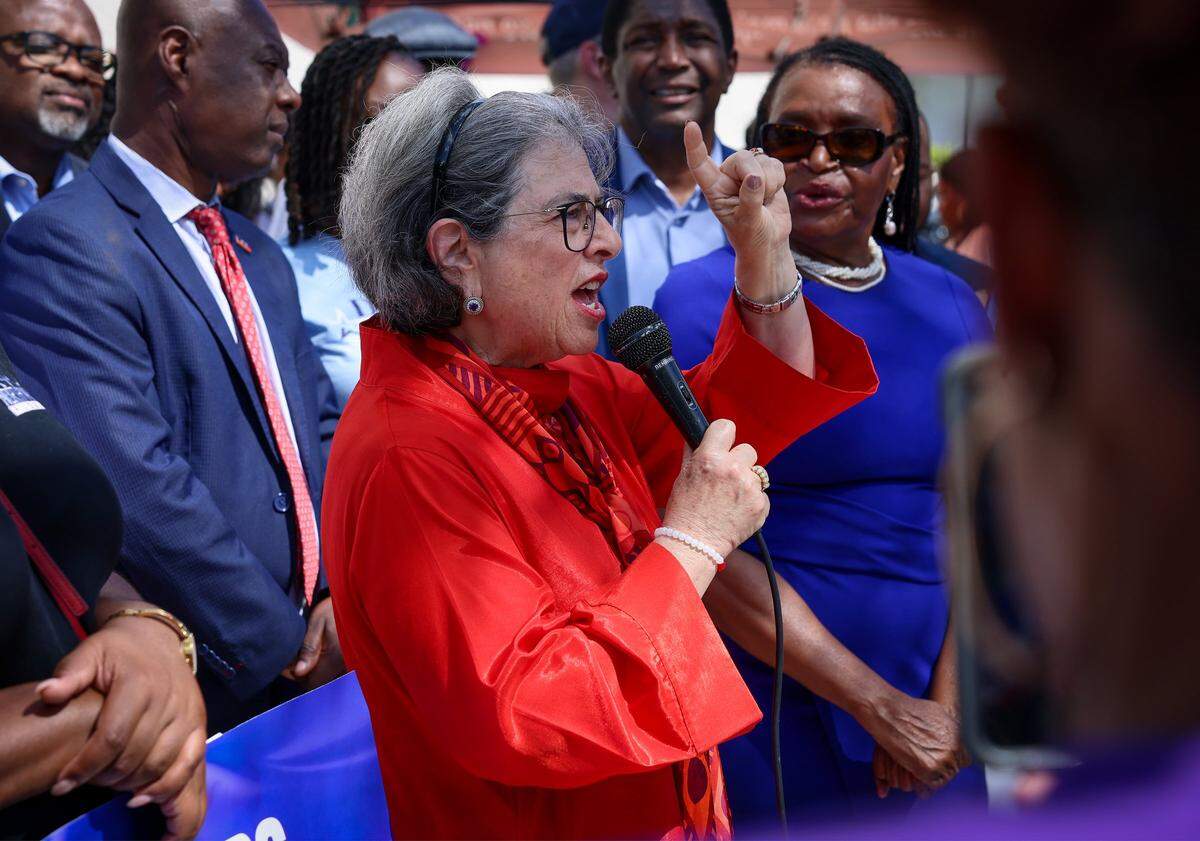
For Baptist pastor Felix, one of the clergy who has been heavily involved in advocating for the extension of TPS since it was revoked by Trump in 2025, the issue is not something he can ignore as a Christian.
“One of the key tenants of our faith is to love our neighbors as we love ourselves,” Felix said. “Our faith calls us to stand against injustice, and when we think of the decision by DHS to declare that Haiti was safe, that’s completely unjust.”
Churches and religious leaders, particularly Black churches, have historically been leading the cause to mobilize against injustices in this country, Felix points out.
“The church has always played a role in speaking against racism, and we see that unless we do so, then injustice will occur,” Felix said. “It’s not only focusing on the Haitian community, but also on other black and brown communities facing similar factors.”
Many advocates for TPS extension feel that the decision to terminate it was at least partly fueled by a deep-seated prejudice against immigrants — particularly those from Haiti. Felix points to Trump’s disparaging and false comments against Haitians in Springfield, Ohio, which put a target on the back of many Haitian immigrants.
“We see the hypocrisy where there’s a travel advisory against going to Haiti,” Felix said, “and yet at the same time we say that Haiti has made significant progress to allow those on TPS to return.”
This story was produced with financial support from Trish and Dan Bell and donors in South Florida’s Jewish and Muslim communities, including Khalid and Diana Mirza and the Mohsin and Fauzia Jaffer Foundation, in partnership with Journalism Funding Partners. The Miami Herald maintains full editorial control of this work.
This story was originally published April 28, 2026 at 4:01 PM.