
Partial demolition approval clears way for plan to revive the Coconut Grove Playhouse
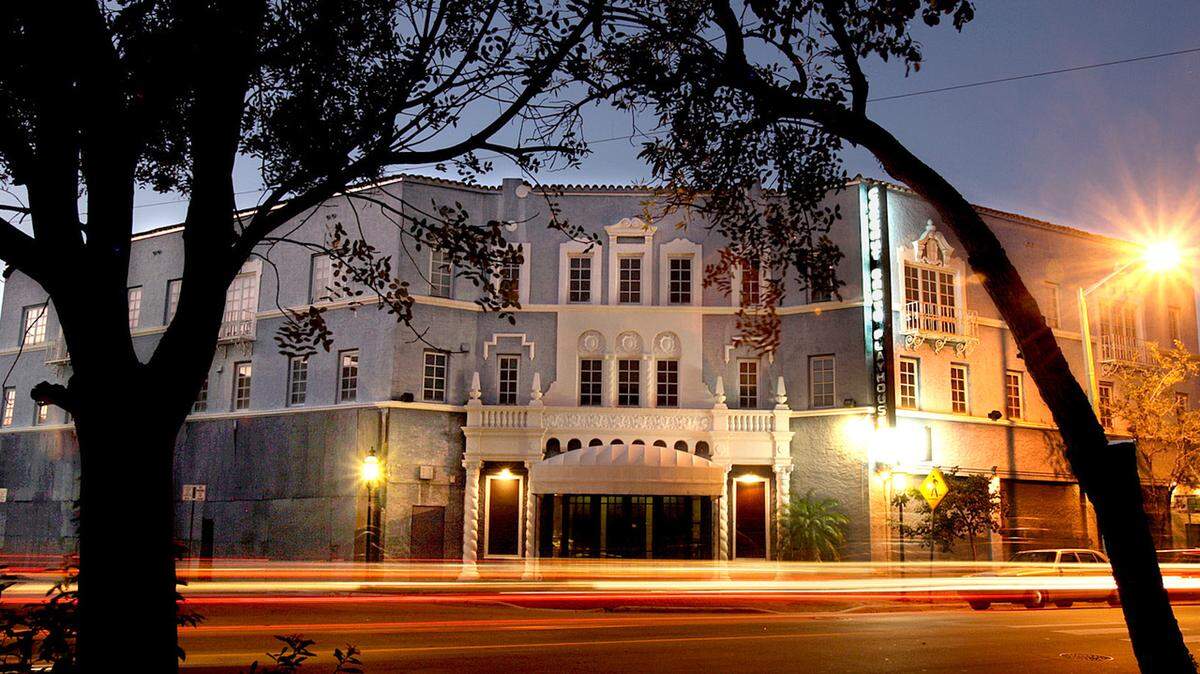
A contentious, long-stalled plan to resurrect the iconic Coconut Grove Playhouse took a major step towards realization Monday when Miami city building officials issued a permit for partial demolition of the historic 1927 theater, which has been closed for nearly 20 years.
The permit gives Miami-Dade County the green light after years of legal and political battles to begin work on its plan, which calls for tearing down the large auditorium at the theater’s rear while preserving the Mediterranean-style three-story front building on Main Highway that gives the playhouse its distinctive architectural presence.
The 1,100-seat auditorium, which the county says is obsolete and too big to be financially sustainable, would be replaced by a modern, 300-seat stand-alone playhouse separated by a public plaza from the restored, wing-shaped front building.
A group of preservationists and playhouse fans who want the entire theater renovated and reopened fought the county plan and the demolition with a series of unsuccessful lawsuits, initially with the support of Miami Mayor Francis Suarez. The Suarez administration dropped its own fight to block the county plan in 2022 after several losses in court, but some preservationists carried on the legal fray.
A stinging appellate court decision last year, however, effectively exhausted their legal options and cleared the way for the demolition permit to be approved. On social media over the weekend, as they anticipated approval of the permit, some of those opponents vowed to again to challenge the permit.
But Miami-Dade Commissioner Raquel Regalado, who has been the county’s public point person for the plan, said courts have been clear that the preservationists have no further legal recourse. Once issued, a demolition permit approved by the city building department can’t be legally appealed, she said.
“They have run out of stuff,” Regalado, whose district includes the Grove, said of the preservationists.
Brian May, chair of the Miami-Dade’s Cultural Affairs Council, the board that oversees county cultural programs and facilities, called the approval of the demolition permit “a turning point” in its long effort to reopen the playhouse, widely considered an important cultural and architectural landmark.

“The preservation community has a perspective on this which is respected,” May said in an interview. “But the community at large is longing for the day this playhouse will be restored and modernized and opened. They’ve been waiting almost 20 years, and that’s far too long.”
In a news release, the county said the issuance of the permit puts work on track for the new theater to open in 2027. The release also includes statements of support for the start of work from Miami-Dade Mayor Daniella Levine Cava and Miami Commissioner Damian Pardo, whose district includes Coconut Grove.
“Today’s permit marks decisive action forward on a contentious community issue marred by polarized debate. While it may not be the desired outcome for some, after almost 20 years of stagnation, we are excited to witness new beginnings,” Pardo said.
The release said a contractor for the demolition, John Bell Construction, has been hired, but May and Regalado said the razing of the auditorium won’t begin immediately.
First, they said, the county has to clean out the remaining contents of the playhouse, which includes debris as well as furnishings, papers and other materials left behind when it was abruptly shut down in 2006 amid mounting debts, though valuable items like costumes were previously put in safe storage. Some interior architectural elements that will be incorporated into the new theater, such as original columns and portions of the stage and proscenium, are also being removed.
Asbestos must also be removed, and the front building shored up before demolition of the auditorium can be carried out, they said. May said he doesn’t expect demolition to begin for several months.
The playhouse had a long and storied run before closing. The nonprofit volunteer board that ran it was unable to pay cascading debts or maintain the building as it struggled to fill seats.
Designed by the famed architectural firm of Kiehnel and Elliott and originally built as a movie house, the playhouse hosted many legendary stars in stage productions after its conversion to live theater in 1956. Its first theatrical production was the U.S. debut of the classic absurdist play “Waiting for Godot,” during which much of the audience famously left well before the end.
The county took control of the state-owned playhouse under a complex 2014 deal that allowed Florida International University to lease the property for a nominal sum and have use of the planned new theater for student programs. The new playhouse would be managed and programmed by GableStage, an award-winning small company that now operates at the Biltmore Hotel in Coral Gables and would be renamed GroveStage.
Citing the old playhouse operation’s financial failure, the difficulty in attracting large audiences to live theater in Miami, the inadequacy of the barn-like auditorium for modern dramatic productions, and limited available public funding, county officials developed a plan they said balances historic and architectural preservation with fiscal and artistic prudence.
The county’s architectural and theatrical consultants concluded that the playhouse’s front building — which at various points housed the playhouse lobby, restaurants, offices and, on the third floor, apartments for visiting artists — should be renovated as a stand-alone structure. Miami-based Arquitectonica, meanwhile, designed a separate new state-of-the-art theater that consultants said would be financially and artistically feasible to manage.
The plan includes several other significant elements, including a new parking garage on the property’s existing parking lot that would also house dining spots or shops on the ground floor. It would be built and managed by the city’s semi-autonomous parking authority, and revenue from the operation would help cover the cost of renovating and maintaining the playhouse’s historic front building, which could also be converted to commercial use, as well as to subsidize the new theater’s theatrical productions.
Regalado said she has also insisted on addition of a pocket park at the rear of the property to make it welcoming to residents of west Coconut Grove, the historically Black neighborhood whose residents were once barred from attending shows at the playhouse. Other design tweaks include more wood on the facade of the new theater so that it blends better with the woodsy ambience of the Grove, and more trees and landscaping, May said.
The county plan quickly ran into concerted opposition from playhouse fans and some cultural figures who called its intimate new auditorium small and unambitious and demanded instead an alternative plan calling for a full restoration capable of handling big Broadway-style shows. Their calls for a larger auditorium didn’t go anywhere after promised private fundraising failed to materialize.
The final design for the site still requires approval of the city’s historic preservation board, where shifting membership over the years meant that votes on elements of the county plan have been inconsistent -- favorable sometimes and at other times not. Once design approval is in place, the county must also secure building permits from the city. That means it could be as long as a year before construction work on the new theater starts, May said.
The years’ worth of delays also means that the new theater’s original budget of $23 million, a combination of bond proceeds and grants, would fall far short of today’s cost, county officials concede. New estimates are being drawn up, but the county has been allocating additional funds over the years in anticipation of a significant rise in construction cost and there should be no shortfall once construction is ready go to, May said.
The city parking authority has told the county that it will be ready to build the long-planned garage as theater construction starts, May and Regalado said.
This story was originally published April 15, 2025 at 5:30 AM.