
Coconut Grove Playhouse revival plan critics lose in court again, vow to keep fighting

In an unusually blistering ruling, a Miami-Dade appeals court has overturned as “unlawful” a city of Miami zoning board decision blocking a county plan to remake and reopen the historic, shuttered Coconut Grove Playhouse -- but it doesn’t mean the long-stalled project will get underway anytime soon.
The unanimous decision, issued Feb. 9 by a three-judge panel of Miami-Dade Circuit Court’s appellate division, is the latest in a string of stinging legal losses for a group of Grove activists and residents who have nonetheless succeeded in thwarting the county’s playhouse revival plan for eight years, and now vow to continue doing so until all legal avenues are exhausted.
Some activists and preservationists oppose the county plan because it calls for demolishing the large auditorium at the rear of the state-owned 1927 playhouse, a designated historic site that is widely considered one of Florida’s principal cultural and artistic landmarks, and replacing the performance hall with a smaller, $20 million modern theater. The playhouse’s distinctive, winged three-story Mediterranean front building would be preserved and restored.
The county, which has an agreement with the state to reopen the legendary theater, has repeatedly prevailed in a series of political and legal battles over its fate, but the long-running drama shows few signs of cooling off. Now judges who have more than once ruled emphatically in the county’s favor appear to be losing patience with some of the plan’s leading opponents.
This time, the appeals court ruled that the city’s planning and zoning board had “zero authority” to effectively deny the county permission to move forward last year when it granted an appeal filed by a pair of Grove residents and activist attorney David Winker challenging a partial demolition permit authorized for the project by the city planning department. The appellate panel also pointedly noted that the board’s action ignored previous court rulings.
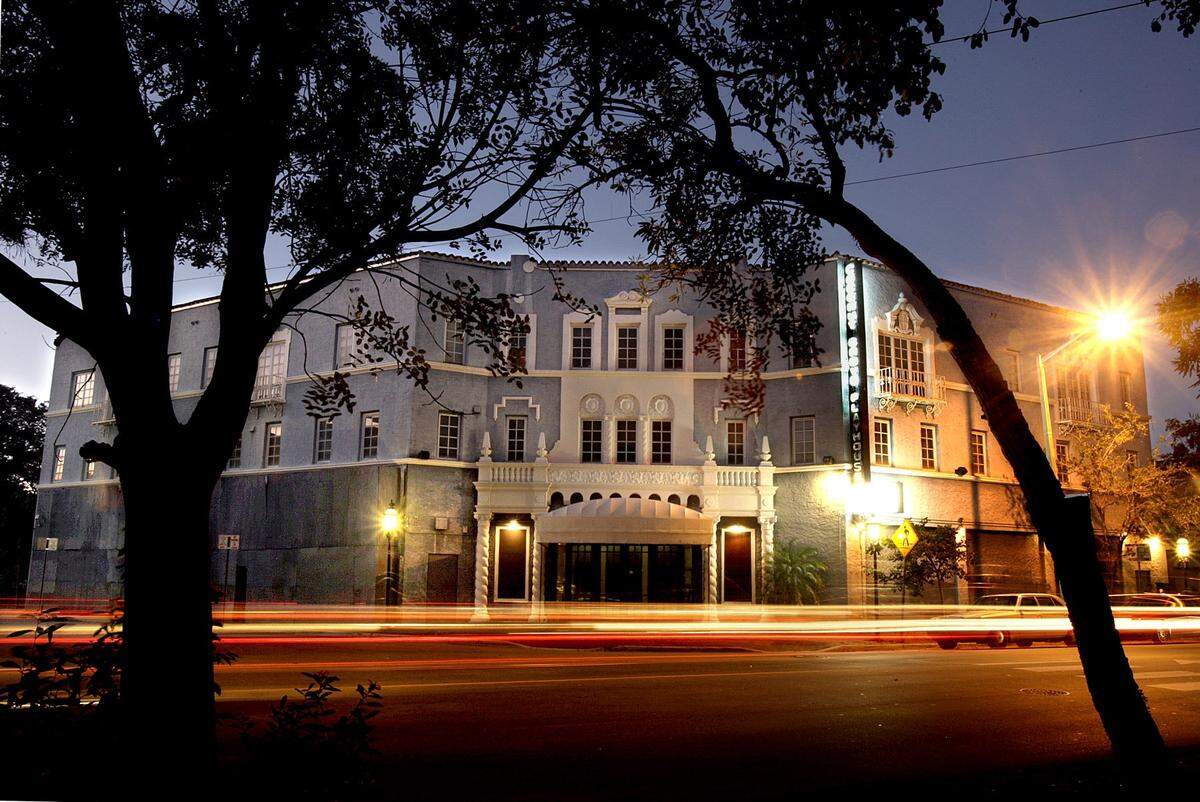
The city of Miami agreed with the court, acknowledging in a legal document that the zoning board, made of up of volunteers who act independently as a quasi-judicial body, had made its decision “in error.”
The appellate decision came with an unusual judicial rebuke.
In a concurrent opinion, one of the judges raised potential ethical lapses by Winker in the case. Miami-Dade Circuit Judge Daryl Trawick said Winker may have tried to conceal unfavorable evidence in the case, a claim the attorney strenuously denies.
He also sharply upbraided the zoning board’s vice chairman, Grove preservationist and developer Anthony “Andy” Parrish, for failing to recuse himself from the board’s hearing on the demolition permit appeal even though he has been a leading public voice in opposition to the county playhouse plan. Parrish led discussion of the demolition permit appeal as acting chair.
“The conflict and bias, or at the very least the appearance of a conflict and bias, raised in the record is so startlingly apparent that it cannot be ignored,” Trawick wrote.
Parrish said Friday that he believes he acted correctly. He openly disclosed his role in opposing the playhouse, and asked his fellow board members whether he should recuse himself, he said. They declined the offer, Parrish said.
“I am completely unapologetic despite being chastised,” Parrish said, adding that he believes the court ruling is flawed.
Winker, Parrish and other critics of the county plan have urged development of an alternative that would preserve the full playhouse building with a larger capacity for Broadway-style productions, an idea county cultural affairs officials and theater consultants have dismissed as financially unfeasible. No fleshed-out alternative plan has surfaced.
Miami-Dade Mayor Daniella Levine Cava and Commissioner Raquel Regalado, whose district includes the Grove and who has tried unsuccessfully to broker a settlement, praised the appeals court ruling in a joint statement.
“Last week’s Court ruling is a win for our community. Miami-Dade County is committed to a thoughtful rehabilitation of the historic Coconut Grove Playhouse. Working with the City of Miami, we now can move forward with preserving and rebuilding the Coconut Grove Playhouse, which has remained dormant for too long,” the statement read in part.
In an interview, Regalado said she recognizes opponents will continue litigating, but contended that they’re running out of legal grounds on which to fight.
“We’re getting to the end. There is not not much left here left to litigate,” she said. “I’ve tried to do as much as I can. This is where we find ourselves.”
The activists say they are undeterred by the court’s decision and plan to appeal. If they do, that would likely prolong the legal fray by months, if not years. The demolition appeal added a year to the saga.
Winker, who said he’s working pro-bono, contends he did nothing wrong in his handling of the case, but declined to elaborate, saying he will respond in detail in a formal motion asking the appellate court to reconsider its decision. If that tack fails, he added, he and his clients plan to challenge the decision on demolition at the Third District Court of Appeal.
“We’re going to have another crack at it with this court. We feel there are a number of issues the court did not consider. It’s just another step in the process” of appeal, Winker said.
The playhouse is a protected city landmark for both its architecture and its long history of theatrical productions featuring leading stars of the stage, including the U.S. premiere of the classic modern play “Waiting for Godot.” But it has been vacant and in a sate of advancing deterioration since financial problems facing its non-profit governing board forced an abrupt closure in 2006.
In 2014, then-Miami Dade Mayor Carlos Gimenez brokered a complex agreement with the state, Florida International University and the GableStage theater group to rebuild and reopen the playhouse.
But opponents of the plan won Miami Mayor Francis Suarez to their side. The plan requires city permits to move forward, but Suarez’s 2019 veto of city commission approval set off three years of litigation between the city and county. Suarez and the city opted not to pursue further legal action after a final court defeat in June of 2022.
That court decision cleared the way for the city to issue a demolition permit. But the zoning board blocked the permit in March of last year after Winker filed an appeal on behalf of a couple who live close to the playhouse property, Anthony Vinciguerra and Courtney Berrien.
In overturning the board decision, the appellate panel ruled that the county had met all requirements for the permit, but that the board erroneously considered issues not pertinent to the matter in granting the appeal, while Vinciguerra and Berrien raised legal arguments that were “entirely without merit,” the court decision says.
In exceeding its authority, the board “applied the wrong law, made a decision unsupported by competent substantial evidence and deprived (the county) of due process,” the decision says.
“This case is not complicated,” the ruling adds.
This story was originally published February 19, 2024 at 5:30 AM.
CORRECTION: Due to a typographical error in a court document, a previous version of this story mistakenly attributed a concurrent opinion in an appeal of a city of Miami board’s denial of a partial demolition permit for the Coconut Grove Playhouse. The concurrent opinion, which raised a potential conflict of interest by a board member and a possible ethical lapse by an attorney representing Grove activists, was written by Miami-Dade Circuit Judge Daryl Trawick, not Miami-Dade Circuit Judge Maria de Jesus Santovenia.