West Coconut Grove losing Black heritage. Stalwarts persist to build on 130-year legacy
READ MORE
On the brink
Historic West Coconut Grove, part of Miami’s foundation, fights to save what little is left of its Black heritage.
Expand All
Piece of original Miami endangered: West Coconut Grove’s Black history slipping away
West Coconut Grove losing Black heritage. Stalwarts persist to build on 130-year legacy
History bulldozed as charming Coconut Grove homes replaced by giant concrete cubes
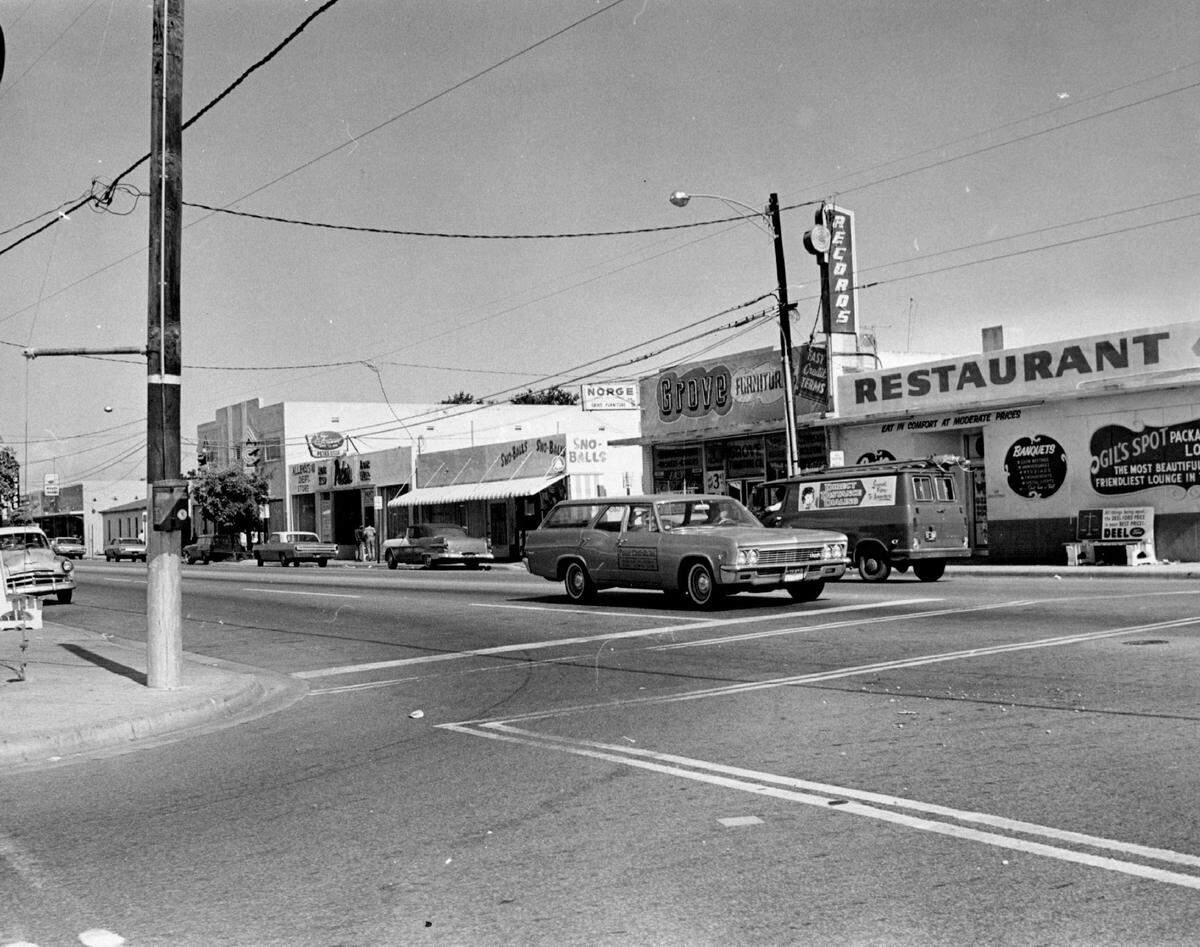
Photo Gallery: West Coconut Grove past and present
Sitting just steps from Coconut Grove’s resurgent village center, the neighborhood’s historically Black section — the West Grove, to outsiders — is just as profoundly steeped in Miami history as its majority-white and far more affluent sibling community.
But you’d hardly know it when you’re there.
Cross the invisible and increasingly porous old Jim Crow line that still somehow separates white Grove from Black, and it can be hard to discern the vital, foundational role that West Grove residents, in particular the early Bahamian settlers and their descendants, have played in the city’s history and culture.
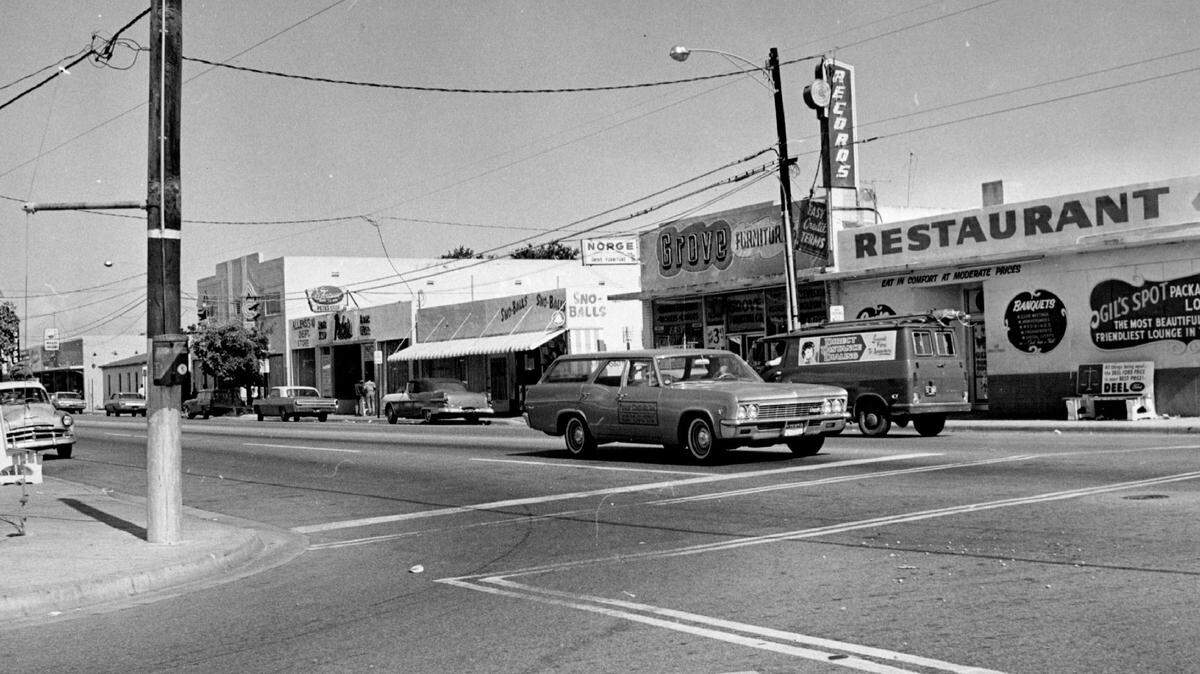
Decades of neglect and disinvestment, now amplified by rampant real estate speculation and accelerating residential gentrification, have wiped out most physical traces of the once-thriving West Grove. Its homes and places of commerce, as well as neighborhood landmarks, today are fond recollections for those still barely hanging on in the community.
Against long odds, though, some neighborhood stalwarts are determined to save some of what remains.
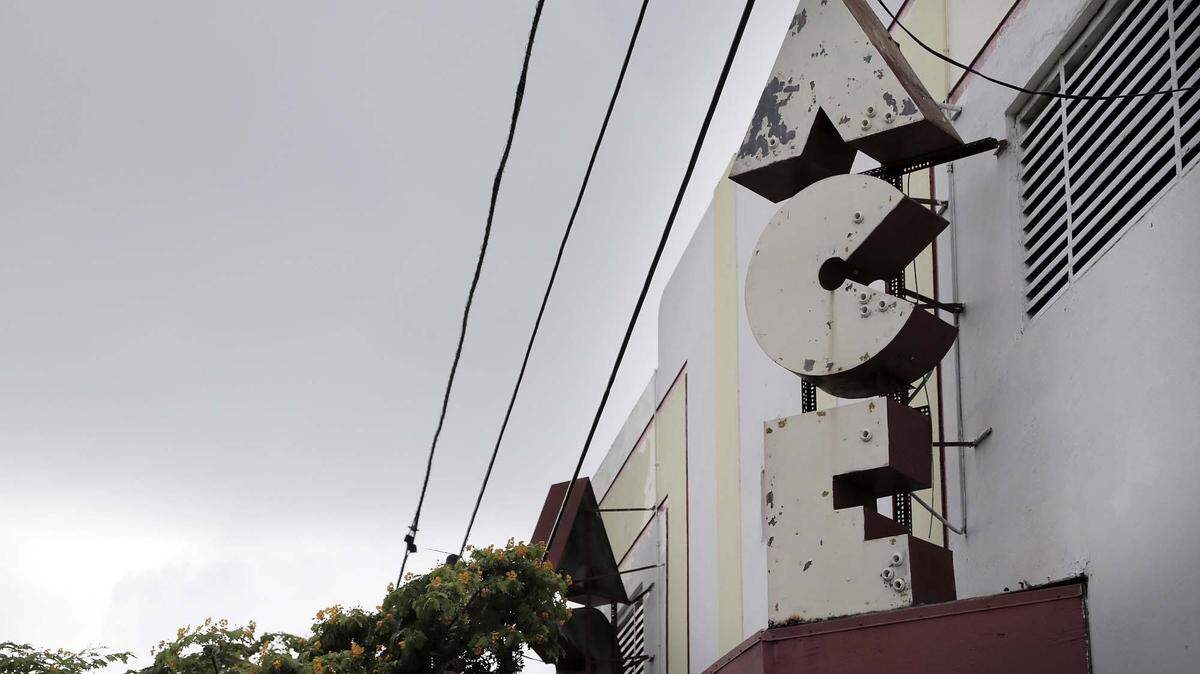
That includes the ACE, the Grove’s Jim Crow-era Art Deco movie theater. Closed for decades, its longtime owners hope to revive the theater as a center of community life and culture. There’s also the imposing wood-frame home of a Bahamian neighborhood founder. It was rebuilt by his Grove descendants just before the COVID-19 pandemic began in spring 2020 as a small lodging house, and now awaiting possible expansion into an island-style inn on historic Charles Avenue.
The efforts extend to a soon-to-open small museum memorializing the exploits of the Black athletes and coaches from the Grove who became stars in high school, college, professional sports and the Olympics. Across the street, a companion project aims to bring back the flavors of the Bahamas and Southern barbecue to an open-air food, handicraft and entertainment pop-up on Grand Avenue — the neighborhood’s all-but-dead, mostly vacant commercial spine, where the last place to eat or drink closed long ago.
It also means a nonprofit group, Rebuilding Together Miami-Dade, housed in a restored wooden bungalow in the West Grove, has been making repairs to dozens of homes belonging to longtime, elderly and low-income local residents, at no cost to them so they can stay in the neighborhood.
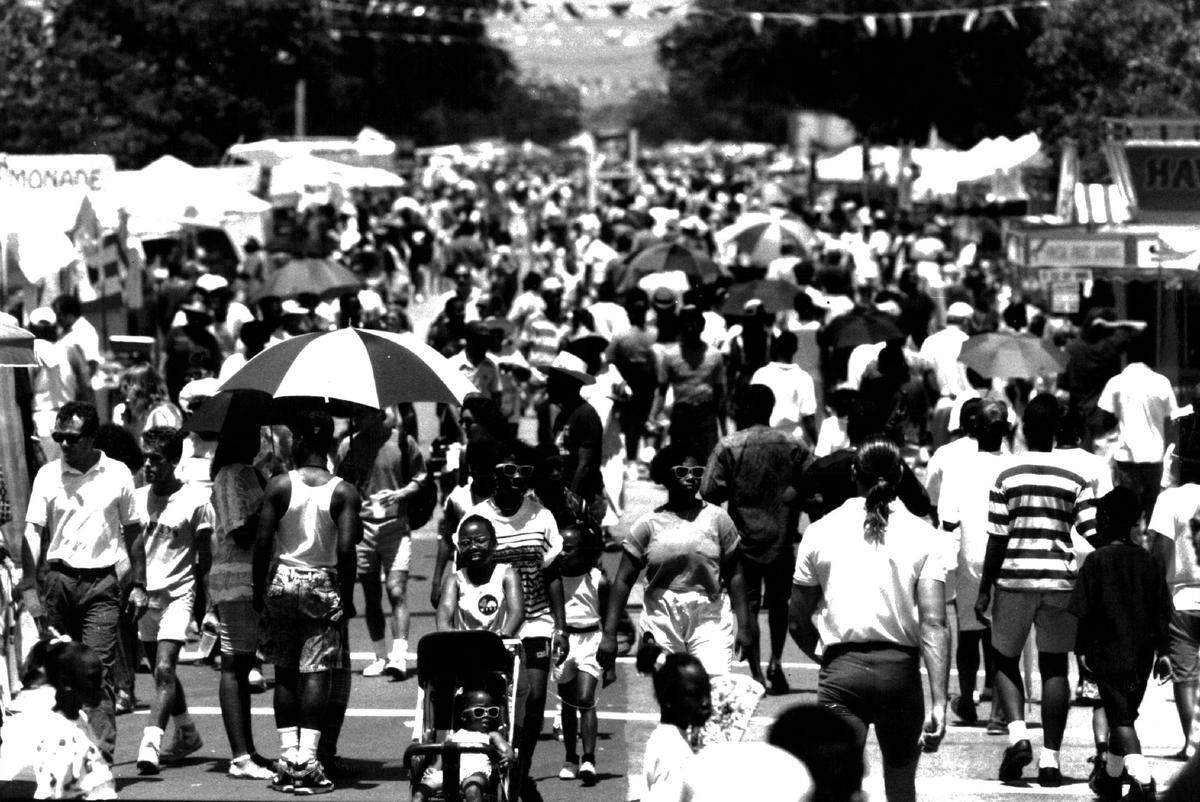
And it encompasses the latest effort by the city of Miami and local advocates to revive the neighborhood’s Goombay Festival, an annual celebration of West Grove’s Bahamian roots in music, food and culture that once drew thousands of people from across Miami to Grand Avenue. A smaller but lively version of Goombay, complete with traditional Junkanoo bands and performers, made its debut in June at West Grove’s Elizabeth Virrick Park, five years after a previous effort to bring back the festival on the majority-white side of the Grove sputtered.
“It’s a challenge, but I like challenges,” said Denise Wallace, a Grove native whose family owns the historic 1930s ACE Theater, on Grand, and has developed an ambitious plan to restore and reopen it.
“It was a segregated movie theater. It was a Jim Crow theater. When you look at its genesis, it was not a great time for our people. But that theater represented hope for everyone in this neighborhood. It’s the only structure remaining in the neighborhood that you can touch and say, ‘This is where Black folks used to go.’
“There is value in the story of it. So you have to preserve the story of it.”
First Bahamian immigrants built the Grove
That story actually begins 130 years ago. Black and white Coconut Grove have been intimately intertwined nearly from the start, in the 1880s. That’s when Mariah Brown, the Grove’s first Black Bahamian immigrant, arrived to work at the Peacock Inn, named after the English family that started what was in effect Miami’s first hotel — though Miami did not exist as a city just yet.
After Brown came many more Bahamians — farmers, carpenters and craftsmen skilled in working with the limestone bedrock of South Florida who helped build the Grove and early Miami. Bahamians worked on Henry Flagler’s railroad. Bahamian stonemasons helped erect the Grove’s grand Vizcaya palace and were responsible for some of its intricate stonework details and decorative elements. Bahamians also worked at the estate’s farm and helped the Merrick family, founders of Coral Gables, learn how to grow fruit trees on the thin local soil, similar to that of the islands they came from.
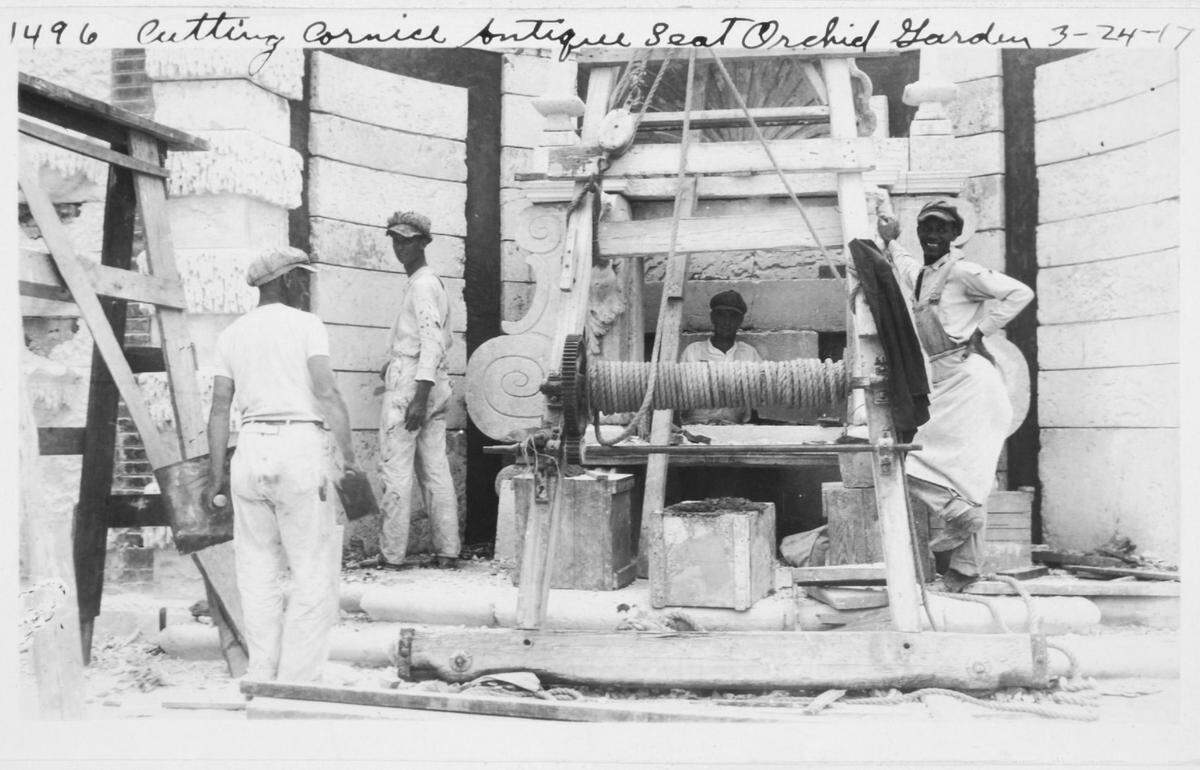
After the Bahamians established a thriving community, the Grove attracted African-Americans from North Florida, Georgia and South Carolina looking for work and an urban environment more welcoming than the racially oppressive rural places they left behind, especially after World War II.
Once Coconut Grove was absorbed by the new city of Miami, segregation, both informal and legally enforced, erected strict barriers between white and Black, creating the enclave on the west side that persists to this day even as it dwindles.
Because she couldn’t live among the white settlers she served, Brown built a Bahamas-style wood-frame house up the hill from the Peacock Inn, in essence becoming a founder of Black Coconut Grove. The spot became Evangelist Street, the early Black settlement’s narrow dirt main byway, so called because of its many churches. The Brown home, a designated city landmark, still stands on what’s today known as Charles Avenue, one of the very few houses of early Black settlers to survive.
Although rebuilt some years ago and marked by a historic sign detailing its significance, the Brown house, owned by a nonprofit association made up of members of some of the Grove’s oldest families. stands unused and is deteriorating for lack of money.
Up the street, another original home, the E.W.F. Stirrup House, has met a happier fate.
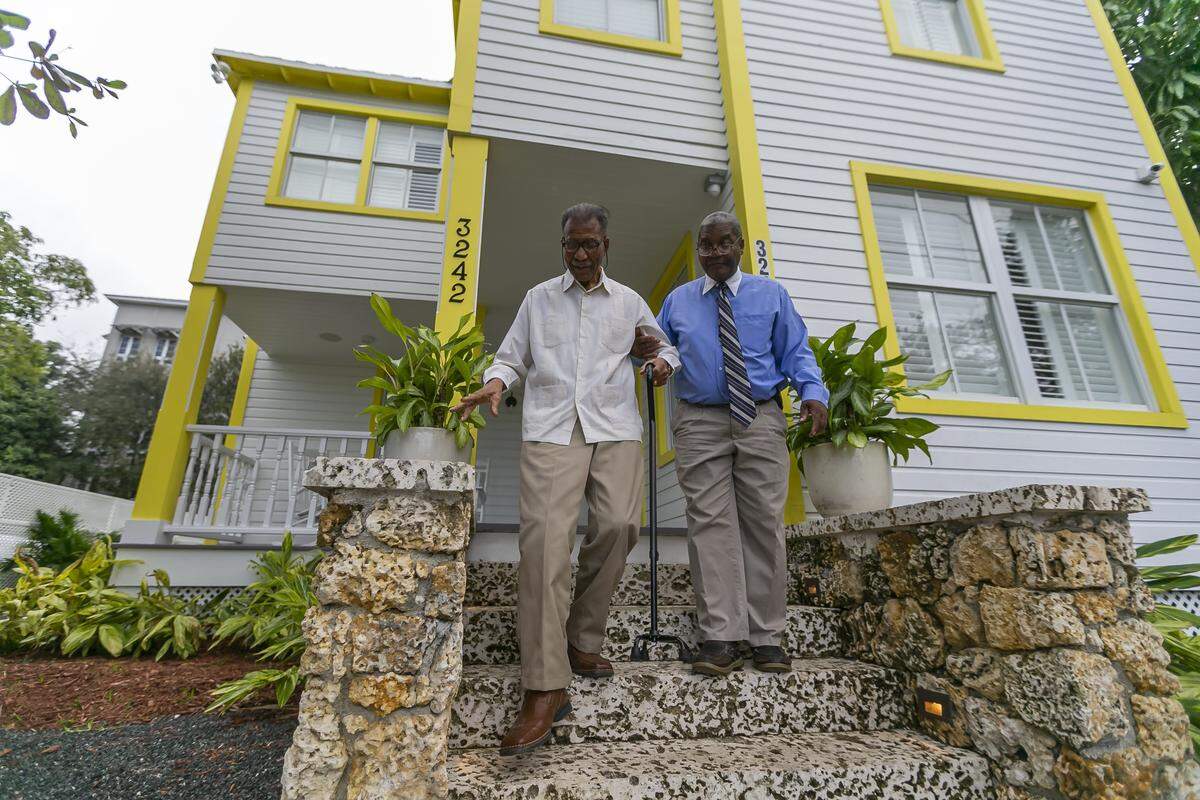
Stirrup, a Bahamian immigrant, was a chauffeur and farmworker for industrialist Charles Deering at Vizcaya, and also worked clearing lots, trading his sweat for land. A skilled carpenter, he amassed a fortune building and renting or selling homes in the Grove to other arriving Bahamians. The spacious house he built for himself stood vacant and deteriorating for decades until his descendants, the Simpson-Stirrup family, joined with white investors from Coconut Grove to rebuild. Today it’s rented as lodging and for events such as weddings.
The family and their backers, who include Grove real estate investors and developers Peter Gardner and Gino Falsetto, also secured zoning approval from the city of Miami to build a low-scale Bahamas-style inn on property they own across Charles Avenue from the house. Construction has not yet begun.
While Charles Avenue itself is also designated as historic, that protects only the road. A handful of wood-frame and shotgun-style houses on the street are individually protected as historic, too. But most of the homes on Charles are not. Many have been demolished, replaced by the encroaching, oversized modern boxes, called “sugar cubes” by locals. They are primarily purchased by affluent white buyers, who increasingly dominate Coconut Grove’s residential areas.
To keep people in their homes, Rebuild Together, backed by foundation money and city of Miami grants, has paid for repairs, including outfitting 15 houses in West Grove with new roofs and 10 with impact windows, for a total so far of 43 homes. The goal is to help 100 homeowners. The owners must agree not to sell their homes for three years after repairs are made, Rebuild Together development director Ashley Snow said.
“Our goal is to keep people in the community, to keep the old guard here,“ Snow said.
Historic churches stand the test of time
The neighborhood does boast one particular sort of enduring landmark — a half-dozen churches. Three of the churches house Black congregations that go back more than 120 years, to the earliest days of Miami and the Grove. Only one building, Christ Episcopal Church, co-founded by Stirrup, is a designated historic landmark. The churches all still come alive every Sunday as members, most of them by now settled outside the Grove, commute back to worship.
There is another exception to the story of loss: One section, the westernmost end of the West Grove, sits inside the borders of the neighboring suburban city of Coral Gables. The section was established by Gables founder George Merrick in the 1920s as its segregated Black district, home to many of its domestic workers. That Gables portion includes the MacFarlane Historic District, where about 30 of the original mostly wood-frame houses and cottages are protected by law and remain occupied, although some are deteriorating because the owners, many of them elderly, can’t keep up with maintenance. Years ago, the city paid for renovations of some of the homes.
One dwindling congregation, St. Mary First Missionary Baptist, the first Black church in the Gables, sold its building in the historic district in 2020 after it was condemned by the city. The buyer was arts patron Mike Eidson, who plans to renovate it for use as a theater or cultural center.
Also, on the Gables side is the storied G.W. Carver public school, once West Grove’s segregated kindergarten to grade 12 institution. The former high school campus, designed by noted Grove Modernist architect Alfred Browning Parker, was converted into a magnet middle school after Coral Gables High was integrated in 1966.
But outside the churches, one barbershop and one beauty shop, there is no place left for West Grove residents — or visitors interested in the neighborhood and its history — to gather, socialize or commune.
That’s what the locals behind the ACE Theater revival and the Coconut Grove Sports Hall of Fame and its companion Taste of Coco-Bahamas are trying to remedy.
The ACE was built by Wometco, the Miami broadcast and movie-theater enterprise that also built the Seaquarium, as one of several movie houses serving segregated Black audiences across Miami-Dade. The ACE was also the site of many a graduation and community event, even boxing matches. But after desegregation and the rise of competing multiplex theaters, Wometco shut down the ACE in 1973, and sold it to prominent West Grove businessman Harvey Wallace. His daughter, Denise Wallace, said he never showed movies, but rented it to church and events promoters.
Wallace had grand plans to expand the theater as the hub of a Bahamian-themed retail, entertainment and residential complex. Like many entrepreneurs in the neighborhood, he could never get bank financing because of redlining, she said. The ACE has been vacant and unused since he died in 1988, Wallace said. The family always hoped to fulfill the elder Wallace’s dream, and did basic maintenance of the building, but it required significant work to be reopened, something they could not afford.
Grove native’s family spearheads historic theater restoration
The family and their supporters did successfully pursue local and national historic designation for the ACE — the building is now listed on the National Register of Historic Places — which meant it qualified for new federal grants for historic preservation. A foundation formed to oversee the project has gotten two grants from the National Park Service totaling nearly $900,000 that will pay for structural repairs and a new roof. The nonprofit is now seeking bids from contractors.
The foundation also will soon launch fundraising to restore one the theater’s most distinctive elements — its marquee, which was sagging and has been temporarily shored up with steel poles. The signature concrete letters spelling out “ACE” in neon that sat atop it have been removed and stored inside the theater.
Future parts of restoration, as yet unfunded, would tackle new plumbing, electrical and mechanical systems, and would outfit the interior for reuse.
Wallace, who is general counsel at historically Black Florida A&M University in Tallahassee but comes home to the Grove regularly, conceded it’s a heavy lift.
“Sometimes I just say, ‘Why?’ I could have sold it and walked away,” she said, but she kept it for her two daughters and her grandchildren. “I haven’t sold it because that is their legacy.”
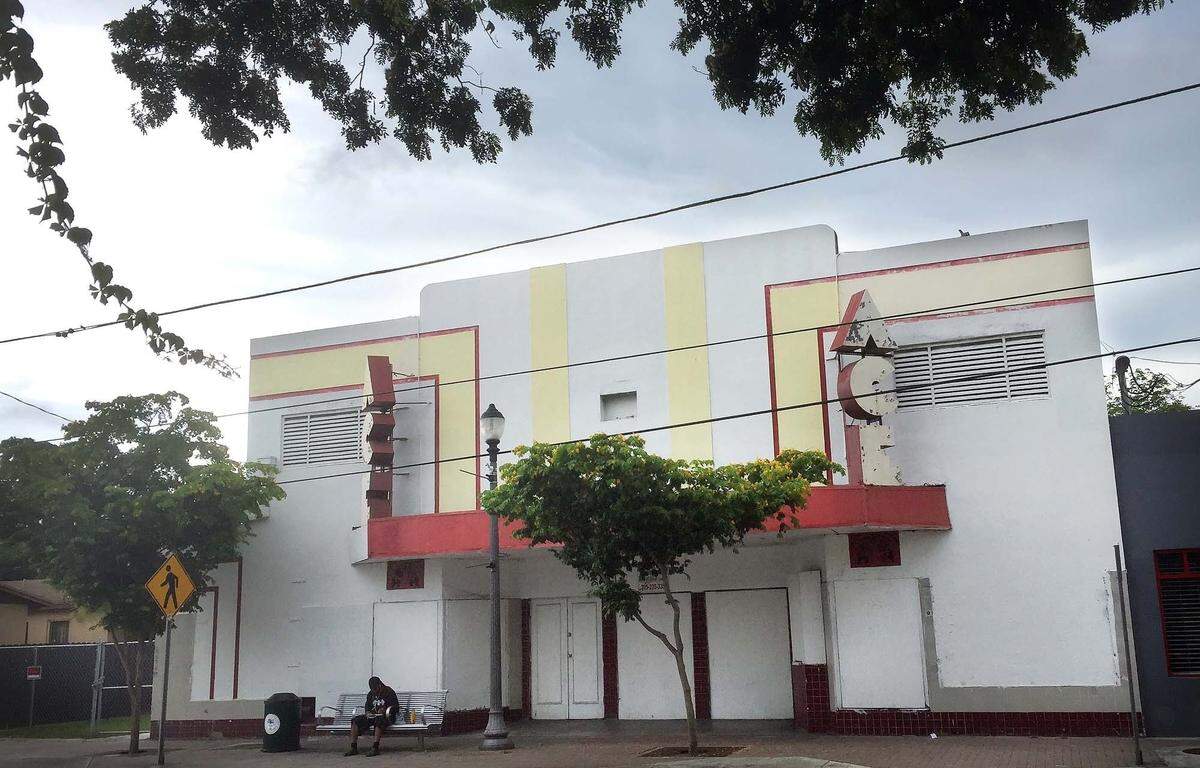
The project has become a Wallace family affair. Both her daughters, Nichelle Haymore and Shanté Haymore-Kearney, grew up in West Grove but left Miami for schooling and careers before returning to the neighborhood. They came back in part to take up the family bequest and are closely involved in a nonprofit foundation they started to run the project. So is their cousin, Alicia Wallace. And Haymore’s daughter will work on marketing for the theater restoration when she graduates from college in New York.
Haymore said the family envisions the reopened ACE as a multi-use space hosting performances and community events, serving as a link between the community’s history and its future, as well as both halves of Coconut Grove. Like many, she said that neighborhood residents simply call it all Coconut Grove, making no distinction between the two.
The West Grove she recalled as a child and teen has largely vanished, Haymore, who is 48, said. That makes it especially important that the ACE is revived.
“This is why it was important that we come back. This is our legacy,” she said. “It’s about maintaining what we have. The community is changing, but there is still a need for this.”
Haymore-Kearney, 42, said she hopes a reopened ACE could serve as a catalyst for Grand Avenue, much like the way the restored Lyric Theater in Overtown served as foundation for that equally vital, historically Black neighborhood’s comeback, which mixes elements of its history and legacy while inviting outsiders in to capitalize on surrounding redevelopment.
“That’s a really good model for us,” Haymore-Kearney said. “You can see it’s really rooted in the community and in history, but it’s open to everyone.”
Museum coming for storied Grove athletes
A couple of doors down, Anthony Witherspoon, who grew up in West Grove and returned after retiring from a career as a college basketball coach in 2016, has finished building the Coconut Grove Sports Hall of Fame Museum in a storefront space owned by a nonprofit run by the prominent Gibson family.
As he pondered what to do about the loss of local landmarks and history in the neighborhood, it dawned on him that sports had long been an important source of pride and accomplishment for the West Grove community. And that a museum dedicated to its heroes — Grove athletes were known for their special swagger back in the day — would be a good way to celebrate its history and heritage.
“My goal was to preserve the history of Coconut Grove, and to do it through sports,” Witherspoon said.
He began organizing induction galas in 2015 to raise money, and had planned to open the museum two years ago, but the pandemic forced a postponement. The exhibits trace the history of Grove sports stars and coaches from the earliest days of the community. They include two players in baseball’s Negro leagues and key neighborhood figures such as Billy Rolle, a jazz musician and activist who in 1947 as a member of FAMU’s football team was one of the first Black athletes to play in the Orange Bowl. There’s also recently retired NFL great running back Frank Gore, a Grove native who played for the University of Miami before his professional stardom.
The museum also highlights legendary football coach Nathaniel “Traz” Powell, who led Grove athletes at Carver High to five national championships, and Gerald Tinker, a Grove native and star member of the newly integrated Coral Gables High “Team of the Century” that won back-to-back national high school football titles in the mid-1960s. Tinker, who still lives in the Grove, also won an Olympic gold medal in a track relay race at the Munich Games in 1972.
To complement the museum, Witherspoon also spent eight months getting a permit from the city of Miami to open Taste of Coco-Bahamas, a forthcoming venture that will bring what he describes as a “mini-Wynwood Yard” to a long-vacant lot across Grand Avenue owned by a Stirrup family foundation.
Witherspoon said the open-air spot will feature: two food trailers, one serving smoked barbecue and traditional Bahamian foods and another ice cream; a Bahamian-style “straw market” selling handicrafts imported from the islands; and music and special events.
The burgeoning efforts to salvage something of West Grove’s rich history may portend more to come, Haymore-Kearney said. Growing recognition of the value of historically Black neighborhoods across Miami and the rest of Miami-Dade County has meant more interest from local, state and federal government officials — and even private investors in supporting preservation ventures.
And that, she said, could mark a big change from the past for Coconut Grove.
“Now there’s a momentum going. There is a lot more support for it than there ever was,” Haymore-Kearney said. “And everyone is noticing it.”
This story was originally published July 10, 2022 at 6:00 AM.